





Curved Leg Writing Desk
A curved leg writing desk brings sculptural grace to a study, offering shaped surfaces and turned or cabriole supports inherited from Georgian, Victorian and Edwardian traditions.
Curved Leg Writing Desk
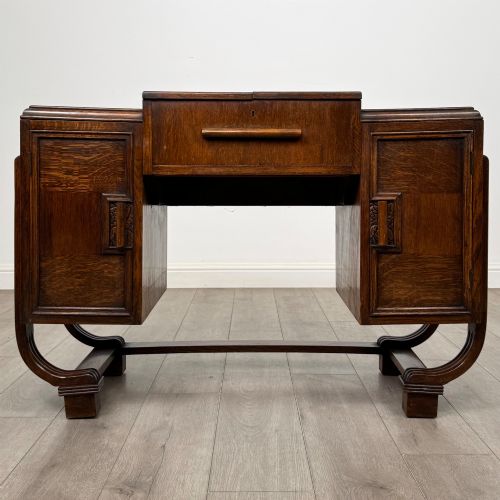
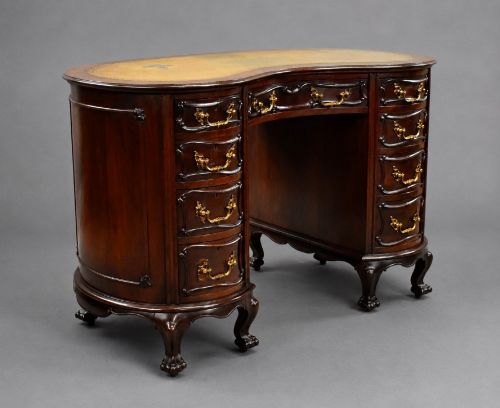
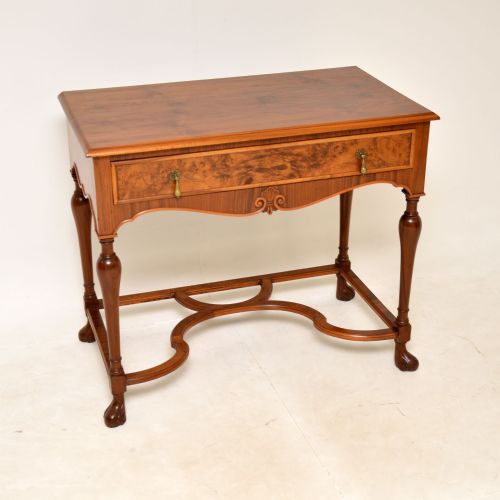
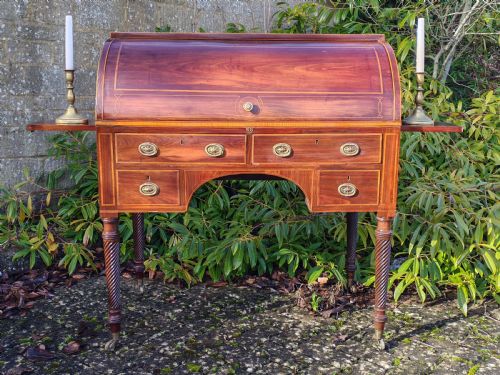
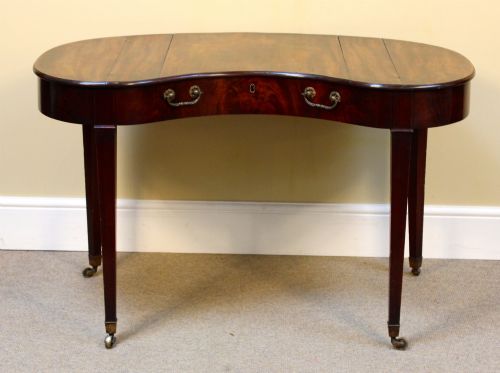
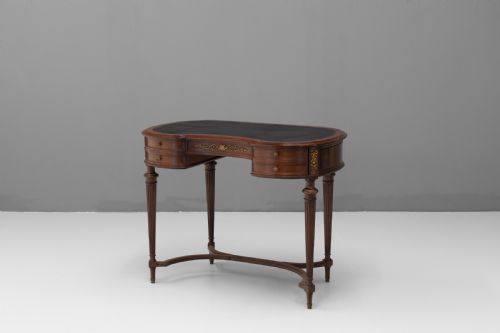
When you search for a curved leg writing desk, you encounter a refined group of library tables, kidney shapes and Carlton House desks spanning the Georgian, Victorian and Edwardian eras. These forms often feature graceful cabriole or swept legs that soften the usual rectangular rigidity of office furniture.
The most common examples on this page are kidney-shaped writing tables and freestanding library pieces in mahogany, walnut and satinwood. They serve both as practical workstations and as decorative centre tables that command attention from any angle.
Originating from periods that prized both utility and elegance, these desks combine fitted drawers and leather writing surfaces with expressive silhouettes. They suit intimate studies or drawing rooms where heavy, straight-lined furniture feels too severe.
What varies in quality
The distinction between standard workshop production and exhibition pieces lies in the choice of timber figurations and the crispness of any inlaid marquetry or Ormolu mounts. Master craftsmen selected figured mahogany or burr walnut with intense grain movement, applying veneers with meticulous symmetry.
Structural refinement also separates the grades, visible in the smoothness of the drawer action and the integration of the curved legs into the apron. Superior examples maintain a harmonious balance where the shaping of the legs complements the contour of the writing surface without sacrificing stability.
The listings show a strong representation of Victorian and Georgian furniture, with mahogany and walnut remaining the dominant timber choices.
The Curved Leg Writing Desk Glossary
- Kidney shape
- A curved desktop resembling a kidney bean, designed to wrap around the user and maximise accessible surface area.
- Carlton House desk
- A form of writing table featuring a curved superstructure of small drawers and compartments enclosing the rear of the writing surface.
- Cabriole leg
- A furniture leg that curves out and then in, resembling the leg of an animal, frequently seen on revival styles.
- Marquetry
- Decorative patterns formed by the insertion of pieces of wood, shell or ivory into a veneered surface.
- Ormolu
- Gilded bronze or brass mounts used as decorative enrichment on fine furniture frames and drawer fronts.
Curved Leg Writing Desk: Frequently Asked Questions
Where should I place a curved leg writing desk?
Because many of these tables are finished on all sides, they sit comfortably in the middle of a room rather than pushed against a wall. This allows the curved legs and polished timber backs to be seen from every angle.
Ensure there is sufficient clearance around the desk to pull out the chair and navigate the curved silhouette without crowding the space.
How do I care for the leather writing surface?
Most antique desks feature either a plain or gilt-tooled leather insert that requires gentle treatment to prevent drying and cracking. Dust the surface regularly with a dry cloth and avoid using harsh chemical cleaners.
Applying a specialist leather balm occasionally will maintain the suppleness and rich colour of the hide without damaging the surrounding wood.
Are these desks suitable for daily computer work?
While these pieces provide ample space for writing and correspondence, modern equipment like desktop monitors can overwhelm their delicate proportions. Many owners prefer to use them for laptops, notebooks or as decorative display surfaces.
Check the kneehole height and drawer clearance if you plan to sit at the desk for long periods, as older dimensions often run lower than modern office furniture.
How can I tell a Georgian desk from a Victorian revival?
Georgian pieces from the eighteenth and early nineteenth centuries generally exhibit restrained proportions, solid mahogany construction and hand-cut joinery specific to the period. The wood tone tends to be deep and mellow through age.
Victorian and Edwardian revivals often incorporate more ornate marquetry, satinwood banding or softer walnut veneers, reflecting the eclectic tastes and industrial capabilities of the later nineteenth century.