
Curved Glass Vitrine Cabinet
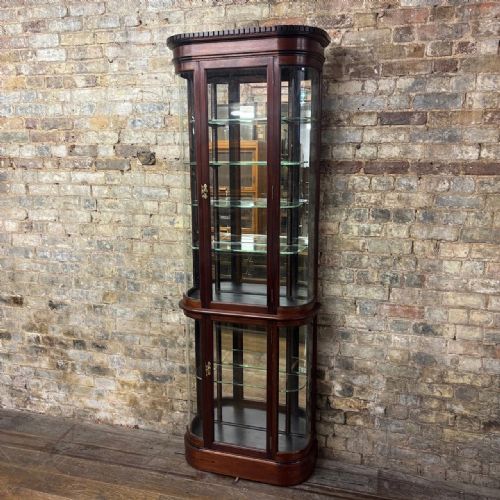
A curved glass vitrine cabinet holds precious objects behind bowed transparent panes, combining French revival styles with Edwardian and Art Deco forms.
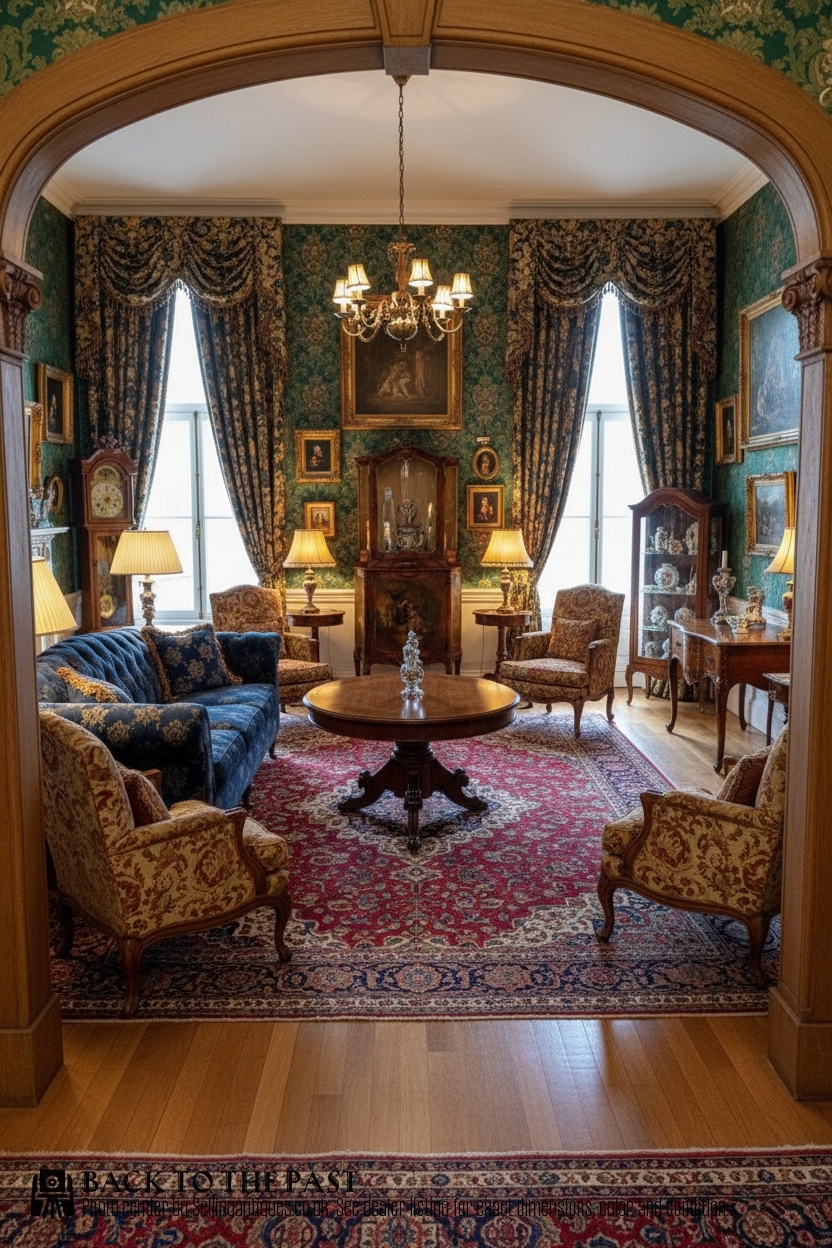
Curved Glass Vitrine Cabinet
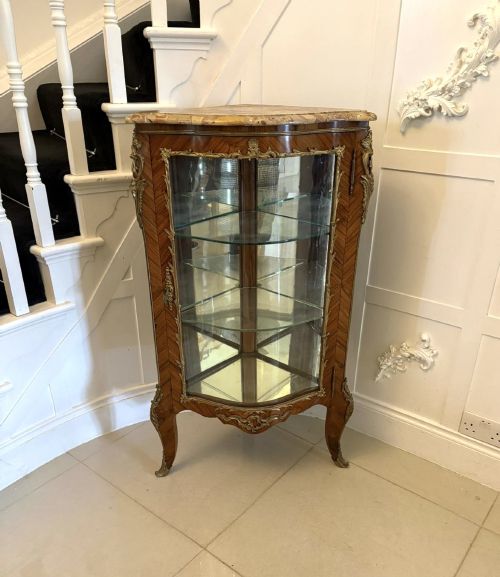
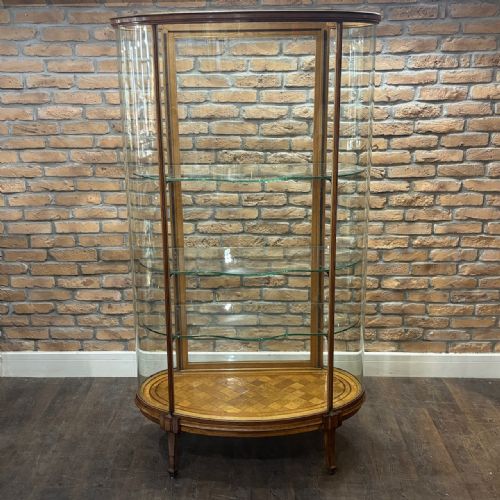
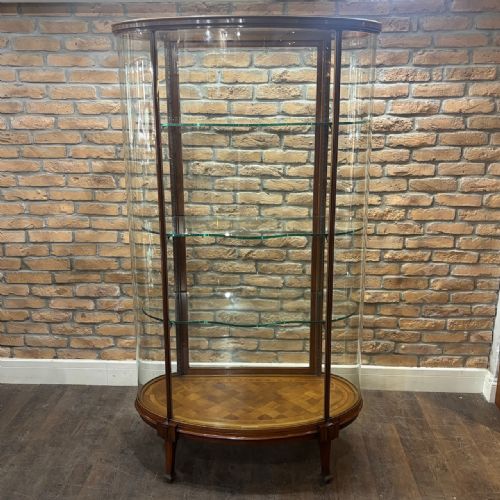
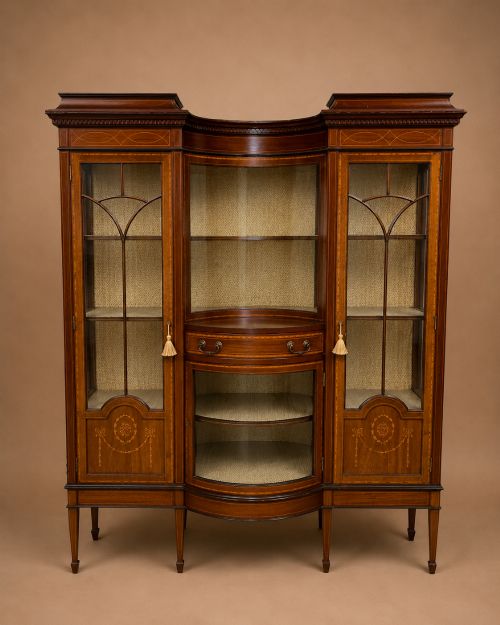
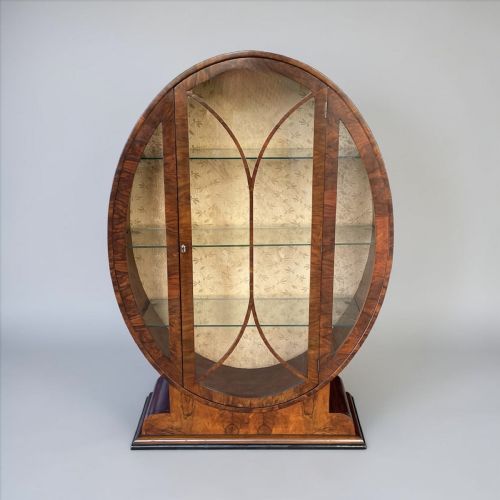
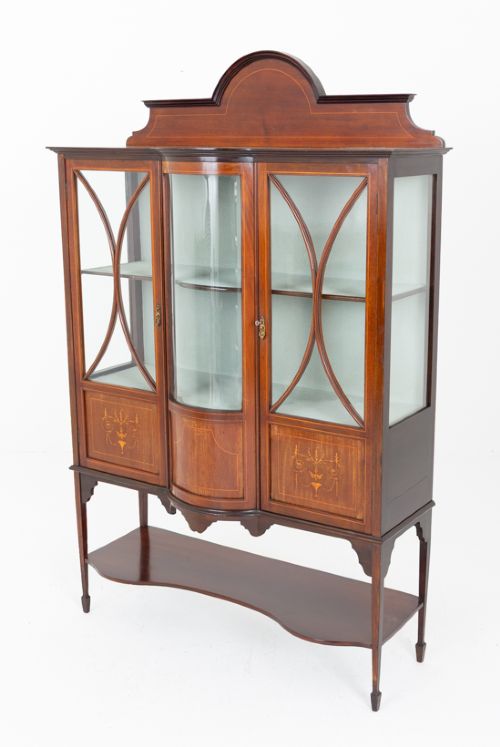
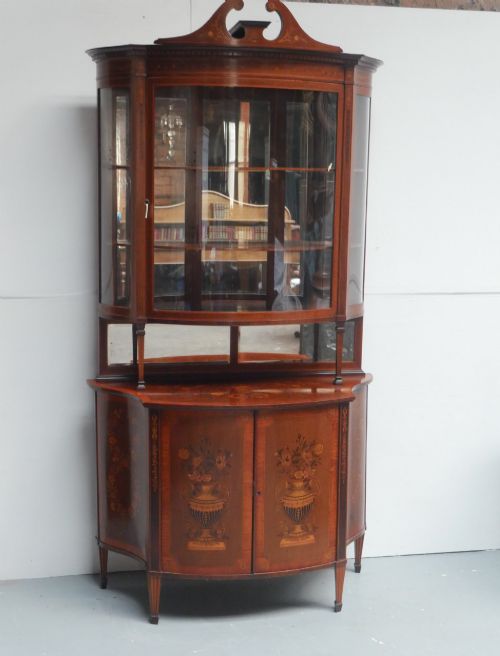
A curved glass vitrine cabinet is a display piece designed to show off porcelain, silver, and decorative objects from all angles through bowed glazing. These items appear across nineteenth-century revival styles, Edwardian satinwood or mahogany, and twentieth-century Art Deco forms.
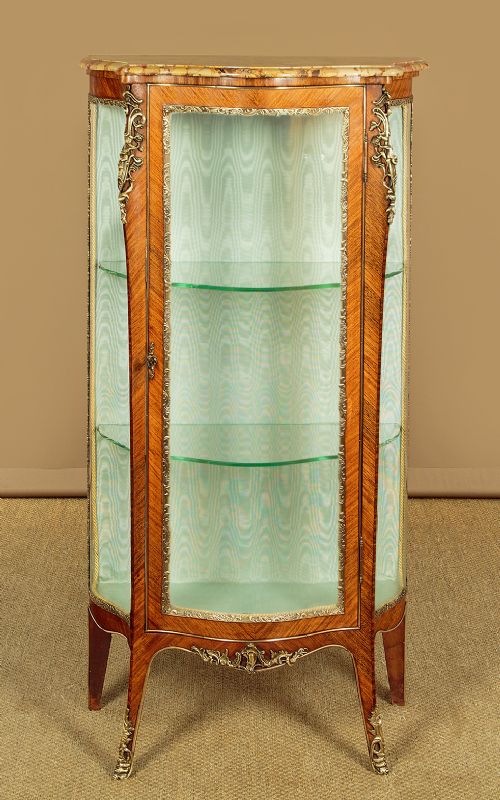
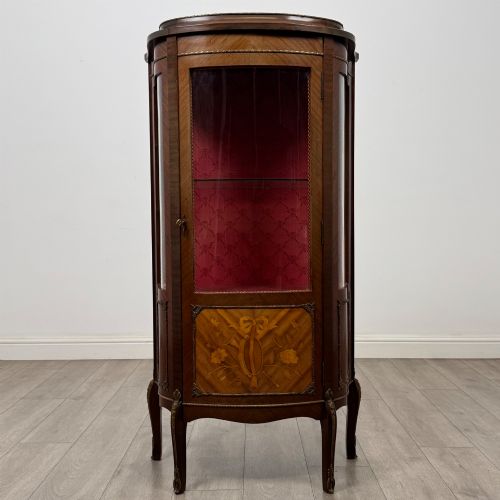
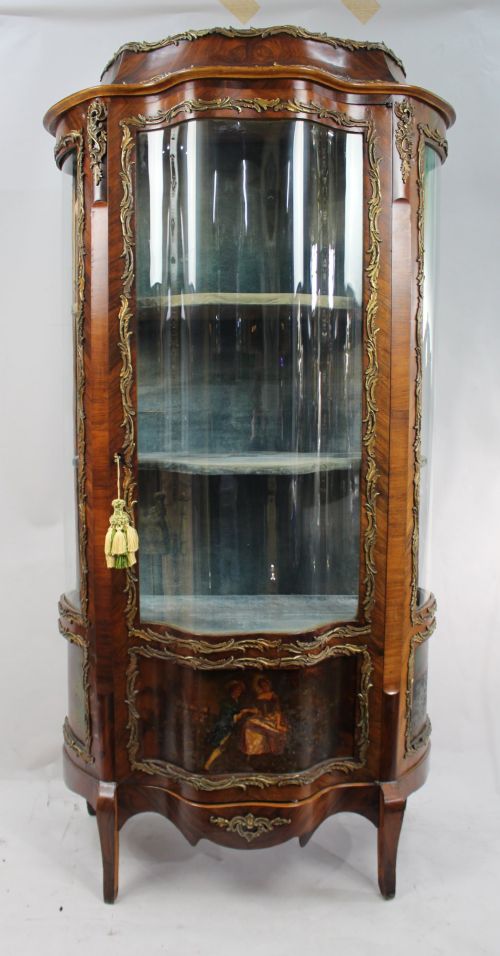
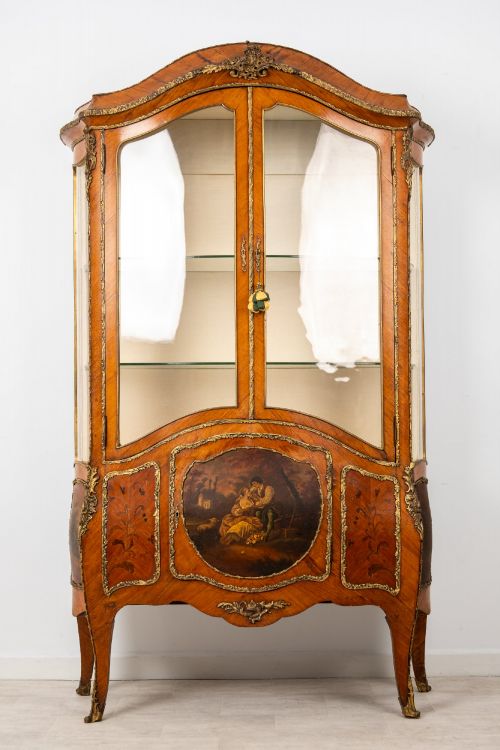
The most common versions on this page combine French influences such as Louis XV and Vernis Martin painted panels with serpentine or bow fronts. Makers built these cabinets using woods like mahogany, walnut, and kingwood, often shaping the glass to fit sweeping oval, corner, or demi-lune frames.
Materials and construction
Cabinetmakers built these pieces using solid and veneered timbers including mahogany, walnut, satinwood, and kingwood over robust carcases. They incorporated curved glass panes into doors and sides, supported by brass hinges and locks.
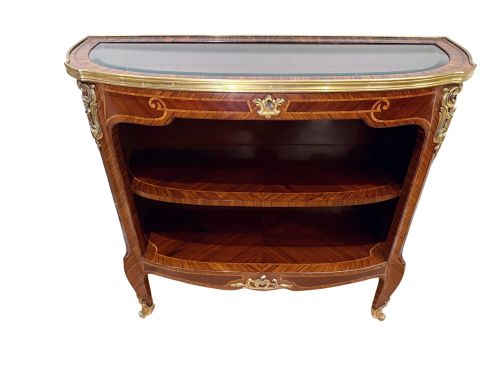
Many French-inspired and Vernis Martin examples feature cast ormolu mounts, marble tops, and detailed fruitwood marquetry inlay. Shop display variants utilise oak and mahogany framing designed to withstand commercial use while maintaining transparent visibility.
Listings feature mahogany, walnut, kingwood, and satinwood, spanning Victorian, Edwardian, and Art Deco periods alongside French revival styles.
Judging the quality
Quality rests in the precision of the timber matching, the crispness of the ormolu mounts, and the complexity of the curved glass framing. Finely handled marquetry and hand-painted Vernis Martin panels distinguish high-tier examples from simpler commercial production.
The handling of the serpentine or bow-front shape dictates the visual success of the piece, requiring careful woodworking where timber meets bent glass. Structural harmony between the cabinet body and its decorative mounts separates standard workshop output from exceptional cabinetmaking.
Edwards & Roberts·F. Sage & Co·François Linke·James Hicks·Maurice Adams·Paul Sormani
The Curved Glass Vitrine Cabinet Glossary
- Vitrine
- A glass-fronted display cabinet used for showing porcelain, curiosities, and decorative art. These pieces rely on transparent panels to maximise light inside the display space.
- Ormolu
- Gilt bronze mounts applied to furniture for decorative enrichment. These chased metal ornaments appeared frequently on nineteenth-century French cabinets.
- Vernis Martin
- A type of simulated Japanese lacquer developed in France, featuring painted decorative scenes on furniture panels. Cabinetmakers applied this technique to nineteenth-century vitrines.
- Marquetry
- Decorative veneer patterns assembled from various tinted woods to form pictorial or geometric designs. Craftsmen inlaid these patterns into cabinet doors and surfaces.
- Serpentine
- A shaped furniture front featuring a concave centre flanked by convex curves. This contour adds movement and depth to display cabinets.
Curved Glass Vitrine Cabinet: Frequently Asked Questions
How were curved glass vitrine cabinets used?
These cabinets served primarily in drawing rooms and parlours to display prized collections of ceramics, glass, and small ornaments. The transparent glazing protected delicate items from dust while allowing them to be viewed from multiple angles.
Commercial variants also functioned in shops and showrooms to present luxury goods to prospective buyers under glass. Their design prioritized maximum visibility combined with secure lockable enclosures.
How do I tell Edwardian cabinets from Art Deco pieces?
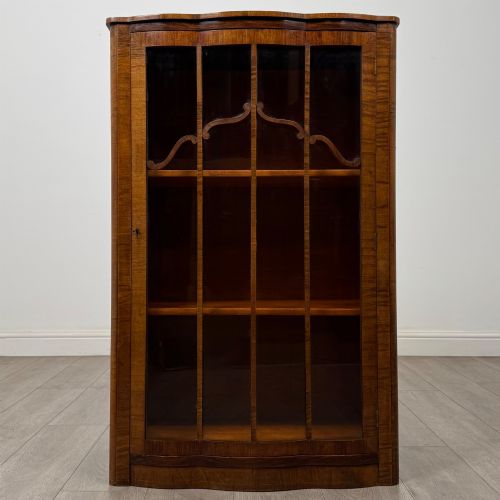
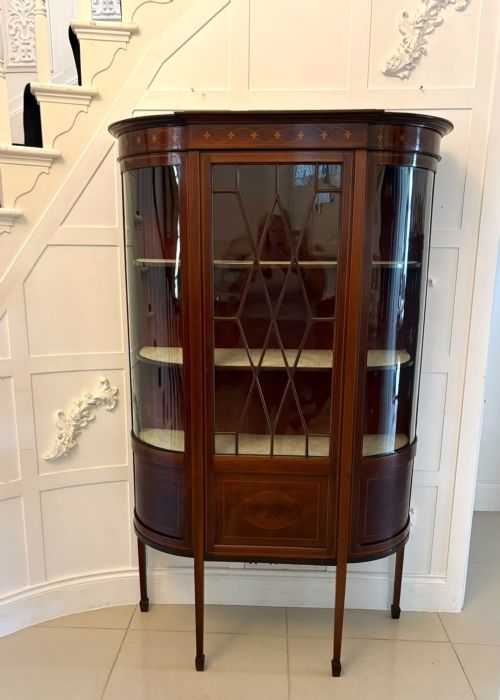
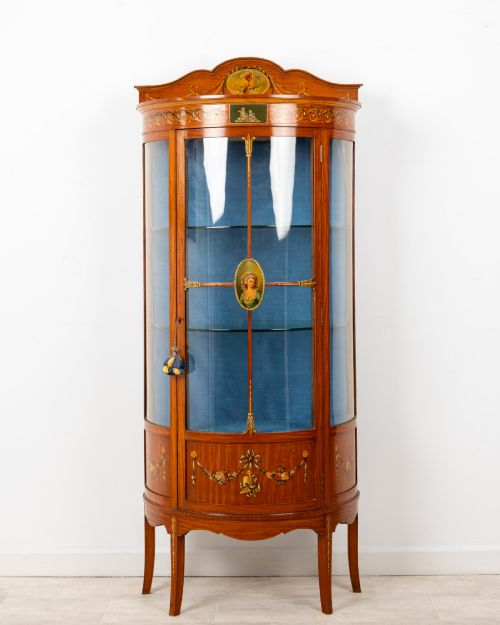
Edwardian display cabinets typically feature inlaid satinwood, mahogany frames, painted classical motifs, and delicate glazing bars reflecting Sheraton revival influences. They rely on traditional cabinetmaking shapes such as bow fronts and Edwardian cross-banding.
Art Deco cabinets from the 1930s adopt geometric forms, figured walnut, clove shapes, and cathedral arches with minimal ornamentation. Their architectural silhouettes embrace clean lines and bold wood grains rather than historical revival motifs.
How do I live with a vitrine cabinet?
Position the cabinet away from direct sunlight to protect interior displays and prevent timber fading or veneer drying. Ensure the floor is level so the doors swing evenly and the curved glass remains unstressed within its frame.
Lighting placed near the cabinet can enhance the visibility of objects housed behind the curved panes. Keep interior displays uncluttered to let the timber framing and glass panels remain the visual focus.