

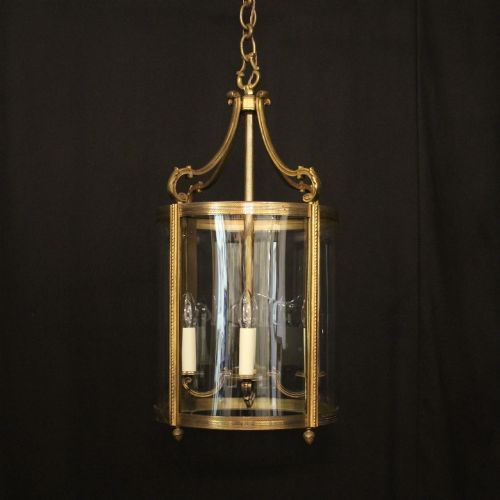
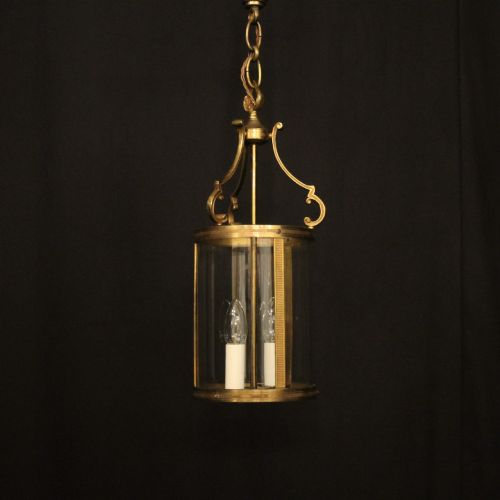
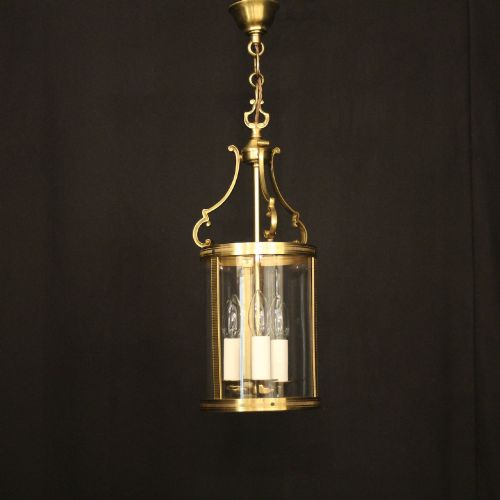
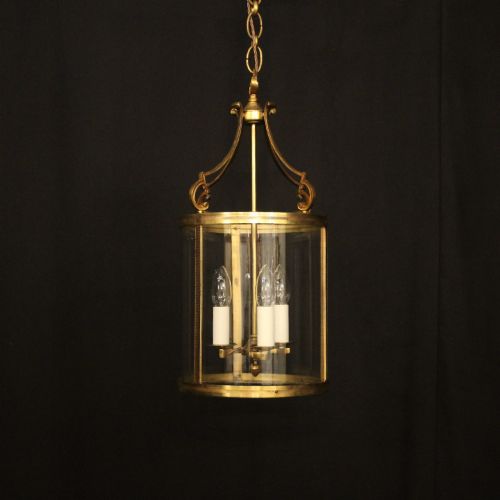
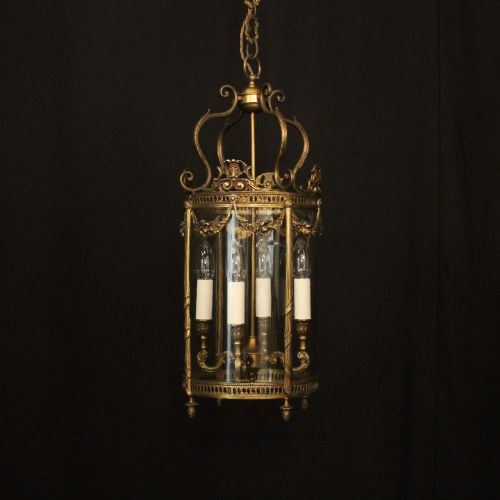
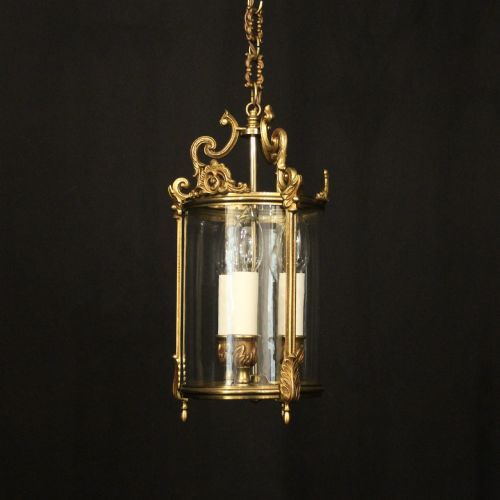
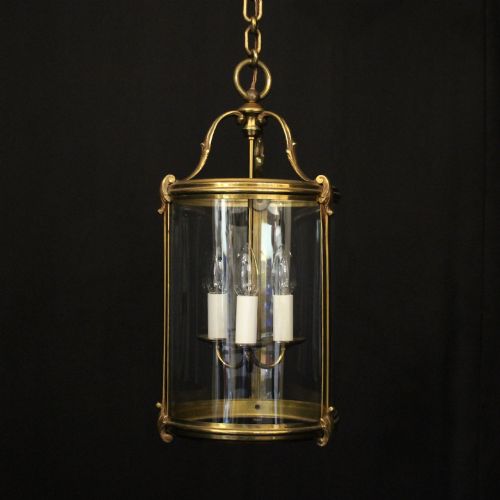
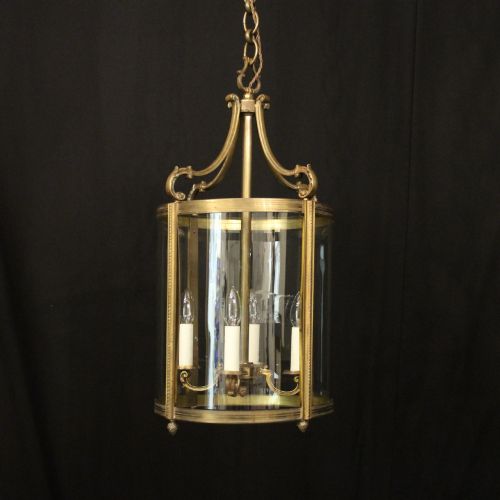
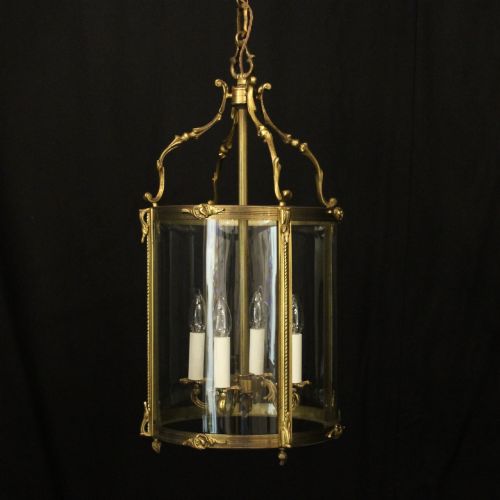
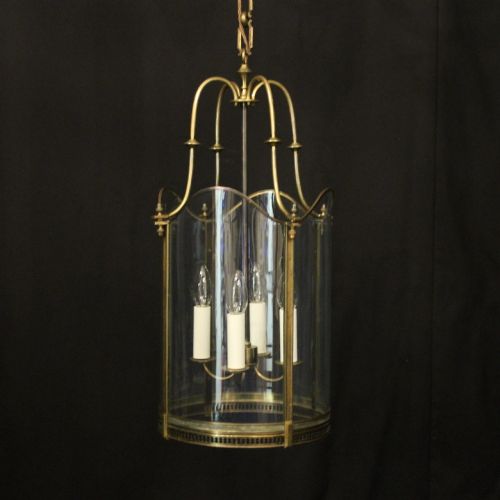
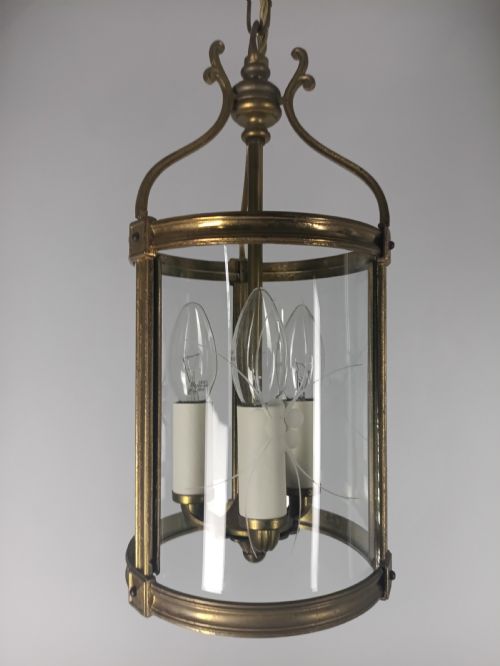
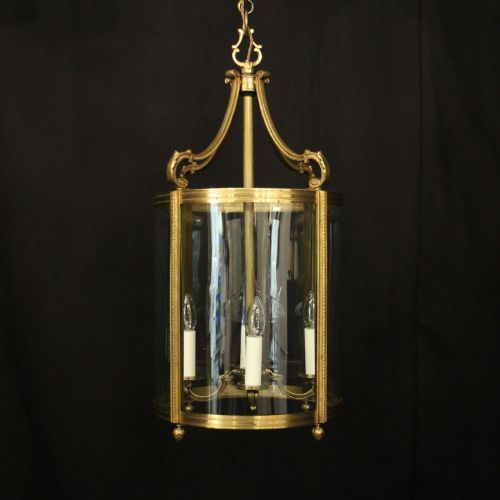


Curved Glass Hall Pendant
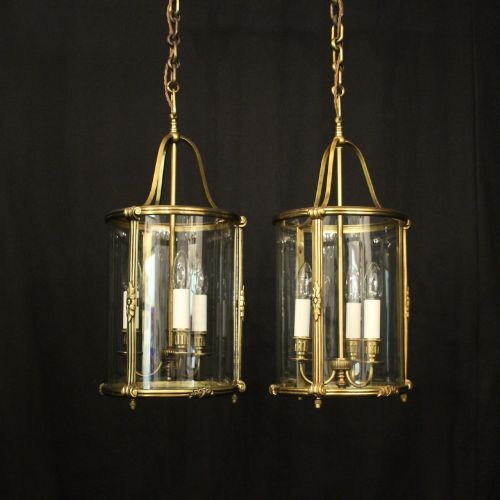
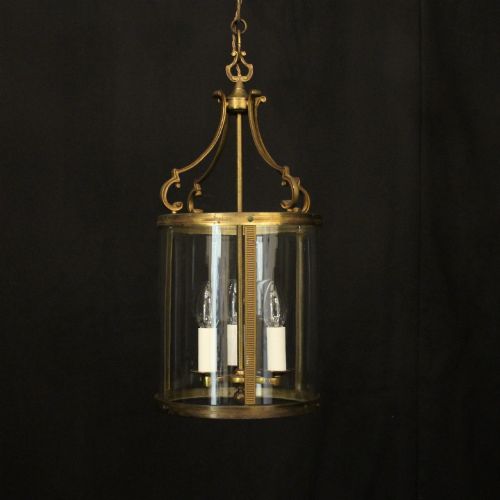
A curved glass hall pendant brings French and English elegance to an entrance, casting warm light through convex panels and metal mounts.
Curved Glass Hall Pendant
A curved glass hall pendant is a ceiling light designed specifically for entranceways, corridors and stairwells where a statement hanging fixture sets the tone for a home. Most examples seen here originate from France, spanning the 1920s and 1930s, alongside nineteenth-century English pieces.
These fixtures take the form of hall lanterns, ceiling lights and hanging lanterns, suspended by chains or rods from the ceiling rose. The defining feature is the bowed or convex glass panels that enclose the internal lights, softening the bulbous glow.
Makers designed these lanterns to illuminate compact architectural spaces without overwhelming them, combining transparent or etched glass panes with decorative metal frameworks. They survive as both single-bulb pendants and multi-light fixtures holding two, three or four lights.
Materials and construction
The framework of a curved glass hall pendant relies on cast and wrought metals, predominantly brass, gilt brass, gilt metal, bronze and gilded bronze. Craftsmen shaped these metals into structural ribs, decorative crests and pierced galleries to hold the glass securely.
The glass itself is mouth-blown or pressed into convex shapes, occasionally featuring etched patterns that diffuse the internal illumination. Metal components are often gilded or polished to reflect the light and add warmth to the entryway.
Curved Glass Hall Pendant Retail Price Guide 2026
Typical asking prices for curved glass hall pendant among the pieces listed under this phrase on Sellingantiques today, from the lower quarter to the upper quarter. They describe what is for sale here now, not the wider market.
Ceiling lighting configurations range from single-light lanterns to four-light fixtures set in classical and rococo styles.
Markers of quality
Quality in these pendants rests on the weight of the metal framework and the crispness of the casting. Heavier bronze and thick brass mounts with deeply chased details distinguish finer pieces from lighter, simpler metalwork.
The glass panes also dictate the standard of the piece, with thicker, distortion-free convex glass and delicate hand-etching marking out superior examples. Original gilding and integrated multi-light internal clusters further elevate the sophistication of the fixture.
The Curved Glass Hall Pendant Glossary
- Convex glass
- Curved glass panels that bulge outward, common in these lanterns to diffuse light evenly across a hallway.
- Hall lantern
- A ceiling-suspended lighting fixture traditionally sized for corridors, vestibules and entrance halls.
- Gilded bronze
- Bronze metal coated with a thin layer of gold or gold-coloured alloy, giving a rich and durable metallic finish.
- Rococo
- An ornate design style characterised by asymmetrical scrolls, shell motifs and natural curves, visible in French period metalwork.
Curved Glass Hall Pendant: Frequently Asked Questions
How do I hang a hall pendant?
These pendants suspend from the ceiling using chains or metal rods attached to a matching rose. Ensure the hanging height leaves sufficient clearance for people passing underneath in a hallway.
Professional electrical installation is recommended to support the weight of bronze and brass frames safely.
What periods do these pendants span?
The selection primarily covers pieces from the 1920s and 1930s, alongside nineteenth-century examples. French chateau and neoclassical influences dominate the twentieth-century production.
English pieces from the nineteenth century offer an alternative aesthetic with robust gilded bronze construction.
How many bulbs do they take?
Internal configurations vary, with fixtures holding single bulbs or multi-light clusters ranging from two to four lights. The number of lights usually corresponds to the physical size of the lantern frame.
Larger convex lanterns require multiple bulbs to illuminate deep entranceways adequately.
Can I use etched glass pendants in modern interiors?
The classic proportions and metallic finishes of French and English lanterns suit both traditional period properties and contemporary spaces. Etched glass adds texture and softens the light output in minimalist rooms.
Rewired models combine antique character with modern electrical standards for everyday use.