

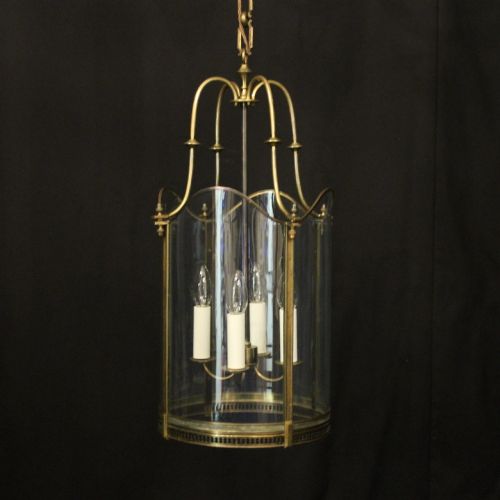
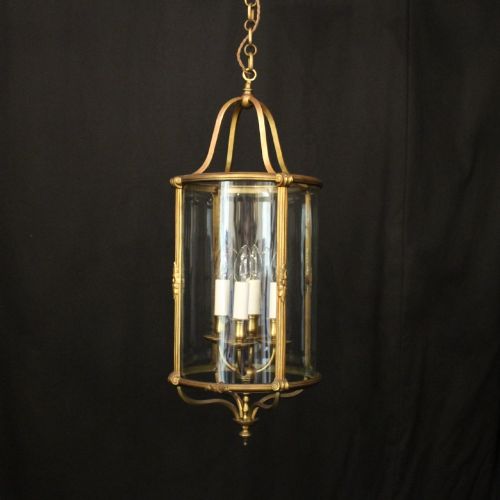
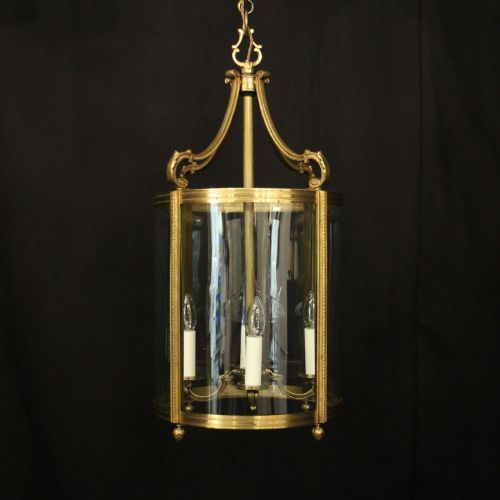
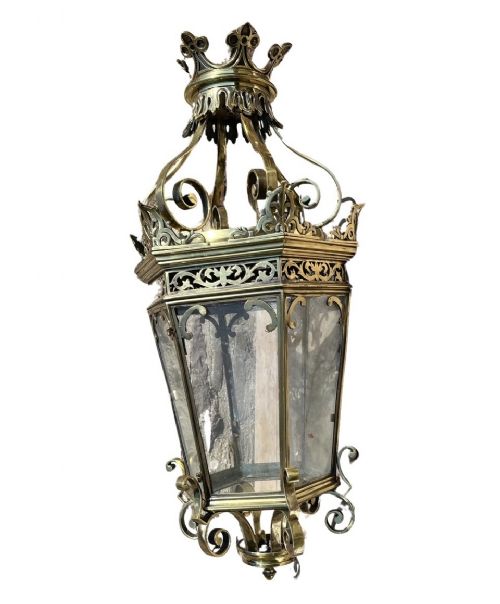
Foyer Hanging Lantern Light
These foyer hanging lantern light pieces bring period illumination to corridors and entryways.
Foyer Hanging Lantern Light
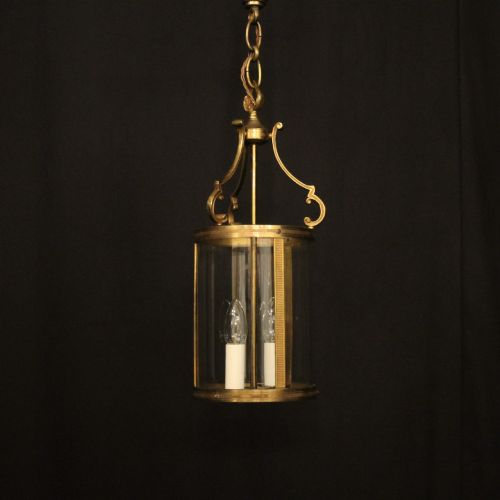
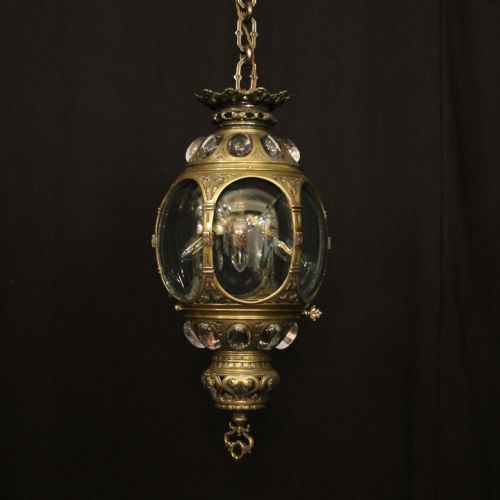
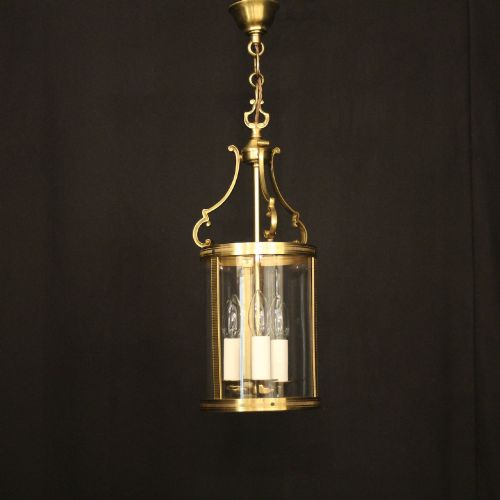
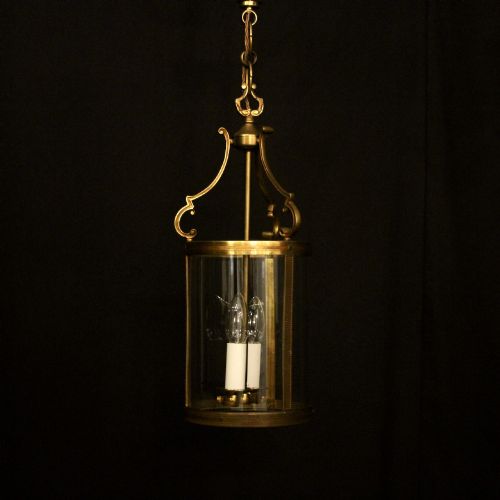
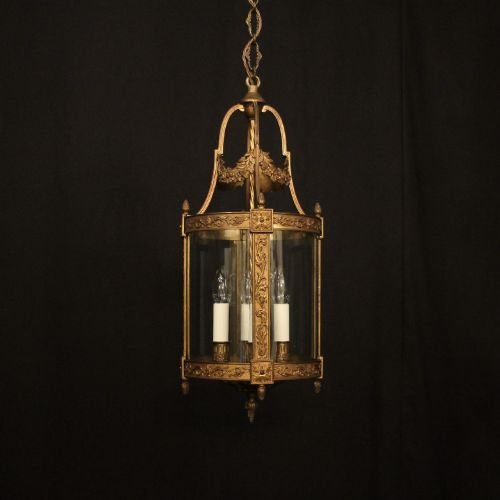
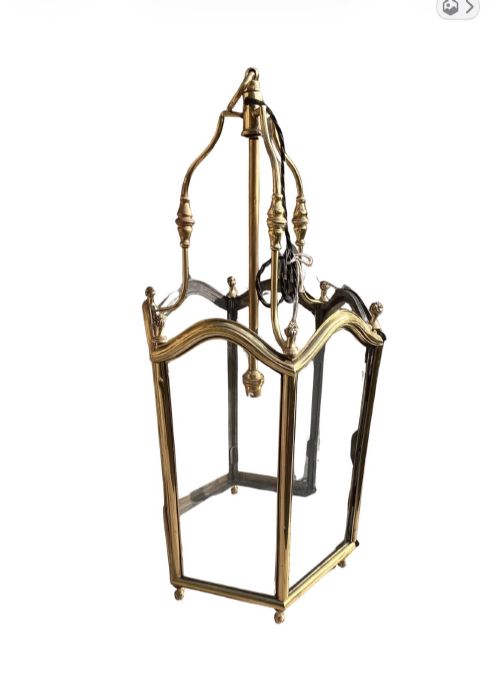
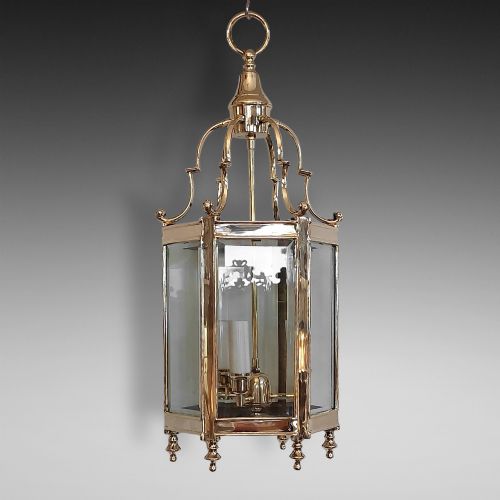
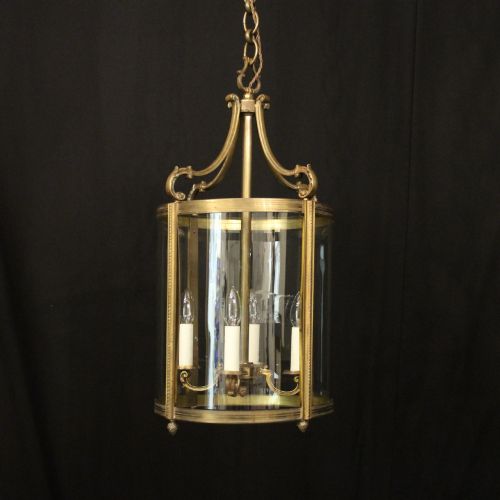
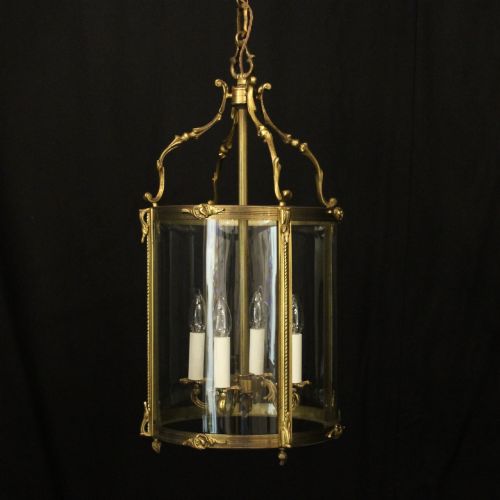
A foyer hanging lantern light provides overhead illumination designed specifically for grand entrances, vestibules and hallways. These fittings descend from the ceiling on chains or rods, casting light outward through glass panels set within a rigid frame. The selection relies heavily on French production, particularly from the early twentieth century and the nineteen-thirties, alongside nineteenth-century English examples.
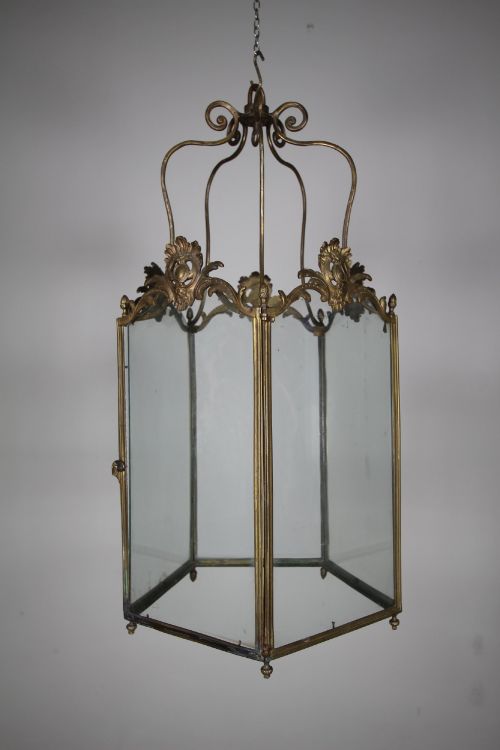
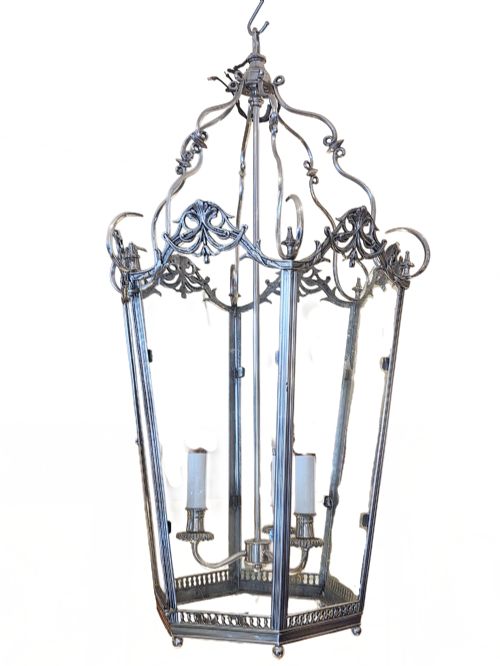
The dominant forms include convex glass lanterns, multi-light chandeliers and tall hexagonal shapes. Buyers encounter many pieces originating from French workshops displaying neoclassical or rococo revival details, as well as robust Victorian and Edwardian English hallway lanterns. Scale varies from compact round eight-inch fixtures to substantial oversized installations measuring a metre in height.
The primary function remains welcoming visitors while adequately lighting high-ceilinged transit spaces. Most surviving examples utilise enclosed or semi-enclosed metallic structures designed to protect candles or early electric bulbs from draughts while maximising reflection.
How they were made
The construction of a foyer hanging lantern light typically combines cast or wrought metal frameworks with fitted glass panels. Workshops employed brass, bronze, gilded bronze and silvered bronze to build the structural cages, ensuring sufficient rigidity to support heavy glass panes and internal lighting clusters. Gilt finishes and silvered treatments were applied to enhance light reflection within dim corridors.
Glass selection dictated the character of the illumination, with makers utilising bevelled, convex or flat transparent panes. Frames frequently incorporate hinged doors for maintenance access, secured by small latches. Decorative elements such as acanthus leaves, classical mounts and scrollwork were cast separately and mechanically fixed or soldered to the main skeleton.
Foyer Hanging Lantern Light Retail Price Guide 2026
Typical asking prices for foyer hanging lantern light among the pieces listed under this phrase on Sellingantiques today, from the lower quarter to the upper quarter. They describe what is for sale here now, not the wider market.
Listings feature brass, bronze, and gilded bronze materials across periods from the 1850s to the 1930s.
What varies in quality
The distinction between standard examples and superior specimens rests on the depth of metal casting and the finishing of the bronze or brass components. Finer foyer hanging lantern light fixtures display crisp chisel work on gilded mounts, heavy gauge metalwork that resists warping, and substantial bevelled glass panes fitted securely into the rebate. Lesser pieces rely on simpler stamped brass components with minimal hand-finishing.
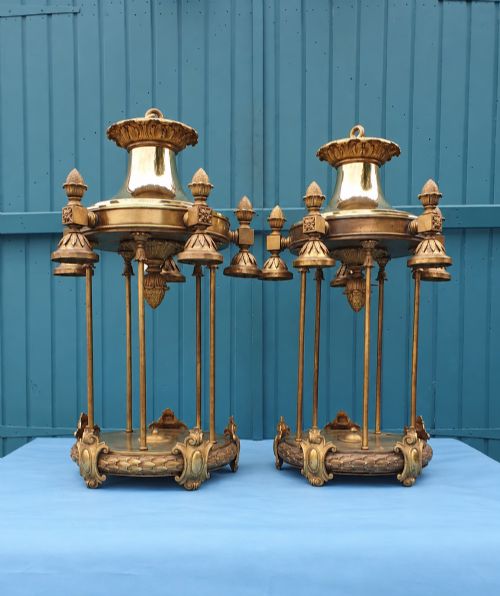
Proportion and scale also govern the hierarchy of quality, particularly in matched pairs or oversized single fixtures. Superior examples maintain balanced symmetry across convex profiles and incorporate integrated multi-light internal clusters rather than basic single-bulb conversions.
The Foyer Hanging Lantern Light Glossary
- Convex glass
- Curved glass panels that project outward to diffuse light across a wider angle. This feature appears frequently on French hallway lanterns.
- Gilded bronze
- Bronze metal treated with a thin layer of gold leaf or applied gold amalgam. It offers a warm, reflective surface suited to formal entryways.
- Hexagonal lantern
- A lighting fixture featuring a six-sided geometric frame. This shape allows multiple glass panes to distribute illumination evenly.
- Silvered bronze
- Bronze treated with a silver coating to provide a cooler, reflective metallic lustre. It was often utilised in nineteenth-century decorative schemes.
- Bevelled glass
- Glass panes with angled edges cut around the perimeter. This technique refracts light into distinct prismatic patterns.
Foyer Hanging Lantern Light: Frequently Asked Questions
Where should I hang a hallway lantern?
These fixtures suit high-ceilinged entryways, vestibules and narrow corridors where overhead illumination is required. They serve as a primary focal point upon entering a building.
Ensure adequate clearance beneath the lowest point of the hanging mechanism so that doors and tall visitors pass safely underneath.
How do I clean the glass panels?
Carefully open any integrated side doors or remove retaining clips if the design permits access to the interior. Use a soft cloth and mild glass cleaner to wipe both inner and outer surfaces.
Avoid spraying liquid directly onto the metal frame, particularly on gilded or silvered bronze surfaces, to prevent moisture damage.
Are these lanterns wired for electricity?
Most surviving antique examples have been converted to accept modern internal bulb fittings during their history. Buyers should inspect the internal wiring cluster to confirm compatibility with current electrical standards.
Qualified electricians can easily adapt or rewire the internal candle tubes and lamp holders safely.
How do I identify French versus English pieces?
French foyer hanging lantern light fixtures often display neoclassical or rococo revival ornamentation with heavily chased gilt bronze mounts and convex glass. English alternatives from the Victorian or Edwardian eras tend toward geometric brass frames, sometimes referencing Gothic revival styles.
Examining the casting quality and structural assembly typically reveals the regional workshop traditions of the period.