
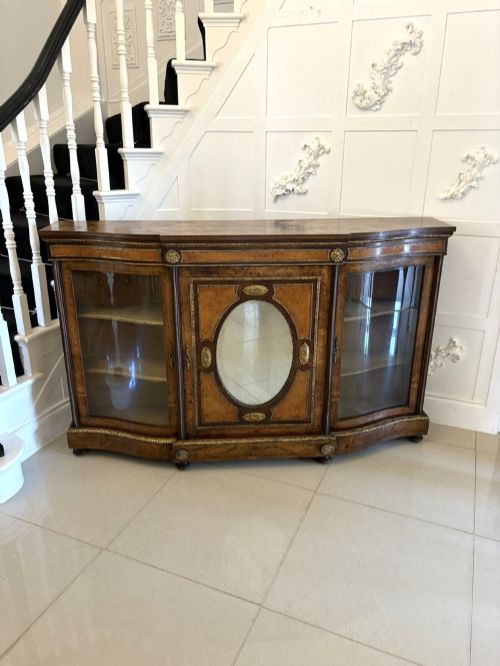
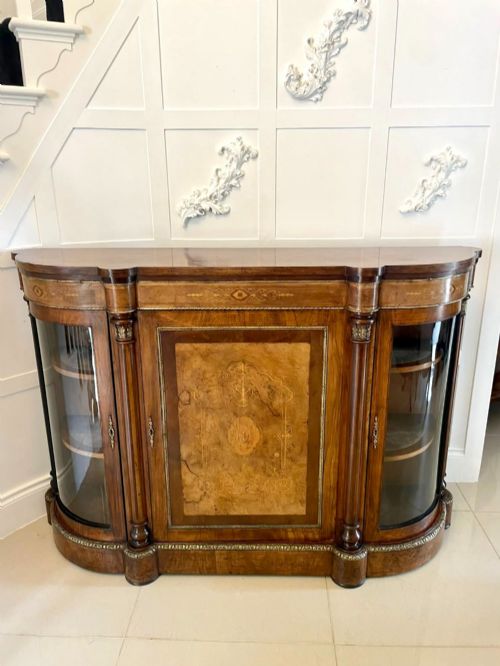
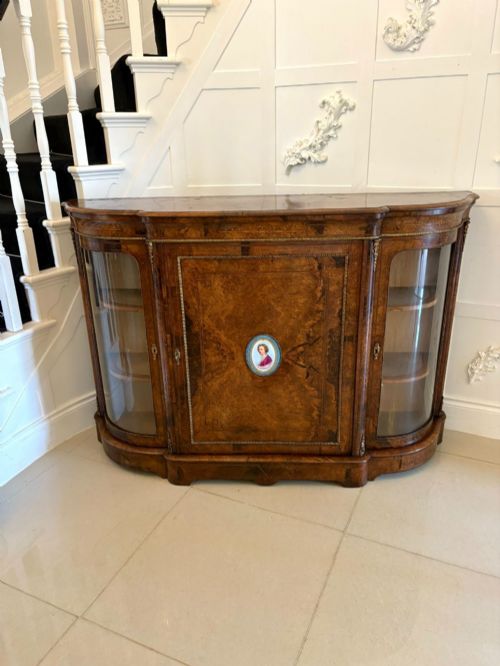


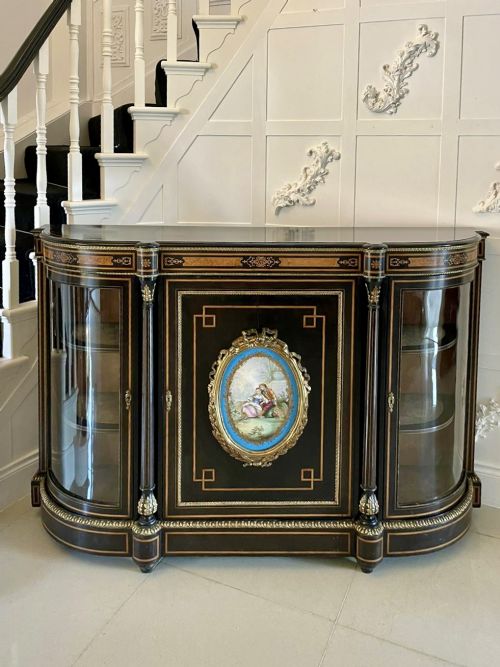


Curved Glass Display Sideboard
A curved glass display sideboard combines the utility of a cabinet with the refined presence of Victorian and French revival reception furniture.
Curved Glass Display Sideboard
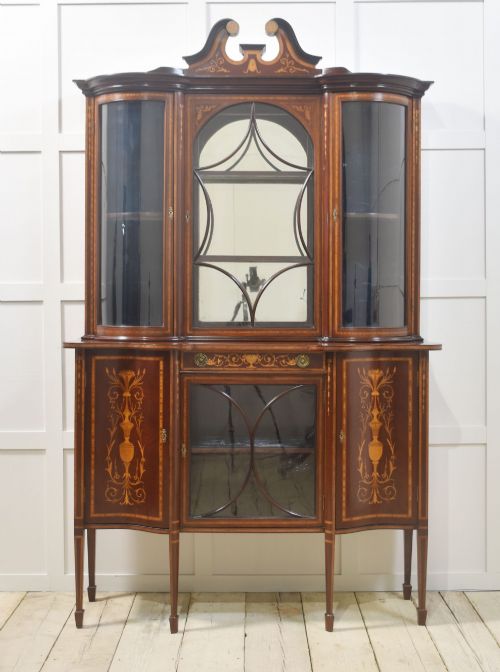
When you search for a curved glass display sideboard, you encounter credenzas, side cabinets and display cabinets spanning the mid-nineteenth century up to the Edwardian period. These pieces originate from Victorian English workshops and continental French centres, bringing together timber carcasses and glazed compartment doors.
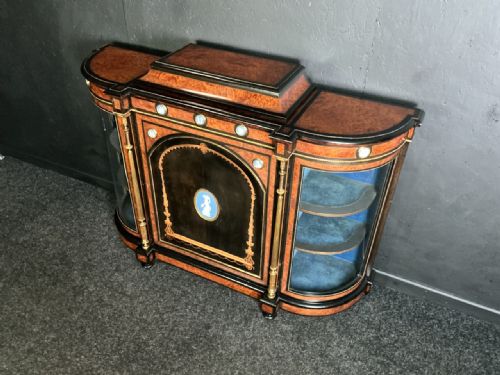
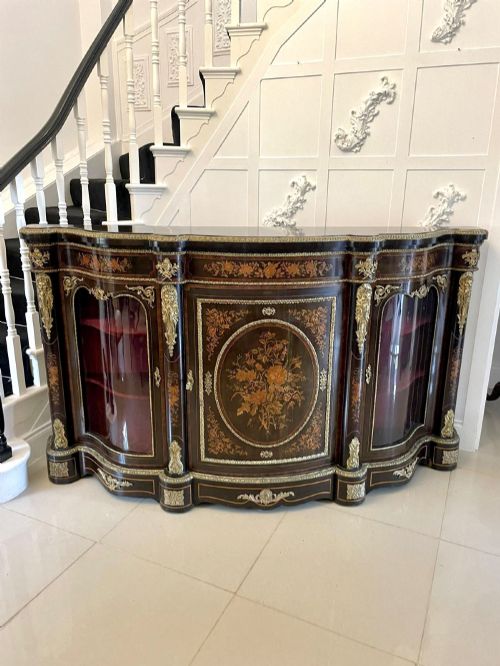
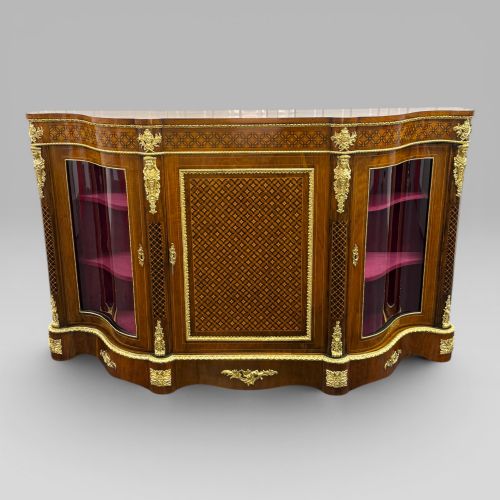
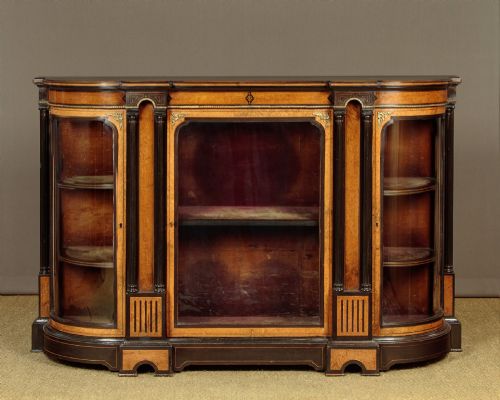
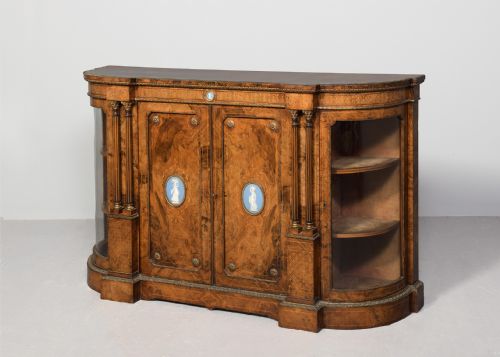
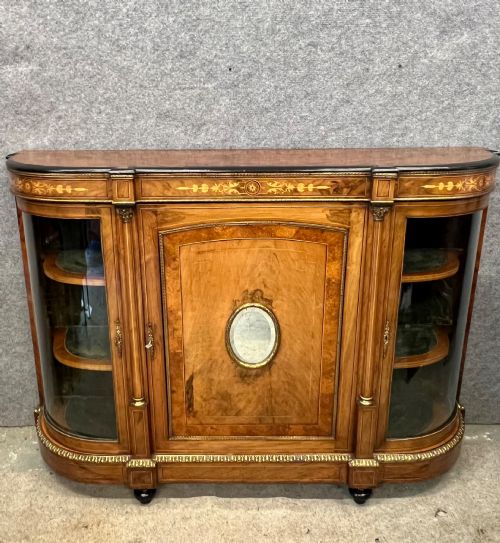
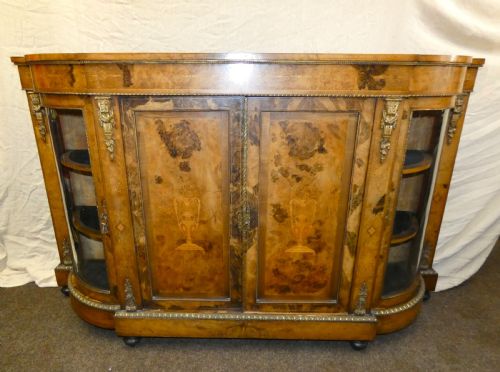
The version you are most likely to meet on this page is the Victorian walnut or burr walnut credenza, frequently shaped with a serpentine front and mounted with ormolu. These forms often incorporate side display cupboards flanking a central door, designed to showcase porcelain and decorative objects in a formal drawing room.
How they were made
Cabinet makers constructed these pieces using solid timbers veneered with burr walnut, amboyna, kingwood or ebonised wood, laid over secondary woods to achieve rich grain patterns. Artisans then applied boxwood inlay, floral marquetry and brass or ormolu mounts to embellish the structural framework.
Glazing was fitted into curved wooden or metal door frames to enclose the display sections, while marble tops and mirrored backs appeared on specific French and Aesthetic Movement variations to reflect interior light.
The listings show nineteenth-century pieces spanning the Victorian and Edwardian eras, predominantly built from walnut, ebonised wood and mahogany with glass and ormolu elements.
What varies in quality
The standard of timber selection and marquetry execution sets the baseline for these items, distinguishing simple production from exhibition pieces. Finer examples display meticulous hand-cut floral inlay, substantial fire-gilt ormolu mounts and carefully matched burr veneers across the entire curved facade.
The integration of the glazed doors and the crispness of the cast brass or ormolu detailing indicate the level of craftsmanship invested by the maker. Workshops operating at the highest tier employed superior bronze work and robust carcase construction that maintains alignment across the curved sections over time.
Maison Gagneau·James Hicks·Gillow
The Curved Glass Display Sideboard Glossary
- Credenza
- A low cabinet or sideboard designed for display and storage, typically featuring a central cupboard flanked by curved glazed side compartments. This form became a focal point in nineteenth-century drawing rooms.
- Ormolu
- Gilded bronze mounts applied to furniture for decorative accent. These cast elements highlight the corners, borders and central panels of Victorian and French revival pieces.
- Marquetry
- Inlaid wood veneers arranged to form decorative pictures or patterns. Artisans used contrasting timbers such as boxwood and satinwood to create floral motifs across the surface.
- Burr Walnut
- Timber taken from the warted growths of walnut trees, yielding intricate, swirling grain patterns. Cabinet makers prized this material for the principal surfaces of high-status cabinets.
- Serpentine
- A furniture front curved with a convex centre flanked by concave ends, creating a gentle undulating wave. This shape requires advanced woodworking skill to fit doors and mouldings accurately.
Curved Glass Display Sideboard: Frequently Asked Questions
Where were these cabinets placed originally?
These pieces occupied principal reception rooms, parlours and drawing rooms in nineteenth-century homes. They served as both storage furniture and display surfaces for valued porcelain and ornaments.
Their low profile ensured they sat beneath large wall mirrors or windows without blocking natural light, grounding the formal decorative scheme of the room.
How do I distinguish Victorian from French revival pieces?
English Victorian pieces often rely on burr walnut veneers paired with boxwood inlay and substantial plinth bases. French revival and Napoleon III examples frequently utilise ebonised wood, amboyna, ormolu mounts and intricate Boulle marquetry.
Continental pieces also tend to incorporate marble tops and mirrored backs more readily than their British counterparts.
What is the function of the side compartments?
The curved glazed doors enclose shelving intended for the exhibition of delicate ceramics, glassware and small collectibles. This protected objects from dust while keeping them visible to visitors.
The solid central door typically concealed larger storage space for table linen or documents.
How should I care for the veneered surfaces?
Maintain a stable room environment away from direct sunlight and strong heat sources to prevent the wood veneers from drying or lifting. Apply natural wax polish sparingly and buff with a soft cloth to preserve the finish.
Avoid using liquid cleaners or silicone sprays, which can penetrate hairline cracks in old polishes and damage the underlying timber.