

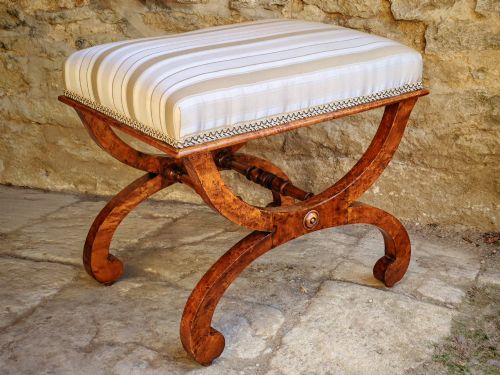


Curule Frame Seating
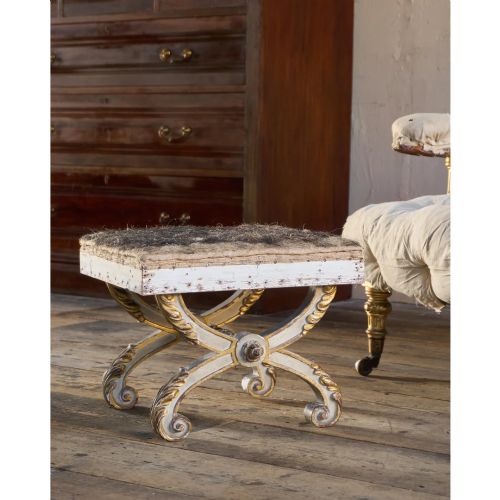
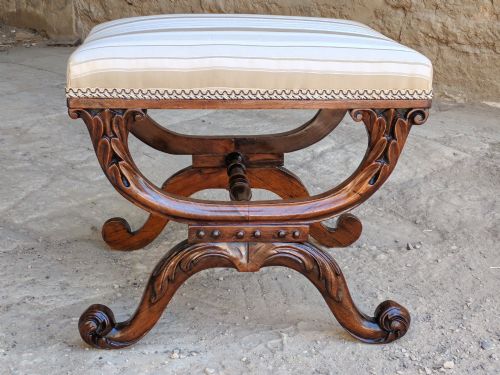
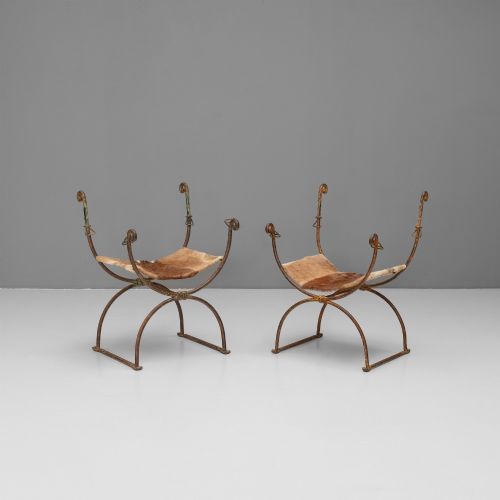
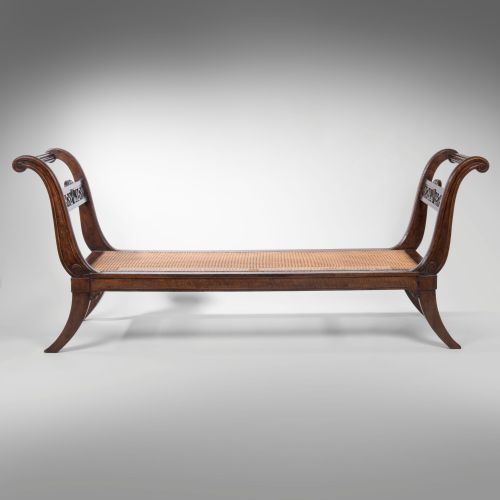
Curule frame seating brings X-shaped ancient Roman grandeur into nineteenth-century drawing rooms and libraries through stools, benches and armchairs.
Curule Frame Seating
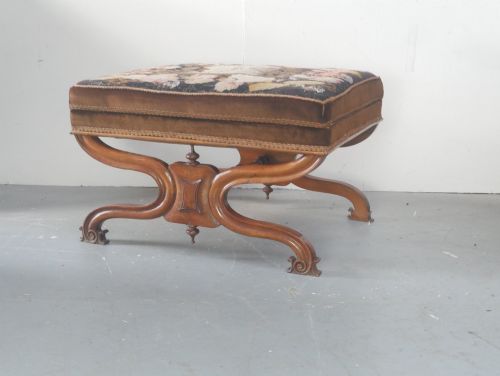
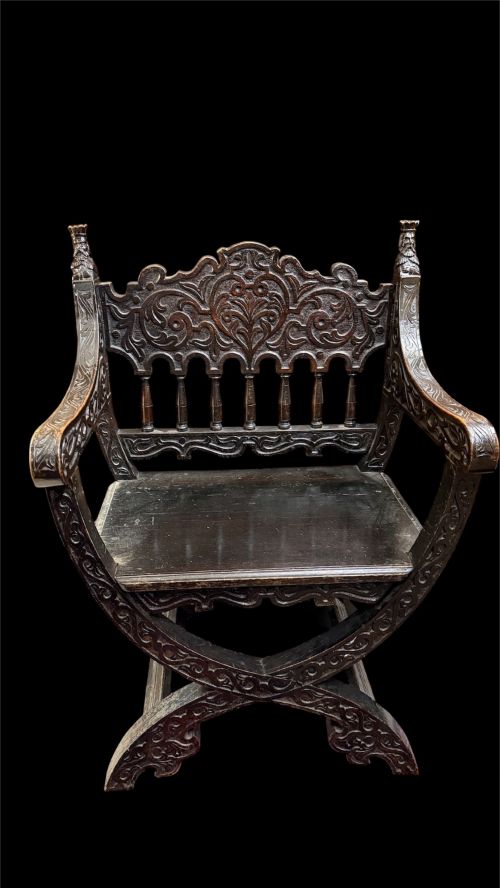
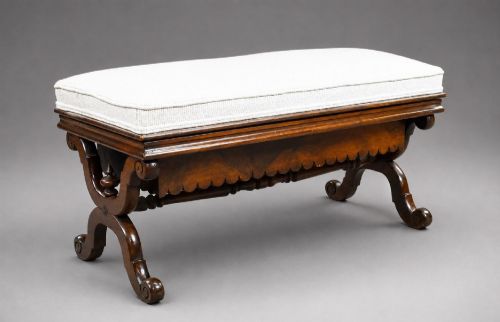
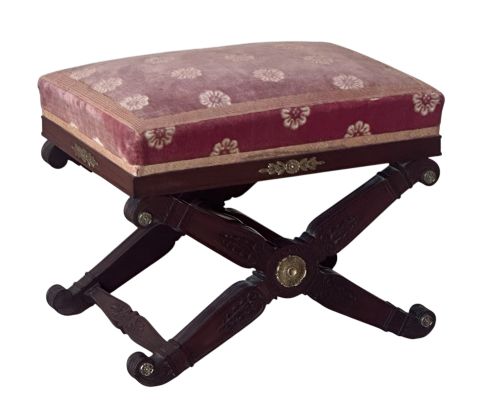
Curule frame seating encompasses a lineage of X-form stools, benches, window seats and armchairs spanning the nineteenth century. Buyers searching for curule frame seating encounter Regency, Victorian and Edwardian iterations drawing upon ancient Roman design.
Stools and footstools dominate the available forms, alongside armchairs, window seats and occasional hall chairs. These pieces originate from diverse workshops across Britain, France, Italy and Austria.
The selection ranges from simple oak folding forms to elaborate walnut, mahogany and rosewood creations with detailed carving and upholstery.
Materials and construction
Cabinetmakers utilised hardwoods including mahogany, walnut, oak, satinwood and rosewood to construct the intersecting X-frames. Structural stability relies on the precise mechanical intersection of the side members.
Upholstery materials range from leather and velvet to silk damask, beadwork and red damask. Decorative surface treatments incorporate giltwood, gesso, ebonisation and nacre-shell inlay.
Assessing quality in X-frame seating
The standard of timber selection and the crispness of hand-carved details define the upper tier of these pieces. Dense hardwoods like rosewood and figured walnut indicate high-status commissions.
Sophistication in secondary materials, such as genuine brass mounts, intricate beadwork or inlaid mother-of-pearl, separates standard production from exceptional examples.
Miles and Edwards·White, Allom and Co
The Curule Frame Seating Glossary
- Curule
- An ancient Roman magistrate's chair shape characterised by crossing curved legs forming an X. This classical silhouette inspired later revival furniture.
- X-Frame
- A structural form utilising two intersecting legs or supports on each side to bear weight. It appears frequently in stools and armchairs.
- Giltwood
- Timber coated with a thin layer of gold leaf or gesso and gilding powder. It provides a bright reflective surface on revival seating.
- Gesso
- A plaster-like mixture applied to wood surfaces as a base for paint or gilding. It allows for sharp moulded decorative reliefs.
Curule Frame Seating: Frequently Asked Questions
What is curule frame seating?
Curule frame seating refers to chairs, stools and benches built around an X-shaped intersecting frame. The design originates from ancient Roman curule seats used by high officials.
In nineteenth-century Britain and Europe, cabinetmakers revived this classical form for formal drawing rooms and libraries. The resulting pieces combine geometric strength with decorative carved woodwork.
How do I identify a Victorian X-frame stool?
Victorian X-frame stools typically display dense timbers like walnut or mahogany paired with elaborate upholstery such as beadwork or velvet. Carved details often reflect revival styles including Gothic or Renaissance motifs.
Examination of the timber joints and underside construction helps confirm nineteenth-century origin. Maker signatures or stamps occasionally appear on the wooden frame underneath.
Where were these pieces used historically?
Historically, curule seats functioned as movable occasional seating in grand reception rooms, dressing rooms and galleries. Their portable X-frame design allowed servants to move them easily around a large estate.
Window seats and benches were placed in long hallways or beneath large windows. Smaller stools served as footrests or piano seating.
How do I care for antique wood and upholstery?
Preserving antique wood requires maintaining stable indoor humidity and applying occasional micro-crystalline wax to nourish the polished surface. Avoid placing furniture in direct sunlight to prevent timber fading.
Upholstery longevity depends on gentle vacuuming with a soft brush attachment and professional cleaning for delicate textiles like silk damask or velvet.