
Curio Furniture
Curio antique furniture brings together glazed display cabinets, vitrines, and miniature cabinets designed to hold small treasures.
Curio Furniture
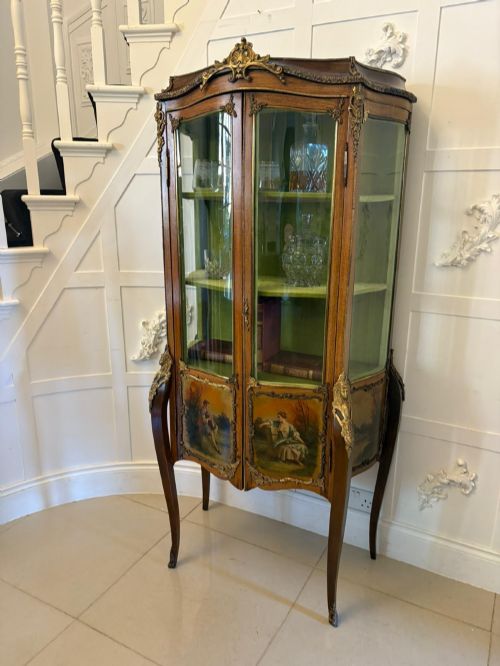
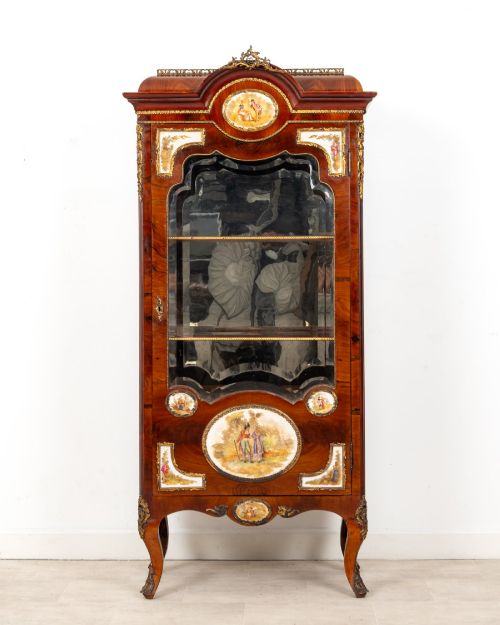
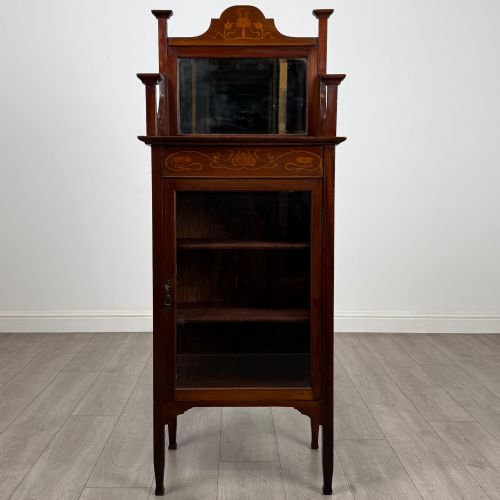
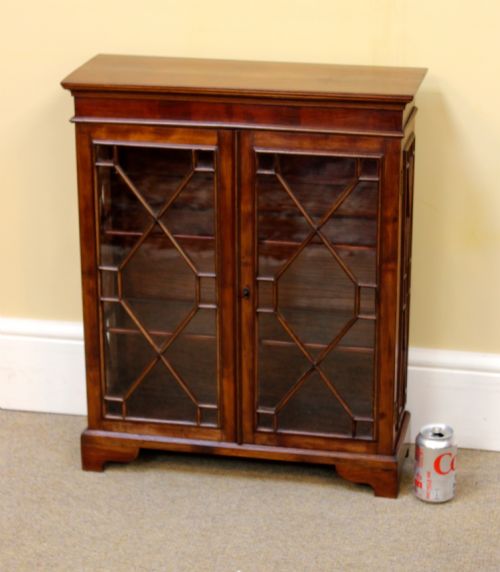
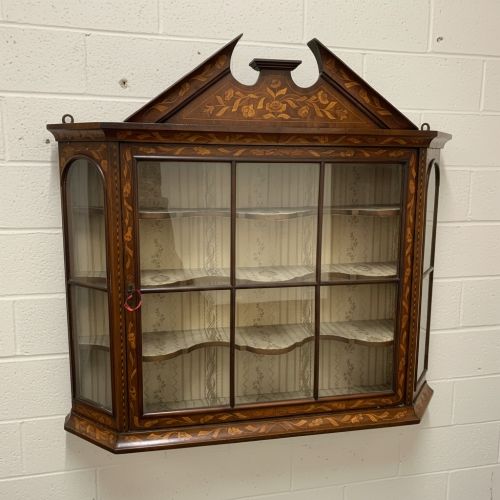
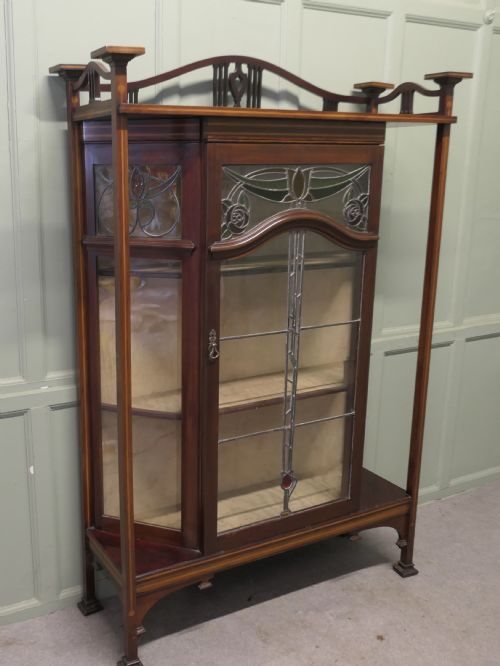
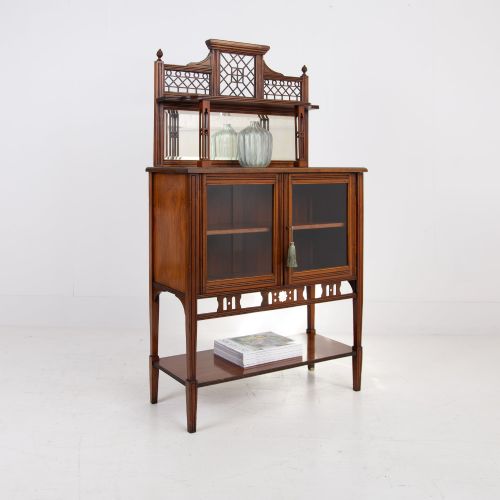
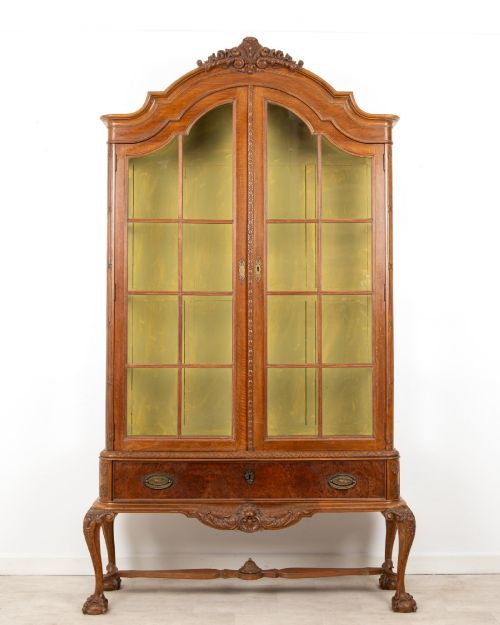
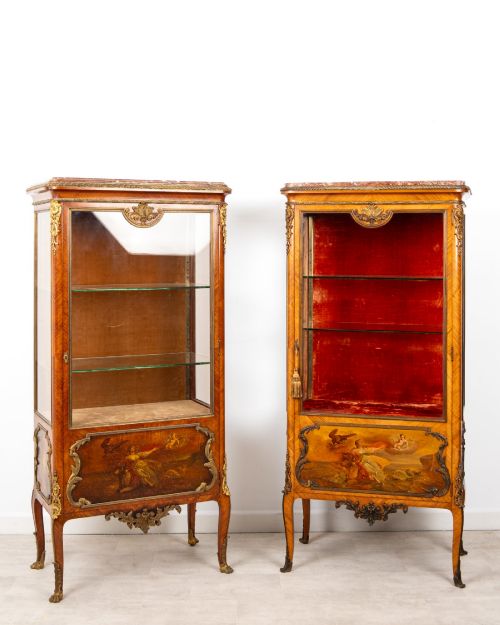
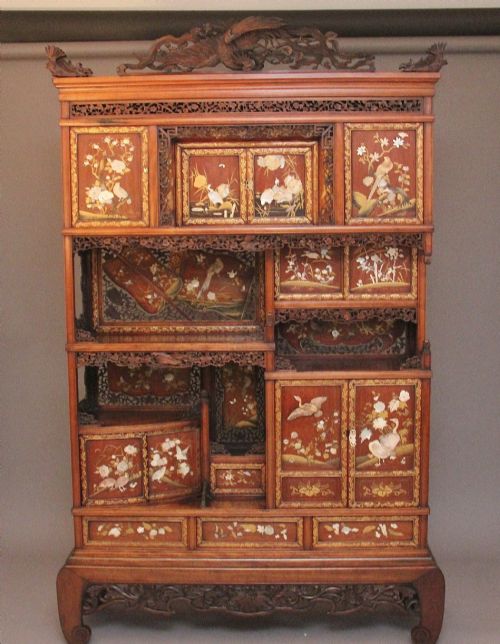
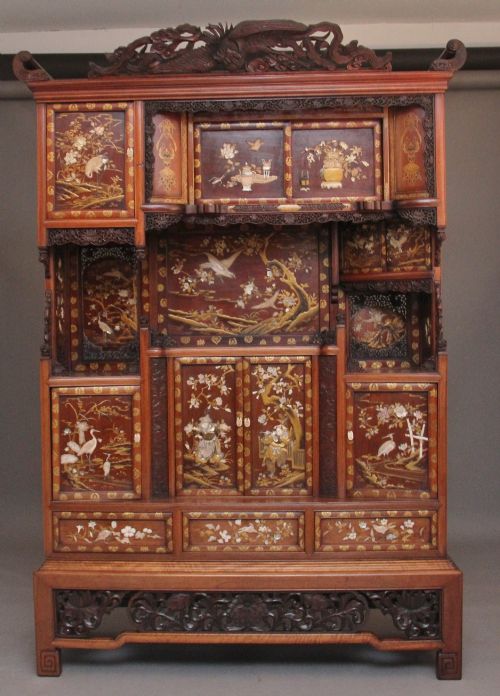
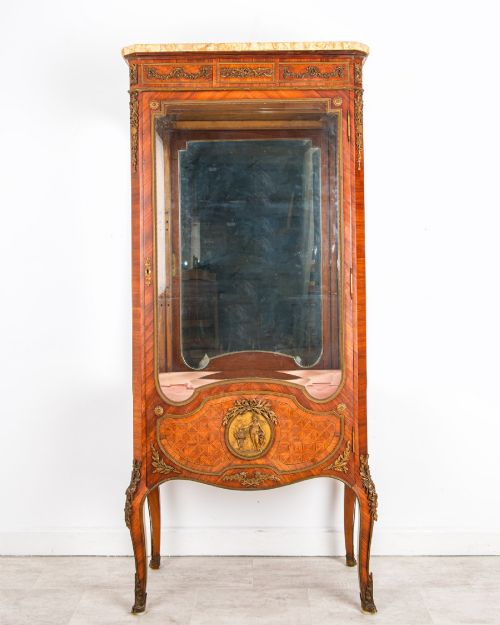
Curio antique furniture comprises display cabinets, vitrines, wall cabinets, and bijouterie tables intended for showing small collections. The version most often met on this page is the nineteenth century or Edwardian glazed display cabinet, alongside French revival vitrines and Japanese shodonas.
Makers and designers worked in mahogany, walnut, kingwood, and satinwood, applying glass panels so collectors could view contents from multiple angles. Miniature furniture and wall cabinets also appear, providing compact alternatives to larger floor-standing vitrines.
Materials and technique
Cabinets rely on solid and veneered timbers such as mahogany, walnut, and kingwood, often strengthened with internal carcases of secondary wood. Glass panels are set into glazed doors or sides to protect objects while keeping them visible.
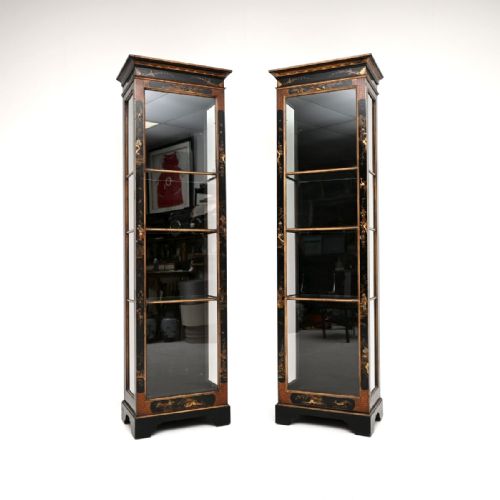
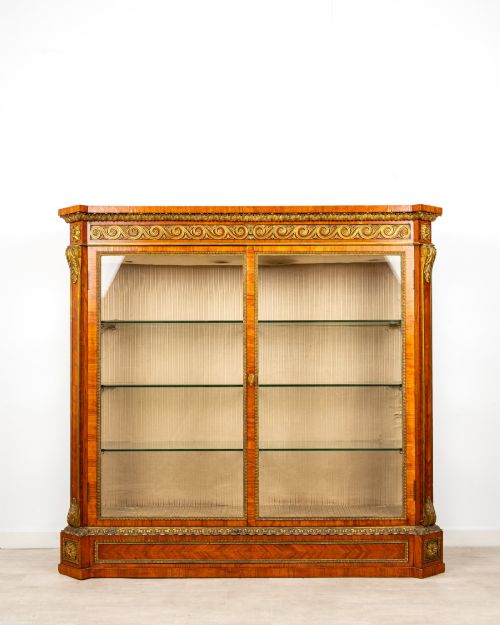
Decoration involves applied ormolu mounts, marquetry inlay, hand-painted Vernis Martin panels, and lacquer work in the Chinoiserie and Japanese Meiji or Taisho styles. Marble tops and parcel-gilt ebonised finishes complete the construction of finer French and English examples.
Miniature cabinets share shelf space with tiny hand-painted Dutch Delft furniture pieces made for collectors.
Quality variations
Quality rests on the precision of the cabinetwork, the choice of timber figure, and the crispness of decorative mounts in ormolu or gilt-bronze. Cabinets with hand-painted porcelain plaques, genuine marquetry, and original marble tops stand apart from plain production pieces.
The integration of design elements, such as curved glass doors, detailed brass stringing, and balanced proportions, distinguishes workshop pieces attributed to known makers from standard commercial cabinetmaking.
H. J. Hatfield & Sons·Shapland and Petter·Paul Sormani
The Curio Furniture Glossary
- Vitrine
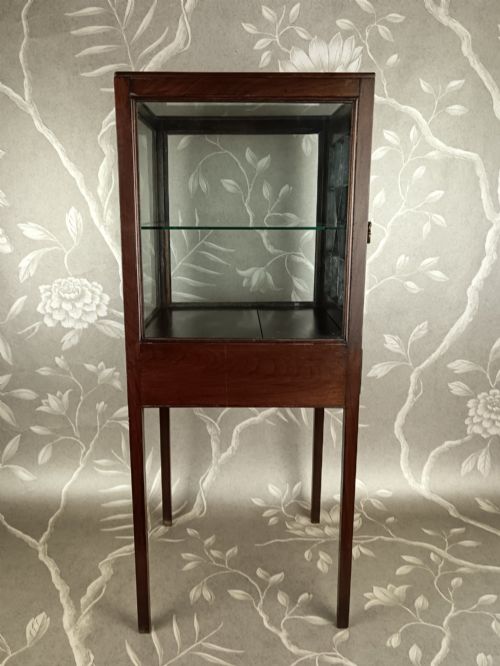
- A glass-fronted cabinet designed specifically for displaying porcelain, curiosities, and small valuables. These pieces often feature glazed sides to maximise light penetration.
- Bijouterie cabinet
- A display table or cabinet with a glazed top and shallow interior, traditionally used for holding jewellery, medals, and small trinkets. The contents are viewed from above.
- Ormolu
- Gilt-bronze mounts applied to furniture, particularly French cabinetwork of the nineteenth century. These decorative elements add weight and visual contrast to kingwood and mahogany surfaces.
- Vernis Martin
- A simulated Japanese lacquer technique developed in eighteenth-century France and revived later, using translucent varnishes over painted panels. It appears on high-end vitrines.
- Shodana
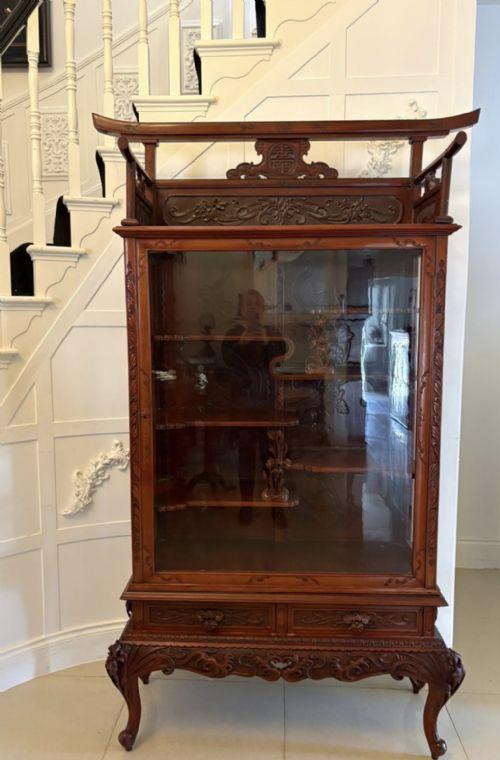
- A traditional Japanese display cabinet featuring asymmetrical shelving, sliding doors, and carved woodwork. Examples from the Meiji and Taisho periods combine utility with intricate craftsmanship.
Curio Furniture: Frequently Asked Questions
What is curio antique furniture?
Curio antique furniture encompasses glazed cabinets, vitrines, and display stands built to hold and exhibit small ornaments, porcelain, and collections.
These pieces range from tall French kingwood vitrines to compact Edwardian mahogany wall cabinets and Japanese shodonas.
How were vitrines used?
Vitrines served as drawing-room furniture where households exhibited collected curiosities, silverware, and fine porcelain to visitors.
The glass panels protected fragile items from dust while allowing them to remain visible as room decoration.
How do I date a display cabinet?
Dating relies on timber choices, construction methods, and prevailing styles such as Art Nouveau, Edwardian marquetry, or Victorian ebonising.
Hardware, hinge types, and the method of glass manufacture also provide clues to the period of origin.
Where should I place a cabinet?
Display cabinets suit living rooms, drawing rooms, or hallways where natural light can illuminate the glazed interior and displayed objects.
Care should be taken to keep wooden furniture away from direct sunlight and sudden temperature changes to protect veneers and polished surfaces.