

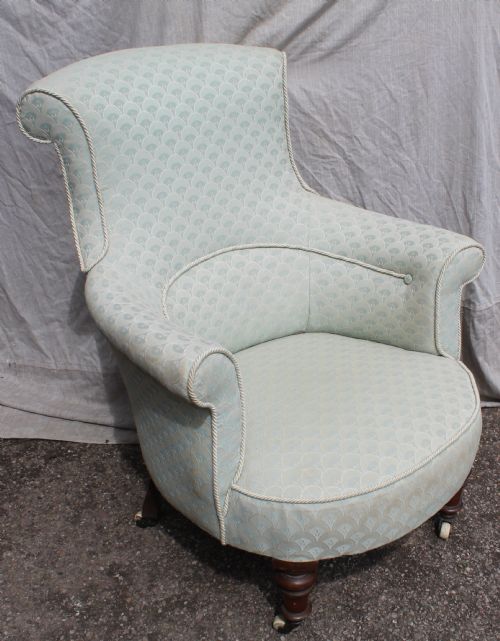


Antique Ducking Chair
An antique ducking chair brings a rare strand of social history indoors, offering sturdy timber framing and traditional seating forms that anchor a room.
Antique Ducking Chair
When you search for an antique ducking chair, you encounter a mix of vernacular seating and occasional historical curiosities from the Victorian and Edwardian eras. The selection spans robust armchairs, dining chairs, and functional pieces made across the nineteenth and early twentieth centuries.
You are most likely to meet heavy timber frames and upholstered armchairs rather than literal operational water dunking devices, reflecting how makers adapted vernacular forms for domestic sitting rooms. These pieces draw on Early English styles alongside French influences like Louis XVI.
The objects listed show a strong representation of Edwardian and Victorian chair forms, encompassing wingbacks, tub chairs, and country house seating. Each piece carries the distinct hallmarks of its period, whether through turned hardwood supports or traditional buttoned upholstery.
How they were made
Constructed primarily from hardwoods such as walnut and mahogany, these chairs rely on traditional joinery to ensure structural integrity across decades of use. Iron bracing and brass details frequently reinforce the timber frames of heavier country house models.
Upholstery techniques involve fabric coverings paired with needlepoint or buttoned finishes, utilising textiles that range from plain upholstery fabric to decorative needlework. The combination of dense hardwood and tightly fitted fabric defines the physical build of the pieces.
Antique Ducking Chair Retail Price Guide 2026
Typical asking prices for ducking chair among the pieces listed under this phrase on Sellingantiques today, from the lower quarter to the upper quarter. They describe what is for sale here now, not the wider market.
Even the sternest Victorian sitting room occasionally required an iron-backed chair to keep posture strictly in check.
What varies in quality
The refinement of the timber carving and the integrity of the underlying frame separate standard seating from exceptional examples. A superior piece demonstrates precise woodworking and well-balanced proportions that maintain stability.
The standard of the upholstery work and the selection of materials dictate the upper tier of the range. Original needlepoint seats and well-preserved fabric coverings enhance the character and finish of the chair.
The Antique Ducking Chair Glossary
- Vernacular
- Everyday objects made by local craftsmen without grand architectural pretensions. These pieces reflect regional traditions rather than high court styles.
- Tub armchair
- A comfortable chair with a rounded back that curves continuously into low arms. This form provides enclosed seating common in Edwardian interiors.
- Needlepoint
- Embroidery stitched onto a stiff canvas mesh to create a dense decorative surface. It often appears on Victorian dining chair seats.
- Fauteuil
- An open-armed upholstered chair with exposed wooden framing originating in France. It represents the lighter decorative styles adopted in nineteenth-century rooms.
Antique Ducking Chair: Frequently Asked Questions
What is an antique ducking chair?
An antique ducking chair typically refers to heavy vernacular seating or historical curiosities from the Victorian and Edwardian periods. These pieces combine robust timber construction with traditional domestic forms.
The selection reflects historical seating styles rather than actual water punishment devices, capturing the craftsmanship of nineteenth-century workshops.
Where should I place these chairs?
These sturdy armchairs and dining seats suit studies, living rooms, and hallways where their historical presence can anchor the room. Their solid hardwood frames make them practical for daily use.
Pairing a wingback or tub armchair with complementary period furniture highlights the traditional materials and craftsmanship.
What materials were used?
Makers utilised dense hardwoods such as walnut and mahogany alongside structural iron and brass components. Upholstery fabric and needlepoint provide the soft surfaces on seats and backs.
The combination of these durable materials ensures the structural survival of the seating over generations.