

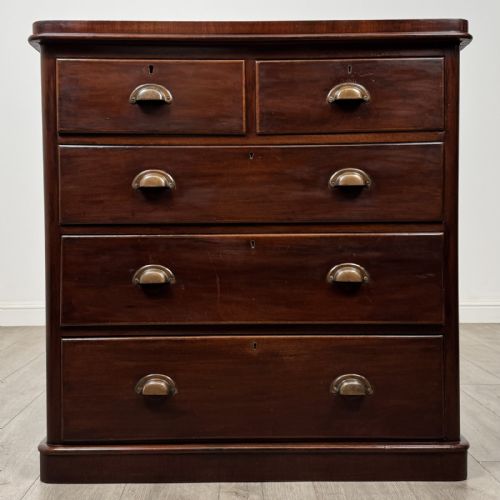
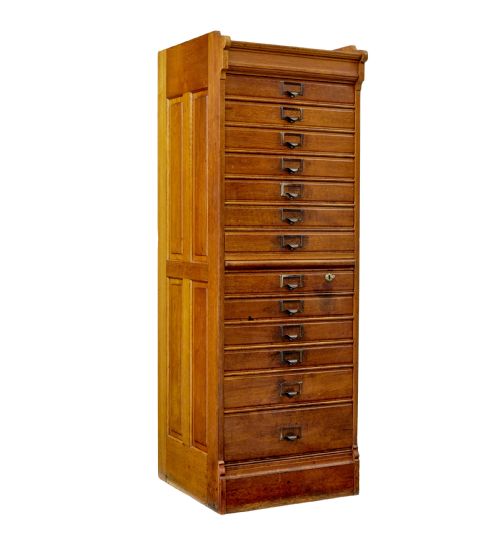
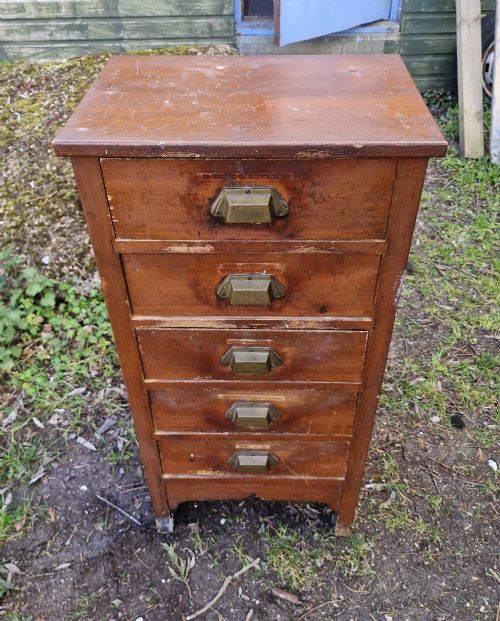


Cup Handle Chest Drawers
These cup handle chest drawers combine practical storage with robust hardware, offering sturdy utility for any room.
Cup Handle Chest Drawers
A cup handle chest drawers setup usually appears as a filing cabinet, plan chest, bank of drawers, or shop counter. These utilitarian forms originate from commercial, office, and domestic settings across the Victorian, Edwardian, and mid-century periods.
The pieces listed here span from 1880 through to the 1960s, encompassing styles such as Victorian, Edwardian, mid-century utility, and industrial utility. Buyers frequently encounter tall or low configurations designed for heavy sorting.
Materials vary widely across the inventory, ranging from traditional hardwoods like walnut, mahogany, and oak to pine, pitch pine, and satin walnut. Metal and glass elements occasionally appear alongside the defining hardware.
Materials and construction
Makers built these pieces using solid timbers such as oak, mahogany, walnut, and pine, often combining them with durable brass fittings. Construction methods prioritized longevity for commercial and domestic use, resulting in heavy, stable frames.
Drawer construction typically involves solid sides and internal framing to support frequent pulling via metal cup or scalloped handles. Polished finishes highlight the natural grain of walnut and mahogany timbers.
Cup Handle Chest Drawers Retail Price Guide 2026
Typical asking prices for cup handle chest drawers among the pieces listed under this phrase on Sellingantiques today, from the lower quarter to the upper quarter. They describe what is for sale here now, not the wider market.
Current listings feature pieces built from oak, walnut, mahogany, pine, and pitch pine across several decades.
Understanding quality differences
The tier of a piece rests largely on the choice of timber and the sophistication of its layout, such as graduated drawers or multi-drawer banks. Dense hardwoods like walnut and mahogany command greater respect than standard pine.
Hardware integrity also dictates standing, with original period brass cup handles adding authenticity compared to later replacements. The overall crispness of the cabinetry and the retention of original polished surfaces mark the upper echelon.
The Cup Handle Chest Drawers Glossary
- Cup handle
- A recessed, semi-circular metal pull shaped like an inverted cup, screwed to the drawer front to allow a firm grip.
- Plan chest
- A wide, shallow multi-drawer cabinet originally designed for storing architectural drawings and large maps.
- Bank of drawers
- A multi-drawer storage unit, often tall or wide, built for commercial or office filing purposes.
- Graduated drawers
- A stack of drawers that decrease in depth from bottom to top, altering the visual proportion of the piece.
Cup Handle Chest Drawers: Frequently Asked Questions
What rooms suit cup handle chest drawers?
These versatile pieces fit comfortably in studies, kitchens, and bedrooms where substantial storage is required. Their utilitarian origins lend themselves well to organising documents, clothing, or household goods.
The deep drawers of plan chests and office cabinets provide efficient organisation for flat items or bulky supplies. Their sturdy wooden construction ensures they withstand daily residential or commercial use.
How do I date a chest of drawers?
Dating relies on observing timber choices, hardware styles, and overall construction techniques typical of periods like the Victorian era or the 1930s. Edwardian pieces often feature lighter walnut or pitch pine finishes.
Examining the drawer joints and the specific style of the brass cup handles helps narrow the decade of manufacture. Commercial pieces from the 1920s and 1960s display distinct utilitarian traits.
Are these chests suitable for office use?
Many of these items originated as office filing cabinets, shop counters, or bank chests designed specifically for document storage. Their deep drawers handle modern paperwork and stationery with ease.
Using antique filing or plan chests in a workspace introduces robust historic craftsmanship that outperforms modern flat-pack alternatives. The sturdy brass pulls facilitate frequent access throughout the working day.
How do I care for polished wood?
Maintaining wooden surfaces involves regular dusting with a soft, dry cloth to prevent grit accumulation. Avoiding direct sunlight and extreme humidity protects the polish and natural timber grain.
Periodically applying appropriate beeswax preserves the lustre of walnut, mahogany, and oak finishes without building up heavy residues. Careful handling of the brass cup handles prevents unnecessary wear to the surrounding wood.