






Crystal Table Candlesticks
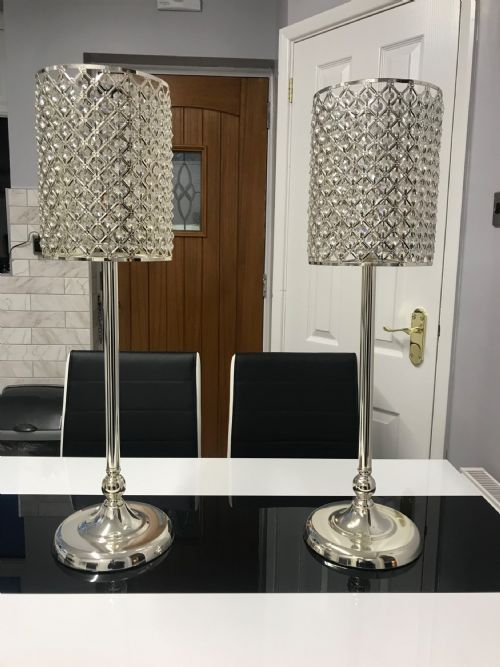
Crystal table candlesticks catch the light on a dining surface, bringing height and sparkle to an interior.
Crystal Table Candlesticks
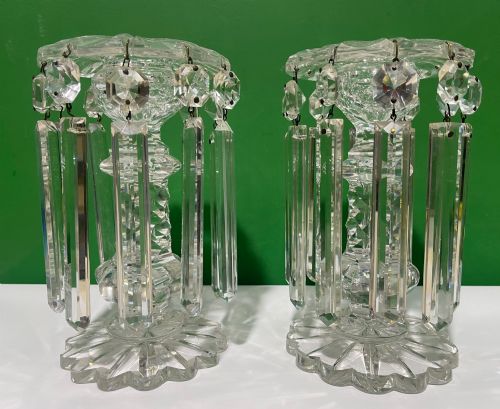
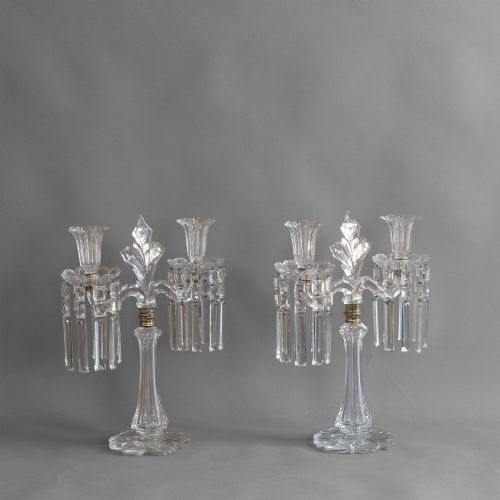
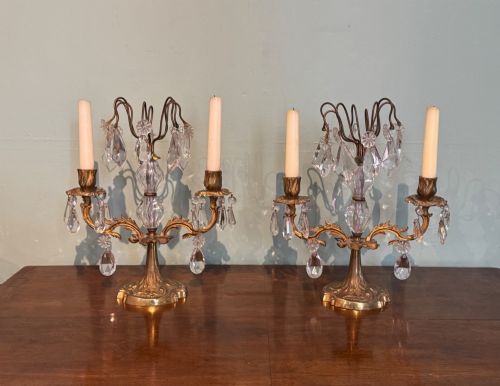
Crystal table candlesticks encompass candleholders and table lamps designed to illuminate surfaces using refractive glass. These objects range from single candle sticks to multi-branched candelabra and hanging-lustre forms.
The selections span multiple eras, with Victorian, Regency, and Edwardian examples appearing alongside early twentieth century and later pieces. Forms frequently incorporate cut glass, crystal, and brass or gilt metal mounts.
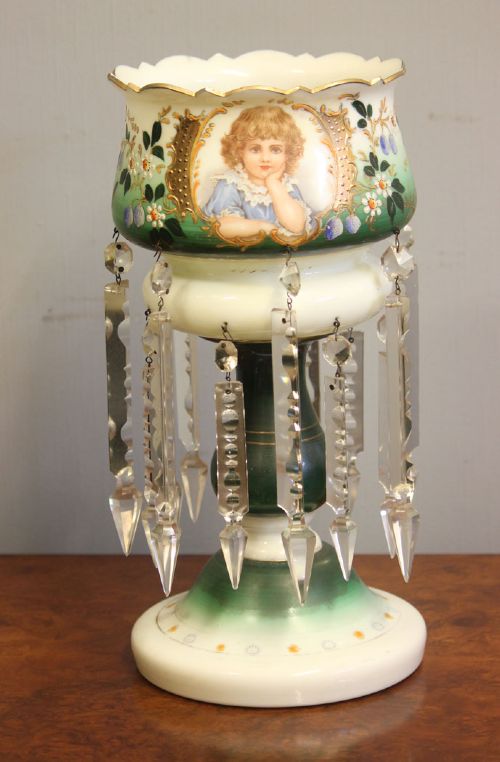
Variations include table lamps and mantel lustres equipped with glass drops. Origin styles cover French Rococo Revival, Italian Baroque, and French Chateau aesthetics.
Materials and construction
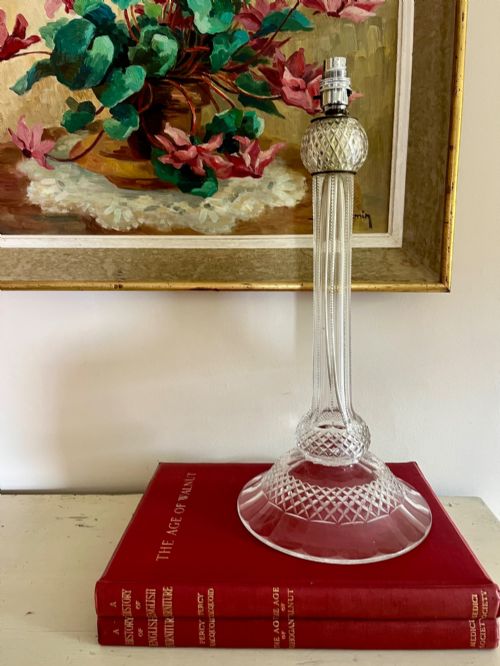
Makers shaped glass and crystal through cutting, moulding, and polishing to maximise light refraction. Metal components such as brass, gilt bronze, and ormolu provide structural support and decorative bases.
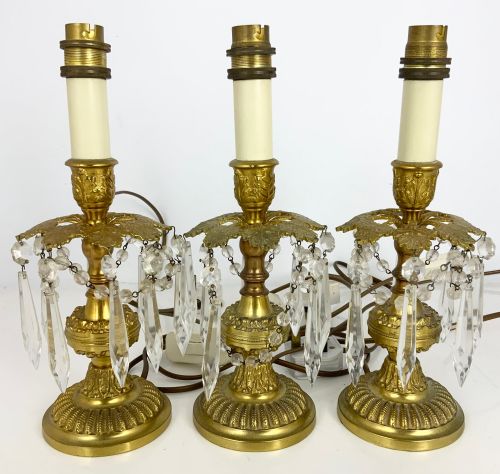
Lustres and candelabra frequently feature suspended glass prisms attached by wire or pinned to metal rings. Combinations of marble, enamel, and ruby or green glass add colour to the clear crystal elements.
Crystal Table Candlesticks Retail Price Guide 2026
Typical asking prices for crystal table candlesticks among the pieces listed under this phrase on Sellingantiques today, from the lower quarter to the upper quarter. They describe what is for sale here now, not the wider market.
Victorian dining rooms relied on hanging crystal prisms to bounce candlelight across the table while guests attempted to read the menu.
Factors determining quality
Depth and crispness of facet cutting on the crystal define the upper tiers of production. Sharply defined edges create cleaner light dispersion than softer, moulded glass surfaces.
The weight and finish of the metal mounts, including gilt bronze and ormolu, separate standard items from finer works. Completeness of the hanging glass prisms and drops heavily influences desirability.
Clarke’s Patent Cricklite
The Crystal Table Candlesticks Glossary
- Lustre
- A decorative tabletop candlestick or vase hung with cut glass pendants designed to refract candlelight. These objects became popular during the nineteenth century for drawing room decoration.
- Candelabra
- A branched candlestick holding multiple lights on separate arms. They often feature central columns rising from heavy bases.
- Ormolu
- Finely ground high-carat gold mercury-gilded onto a bronze base. This technique creates a rich golden finish on metal mounts.
- Prism
- A geometric cut glass pendant suspended from the upper body of a lustre or candelabra. Prisms multiply the flickering illumination of candles.
- Regency
- An architectural and decorative style spanning the early nineteenth century. Pieces from this period emphasise classical symmetry and clean lines.
Crystal Table Candlesticks: Frequently Asked Questions
How do I clean crystal candlesticks safely?
Wash glass components by hand using lukewarm water and mild soap. Avoid submerging metal bases or wired lamp fittings to prevent corrosion and damage.
Dry each piece thoroughly with a lint-free cloth to restore clarity to the cut facets.
What is the difference between a lustre and a candlestick?
A standard candlestick holds a single candle to provide direct illumination. A lustre incorporates hanging crystal drops that catch and scatter the candlelight.
Lustres often double as ornamental vases when candles are not in use.
How can I date a pair of glass candelabra?
Examine the weight of the metal mounts and the sharpness of the glass cutting. Hand-cut facets and pinned prism attachments typically indicate earlier nineteenth-century production.
Moulded glass components and simpler electrical conversions point toward twentieth-century manufacturing.
Can antique table lamps be used daily?
Many older pieces arrive wired for modern electrical standards or adapted safely for contemporary use. Check the internal wiring condition before plugging in any vintage lamp.
Gentle handling ensures the fragile glass drops remain secure during regular placement changes.