
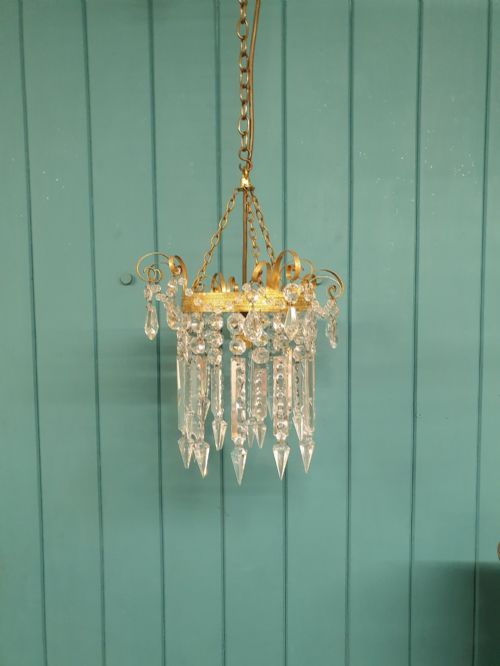


Crystal Prism Light
A crystal prism light refracts candlelight or electric illumination through glass drops, hanging to catch the eye in any room.
Crystal Prism Light
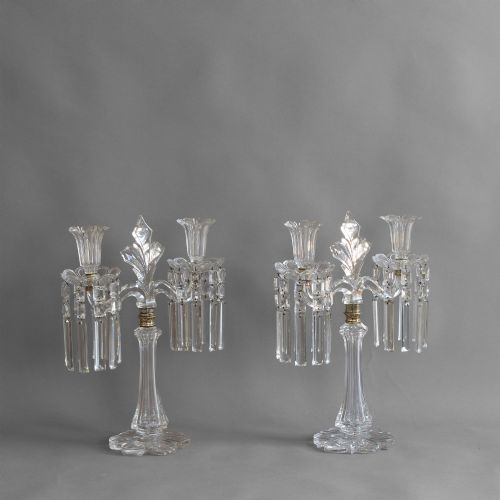
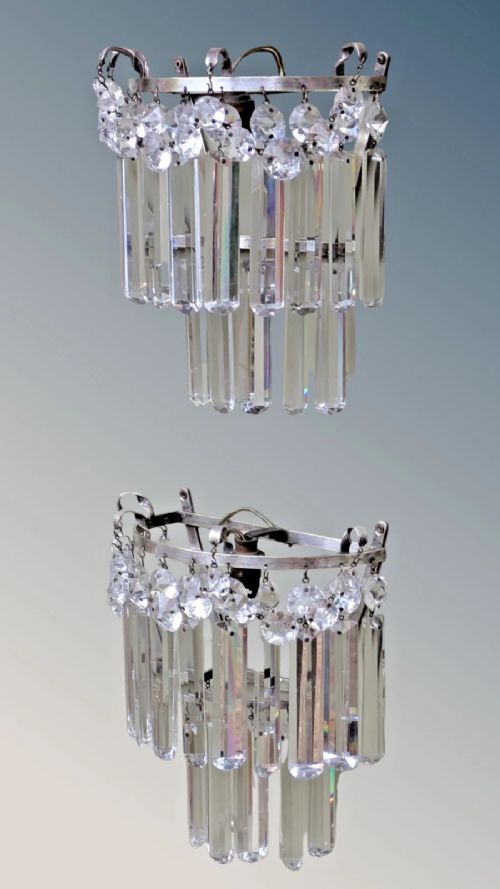
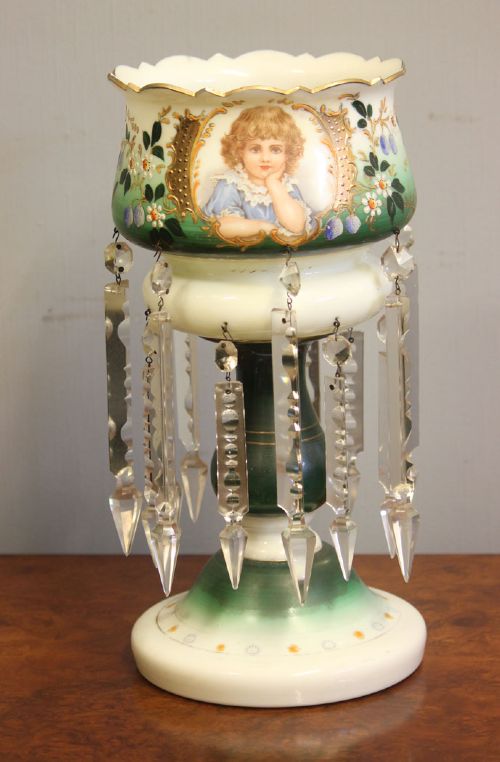
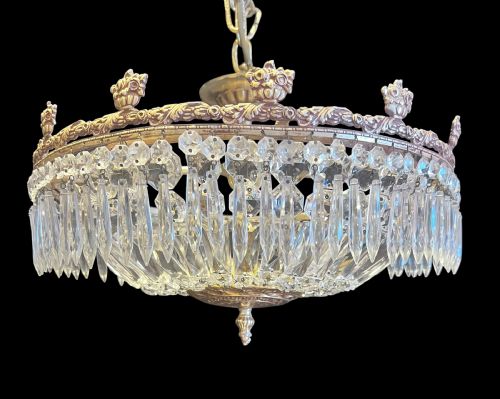
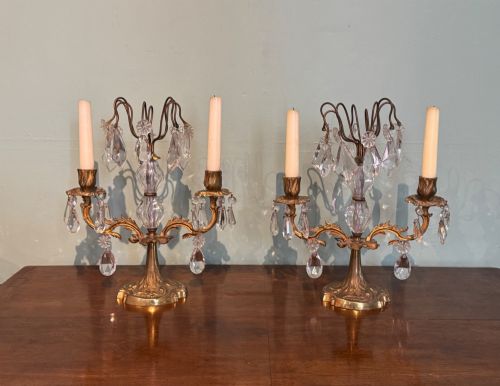
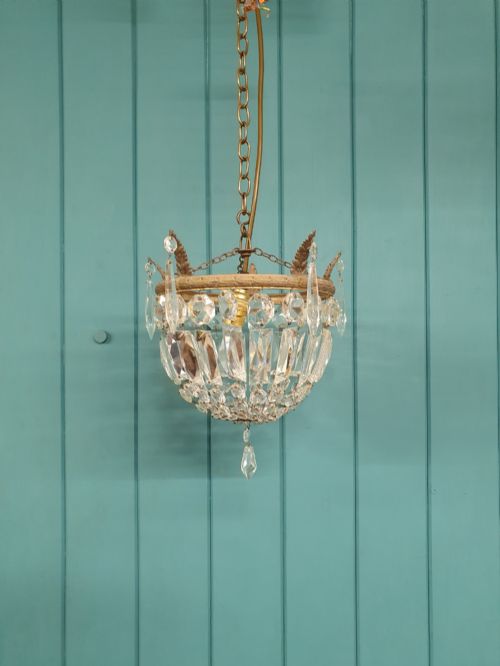
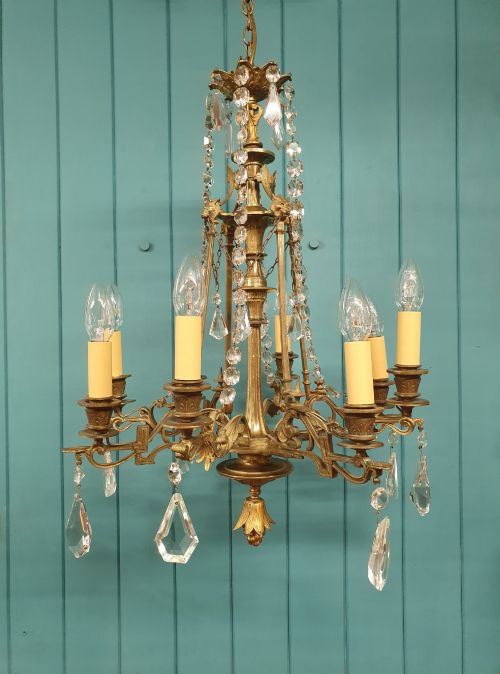
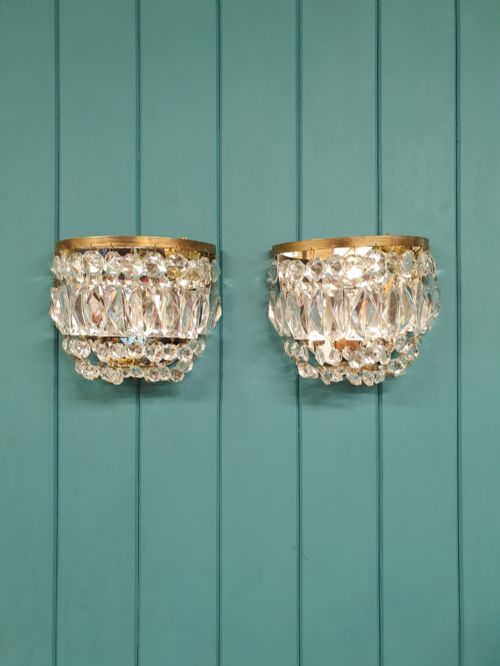
A crystal prism light gathers forms such as chandeliers, ceiling lights, wall lights, mantel lustres, and candelabra. Pieces range across the nineteenth century, the Edwardian era, and the 1930s, displaying styles from French Empire and Regency to Victorian and early twentieth century.
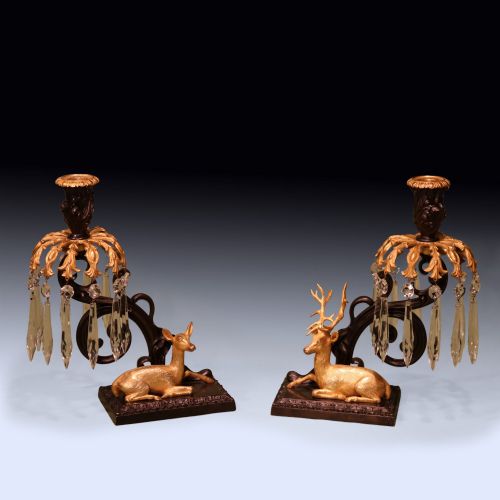
Buyers seeking a crystal prism light frequently meet glass and cut crystal drops paired with brass, gilt, and bronze frames. These items appear as single pieces, pairs, or larger multi-arm configurations designed for overhead suspension or tabletop placement.
Materials and construction
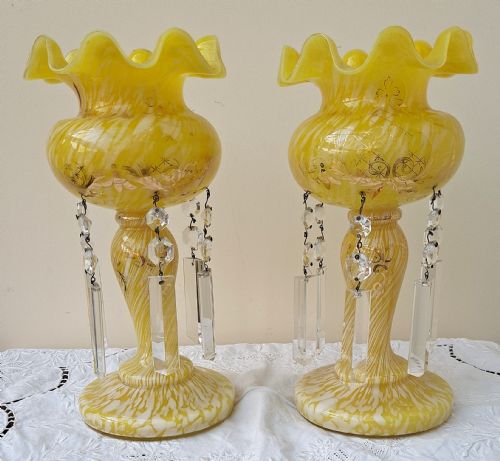
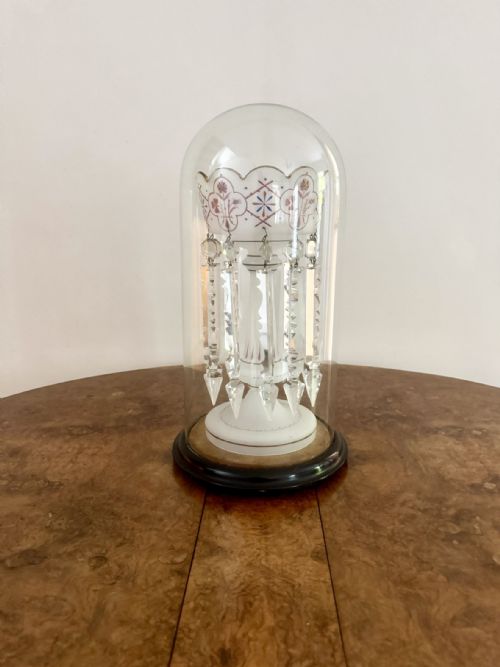
Makers built frames from brass, gilt metal, bronze, and ormolu to support heavy glass components. Cut crystal, cut glass, and coloured glass in ruby, yellow, or opaline formed the body of lustres, sconces, and chandeliers.
Prisms, spikes, coffin drops, and beads were suspended from metal frameworks using wire or pins. Overlay glass and flash glass techniques added depth and colour variation to mantel pieces and table lustres.
The listings feature brass, bronze, and gilt frames alongside ruby, yellow, and opaline glass elements across the nineteenth and early twentieth centuries.
Assessing quality and detail
Superior examples demonstrate precision in glass cutting, where sharp facets catch light cleanly without internal bubbles or cloudiness. The weight and casting quality of the brass, bronze, or gilt metal armature also indicate the standard of production.
Completeness of the hanging prisms and matching drops defines the visual harmony of a fixture. Lustres and chandeliers retain greater character when their original glass pendants remain intact alongside the primary structure.
The Crystal Prism Light Glossary
- Lustre
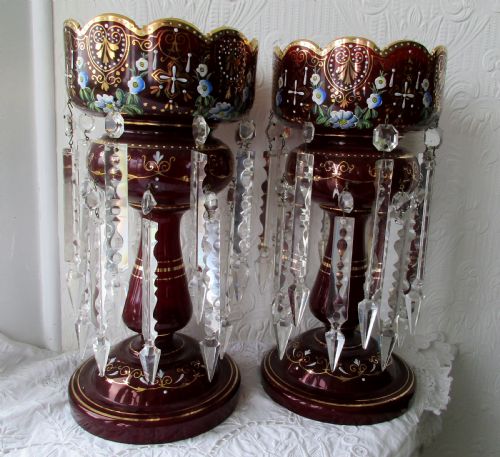
- A decorative tabletop ornament featuring hanging glass prisms attached to a central vase or candlestick stem. These pieces gained popularity during the Victorian period.
- Prism
- A cut glass pendant suspended from a lighting fixture to refract light. They appear in shapes such as spikes, beads, and coffin drops.
- Chandelier
- A branched ceiling-mounted lighting fixture holding multiple bulbs or candles. Many examples incorporate glass drops arranged in tent and waterfall configurations.
- Ormolu
- Gilded bronze applied to decorative mounts and hardware on antique furnishings and light fittings. The technique produces a rich metallic finish.
- Flash glass
- A method of fusing a thin layer of coloured glass over a clear or contrasting body before cutting through the surface. This technique creates sharp contrast in Bohemian overlay pieces.
Crystal Prism Light: Frequently Asked Questions
How do I hang a heavy crystal chandelier?
Suspension requires fixing the main weight directly into ceiling joists using a suitable metal hook and bracket. Professional installation ensures the electrical wiring and ceiling support bear the load safely.
Heavier multi-arm fixtures demand reinforced fixings to prevent movement. Lowering the piece carefully allows for the safe attachment of delicate crystal prisms after mounting.
What is the difference between a lustre and a candelabrum?
A lustre is a mantel ornament fitted with hanging glass drops, primarily serving decorative purposes with or without candle nozzles. A candelabrum is designed specifically with multiple branches to hold candles.
Lustres often combine coloured glass bodies with reflective crystal pendants. Candelabra focus on branched arms for illumination, sometimes incorporating prisms along the shaft.
How should I clean antique glass prisms?
Prisms require gentle cleaning by hand using warm water and mild soap, removing them from the fixture individually if necessary. Drying each piece with a lint-free cloth restores maximum sparkle.
Harsh chemical cleaners damage old glass surfaces and corrode metal wire fixings. Cleaning the frame separately while damp cloth wiping preserves the surrounding gilt or brass.
Can these antique lights use modern electricity?
Most antique ceiling lights and wall fixtures adapt readily to modern electrical standards through rewiring by a qualified professional. Wiring channels run through the central brass or bronze stems to conceal modern cables.
Lower-wattage candle bulbs replicate the warm glow of historical lighting while protecting fragile glass from excessive heat. Sockets are chosen to fit existing shades or exposed candle tubes.