

Crystal Pendant Fitting
A crystal pendant fitting brings focused illumination and refractive sparkle to a room, drawing the eye upward with historic glass and metalwork.
Crystal Pendant Fitting
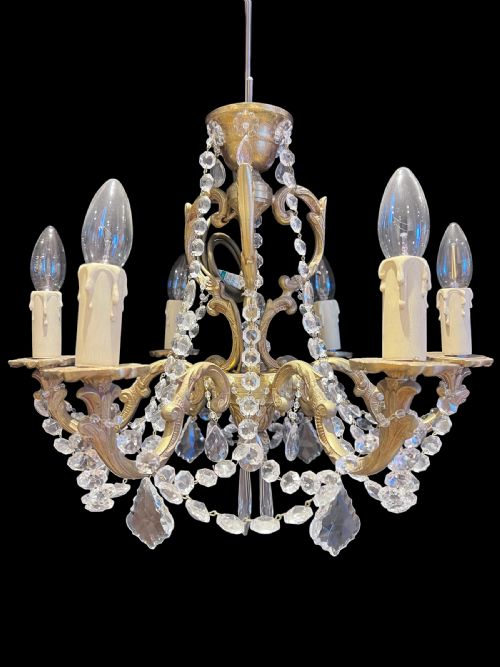
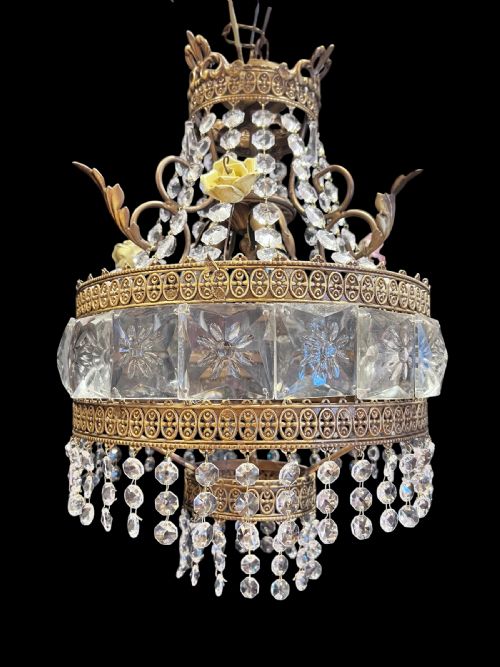
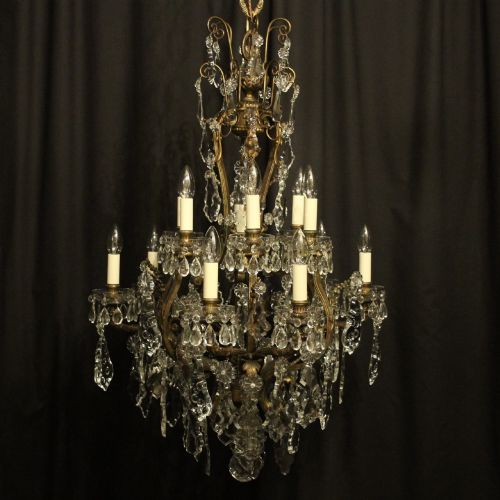
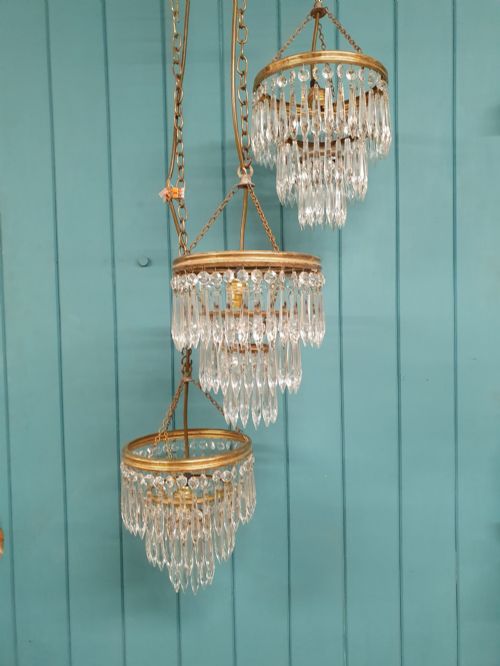
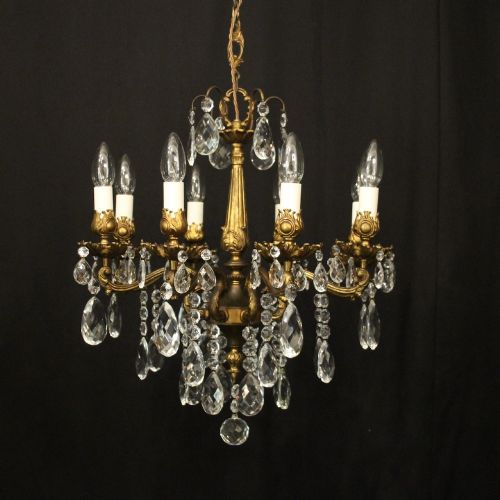
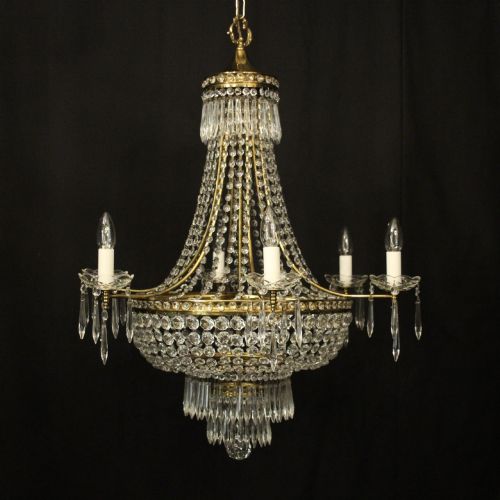
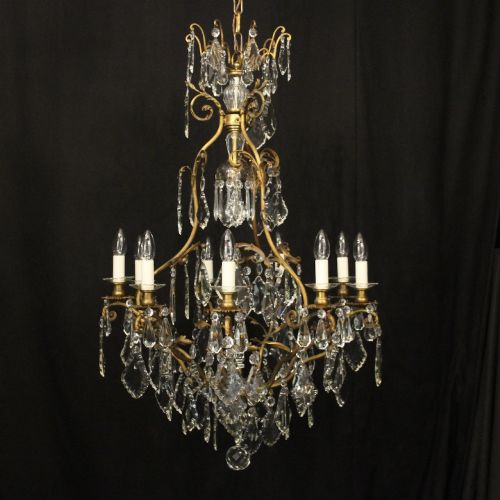
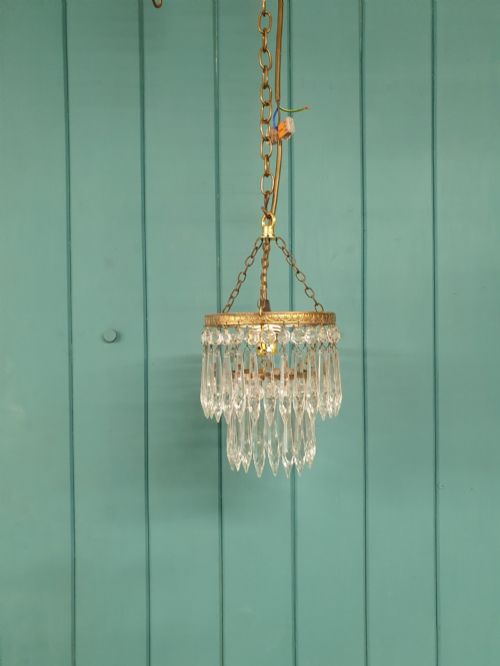
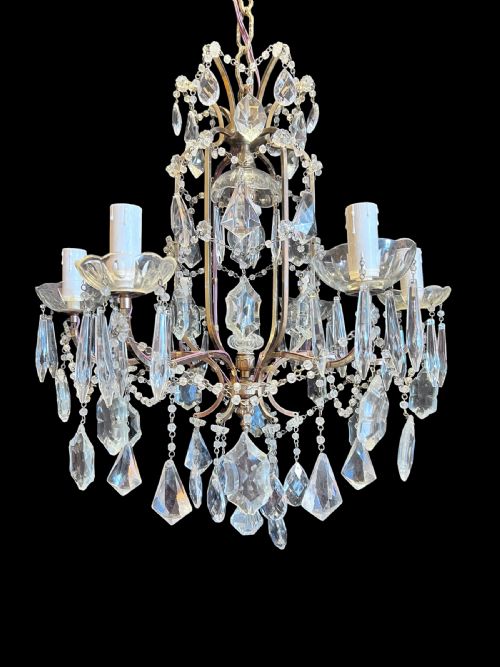
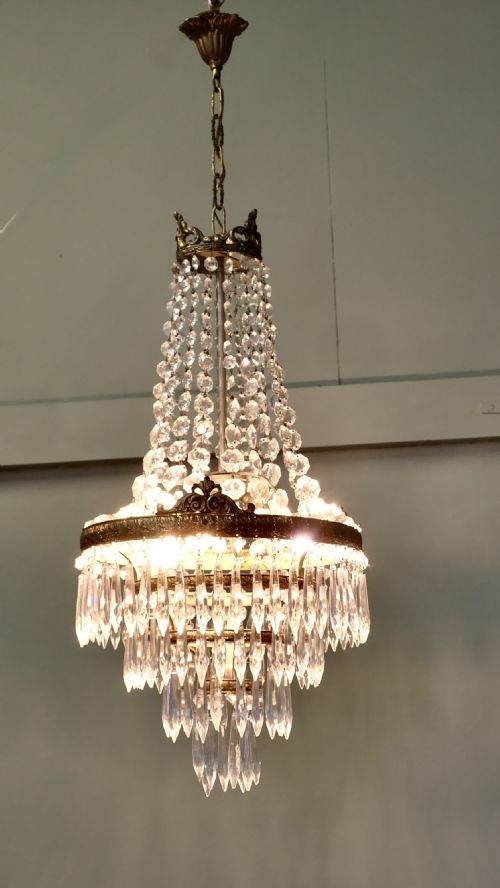
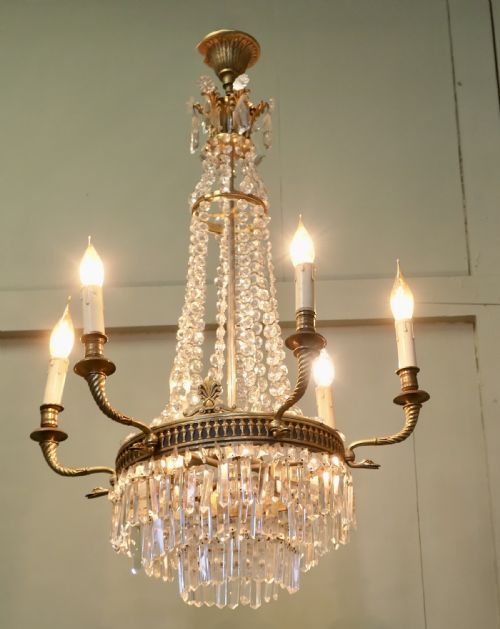
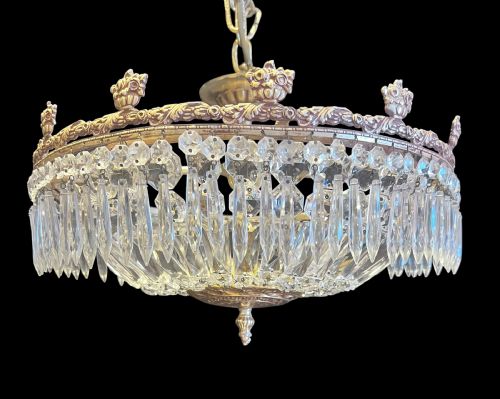
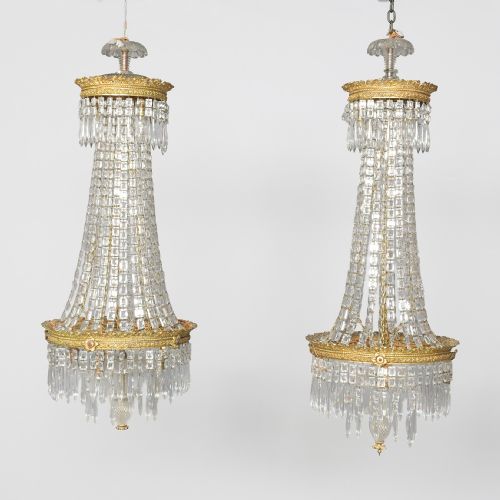
A crystal pendant fitting is typically encountered as a chandelier, ceiling light, or plafoniere originating from periods spanning the late nineteenth century through the 1930s. These fixtures appear in forms such as tent and waterfall designs, single-light drops, spike chandeliers, and multi-armed fixtures.
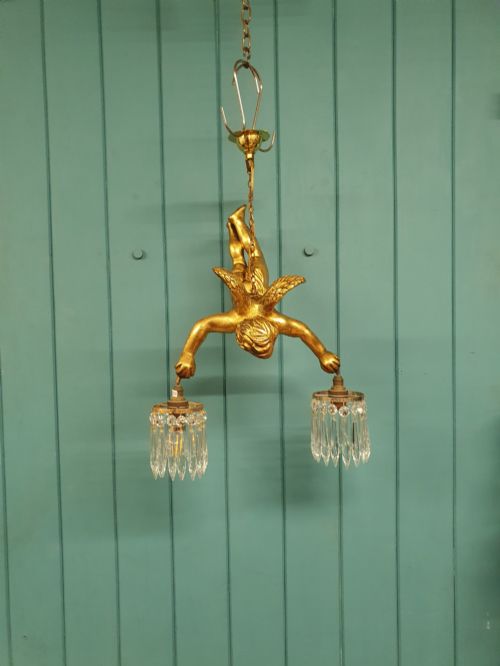
The aesthetic vocabulary draws heavily from French and Italian traditions, including French Empire, Rococo Revival, and Art Nouveau styles. Pieces frequently incorporate decorative elements like flying cherubs, porcelain flowers, tolewear, and lion masks alongside extensive glass dressing.
Most examples date from the Edwardian era and the 1920s or 1930s, reflecting domestic lighting ambitions of the early twentieth century. Buyers encounter both compact six-inch dome or spike fixtures and large multi-light ballroom chandeliers.
Materials and construction
Metal frameworks rely predominantly on brass, gilt bronze, gilded brass, and gilt metal, occasionally featuring silver gilding, bronze, or painted tolewear. These structural components support the weight of the glass elements while providing decorative scrolling or cast detailing.
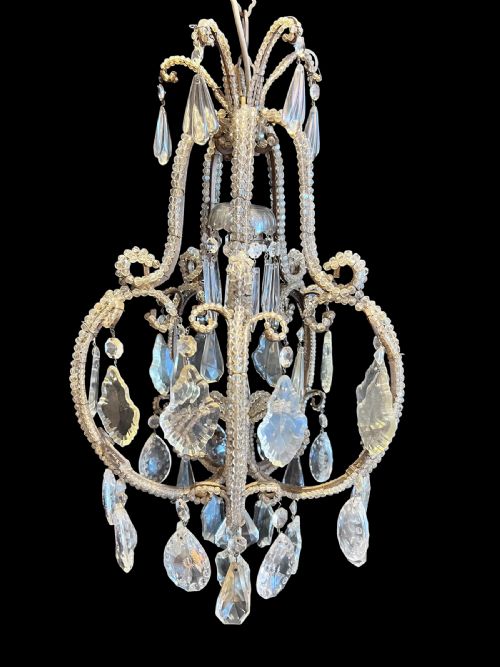
Illumination is filtered through glass, crystal, cut glass, and crystal glass components formed into beads, teardrops, coffin prisms, and spike configurations. Coloured crystals and amber drops appear alongside clear glass to alter the light diffusion.
Listings feature items from the nineteenth century, Edwardian period, and the 1920s to 1930s, constructed from brass, bronze, gilt metal, and cut crystal.
Factors of quality
Quality rests in the crispness of the metal casting and the depth of the hand-cut facets on the crystal drops. Heavier bronze frames and intricately chased brass mounts demonstrate superior workshop standards compared to simpler pressed metal alternatives.
The integrity of the hanging scheme, involving density and variety of glass prisms such as tent and waterfall arrangements, distinguishes standard commercial pieces from grander salon fittings.
The Crystal Pendant Fitting Glossary
- Plafonier
- A ceiling-mounted light fixture that sits relatively flush against the ceiling surface. These are often framed in brass and hung with crystal droplets.
- Tent and waterfall
- A lighting configuration where upper strings of beads form a conical tent shape above a cascading lower section of crystals. This style references grand French Empire interior decoration.
- Spike chandelier
- A compact hanging light featuring upward or outward radiating glass spikes surrounding the central stem. These smaller fittings suit lower ceiling heights.
- Tolewear
- Painted sheet metal used to form decorative leaves or structural elements on specific continental lighting fixtures. It often introduces coloured accents into the design.
- Coffin prisms
- Elongated, flat-sided glass drops named for their geometric profile. They refract light with distinct linear flashes.
Crystal Pendant Fitting: Frequently Asked Questions
How do I hang a crystal pendant fitting?
These fixtures require secure anchoring to a ceiling joist using an appropriate ceiling hook and heavy-duty electrical wiring. Professional installation is standard practice due to the combined weight of the metal frame and glass components.
Height adjustment depends on room proportions and clearance requirements beneath the fitting. Ceiling lights and plafonieres sit higher, while multi-arm chandeliers hang lower over specific furniture placement.
What periods do these fittings come from?
The available lighting primarily spans the late nineteenth century through the 1930s. Edwardian examples and pieces from the 1920s form the majority of the selection.
Stylistic influences reach back further into French Empire and Rococo revivals. Workshops in France, Italy, and Sweden produced these designs across several decades.
How are coloured crystals used in these lights?
Coloured crystals and amber teardrops serve to warm or tint the emitted light while adding visual contrast to clear glass sections. They appear alongside porcelain flowers and painted tolewear elements in specific continental designs.
These additions reflect regional decorative preferences from the early twentieth century. They break up the uniformity of standard clear crystal dressings.
What size fitting do I need?
Dimensions range from small six-inch spike and dome fixtures suitable for modest spaces to multi-light ballroom chandeliers spanning twenty-one inches or more. Ceiling height and room dimensions dictate the appropriate scale of the piece.
Smaller single-light or compact multi-light pendants fit hallways and intimate rooms. Larger tent and waterfall configurations require expansive vertical and horizontal space.