







Crystal Desk Inkstand
A crystal desk inkstand sits heavy and bright upon the walnut, offering a tangible weight to daily correspondence.
Crystal Desk Inkstand
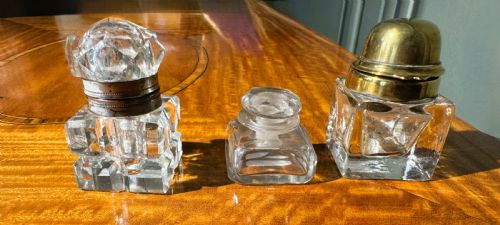
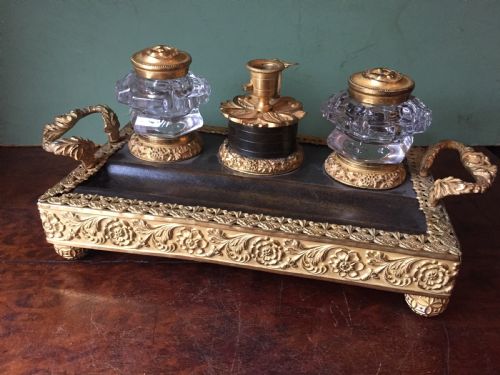
A crystal desk inkstand brings together heavy glass reservoirs and fitted trays for writing instruments, designed to anchor a nineteenth or early twentieth-century writing table. These pieces range from simple single glass ink pots to grander arrangements featuring pen stands and matching inkwells.
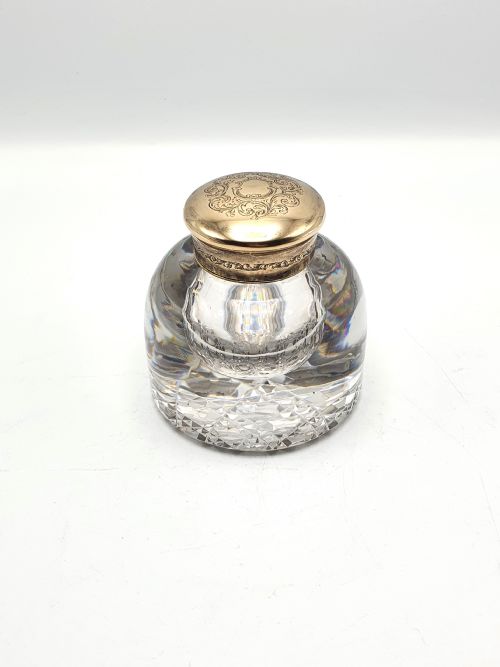
Victorian and Edwardian examples predominate here, often combining cut glass or crystal bodies with hinged sterling silver lids. Buyers also encounter occasional Art Deco designs incorporating cast gilded bronze or solid oak bases alongside the characteristic glass inkwells.
Originating in periods when handwritten correspondence governed daily business and personal life, these items served as both functional desk furniture and decorative objects. The forms span from compact faceted desk blocks to French Empire ormolu-mounted stands intended for formal libraries.
How they were made
Cut glass and crystal bodies are formed through heavy facet-cutting or deep pressing, creating sharp geometric patterns that catch the light upon the desktop. This glass is combined with metal mounts, utilising sterling silver for hinged lids and collars, or brass and ormolu for structural frames.
Silversmiths and bronze founders shaped the metal components to fit the glass reservoirs precisely, often incorporating hallmarks to record the assay office and year of production. Where wood appears, as in solid oak stands, joinery and fitted depressions secure the ink pots firmly against movement.
Crystal Desk Inkstand Retail Price Guide 2026
Typical asking prices for crystal desk inkstand among the pieces listed under this phrase on Sellingantiques today, from the lower quarter to the upper quarter. They describe what is for sale here now, not the wider market.
Listings feature periods spanning the nineteenth century through the 1930s, including Victorian, Edwardian, and Art Deco styles.
What varies in quality
Quality rests upon the depth and crispness of the glass cutting, the gauge of the sterling silver or bronze used in the mounts, and the integration of diverse materials. Superior examples display deep, sharp facets on the crystal and heavy, well-cast metal fittings that align snugly with the glass.
The presence of figural elements, such as cast bronze chicks with glass eyes, or the incorporation of French Empire ormolu work, elevates an ordinary desk accessory into an ambitious decorative object. Maker attribution, evidenced by hallmarked silver or recognised retail signatures, further distinguishes the finer works from standard commercial production.
Tiffany and Co
The Crystal Desk Inkstand Glossary
- Crystal desk inkstand
- A weighted glass or crystal vessel combined with a base or tray, designed to hold liquid ink and writing implements upon a desktop. These items date primarily from the nineteenth and early twentieth centuries.
- Sterling silver
- An alloy of silver containing 92.5 percent pure silver and 7.5 percent other metals, commonly used for the hinged lids and collars of quality inkwells.
- Ormolu
- Gilded bronze or brass applied to furniture and decorative objects, frequently seen on French Empire design stands.
- Facet cut
- A glass-cutting technique producing flat, polished planes that reflect light across the body of the crystal ink pot.
- Hallmark
- An official stamp applied by an assay office to precious metal items, indicating the standard of purity and the year of manufacture.
Crystal Desk Inkstand: Frequently Asked Questions
What is a crystal desk inkstand?
A crystal desk inkstand is a heavy glass or crystal container paired with a base or lid, designed to hold ink for writing.
These pieces combine functional glass reservoirs with decorative mounts in silver, brass, or bronze to anchor a writing desk.
How were crystal inkstands used?
They sat upon desks in studies and offices to supply liquid ink for dip pens during the nineteenth and twentieth centuries.
The fitted trays and stands also provided a secure place to lay pens when not in use.
How do I date a crystal inkwell?
Dating relies upon hallmarks on the silver mounts, the style of the glass cutting, and the overall design period such as Victorian or Art Deco.
Makers' marks and assay office letters stamped into the metal provide precise years of manufacture.
Are these inkstands still functional?
Many crystal inkstands retain their glass liners and hinged lids, allowing them to hold ink just as they did originally.
Collectors often use them today as decorative desk accessories or for occasional calligraphy work.