



Crystal Centrepiece Vase
A crystal centrepiece vase anchors a dining table or console with commanding presence, gathering light across heavily cut surfaces and coloured glass.
Crystal Centrepiece Vase
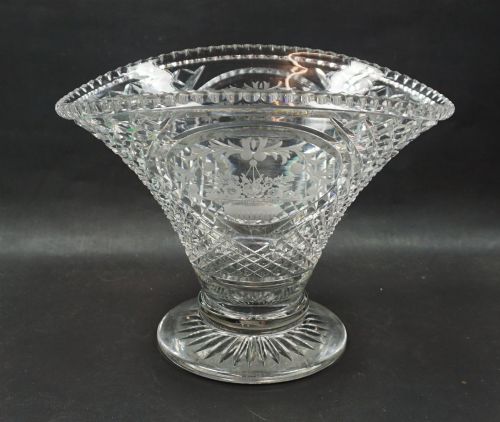
A crystal centrepiece vase brings sculptural weight and brilliant light refraction to a room, functioning as both a standalone decorative object and a vessel for arrangements. When searching for a crystal centrepiece vase, collectors encounter diverse forms spanning from late nineteenth century Victorian and Art Nouveau examples to mid-twentieth century designs.
The pieces on this page encompass substantial table centrepieces, glass lustres, epergnes combining carved wood and crystal, and large decorative bowls. Origins range widely across English, French, and Belgian workshops, showing influences from the Arts and Crafts movement, Art Deco, and French Belle Epoque.
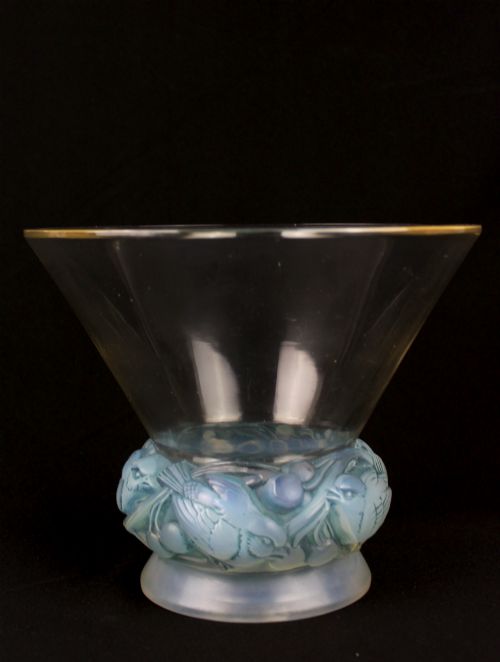
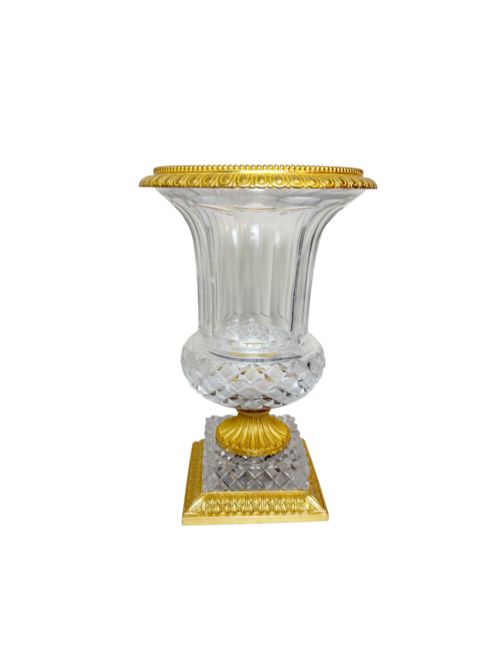
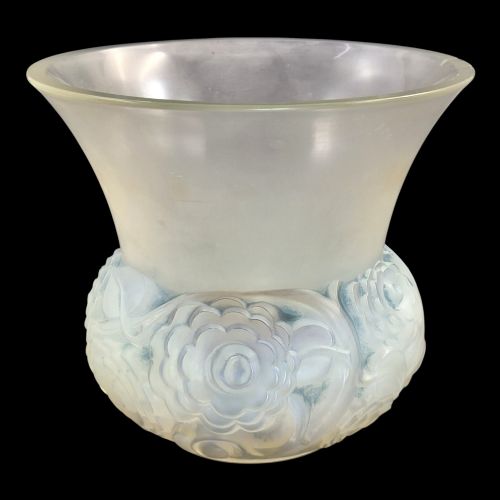
Victorian and Edwardian iterations frequently feature rich ruby glass, cobalt blue cut-to-clear glass, or gilt bronze mounts, whilst later periods introduce opalescent glass and stylized motifs. Each piece serves to draw the eye and dominate the surface it occupies.
How they were made
Makers shaped heavy lead crystal and crystal glass through meticulous blowing, moulding, and deep cutting to create sharp geometric facets and intricate optical effects. Techniques such as casing layers of coloured glass over clear crystal allowed artisans to cut back the outer layer and reveal striking contrast, as seen in cobalt blue and green over crystal specimens.
Surface ornamentation involved varied artisan skills, including hand-painted gold enamel decorations of floral motifs, paste gilt applications, and metal mounting in gilt bronze. Certain elaborate pieces integrated carved wood elements from Black Forest workshops alongside Baccarat crystal vessels to construct multi-tiered epergnes.
Crystal Centrepiece Vase Retail Price Guide 2026
Typical asking prices for crystal centrepiece vase among the pieces listed under this phrase on Sellingantiques today, from the lower quarter to the upper quarter. They describe what is for sale here now, not the wider market.
Peacock eyes in green glass prove that Victorian makers enjoyed bringing exotic bird plumage straight to the dining table.
What varies in quality
Quality rests upon the crispness of the glass cutting, the depth and clarity of the crystal, and the sophistication of any applied surface decoration. Sharp, clean facets that catch light evenly distinguish superior cutting from softer, shallower work.
The integration of mixed materials dictates distinction at the upper end, where gilt bronze mounts fit precisely against the glass or carved wood supports maintain structural integrity and fine detail. Preserved hand-painted enamel and intact gilding significantly elevate an object's visual impact.
Charles Graffart for VSL·St Louis glassworks·Stuart for Liberty·Baccarat Crystal
The Crystal Centrepiece Vase Glossary
- Lead crystal
- Glass containing a high proportion of lead oxide, which increases weight, brilliance, and softness for deep cutting. This material allows for exceptional light dispersion across faceted surfaces.
- Cut-to-clear
- A technique where a layer of coloured glass is overlaid on clear crystal and partially cut away to reveal the clear glass beneath. This creates bold contrast and intricate geometric patterns.
- Glass lustre
- A decorative table vase or urn hung with prismatic glass pendants designed to catch and reflect candlelight. They were prominent during the Victorian era.
- Epergne
- A large central table ornament featuring multiple branching dishes, baskets, or vases for fruit or flowers. These pieces often combine Baccarat crystal with carved wood mounts.
- Opalescent glass
- Glass that diffuses light to display milky, semi-translucent effects with shifting iridescent hues. It gained popularity in twentieth-century modernist and Art Deco design.
Crystal Centrepiece Vase: Frequently Asked Questions
What is a crystal centrepiece vase?
A crystal centrepiece vase is a substantial decorative vessel designed to sit in the middle of a table or sideboard, catching and reflecting light through heavy glass.
These pieces often incorporate cut crystal, coloured overlays, or metal mounts, serving as focal points in period interiors.
How were glass lustres used?
Glass lustres functioned as decorative table ornaments equipped with hanging crystal pendants that scattered candlelight across the room.
They were placed on dining tables or mantelpieces during the nineteenth century to enhance evening illumination.
How do I identify Art Nouveau examples?
Art Nouveau examples appear in the form of flowing organic motifs, such as hand-painted enamel poppy flowers and winding plant stems.
These pieces often utilise softer curves and naturalistic details distinct from strict geometric Victorian cutting.
What are Black Forest epergnes?
Black Forest epergnes combine intricately carved wooden stands, often depicting foliage or animals, with fitted crystal bowls or vases.
This hybrid form merges traditional Swiss and German woodwork with fine French crystal manufacturing.