




Crystal and Silver Bottle
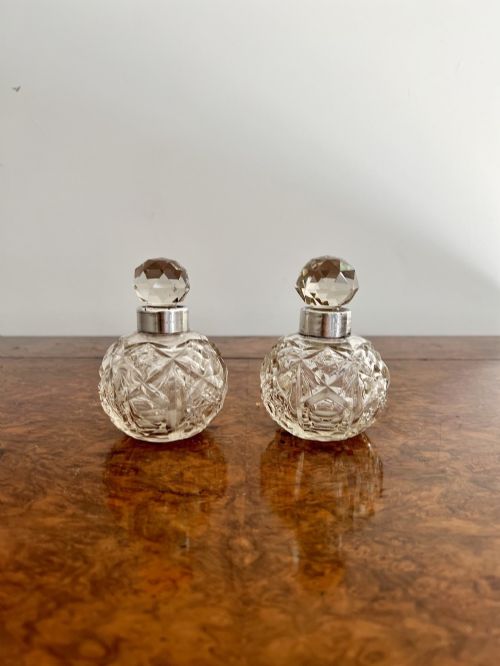
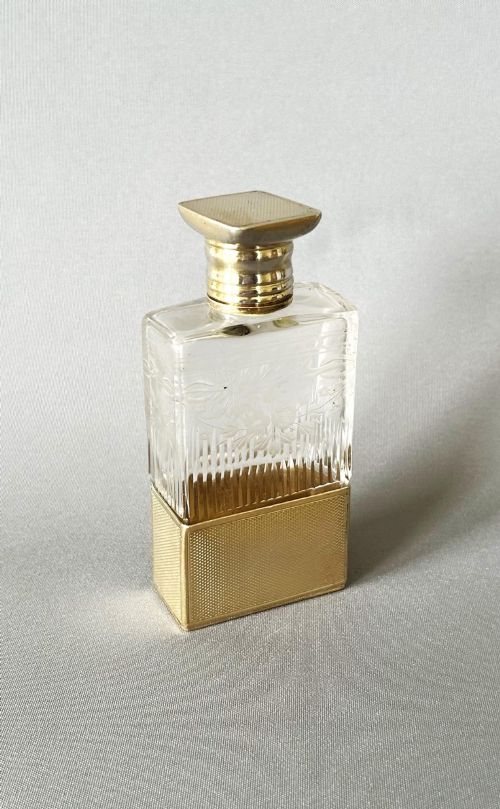
When you search for a crystal and silver bottle, you find an array of scent flasks, decanters, and cruet sets that combine sparkling glass with precious metal mounts.
Crystal and Silver Bottle
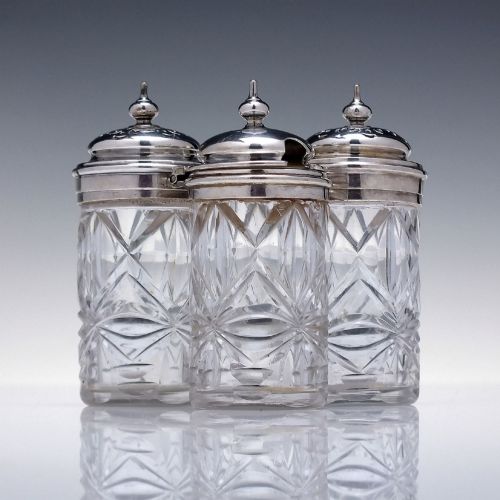
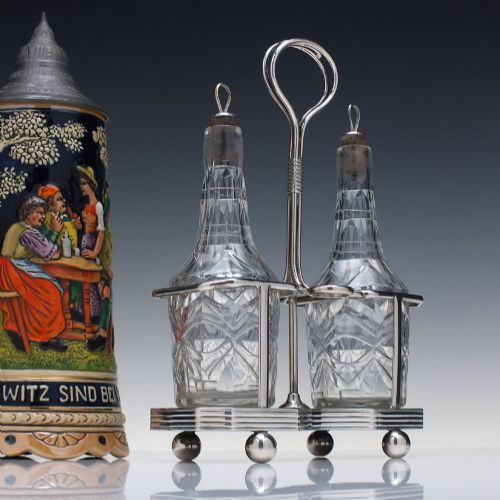
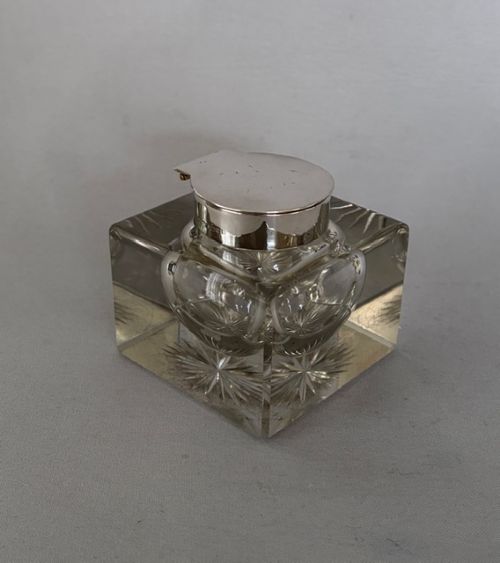
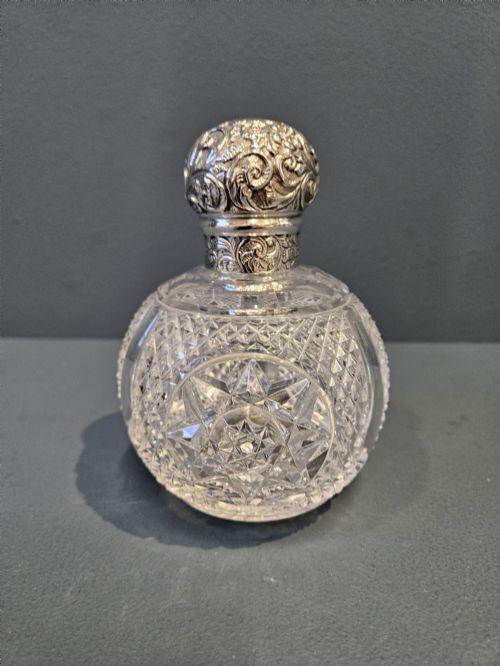
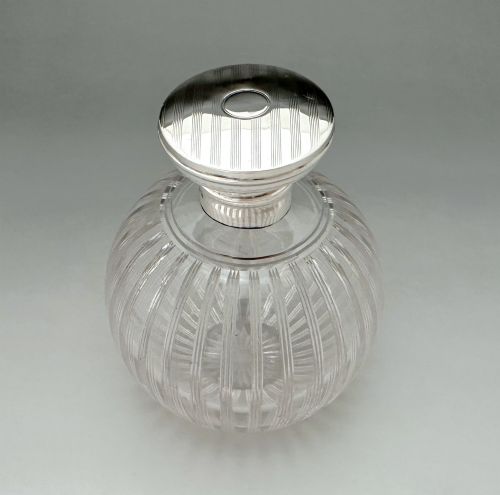
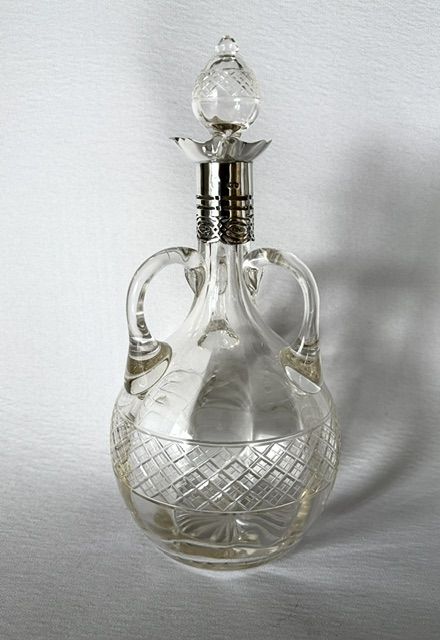
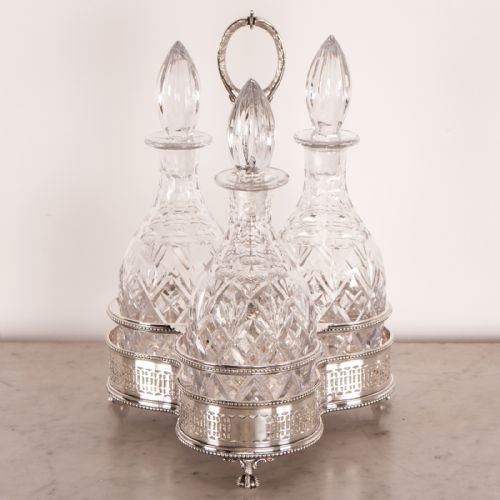
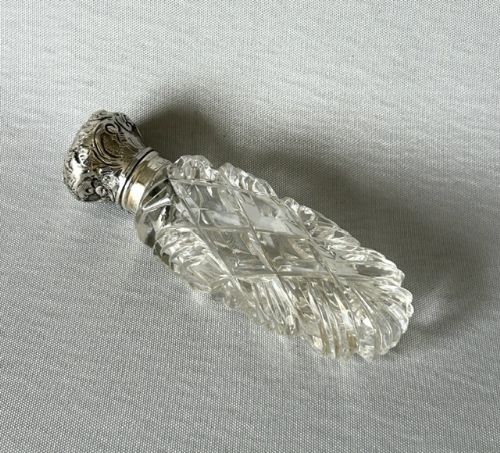
A crystal and silver bottle encompasses various forms from scent flasks and perfume atomisers to large spirit decanters and condiment cruets. These pieces bridge the domestic and the personal, serving functional roles on dressing tables and dining sideboards alike.
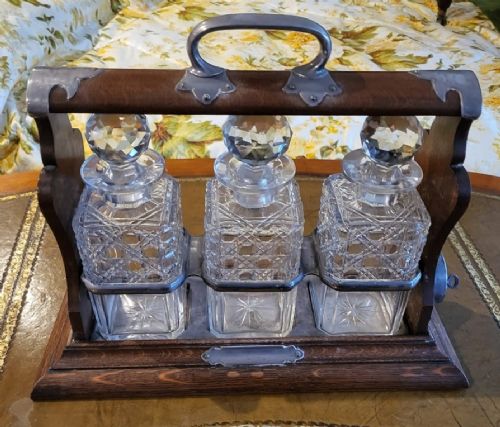
The versions most frequently encountered stem from the Victorian and Edwardian eras, alongside pieces stretching from the Georgian period through the Art Deco years. Common configurations include single scent bottles with hinged lids, larger whisky decanters with silver collars, and multi-bottle tantalus frames.
Makers utilised both sterling silver and silver plate for the collars, hinges, and tops, pairing them with cut glass, cut crystal, ruby glass, cranberry glass, and blue glass bodies. Some examples incorporate tortoiseshell, guilloche enamel, or colourful enamel work into the metal mounts.
Materials and construction
Glass bodies were formed by blowing or moulding, often receiving deep exterior facet cutting or intricate pattern wheel-engraving to refract light through the crystal or coloured glass. Makers then fitted these vessels with custom metal mounts, securing silver collars and hinged lids directly to the glass necks with specialised adhesives or mechanical tension.
Silversmiths shaped the mounts from sterling silver or applied silver plate over base metals, frequently incorporating hallmarks to indicate the assay office, date, and maker. Decorative elements such as enamel panels, tortoise shell insets, or gilding were added by hand before final assembly and polishing.
Crystal and Silver Bottle Retail Price Guide 2026
Typical asking prices for crystal and silver bottle among the pieces listed under this phrase on Sellingantiques today, from the lower quarter to the upper quarter. They describe what is for sale here now, not the wider market.
Listings feature glass and silver vessels spanning the Victorian, Edwardian, and Art Deco periods, alongside Georgian and mid-century examples.
Evaluating quality and execution
Quality rests in the weight and clarity of the glass, where deeply cut crystal displays sharper refraction than simpler pressed glass. The crispness of the wheel-cut facets and the absence of internal flaws indicate superior glassmaking skill.
In the metalwork, the thickness of the silver and the precision of the hinge mechanics distinguish finer pieces from standard production. Well-executed hallmarks, tight lid closures, and hand-applied enamel or gilding point to dedicated workshop standards.
Walker & Hall·Betjemann·Harold Bushell & Co·Karl Palda·Hukin & Heath Ltd·Freeman & Son Ltd·Barnsley & Co·Jonathan Douglas
The Crystal and Silver Bottle Glossary
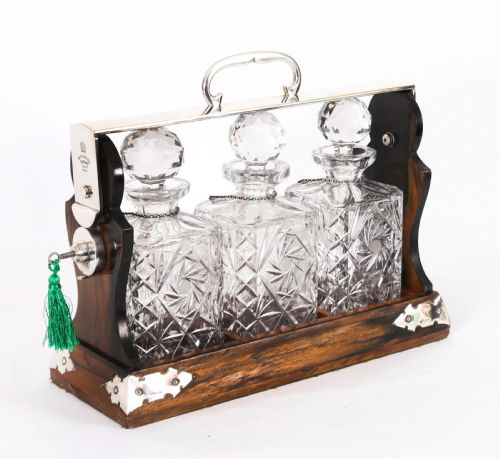
- Tantalus
- A locking wooden or metal stand designed to hold decanters securely while preventing access to the contents without a key.
- Cruet set
- A collection of small glass bottles mounted in a frame for holding condiments, oil, vinegar, or sauces at the dining table.
- Guilloche enamel
- A decorative technique where translucent enamel is layered over precisely engraved or engine-turned metal.
- Glug glug decanter
- A spirit decanter with a constricted neck that produces a characteristic gurgling sound when liquid is poured.
- Sterling silver
- An alloy containing a high percentage of pure silver combined with other metals to ensure durability in decorative mounts.
Crystal and Silver Bottle: Frequently Asked Questions
What is a tantalus?
A tantalus is a secure frame that holds one or more decanters in place with a locking mechanism across the stoppers. This design allowed hosts to display fine spirits while keeping the contents secure from servants or guests.
Most examples feature fitted wooden bases in oak or coromandel, paired with silver-plated or sterling silver hardware and lock plates.
How do I date a silver collar?
British silver mounts usually feature hallmarks stamped directly onto the metal surface. These tiny marks indicate the assay office, the specific year through an assigned letter code, and the maker's mark.
Matching the date letter against official hallmarking tables provides the exact year the metal mount was assayed and finished.
Were these used for perfume or spirits?
Depending on the scale and form, these vessels served vastly different domestic purposes. Smaller vessels with stoppers or screw caps held perfumes, cologne, and smelling salts on dressing tables.
Larger vessels with weighted stoppers and collars functioned as spirit decanters for whisky, brandy, or wine, while multi-bottle sets contained condiments and sauces.
What is cut crystal?
Cut crystal is glass containing lead oxide that has been shaped and patterned using abrasive wheels. The lead content increases the weight, refractive index, and clarity of the material.
This composition allows artisans to cut deep, sharp geometric facets that catch and scatter light more brilliantly than standard soda-lime glass.