



Crossbanded Walnut Cabinet
A crossbanded walnut cabinet brings warmth and figured timber to a room, offering both display space and practical storage.
Crossbanded Walnut Cabinet
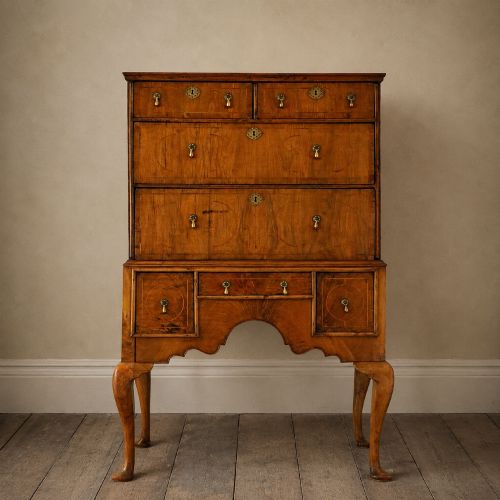
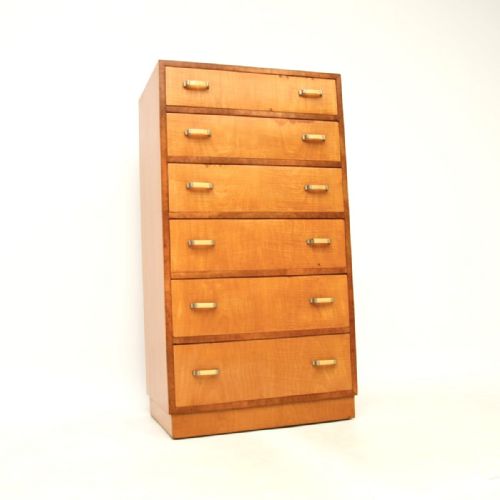
A crossbanded walnut cabinet combines the deep, rich tones of walnut timber with the decorative border work of crossbanding, creating a distinct visual contrast along the edges of doors, drawers or tops. These pieces span several centuries, with examples appearing across the Georgian, Victorian and Art Deco periods, alongside later revival styles.
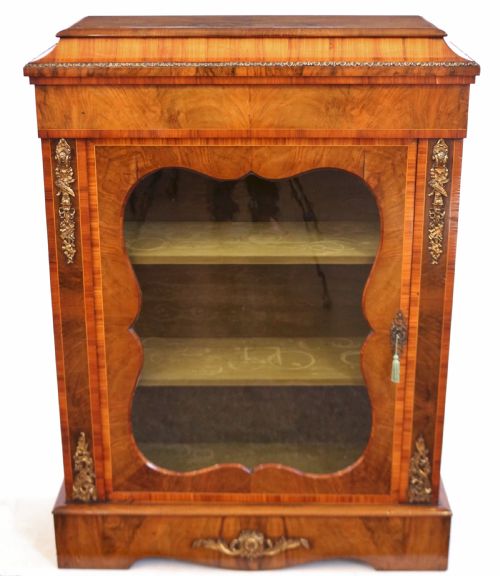
The forms vary considerably across the selection, ranging from pier cabinets and corner cupboards to chests of drawers, bureaux and sideboards. Buyers encounter both early eighteenth-century origins and later interpretations from the nineteenth and twentieth centuries, each showing how cabinetmakers adapted the form for different domestic settings.
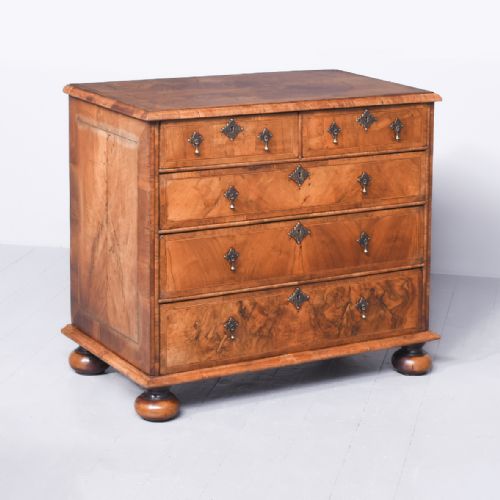
Most pieces rely on solid timbers combined with matched veneers, often utilising burr walnut to create striking grain patterns across the main surfaces. The inclusion of kingwood, oak or satinwood for banding and inlay work demonstrates the careful attention paid to surface decoration by makers of various eras.
How they were made
Makers constructed these cabinets using carcasing timbers such as oak, applying fine veneers of walnut or burr walnut to the primary exterior surfaces. The characteristic crossbanding involved laying narrow strips of veneer with the grain running at right angles to the main panel, framed further by stringing lines in contrasting woods like satinwood or kingwood.
Surface finishing relied on hand-applied polish that brought out the natural figuring and deep brown tones of the walnut. Brass hardware, including drop handles, escutcheons and hinges, was fitted by hand to secure doors and drawers while adding metallic contrast to the timber.
Some miniature chests were built as apprentice pieces, proving a young cabinetmaker's skill before he joined the guild.
What varies in quality
The selection of timber plays a primary role in distinguishing pieces, particularly the choice between plain walnut and highly figured burr walnut veneers. The skill with which the crossbanding is matched at the corners and mitres indicates the precision of the workshop that produced the cabinet.
Proportion and structural integrity separate standard examples from finer items, especially in how secondary timbers like oak are used internally for drawer linings and carcase construction. Original brass fittings and the preservation of the polished surface also contribute significantly to the overall character of the piece.
The Crossbanded Walnut Cabinet Glossary
- Crossbanding
- A border of veneer laid around the edges of a panel, where the grain runs perpendicular to the main surface. This technique creates a neat framing effect that highlights the central timber.
- Burr walnut
- Timber taken from the abnormal growth of a walnut tree, producing swirling, intricate grain patterns. Cabinetmakers prized this material for its decorative impact on drawer fronts and tabletops.
- Kingwood
- A dense, dark exotic wood with contrasting golden-brown streaks, frequently used for banding and inlay work. It provides a sharp visual boundary against paler walnut surfaces.
- Pier cabinet
- A low freestanding display cabinet designed to fit against the wall space between windows. These pieces often feature glass doors and internal shelving for porcelain or small objects.
- Davenport
- A compact desk featuring a sloping writing surface above a pedestal of drawers. The form gained popularity during the nineteenth century for use in smaller reception rooms.
Crossbanded Walnut Cabinet: Frequently Asked Questions
How do I date a walnut cabinet?
Dating relies on examining the construction methods, secondary timbers like oak, and the style of the hardware and feet. Early eighteenth-century pieces often show different carcase construction compared to Victorian or revival pieces from nineteen thirty.
Changes in veneer thickness and the choice of banding woods also help distinguish Georgian originals from later interpretations.
What is crossbanding?
Crossbanding is a decorative technique where a border of veneer is applied to the edges of a panel so the grain runs across the border rather than along the length. It frames the central wood and adds a neat finish.
This method appears frequently on walnut furniture from the seventeenth century onwards.
Where should I place a corner cabinet?
Corner cabinets fit neatly into unused room angles, making them practical for smaller spaces where a standard rectangular cupboard would block movement. They work well in dining rooms or hallways for displaying china or storing glassware.
Their angled backs ensure they sit flush against adjoining walls.
How do I care for walnut veneer?
Walnut furniture requires protection from direct sunlight and steady indoor humidity to prevent the timber and veneer from drying out or splitting. Gentle dusting with a dry cloth keeps the surface clean without harming the polish.
Avoid placing damp items directly onto the polished wood.