

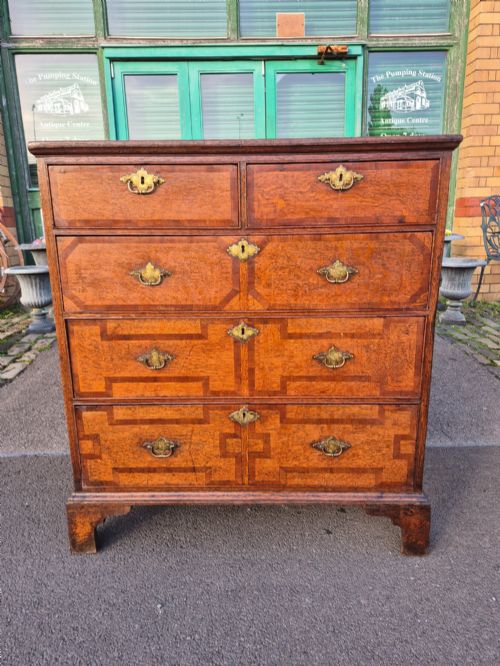
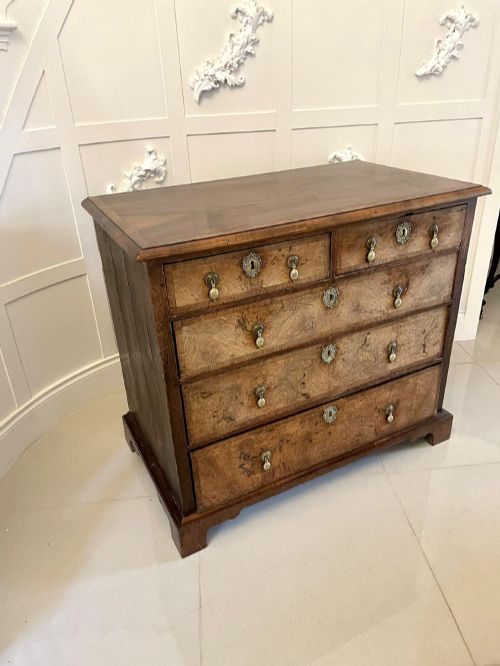
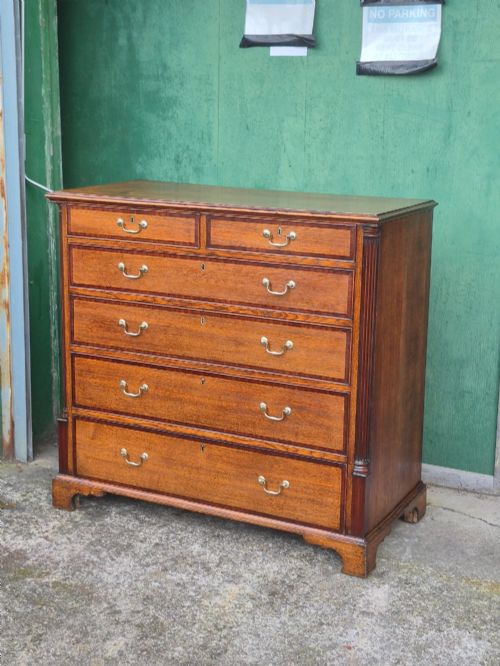
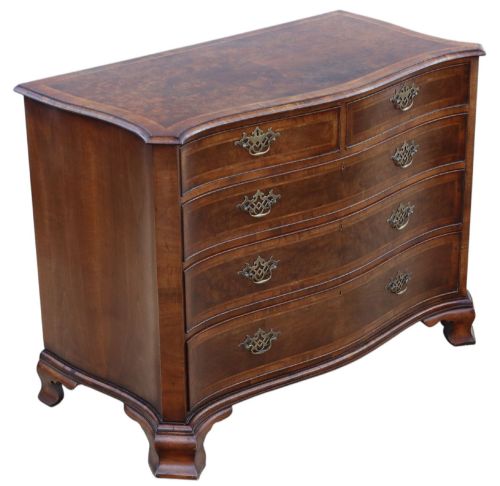
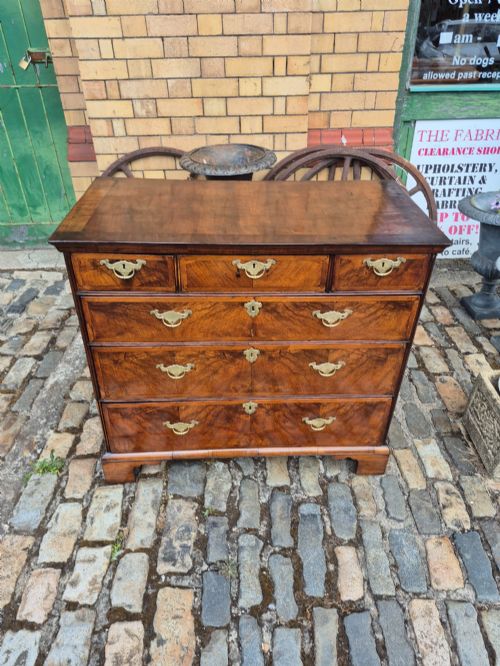
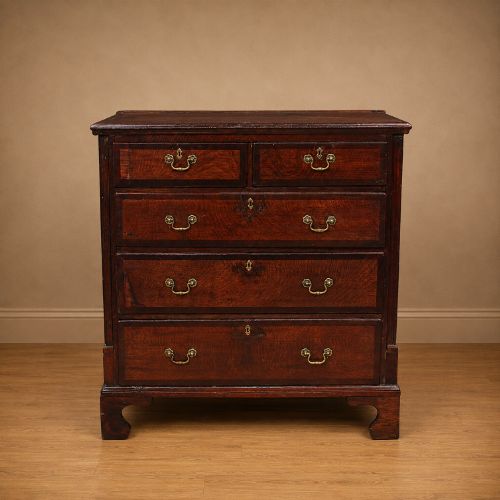
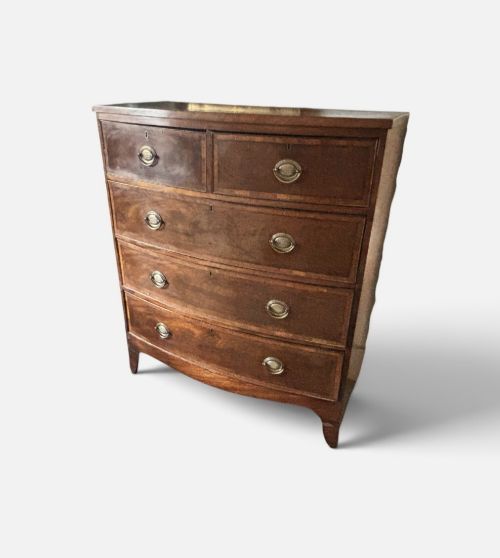
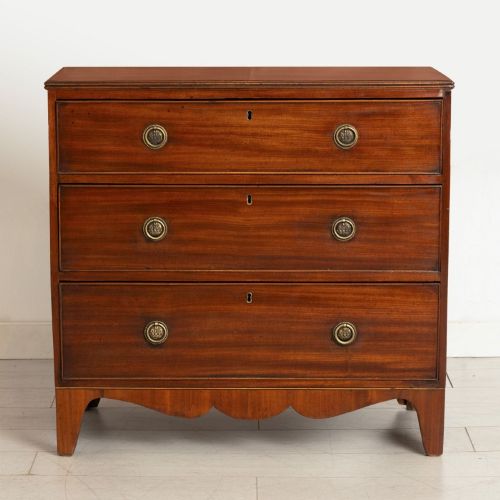
Crossbanded Storage Chest
A crossbanded storage chest brings together warm timbers and precise border inlay, offering practical storage with enduring decorative presence.
Crossbanded Storage Chest
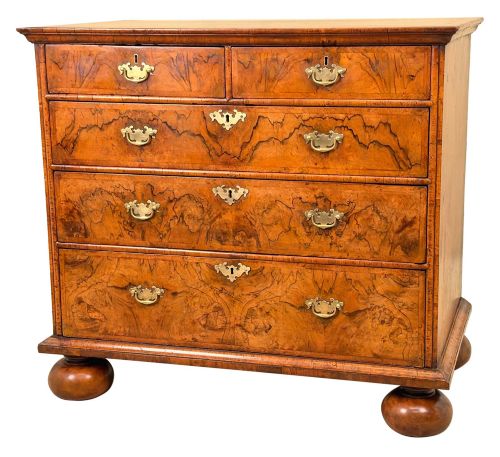
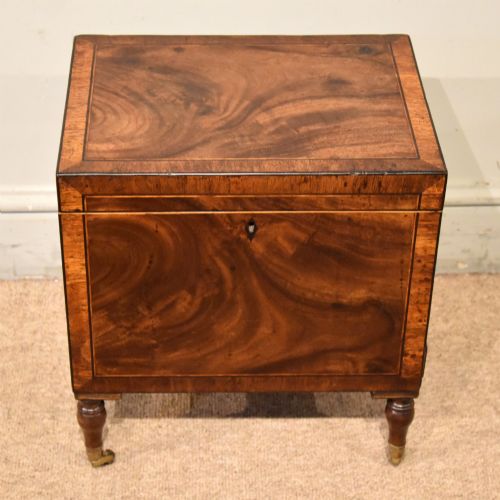
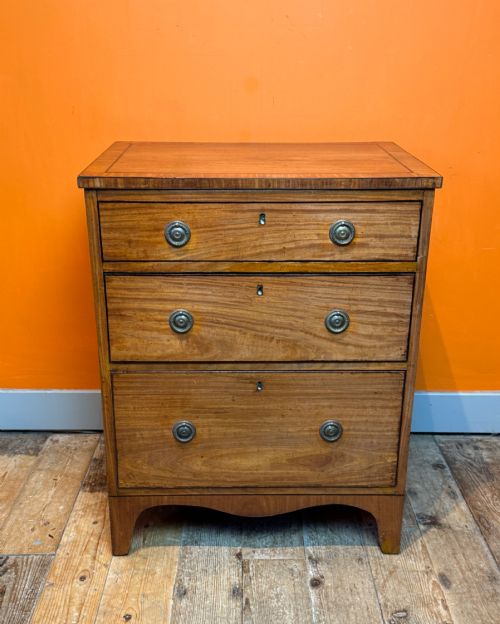
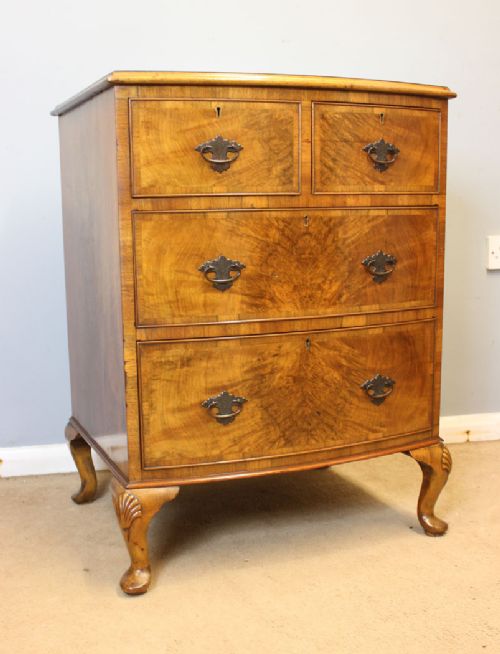
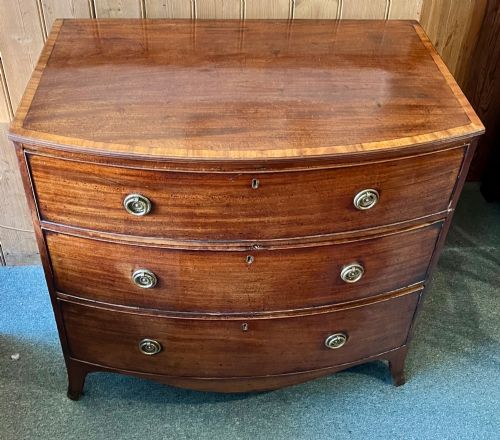
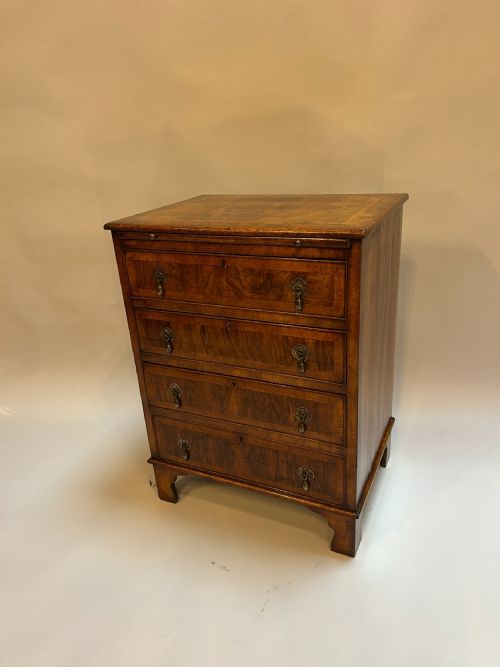
A crossbanded storage chest is a functional furniture piece designed for domestic organisation, frequently taking the form of a chest of drawers, a mule chest, or a linen press. These items emerge across several periods, most notably the Georgian era and the eighteenth and nineteenth centuries, reflecting shifts in cabinet making over generations.
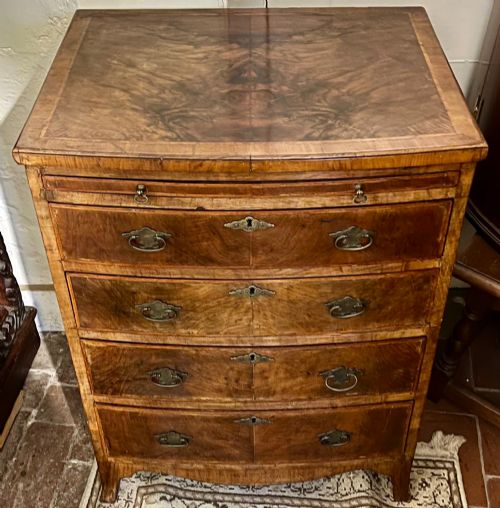
The varieties met most often on this page combine primary structural woods like oak, mahogany, or walnut with contrasting border veneers such as satinwood or rosewood. Buyers encounter everything from compact bow front designs and serpentine commodes to larger Lancashire mule chests fitted with internal storage.
Originating from British and continental workshops, these pieces served bedrooms and living spaces for centuries. Their enduring appeal lies in the way timber grain and geometric border bands catch the light in a room.
How they were made
Cabinet makers constructed these storage pieces using solid carcasses of oak, mahogany, or walnut, selected for structural stability and strength. Surfaces then received careful layers of veneer, applying fine timbers like burr walnut, satinwood, and amboyna to create patterned fronts and tops.
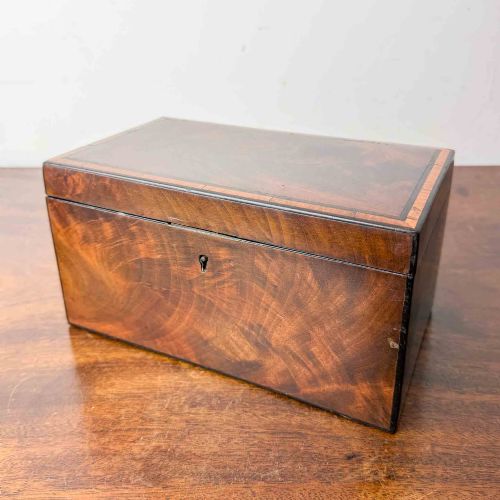
The characteristic crossbanding involves laying veneer strips with the wood grain running perpendicular to the surrounding surface, framing the central panels. Brass handles and escutcheons were fitted to drawer fronts, alongside dovetail joinery that held drawer boxes together through decades of daily use.
Crossbanded Storage Chest Retail Price Guide 2026
Typical asking prices for crossbanded storage chest among the pieces listed under this phrase on Sellingantiques today, from the lower quarter to the upper quarter. They describe what is for sale here now, not the wider market.
Some mule chests retain faint interior candle scorches from centuries ago when servants searched for linens after dark.
What varies in quality
The standard of a crossbanded storage chest rests upon the precision of its timber selection and the harmony of its contrasting veneers. Finer examples display carefully matched burr walnut or satinwood grains that flow naturally across the drawer fronts and frame the top border without awkward interruptions.
Construction methods also distinguish the tiers of quality, seen in the tightness of hand-cut dovetails and the weight of the original brass hardware. Pieces originating from prominent stylistic periods often demonstrate superior proportion in their curved bow fronts or serpentine shapes.
The Crossbanded Storage Chest Glossary
- Crossbanding
- A border technique where veneer strips are applied so the wood grain runs across the length of the band rather than following the panel centre. This frames the top or drawer fronts with a neat, contrasting perimeter.
- Mule chest
- A traditional storage chest featuring one or more bottom drawers beneath the main internal compartment. They bridge the design gap between simple blanket chests and modern drawer units.
- Serpentine
- A furniture front shaped in a gentle wave with a convex centre flanked by concave curves. This contour requires skilled carpentry and adds fluid movement to case pieces.
- Bow front
- A cabinet front that curves outward in an arc. The style became particularly popular during the Regency and Georgian periods for chests of drawers.
- Caddy top
- A raised furniture top with a moulded edge reminiscent of the lids found on tea caddies. It gives a defined profile to the upper surface of smaller chests.
Crossbanded Storage Chest: Frequently Asked Questions
How do I date an old chest?
Dating relies on examining the secondary woods, construction joints, handles, and overall stylistic proportions. Pieces from the Georgian period often feature hand-cut dovetails and specific timber choices like oak or early mahogany.
Later Victorian and Edwardian revivals adopted machine-assisted methods alongside different aesthetic preferences. Comparing the carcass construction against known period characteristics helps establish an approximate age.
Where were these chests used?
These storage pieces historically served bedrooms, hallways, and living quarters for holding linens, clothing, and personal valuables. Mule chests often sat in ground-floor rooms for everyday garments before dedicated wardrobes became common.
Their substantial construction and decorative crossbanding meant they functioned as prominent furnishings rather than purely hidden storage. Today they continue to serve similar organisational roles in modern homes.
How do I care for antique timber?
Maintaining antique timber requires stable indoor humidity away from direct heat sources and strong sunlight. Regular dusting with a soft, dry cloth preserves the finish without building up heavy chemical residues.
Applying occasional traditional wax feeds the wood and protects the delicate veneers. Avoiding excessive moisture ensures the crossbanding stays secure to the base wood.