
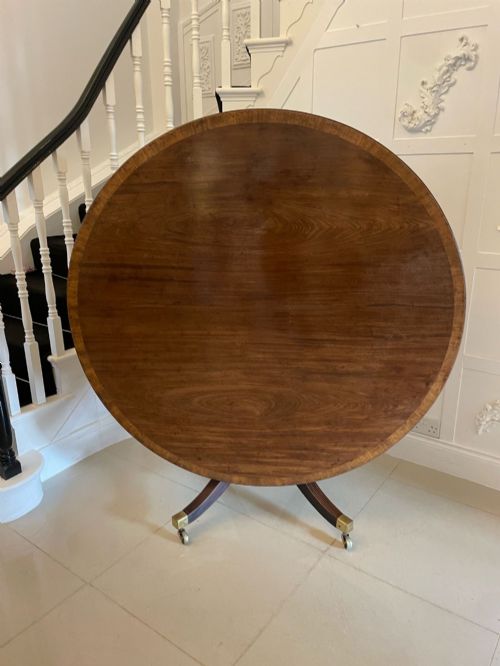
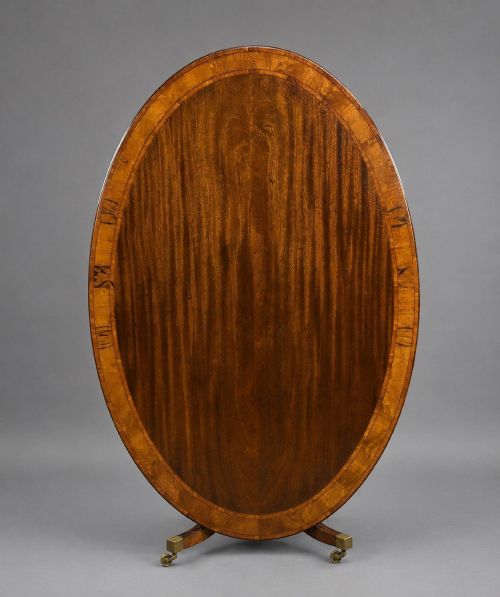
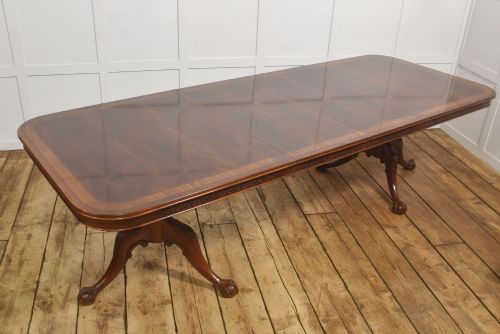
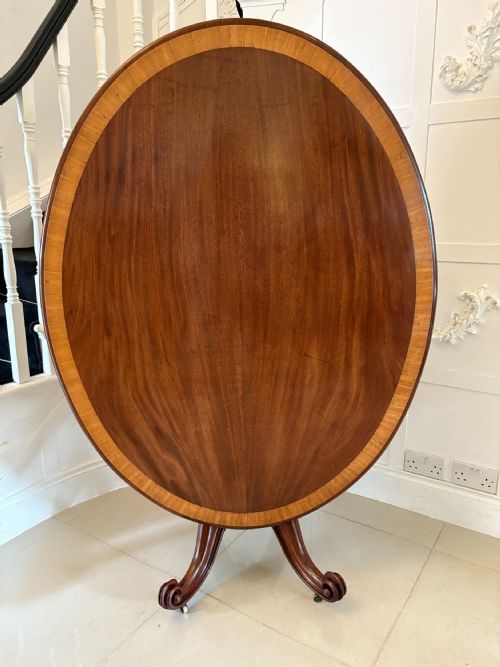




Crossbanded Dining Table
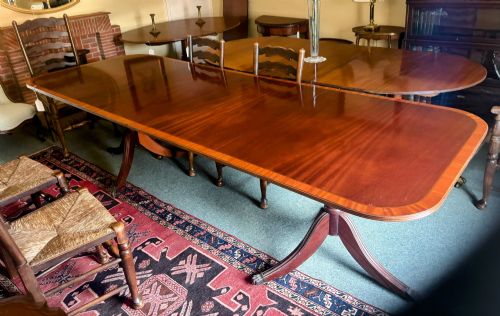
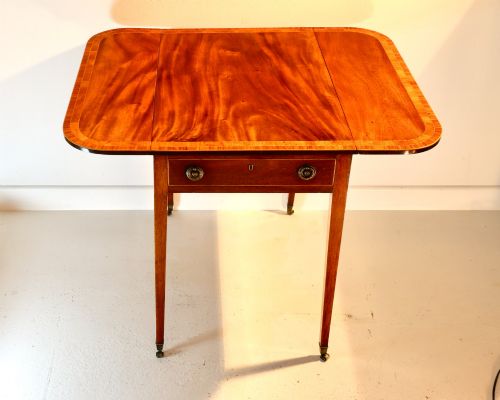
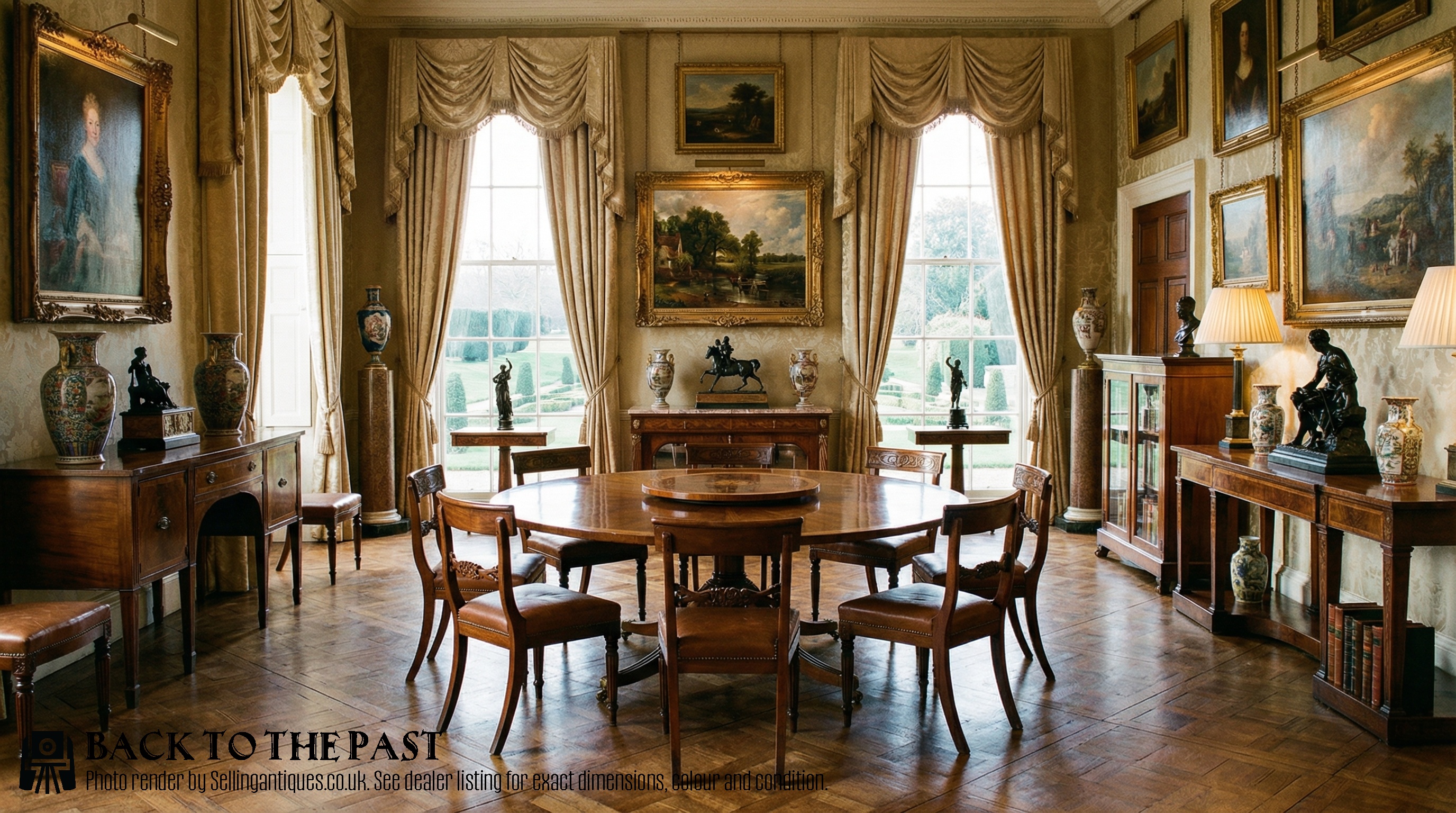
A crossbanded dining table brings distinct timber contrast and linear framing to a room, uniting functional surface space with refined cabinetmaking.

Crossbanded Dining Table
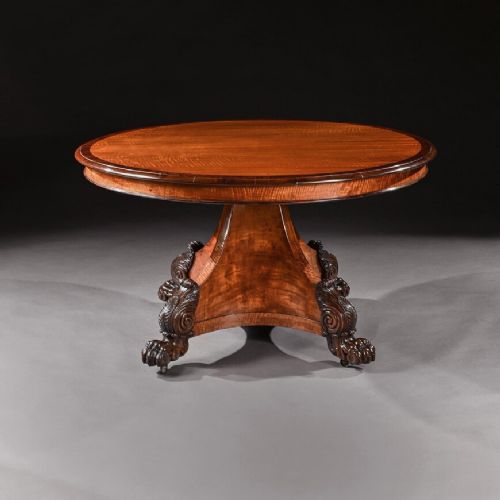
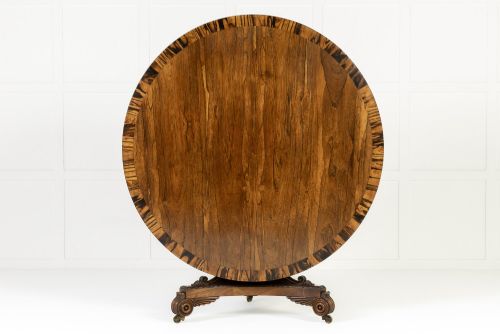
The forms vary from large extending tables supported by multiple pillars to tilt-top breakfast tables, circular centre tables, and oval formats designed to seat several guests. These pieces originate across the Georgian, Regency, Victorian, and Edwardian eras, encompassing both original period craftsmanship and subsequent revival interpretations.
How they were made
Cabinetmakers constructed these tables using solid timber bases and frames overlaid with carefully selected figured mahogany, rosewood, or coromandel veneers. The distinctive borders utilised contrasting woods such as satinwood, applied in strips so the grain ran across the width of the band rather than along its length.
Makers integrated brass fittings, including castors and paw feet, alongside tilt mechanisms and pillar supports that allowed large tops to pivot or separate into sections with additional leaves.
Crossbanded Dining Table Retail Price Guide 2026
Typical asking prices for crossbanded dining table among the pieces listed under this phrase on Sellingantiques today, from the lower quarter to the upper quarter. They describe what is for sale here now, not the wider market.
Listings feature mahogany, rosewood, and satinwood timbers across Georgian, Regency, and Edwardian periods.
What varies in quality
The standard of timber selection largely dictates the quality, with highly figured flame mahogany and richly grained rosewood marking the superior examples. The precision of the inlay work and the tightness of the mitred corners on the crossbanding further separate standard production from exhibition pieces.
Understructures also distinguish the range, where heavy, stable pillar pedestals with well-carved bases or robust leg assemblies indicate greater craftsmanship than lighter, simpler frames.
Peters of Genoa
The Crossbanded Dining Table Glossary
- Crossbanding
- A border veneer applied to the perimeter of a tabletop where the wood grain runs at right angles to the central panel. This technique frames the primary timber and provides visual contrast.
- Tilt-top
- A hinged tabletop mechanism that allows the surface to be folded vertical against the pedestal when not in use. It is commonly found on breakfast and centre tables from the Georgian and Regency periods.
- Veneer
- A thin layer of highly figured or choice wood applied to a stable secondary timber base. This method displays striking grain patterns while preventing warping.
- Satinwood
- A durable, light-coloured tropical timber used extensively for inlay and crossbanding. Its golden sheen provides sharp contrast against darker woods like mahogany.
- Pillar
- A central turned wooden column supporting a table top, often resting on a platform base with multiple splayed legs. These columns frequently feature reeded or carved decoration.
Crossbanded Dining Table: Frequently Asked Questions
What is a crossbanded dining table?
A crossbanded dining table is a table featuring a decorative border veneer where the grain runs perpendicularly to the main surface. These pieces range from compact breakfast tables to large multi-pedestal dining formats.
They combine functional dining surfaces with decorative cabinetmaking techniques originating primarily in the eighteenth and nineteenth centuries.
How do I date a crossbanded table?
Dating relies on examining the timber species, construction methods, and overall style characteristics such as leg profiles and pedestal designs. Georgian and Regency examples typically show hand-cut joinery and native timbers alongside imported veneers.
Later Victorian and Edwardian revival pieces often incorporate machine-cut veneers and standardised hardware while copying earlier aesthetic movements.
How were tilt-top tables used?
Tilt-top tables functioned as versatile furniture that could be folded flat and pushed against a wall when meals concluded. This saved valuable floor space in smaller rooms.
In larger reception rooms, they served as breakfast or centre tables before being cleared and stored upright.
How do I care for antique veneer?
Antique veneer requires consistent indoor humidity and protection from direct sunlight to prevent the timber from drying and lifting. Regular dusting with a dry cloth maintains the finish without moisture damage.
Polishing with traditional wax preserves the natural sheen of the wood and nourishes the older surface layers.