


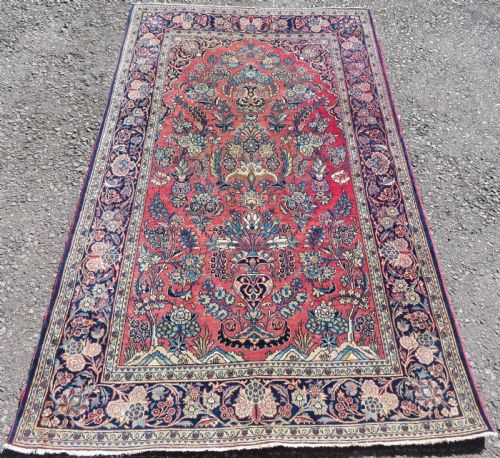

Crimson Wool Floor Rug
These crimson wool floor rugs bring warmth and texture to a room, spanning tribal village weaves and grand nineteenth-century carpets.
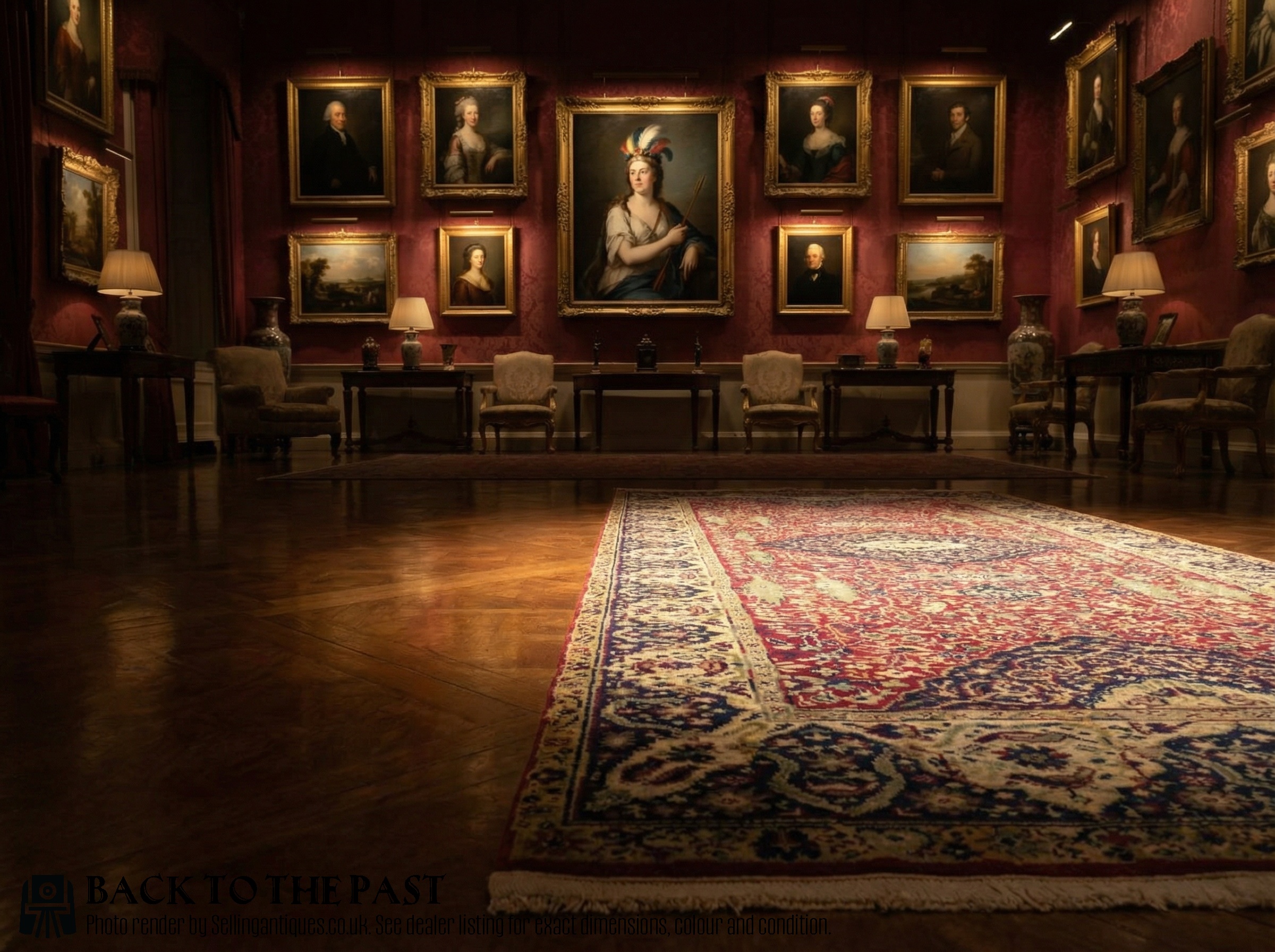
Crimson Wool Floor Rug
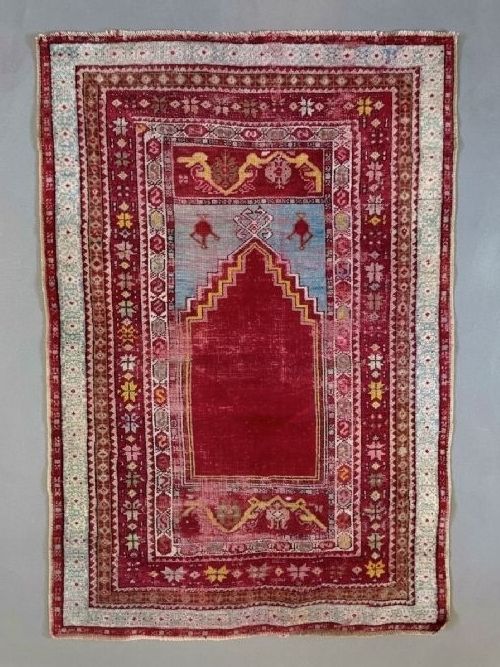
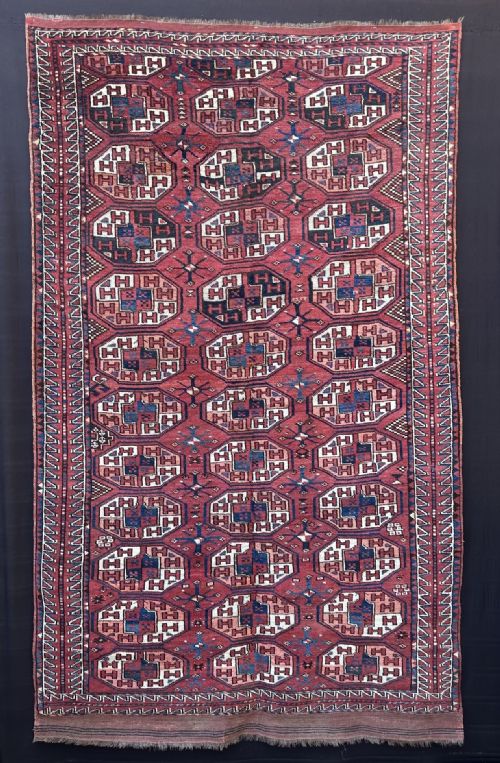
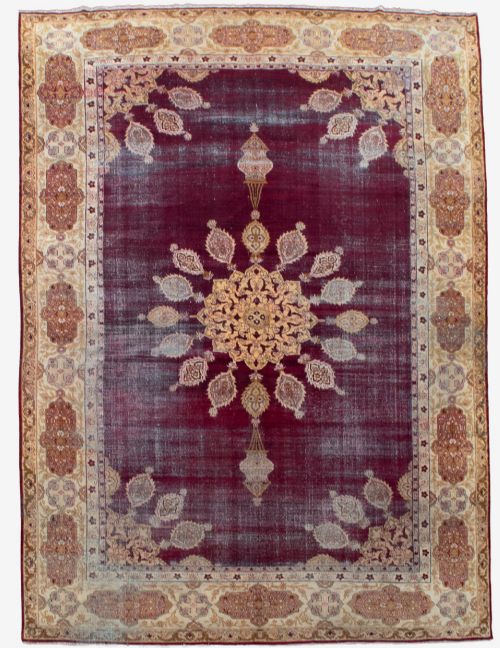
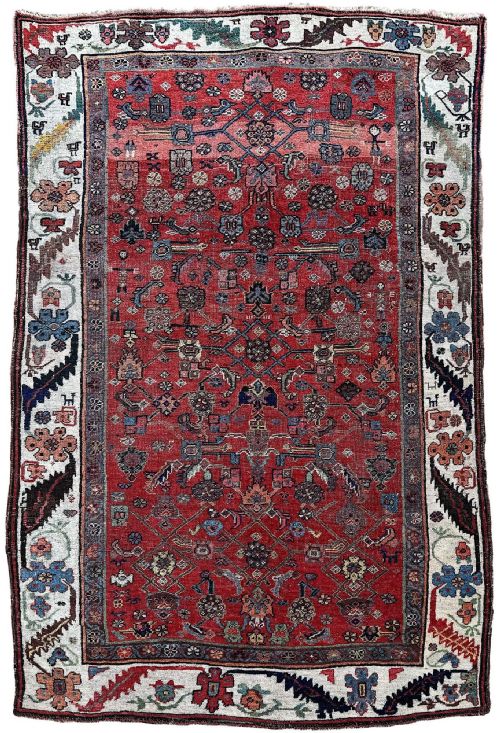
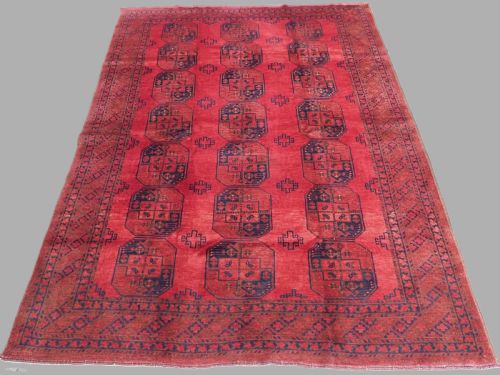
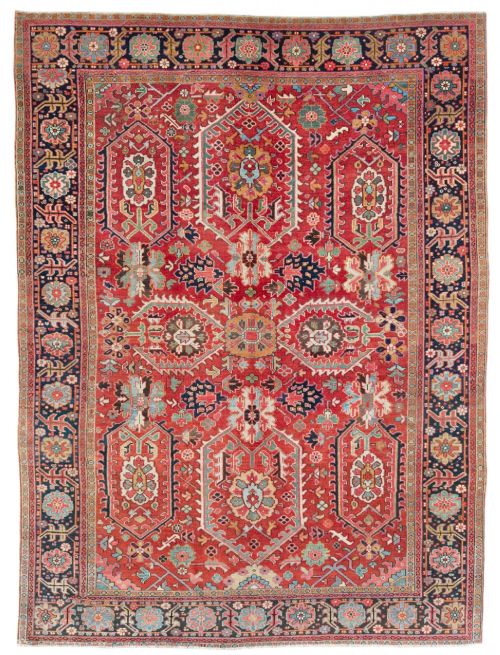
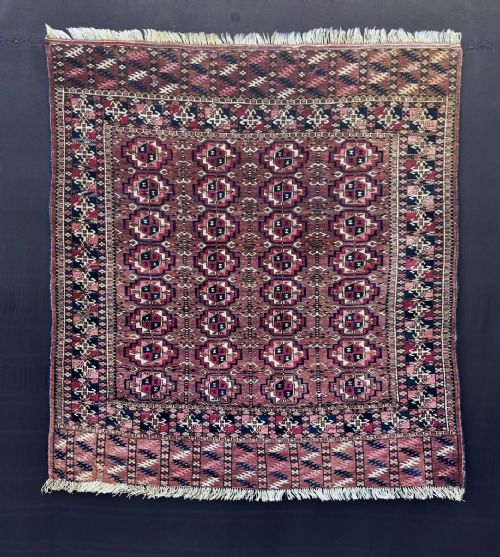
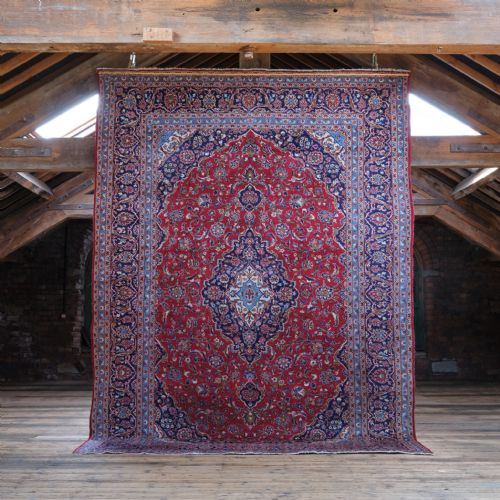
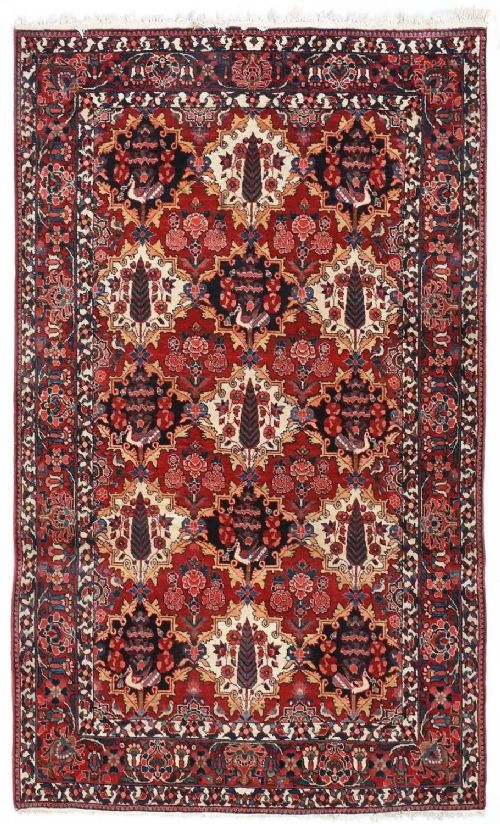
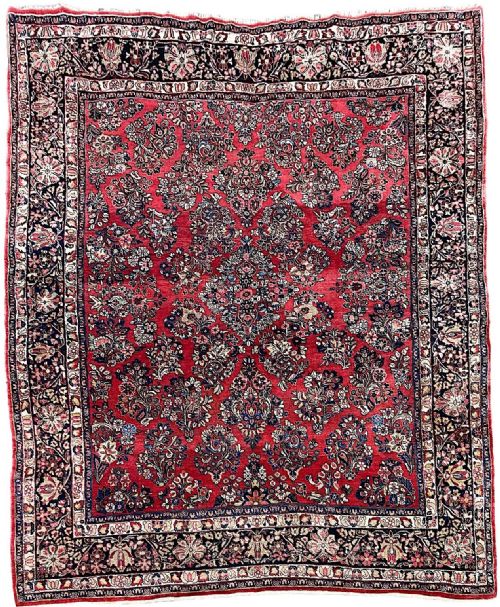
Buyers encounter everything from compact prayer rugs to palace-size country house carpets. Traditional regional styles such as Heriz, Bidjar, Sarouk, and Ersari Turkmen dominate the inventory, displaying deep red and crimson ground colours shaped by traditional design vocabularies.
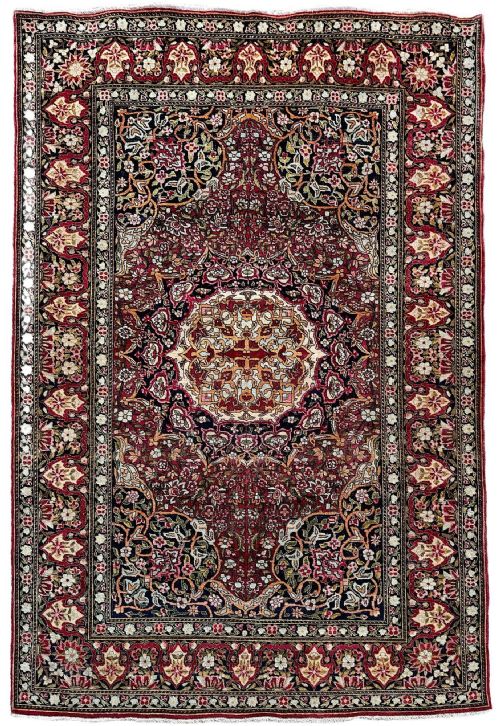
Village and tribal formats offer geometric medallions, guls, and tree-of-life motifs, while formal city carpets display intricate floral arrangements. Each piece serves as a heavy-duty floor covering that anchors a interior scheme with rich crimson wool tones.
How they were made
Construction relies upon hand-knotted and hand-woven techniques using natural materials such as wool, cotton, and occasionally silk or angora wool. Artisans worked on vertical or horizontal looms, securing pile yarn around warp threads with precise knotting structures.
Dyeing involved natural dye sources to achieve the characteristic warm red and crimson hues found across Afghan, Persian, and Turkmen pieces. Foundation threads commonly utilise spun cotton or wool, providing structural stability for heavy foot traffic.
Tribal weavers often embedded minor intentional irregularities into geometric patterns to ward off the evil eye and protect the household.
What varies in quality
Quality rests upon knot density, the finesse of the design execution, and the integrity of the wool pile. Tighter knotting allows for crisper medallion and floral detail in city carpets, whereas tribal rugs derive strength from robust, heavy-duty wool construction.
The choice of natural dyes influences the depth and longevity of the crimson palette, creating rich tonal variations as light shifts across the surface. Balance in composition, well-drawn borders, and the retention of original fringe and selvedge edges mark superior examples.
The Crimson Wool Floor Rug Glossary
- Gul
- A repeating octagonal medallion motif frequently found in Turkmen and Afghan tribal carpets. These tribal emblems often hold distinct clan or regional identities.
- Medallion
- A central ornamental design feature placed in the middle of the field, typical of Persian city rugs. It anchors the symmetrical layout of the surrounding floral or geometric patterns.
- Warp
- The stationary vertical threads stretched tightly on the loom that form the structural skeleton of the rug. Weft threads are woven horizontally across these to lock the knots in place.
- Selvedge
- The reinforced side edges of a rug finished by wrapping or binding the outermost warp threads. A well-maintained selvedge prevents the pile from fraying over decades of use.
Crimson Wool Floor Rug: Frequently Asked Questions
How do I clean a wool floor rug?
Regular gentle vacuuming without a rotating brush head removes surface grit before it settles into the wool pile. Professional specialist cleaning remains essential for addressing deeper soil and preserving natural dye stability.
Water and harsh chemical detergents should be avoided to prevent wool shrinkage and colour bleeding. Allowing adequate air drying protects the foundational cotton or wool warps from moisture damage.
Where should I place a runner rug?
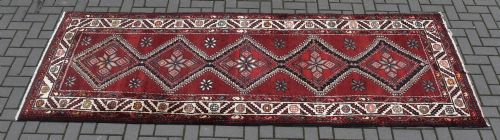
Runners suit narrow spaces such as hallways, corridors, and galley kitchens where foot traffic benefits from a protective floor covering. They also serve effectively alongside beds or in long entryways to introduce colour and warmth.
Selecting the correct length ensures the runner spans the primary walking path without obstructing doors. Underlay placement keeps the rug stable on hard wood or stone floors.
What is the difference between village and city rugs?
Village and tribal rugs feature geometric motifs, spontaneous designs, and heavy-duty wool constructed by nomadic or regional weavers. City workshops produce refined, symmetrical floral compositions with higher knot counts and intricate curving lines.
Regional weaving centres such as Kashan, Isfahan, and Tabriz produced structured workshop carpets, whereas Afghan and Baluch weavers favoured tribal traditions. Both categories utilise crimson wool grounds but express distinct artistic heritages.
How do I choose the right rug size?
Room-size carpets should allow enough exposed flooring around the perimeter to frame the furniture arrangement correctly. Area rugs work best when front furniture legs rest comfortably upon the wool surface to unify the seating group.
Measuring the floor space accurately before purchase prevents overcrowding in compact rooms or leaving large expanses bare. Considering doorway clearances ensures heavy pile thickness does not impede entry.