
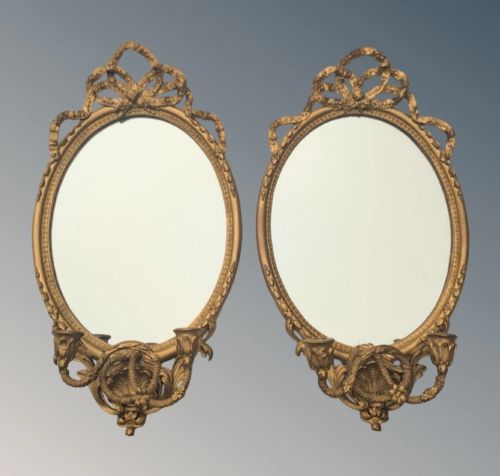
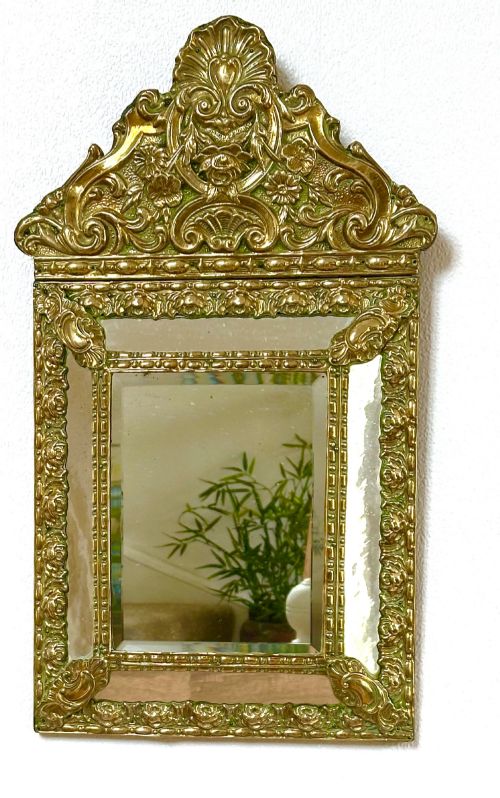
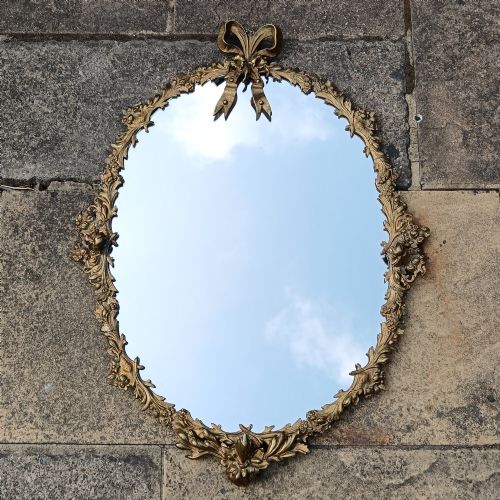

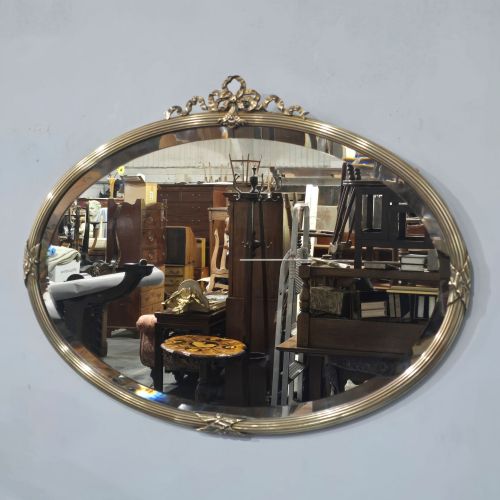
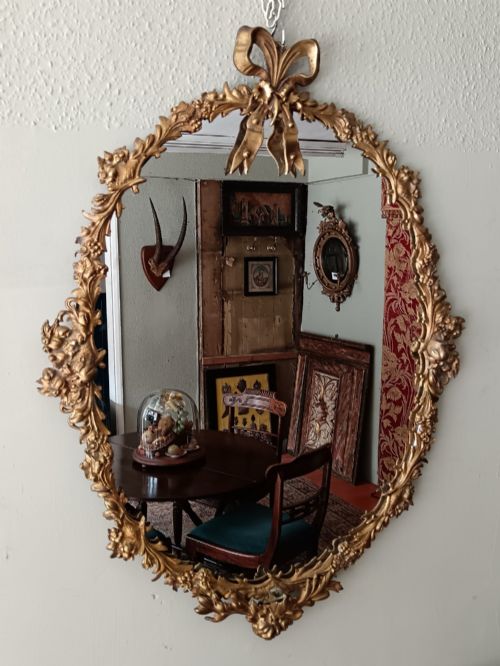


Crested Brass Mirror
These crested brass mirrors bring striking metallic frames and decorative crests to interiors, spanning Regency, Victorian, and Edwardian periods.
Crested Brass Mirror
A crested brass mirror combines a reflective glass plate with a prominent metal frame and decorative upper crest. When you search for a crested brass mirror, you encounter pieces designed for walls, dressing tables, and tabletops.
The pieces on this page originate predominantly from the nineteenth century, with Victorian and French examples appearing frequently alongside Regency and Edwardian variants. Forms range from simple oval wall hangings to elaborate cushion frames and pressed brass designs.
What varies in quality
The standard of a crested brass mirror depends on the depth and crispness of the metalwork in the crest and frame. Finely cast or repoussé examples display sharper relief and more deliberate detailing than simpler pressed items.
The quality of the glass plate and the integrity of the original backing or mounts also distinguish finer examples. French Louis XVI revival pieces and heavy Flemish cushion frames often demonstrate superior craftsmanship.
Materials span brass, gilt bronze, bevelled glass, and wooden cushion structures.
The Crested Brass Mirror Glossary
- Repoussé
- A metalworking technique where the metal is hammered from the reverse side to form a raised design in relief. This method creates the tactile surface patterns seen on many nineteenth-century frames.
- Cushion frame
- A convex or rounded frame profile that swells outward toward the outer edge. This style gives mirrors a substantial, three-dimensional presence on the wall.
- Bevelled glass
- Glass with an angled edge cut and polished to a specific width. It adds a decorative border to the reflection and catches the light.
- Girandole
- A decorative wall mirror featuring attached candle sconces or arms. The metal and glass reflect the candlelight to illuminate the room.
- Mask crest
- An ornamental facial motif incorporated into the upper crown of the frame. These faces are often cast in brass or bronze as part of the revival styles.
Crested Brass Mirror: Frequently Asked Questions
Where should I hang a brass wall mirror?
These mirrors suit principal reception rooms, hallways, and bedrooms where they can reflect natural light and anchor a wall space.
Choose a position that complements the scale of surrounding furniture, keeping the decorative crest at a comfortable viewing height.
How do I identify a Victorian brass mirror?
Victorian examples often display heavy cast brass frames, ornate mask crests, or pressed metal decorations typical of nineteenth-century production.
Examining the construction of the backboards, fixings, and glass bevelling helps confirm the period.
How do I care for antique brass frames?
Dust the metal gently with a soft, dry cloth to preserve the patina accumulated over the decades. Avoid abrasive metal cleaners that can strip the original finish and surface character.