
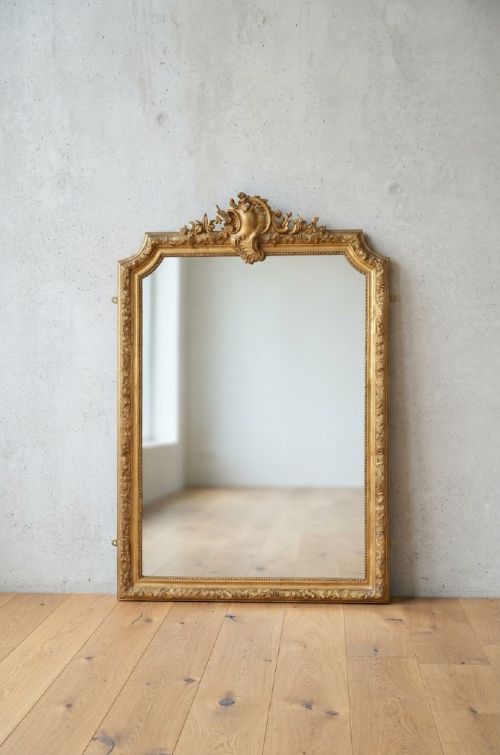
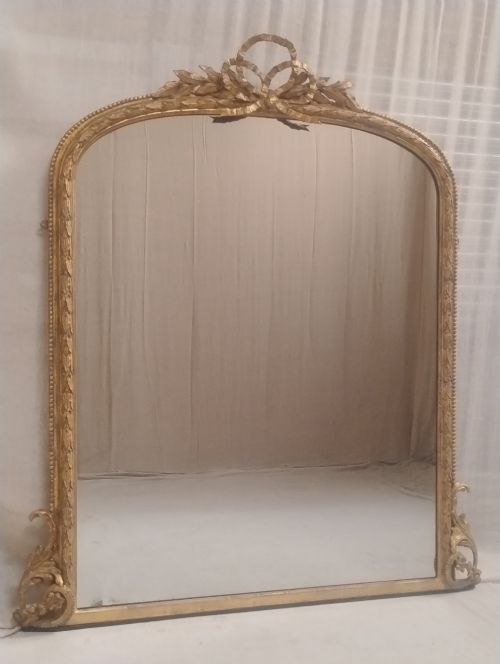
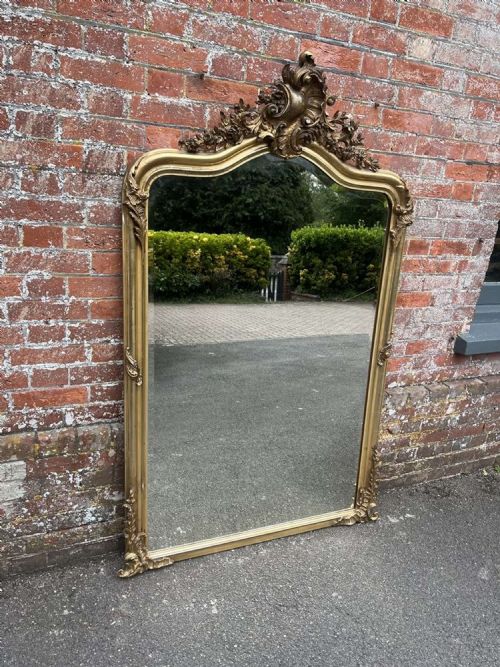
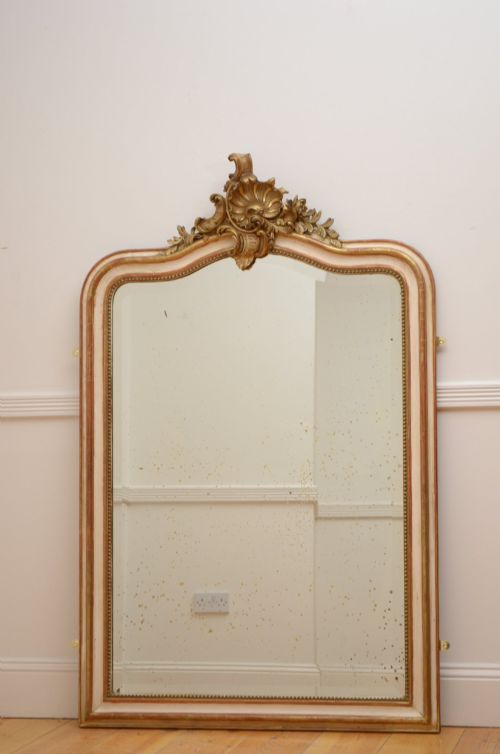
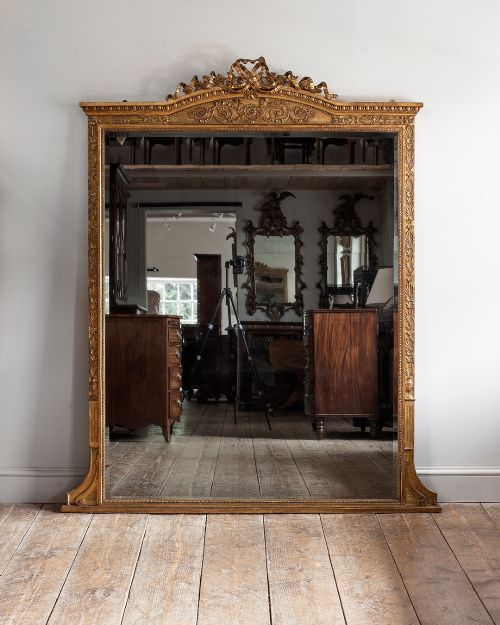
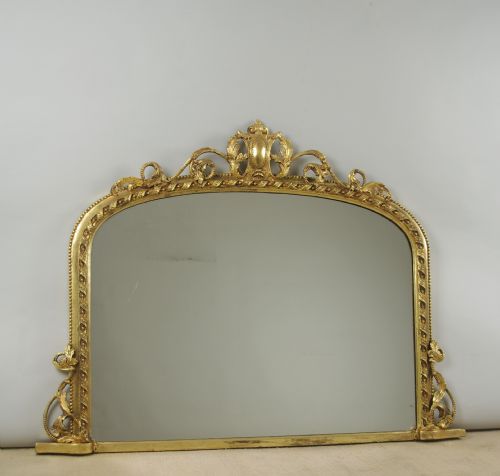
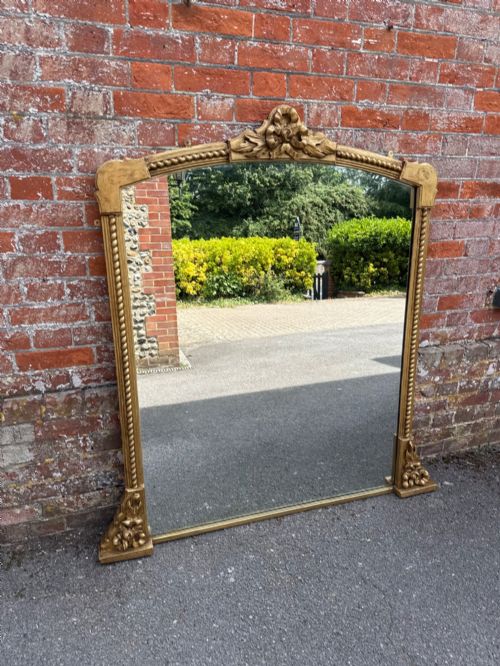
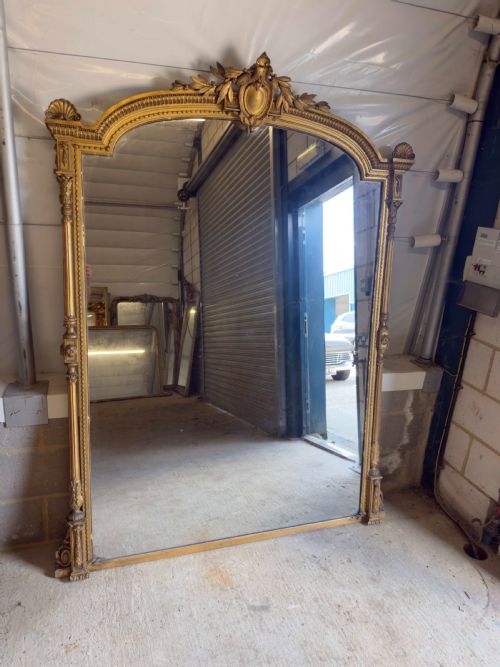
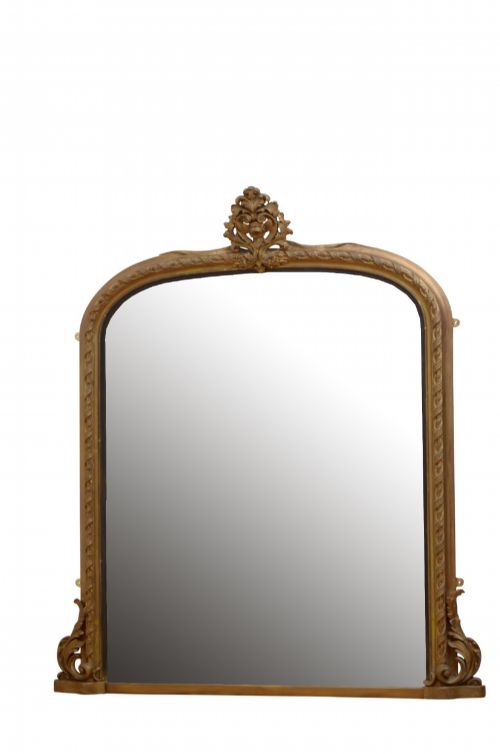
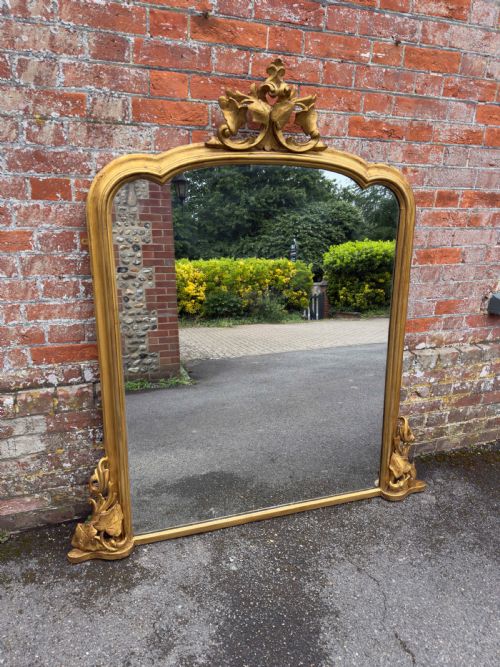
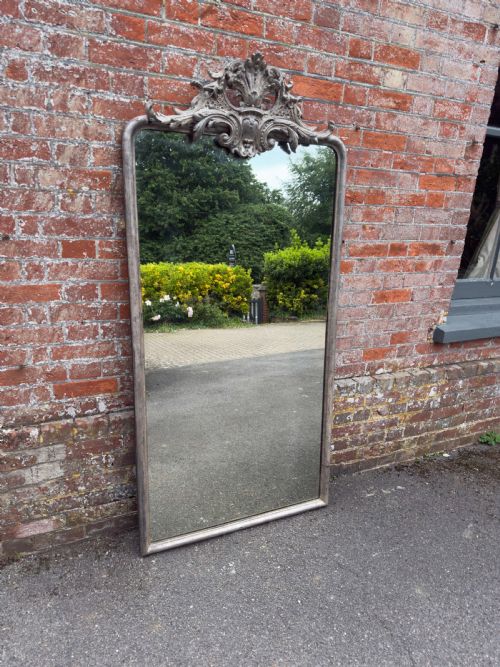

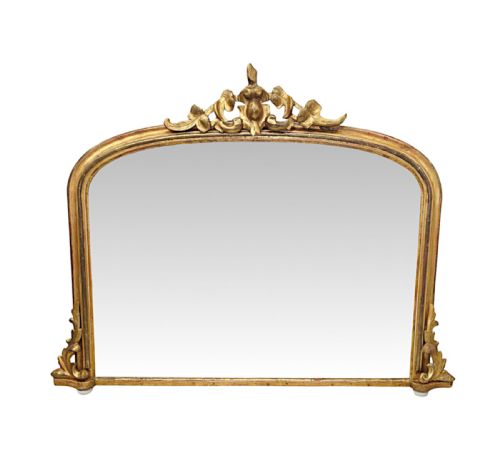


Crest Top Overmantel Mirror
When you want a crest top overmantel mirror, you are looking at nineteenth century wall pieces designed to sit above a fireplace.
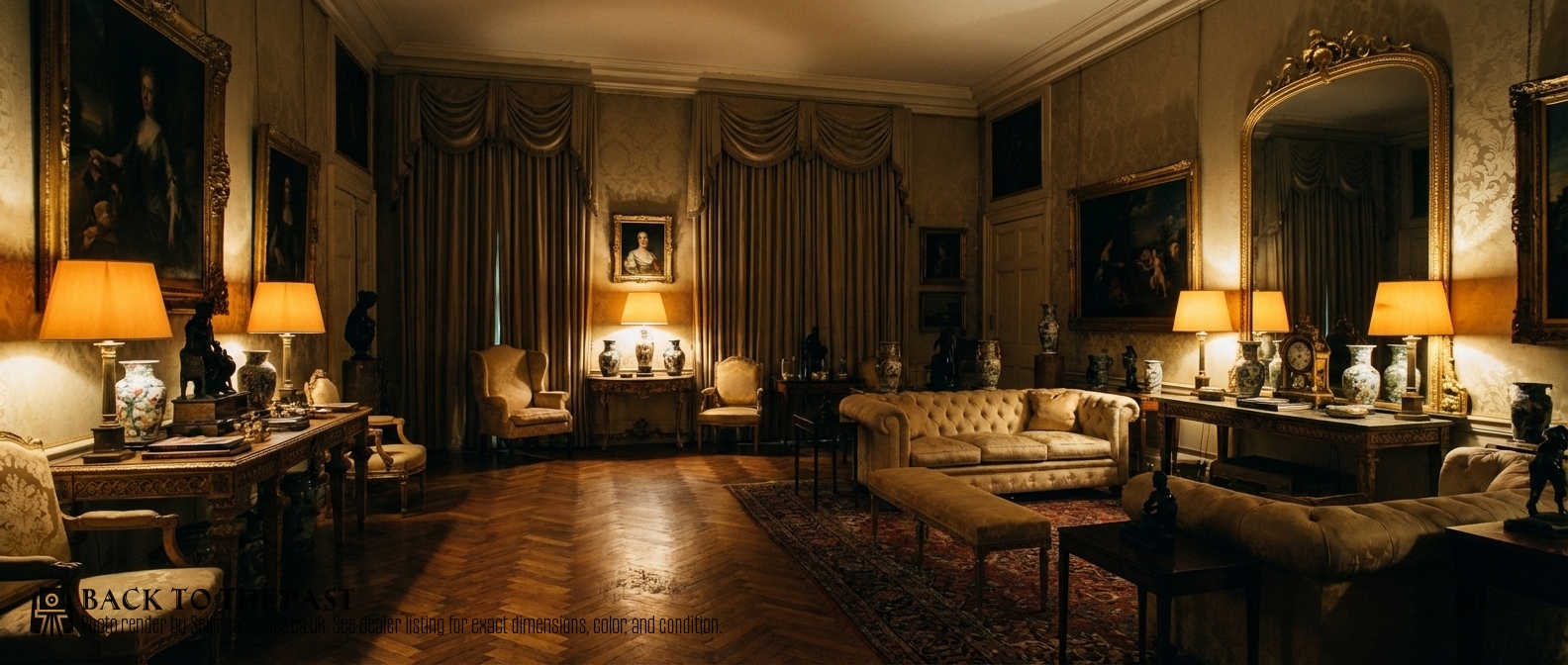
Crest Top Overmantel Mirror
A crest top overmantel mirror is a substantial wall glass designed to be positioned directly above a mantelpiece. These pieces originate primarily from the nineteenth century, spanning decades such as the eighteen sixties, seventies, eighties, and nineties, alongside some twentieth century examples.
Buyers will most frequently meet large giltwood or painted wooden frames featuring architectural arches, shaped tops, or central cartouches. The selection includes both English and French examples, with styles ranging from Victorian and Louis Philippe to French Rococo Revival and Napoleon III.
Many items incorporate decorative motifs such as rope twist borders, shell designs, or distinct crestings above the main glass plate. These objects function as commanding focal points within a room, originally scaled to dominate the chimney breast.
How they were made
Carpenters constructed the primary framework from timber, frequently utilising carved wood or walnut for the structural body. Artisans then applied layers of gesso to the wooden base to create smooth surfaces and intricate relief details before gilding.
Giltwood pieces received applications of gold leaf, while other variants utilised paint, silvering, or gold on red bole grounds. Mirror glass was set within these ornate frames, often secured with traditional backing methods appropriate to the period.
Materials recorded across the selection include carved wood, gesso, giltwood, paint, gold leaf, and traditional mirror glass.
What varies in quality
The sophistication of the carved wood and gesso ornamentation determines much of the distinction between standard and superior pieces. Deeply undercut carving, crisp moulding profiles, and well-preserved original gilding indicate higher levels of original craftsmanship.
The complexity of the crest design and the integrity of the frame construction also shape the overall character of the object. Pieces retaining their original mirror glass and untouched surface patination demonstrate greater historical authenticity.
The Crest Top Overmantel Mirror Glossary
- Overmantel mirror
- A large wall mirror specifically proportioned to hang on the wall above a fireplace mantel. These items often feature wide horizontal or vertical frames designed to reflect light across the room.
- Gesso
- A plaster mixture applied to wood frames to provide a smooth base for gilding or painting. Artisans mould this substance into relief ornamentations and decorative motifs.
- Giltwood
- Timber that has been coated with gold leaf or gold paint. This finish creates a reflective, metallic surface characteristic of nineteenth century formal interior decoration.
- Cartouche
- An ornamental tablet or panel, often resembling a scrolled frame or unrolled scroll, placed centrally on the crest of a mirror. It frequently serves as a focal point for detailed carving.
- Rope twist
- A carved decorative moulding that resembles intertwined ropes. This pattern runs along the inner or outer borders of mirror frames.
Crest Top Overmantel Mirror: Frequently Asked Questions
Where should I hang an overmantel mirror?
These mirrors are traditionally positioned on the chimney breast directly above a fireplace mantelpiece. Their original proportions allow them to anchor the wall space between the hearth and the ceiling.
They also function effectively on large blank walls in reception rooms where a substantial focal point is required. The height of the mantel must be measured carefully against the scale of the mirror frame.
How do I clean a giltwood mirror?
Dust the carved frame gently using a soft, dry brush to prevent damage to the delicate gesso and gold leaf. Avoid using commercial cleaning sprays or water on gilded surfaces, as moisture strips the finish.
Clean the mirror glass itself with a minimal amount of glass cleaner applied to a cloth rather than sprayed directly onto the glass. This stops liquid from seeping behind the plate and harming the wooden backing.
What is the difference between English and French styles?
English overmantel mirrors from the nineteenth century often display restrained architectural lines, rope twist details, or classical Victorian proportions. They rely on sturdy carved wood and gesso construction.
French variants, such as Louis Philippe or Napoleon III designs, frequently incorporate pronounced arched crests, shell motifs, or elaborate rococo curves. Their frames emphasise sweeping decorative shapes and often feature silvered or painted finishes alongside traditional gilding.
Are these mirrors heavy?
Nineteenth century mirrors constructed from solid wood, thick gesso, and heavy glass plates possess considerable weight. The large dimensions common to these pieces require robust wall fixings anchored directly into structural masonry or studs.
Professional installation is recommended to ensure the wall brackets can support the sustained load of the frame safely. Standard picture hooks are unsuitable for supporting overmantel mirrors.