
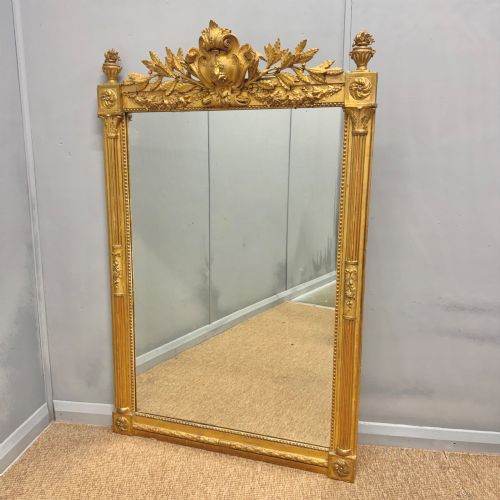
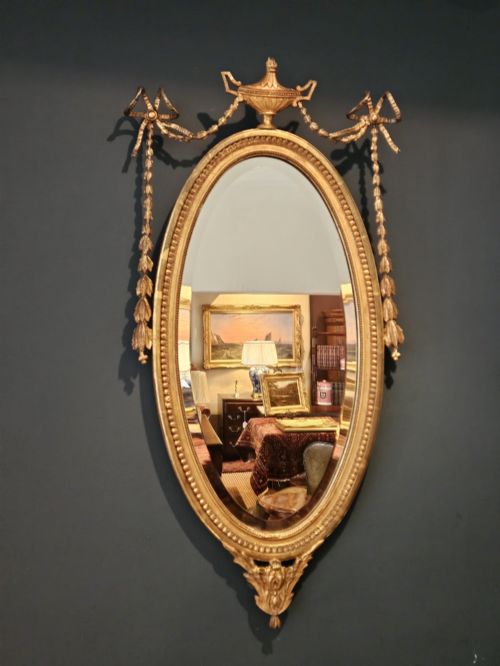
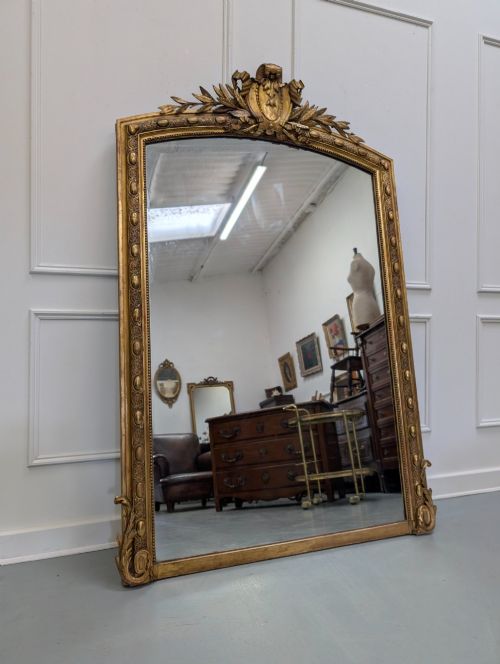
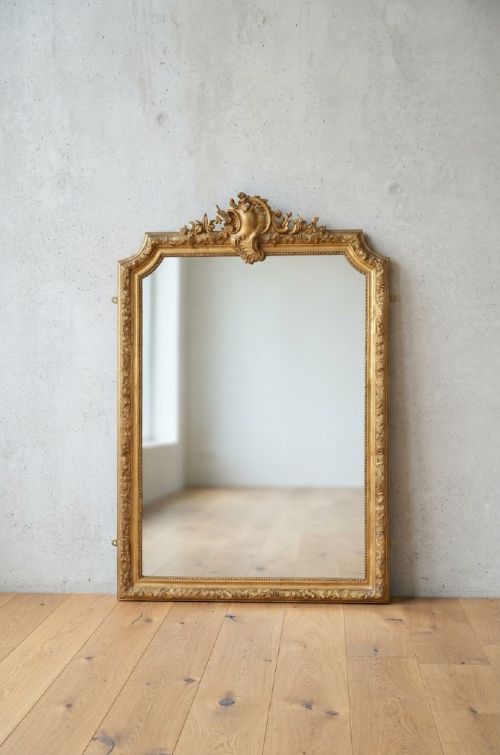

Crest Top Gilt Mirror
When you search for a crest top gilt mirror, you enter a world of nineteenth-century French and English overmantels designed to anchor a room.
Crest Top Gilt Mirror
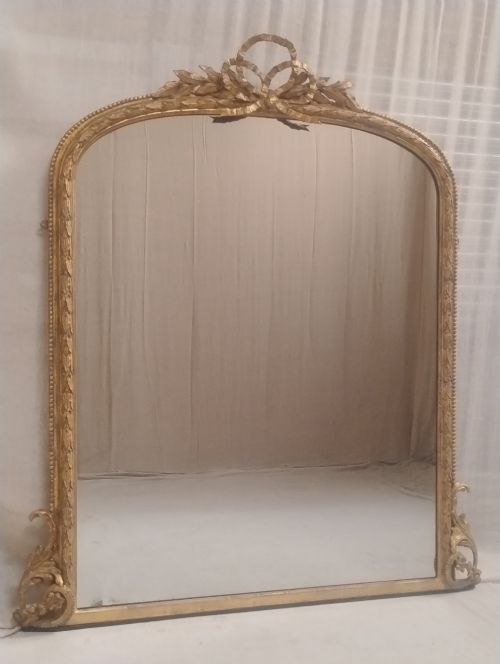
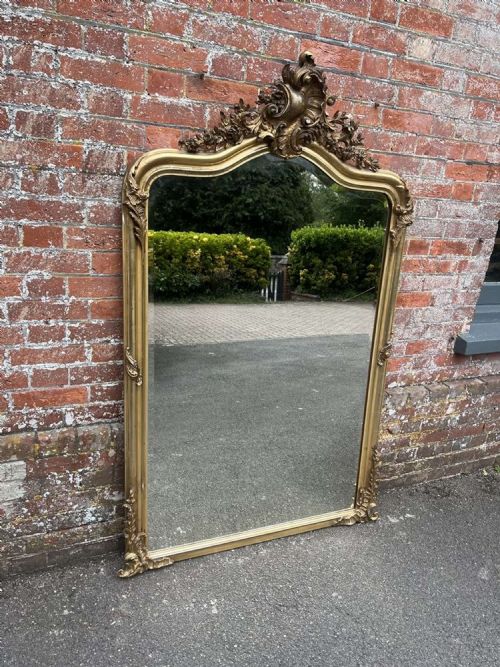
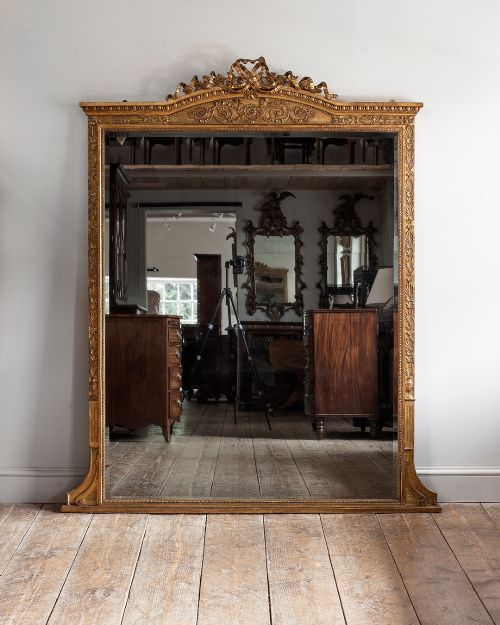
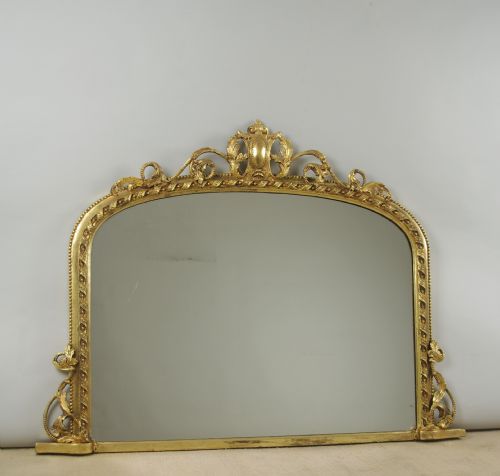
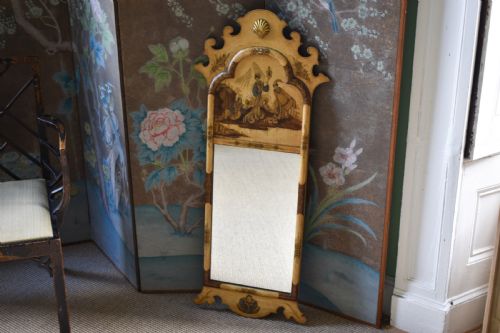
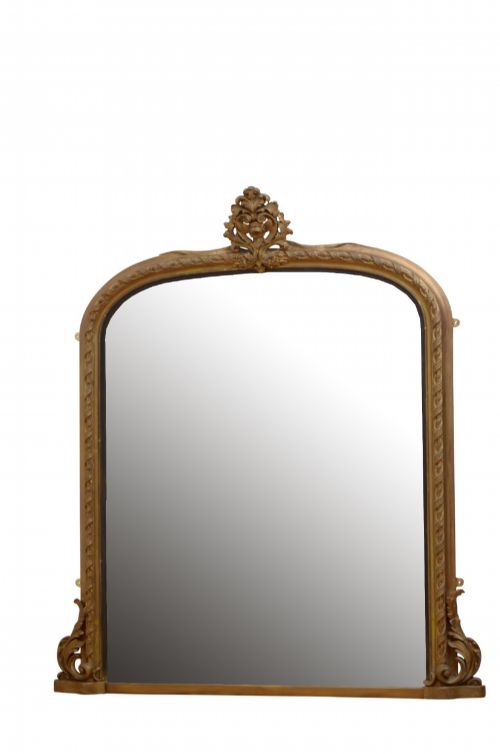
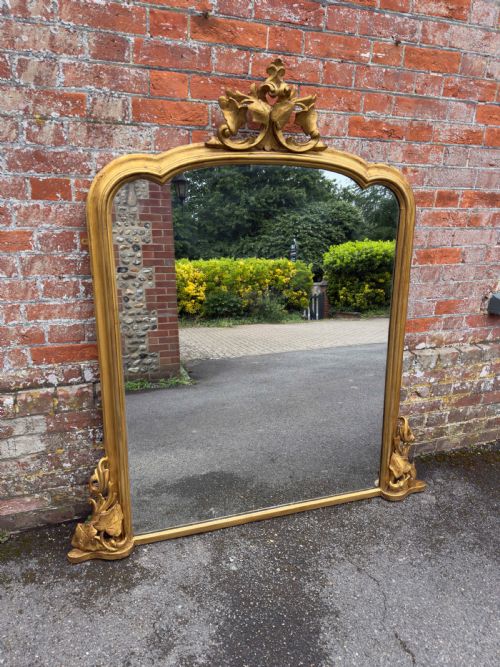
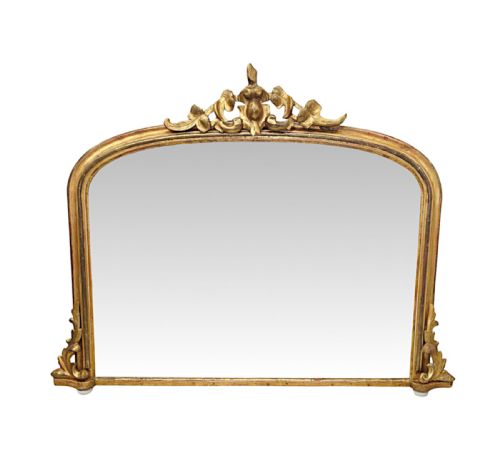
A crest top gilt mirror is a substantial wall hanging or overmantel glass designed to sit above a fireplace, bringing light and scale into a room. Most examples found here originate from the nineteenth century, spanning Victorian, French Rococo Revival, Louis XVI, and Queen Anne styles.
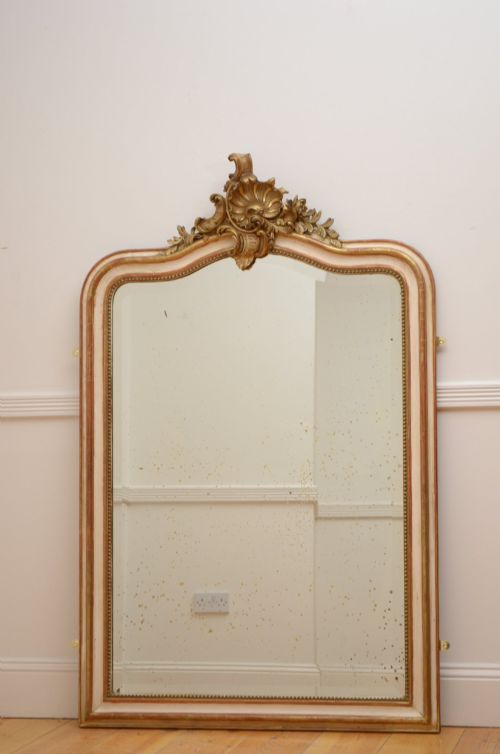
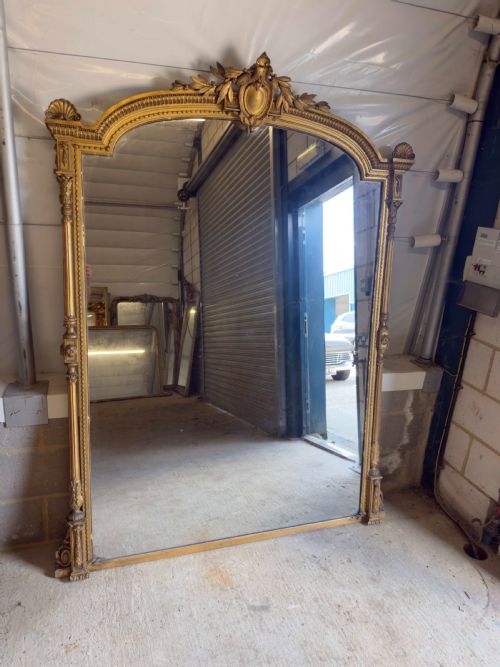
The dominant forms are large overmantel mirrors and wall mirrors shaped with arched, dome, or shaped tops featuring prominent decorative crestings. Makers often incorporated central cartouches, shell motifs, putto cresting, or rope twist details into the wooden frames.
Originating predominantly from French and English workshops, these mirrors served both functional dressing purposes and grand decorative roles in period interiors. Pieces range from neat domestic sizes up to grand full-height floor mirrors and wide overmantels.
How they were made
Traditional construction relies on carved wood frameworks built from sturdy timbers, frequently overlaid with moulded gesso to create high-relief ornamentation. Artisans applied gold leaf or silver leaf over the gesso base to achieve the characteristic reflective metallic surface.
Reflective surfaces consist of heavy mirror glass fitted securely into rebated frames, sometimes accompanied by secondary silvering or specialised red bole grounds visible beneath worn gilt layers.
Listings feature periods from 1850 through the 1930s, encompassing Victorian, Regency, and various French revival styles.
What varies in quality
Quality reveals itself in the crispness and depth of the carved wood and gesso ornamentation along the crest and frame. Superior examples display finely hand-modelled cartouches, shells, and figural motifs rather than heavy, indistinct moulding.
The integrity of the original gilding and the preservation of early mirror glass separate standard decorative items from exceptional survivals. Evidence of original gold leaf applied over well-prepared gesso indicates higher workshop standards.
The Crest Top Gilt Mirror Glossary
- Gesso
- A plaster-like mixture applied to wood frames to provide a smooth, resilient base for carving and gilding. Artisans modelled intricate relief details directly into this compound before applying gold leaf.
- Giltwood
- Timber that has been coated with thin sheets of gold leaf or metallic powder. It provides the signature bright finish seen on period decorative frames.
- Overmantel Mirror
- A large horizontal or vertical mirror specifically proportioned to hang on the wall directly above a fireplace mantelpiece. These pieces often feature decorative crests designed to draw the eye upward.
- Cartouche
- An ornamental tablet or oval frame motif, often resembling a rolled-up piece of parchment, placed centrally on the crest of a mirror. It frequently bears carved scrollwork or heraldic detailing.
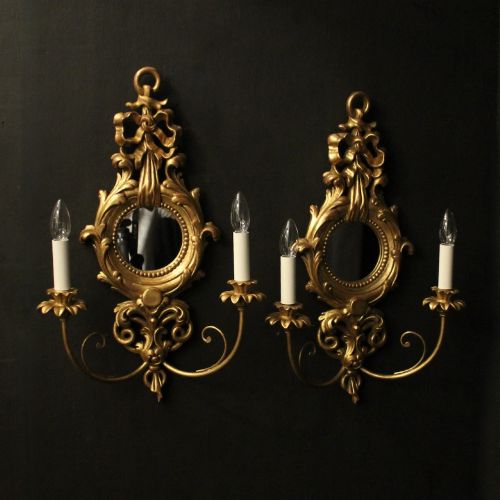
- Girandole
- A decorative wall mirror fitted with attached candle sconces or arms branching from the frame. The polished glass reflects the candlelight to brighten the surrounding space.
Crest Top Gilt Mirror: Frequently Asked Questions
Where should I hang a crest top gilt mirror?
These mirrors traditionally anchor reception rooms by mounting securely to the wall directly above a fireplace mantelpiece. Their scale also suits placement above large sideboards or as standalone floor-length dressing mirrors in bedrooms.
Because of their substantial weight, particularly large nineteenth-century overmantel versions require proper structural fixings into masonry or wall studs to support the heavy wood and glass construction safely.
How do I identify a French nineteenth-century mirror?
French pieces from this era frequently exhibit Louis Philippe, Napoleon III, or Rococo Revival styling characterised by refined arched frames and naturalistic crest motifs. Look for details like shell carvings, delicate cartouches, and gold leaf applied over red clay grounds.
English equivalents of the same period often share similar carved wood and gesso construction but tend to display distinct regional joinery or heavier architectural proportions in the frame design.
Can I clean the original gold leaf safely?
Dust the gilded frame gently using a soft, dry brush or a clean microfiber cloth without applying pressure. Avoid all liquid cleaners, commercial polishes, and abrasive cloths, as these will permanently strip the delicate metallic leaf from the gesso.
Mirror glass can be cleaned sparingly using a minimal amount of glass cleaner applied to a cloth rather than sprayed directly onto the surface, ensuring liquid does not seep behind the frame edges.