
Crest Overmantel Mirror
A crest overmantel mirror brings architectural weight to a chimney breast, reflecting light across a room with its ornate upper carving.
Crest Overmantel Mirror
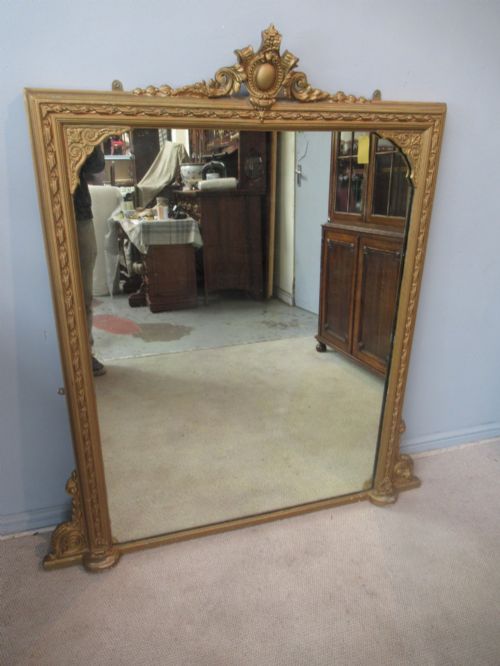
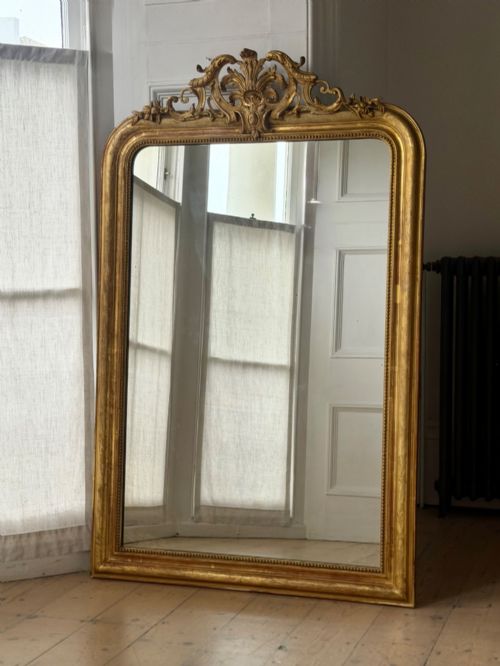
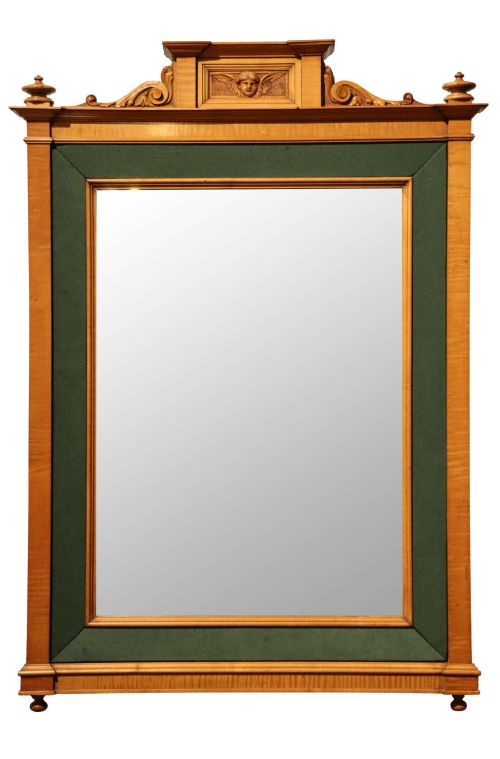
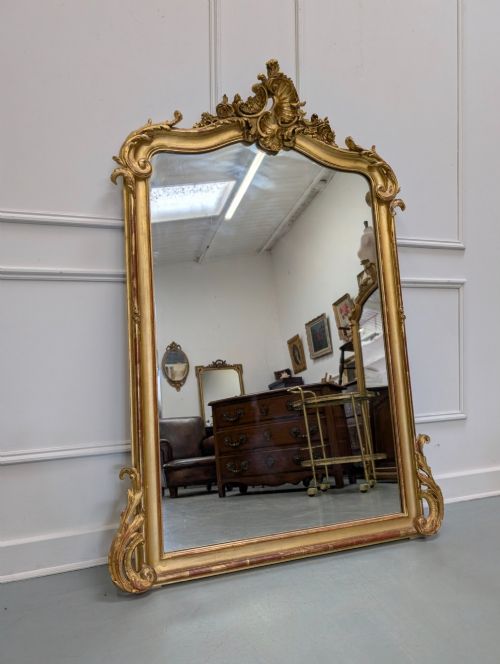
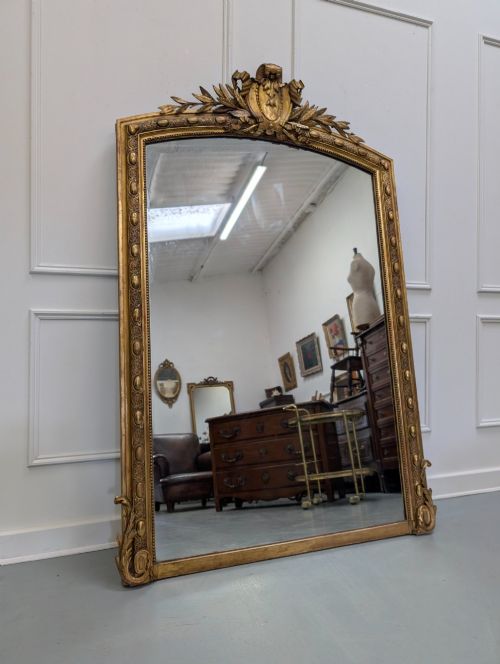
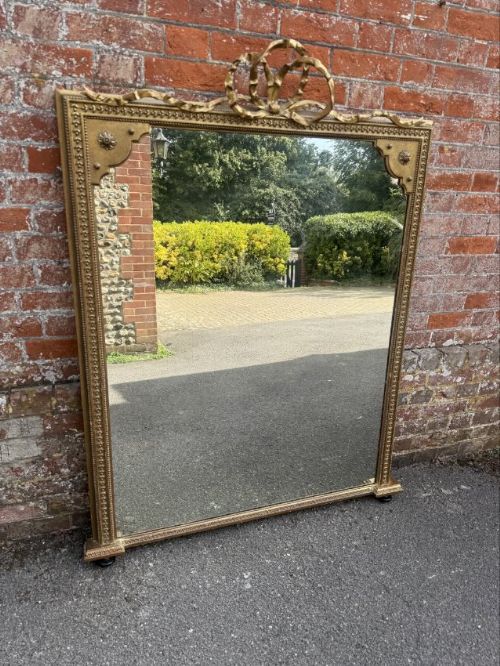
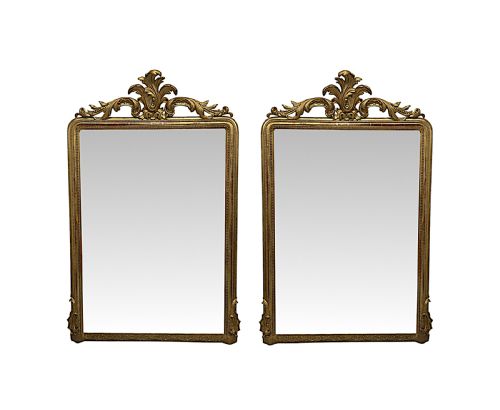
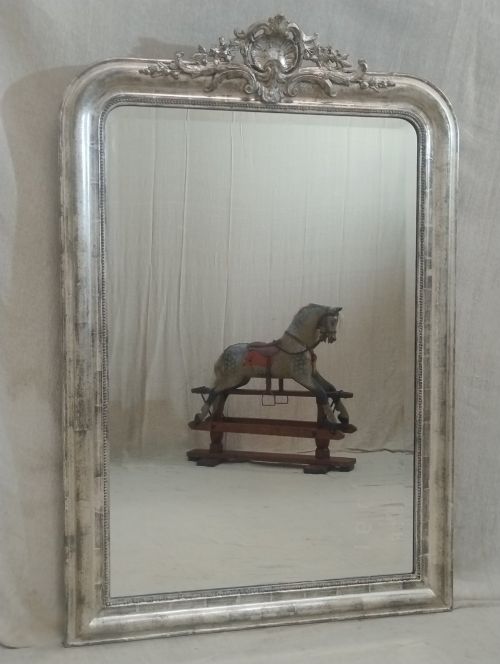
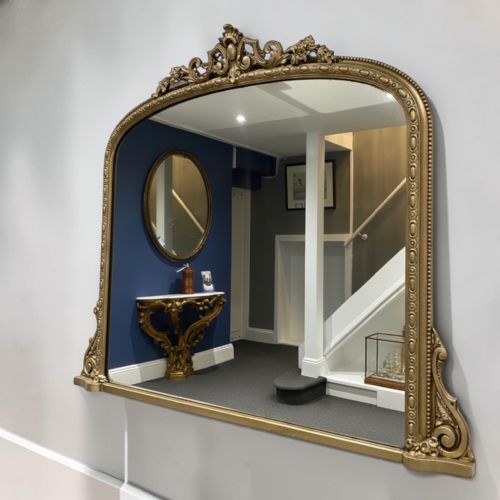
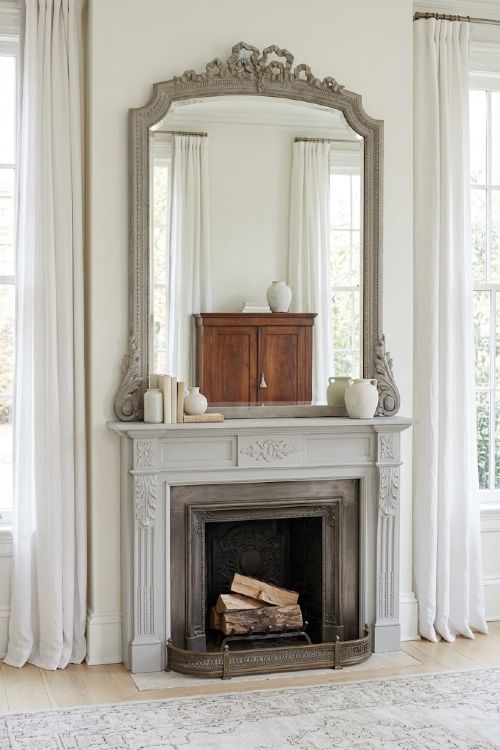
A crest overmantel mirror is designed specifically to sit above a fireplace mantel, anchored by a prominent decorative motif at the top edge. These pieces emerge predominantly from the nineteenth century, including Victorian, Regency, and various French periods, bringing substantial scale to interior spaces.
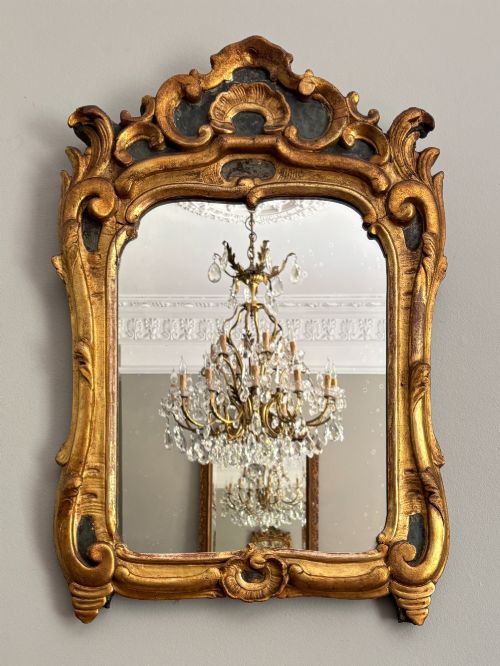
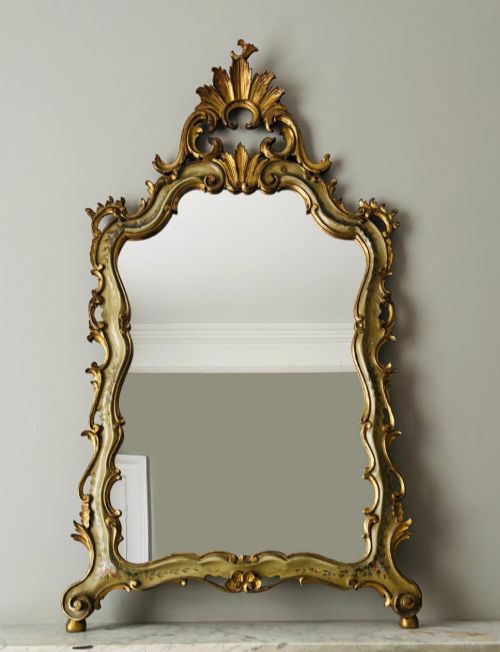
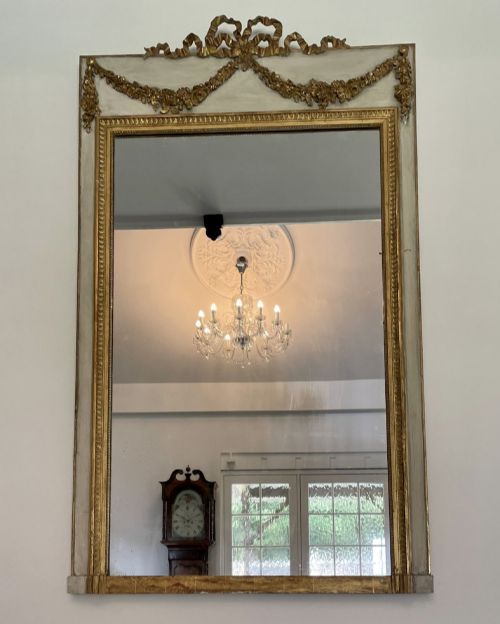
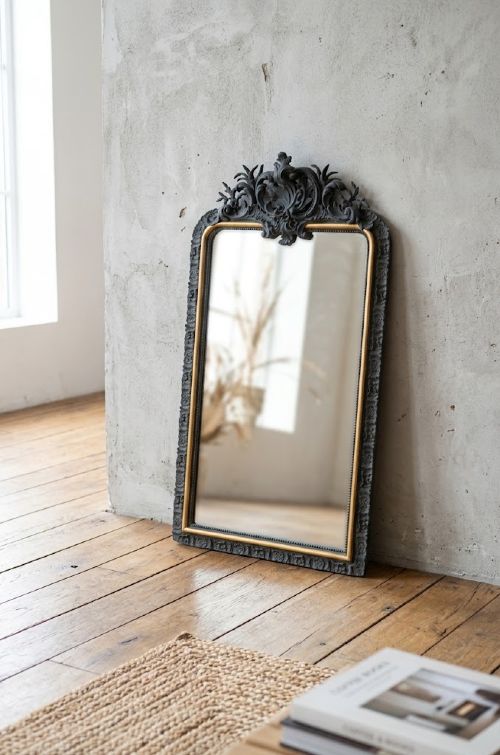
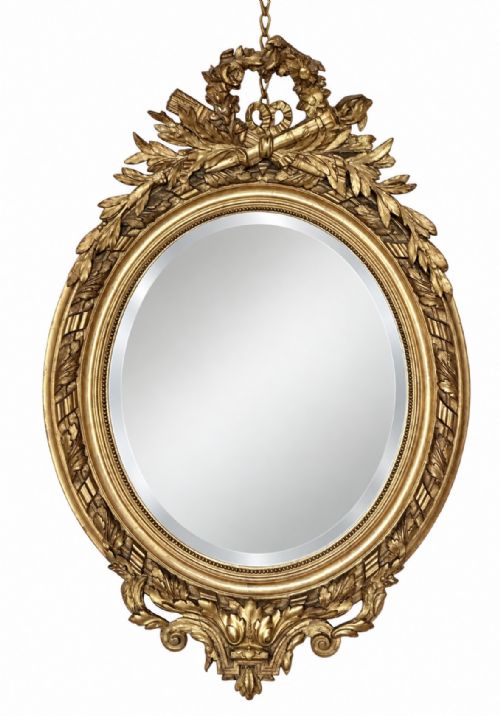
The most common examples on this page are large giltwood and gesso mirrors featuring carved wooden frames. Buyers also encounter mahogany, painted wood, and ebonized versions spanning from the eighteenth century through to the Belle Époque.
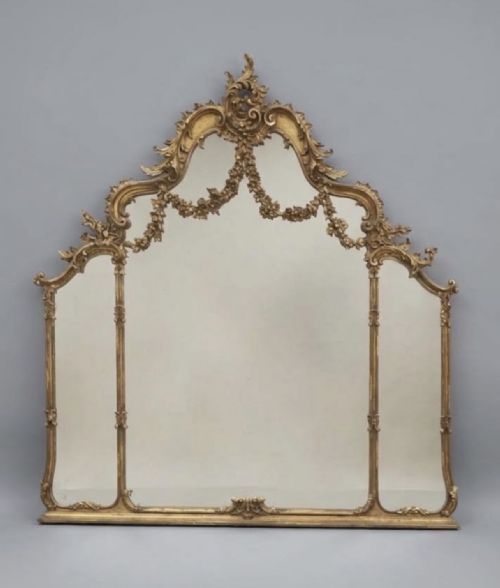
Makers utilised architectural forms ranging from arched tops and shaped frames to triptych configurations with bird cresting. They function both as wall-hung pieces and large leaner mirrors positioned directly on mantels.
How they were made
Makers built the foundational frames from carved wood, utilising timber such as mahogany, oak, and pine. Artisans then applied layers of gesso onto the wooden structure to create smooth surfaces for detailed ornamentation.
Gilding involved applying gold leaf or paint over the prepared gesso base, often burnished to catch the light. Early examples employed silvered mercury glass, while standard mirror glass eventually became standard in later Victorian production.
Some nineteenth-century mirrors feature whimsical bird cresting at the very top, offering a charming touch of avian theatre above the mantel.
What varies in quality
The crispness and depth of the hand-carved wooden ornament dictate the upper tier of quality. Superior examples display intricate, well-defined crests and mouldings rather than simplified or shallow casting.
The integrity of the original gilding and the preservation of the mirror glass separate fine survivals from heavily restored pieces. Original mercury glass and undisturbed gold leaf retain a depth that modern replacements lack.
The Crest Overmantel Mirror Glossary
- Gesso
- A plaster-like mixture applied to wood frames to create a smooth base for gilding or painting. It allows craftsmen to carve intricate relief details before the gold leaf is laid down.
- Giltwood
- Timber that has been coated with gold leaf or metallic powder. It provides the bright, reflective warmth characteristic of period frames.
- Overmantel
- A mirror or painting designed specifically to hang on the wall directly above a fireplace mantelpiece. Its proportions usually match the width of the fireplace below.
- Mercury glass
- An early type of mirror glass made by pouring a mercury and tin amalgam behind the glass plate. It produces a mottled, dark reflection due to centuries of oxidation.
- Pier mirror
- A tall, narrow mirror designed to hang on the wall space between two windows. They often share similar gilt and gesso techniques with overmantel pieces.
Crest Overmantel Mirror: Frequently Asked Questions
Where should I hang a crest overmantel mirror?
These mirrors traditionally anchor the space directly above a fireplace mantel, where their proportions balance the hearth below. They also function successfully as leaner mirrors placed on the floor against a principal wall.
Because of their substantial weight and height, secure wall fixings into masonry or studs are essential. Positioning them opposite a window maximises the natural light they bounce around the room.
How do I identify a Victorian overmantel mirror?
Victorian examples frequently display heavy giltwood frames, arched tops, and elaborate crest mouldings influenced by Rococo or Renaissance revivals. They tend to be heavy, utilising standard mirror glass rather than earlier mercury plates.
Examining the construction of the wooden backboards and fixings often reveals nineteenth-century manufacturing methods. The scale is typically generous, designed to dominate the chimney breast in a Victorian parlour.
What is foxed glass?
Foxed glass refers to mirror plates that have developed dark spots, speckling, or mottled patches over time due to the degradation of the backing material. This ageing process occurs naturally as air and moisture interact with the reflective layer behind the glass.
Many collectors prize foxed glass because it proves the antiquity of the piece and provides a soft, atmospheric reflection. It distinguishes antique mirrors from modern reproductions that use flawless, uniform glass.