





Cream Watercolour Painting
A cream watercolour painting brings tactile Victorian and early twentieth-century brushwork into domestic spaces through delicate paper studies.
Cream Watercolour Painting
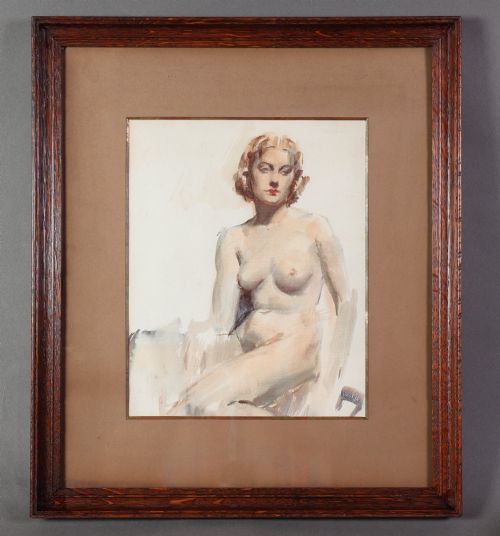
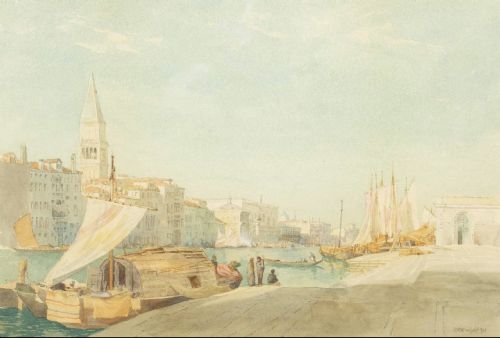
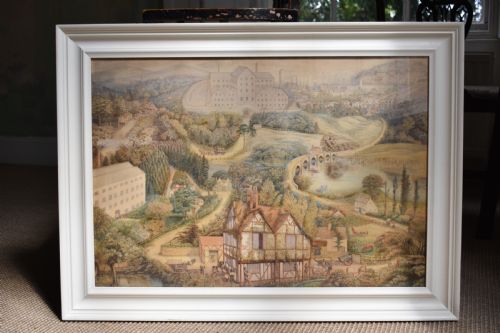
A cream watercolour painting encompasses nineteenth-century and early twentieth-century works on paper depicting landscapes, botanical studies, architectural landmarks, and portraiture. The selection ranges from Regency and Victorian sheets to Edwardian illustrations and mid-century British compositions.
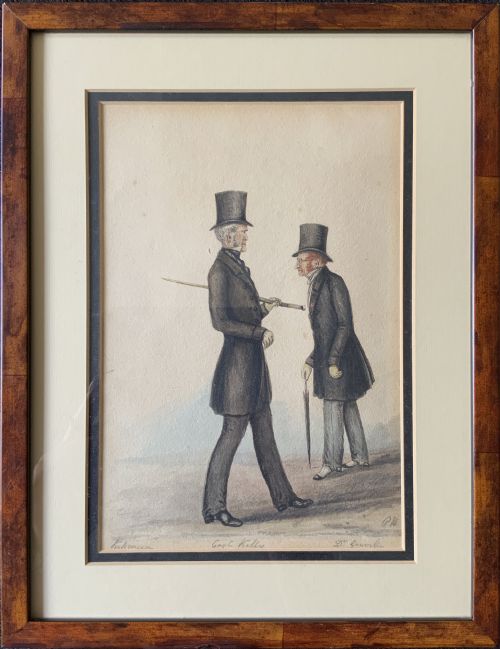
Buyers encounter framed artworks executed by named artists and regional British schools, alongside Grand Tour travel scenes and detailed animal paintings. The forms include single portraits, landscape views, and botanical subjects rendered in pigment on aged paper.
Many examples utilise gouache or ink alongside watercolour, often set within period wooden or gilt frames behind glass. The palette frequently relies on warm cream grounds, soft earthen tones, and muted washes characteristic of historic paper supports.
Materials and technique
These works are executed using water-based pigments applied to paper supports, occasionally incorporating bodycolour or gouache for opaque highlights and ink for foundational line work. The underlying paper naturally ages to an ivory or cream tone over decades.
Mounting and presentation typically involve protective glass panes set within wooden frames, frequently finished in gilt to complement the delicate character of the painted surface.
Even three-month-old infants found themselves immortalised in naive watercolour portraits during the Regency period.
What separates the work
Quality rests in the precision of the brushwork and the clarity of the composition, distinguishing accomplished academic studies from naive or provincial output. Superior sheets demonstrate confident handling of light, shade, and pigment distribution across the paper surface.
The preservation of the original paper support and the retention of vibrant pigment tones without excessive fading define the upper tier of surviving examples.
Richard Henry Wright·Oswald Garside·Cornelius Pearson·Alice Anne Renshaw·William Frederick Settle·Nicolas Freese·James Hardy Junior·Charles F Tunnicliffe·Helena Maguire·Edith Barrow·Stanley Orchart·Basil Bradley·John Atkinson·Margaret Laing·John McDougal·Mabel Gear·Takashi Nakayama·Henry Wimbush·Karl Feiertag·Laura Knight·Belisario Gioja·Alfred Rimmer·Paul-Louis Barruel·John E Bosanquet·Olive Higginbottom
The Cream Watercolour Painting Glossary
- Watercolour
- A painting method where finely ground pigments are suspended in a water-soluble binder and applied to paper. This medium allows for transparent washes and delicate tonal layering.
- Gouache
- An opaque water-based paint containing pigment, water, and a binding agent such as gum, often featuring added white to create solid highlights. It appears alongside watercolour in several listed Edwardian and Victorian works.
- Grand Tour
- A traditional educational trip through Europe undertaken by upper-class young men and artists during the eighteenth and nineteenth centuries. The resulting watercolours document continental architecture and classical ruins.
- Gilt Wood
- Wood treated with gold leaf or metallic gilt finish, commonly used for nineteenth-century and Edwardian picture frames. This framing material protects the fragile paper surface underneath.
Cream Watercolour Painting: Frequently Asked Questions
What periods do these paintings cover?
The available selection spans from the Regency and Georgian eras through the Victorian period and into the mid-twentieth century.
Works include eighteenth-century Italian architecture studies alongside later British and European illustrative pieces.
Are the paintings supplied framed?
Many examples retain their original period wooden or gilt frames, often preserved behind protective glass.
Framing styles range from ornate Victorian mouldings to simpler early twentieth-century wooden surrounds.
How should paper watercolours be displayed?
Watercolours on paper require placement away from direct sunlight to prevent the fading of delicate pigments and the yellowing of the support.
Stable indoor humidity levels help preserve the integrity of both the historic paper and the original frame.