




Cream Stone Light
Cream stone light pieces bring warm, translucent illumination and tactile presence to a room through carved natural minerals.
Cream Stone Light
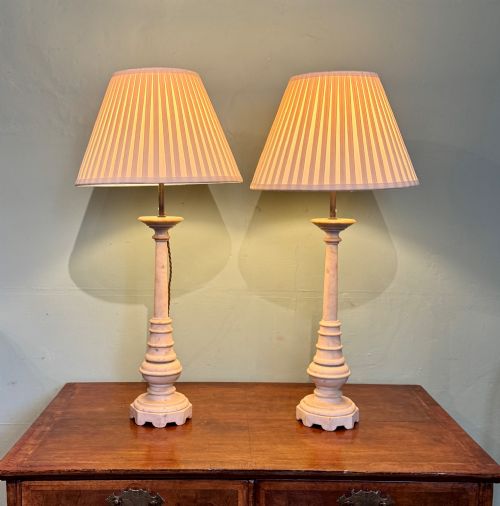
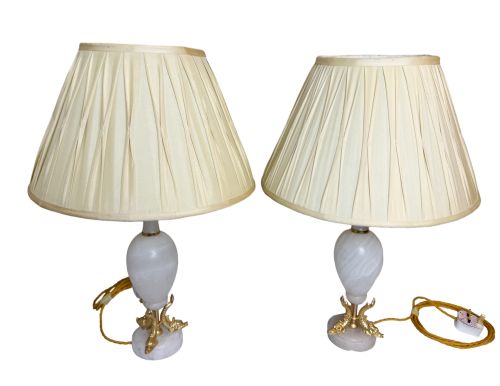
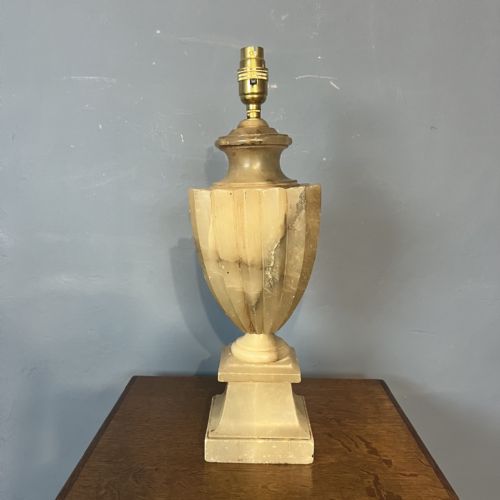
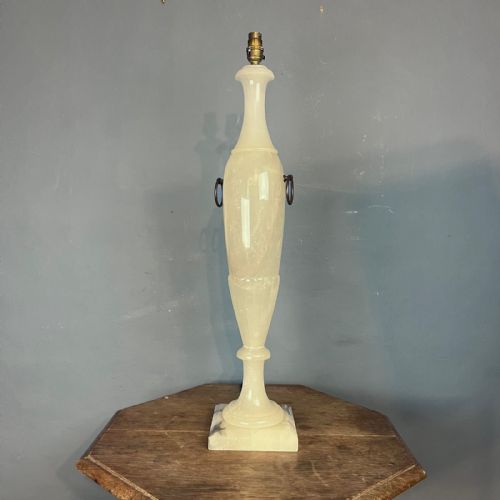
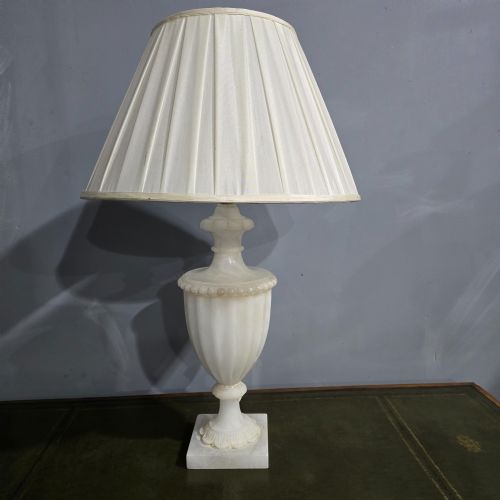
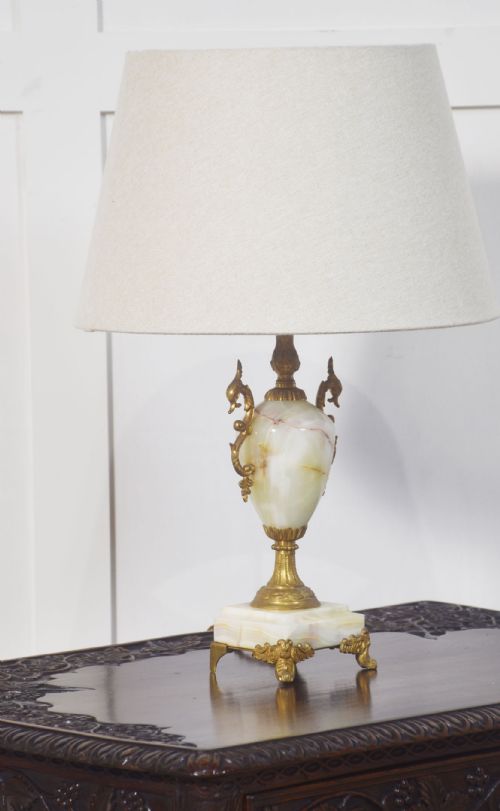
Cream stone light options visible here primarily comprise table lamps, chambersticks, and pendant lights originating from the nineteenth and early twentieth centuries. These pieces utilise natural mineral blocks, taking forms from neoclassical columns to streamlined art deco pendants.
Pendant lighting and chambersticks represent alternative formats in the evidence. These items share the characteristic creamy, translucent mineral body seen across the broader selection of table lamps.
Materials and Construction
Construction relies heavily on turning and carving dense natural stones such as alabaster, onyx, and marble. Masons shaped these mineral blocks into smooth columns, urns, and rounded bowls to exploit the material's inherent translucency.
Metal mounts provide structural support and decorative contrast to the stone bodies. Craftsmen utilised brass, gilt bronze, or ormolu for collars, bases, and Corinthian capitals, securing the stone components together mechanically.
Grand tour travellers lugged heavy Italian marble home in luggage trunks just to light their hallways.
Assessing Quality in Stone Lighting
Quality rests upon the purity and depth of the mineral carving. Finer examples display subtle natural veining and uniform translucency throughout the stone body rather than opaque or heavily fractured patches.
The integration of metal mounts dictates the refinement of the piece. Superior items feature crisply chased ormolu, gilt bronze, or brass fittings that fit the contours of the stone precisely.
The Cream Stone Light Glossary
- Alabaster
- A fine-grained, translucent stone commonly carved into lamps and vases. Its softness allows for delicate turning and a warm glow when illuminated from within.
- Onyx
- A banded variety of chalcedony prized for its layered patterning and polished finish. It frequently appears alongside metal mounts in twentieth-century lighting.
- Ormolu
- Gilt bronze ornamentation applied to furniture and lighting fixtures. The technique involves coating metal in a finely ground gold-mercury amalgam.
- Cassolette
- A decorative vessel shaped like an urn, often adapted as a lamp base. In nineteenth-century French pieces, these frequently feature removable lids or mountings.
- Grand Tour
- A nineteenth-century travel tradition resulting in the collection of classical antiquities and souvenirs. Items from this context often utilise Italian marbles.
Cream Stone Light: Frequently Asked Questions
What is cream stone light?
Cream stone light describes lighting fixtures carved from pale minerals like alabaster, onyx, and marble. These materials diffuse light softly through their natural structure.
Such pieces range from nineteenth-century chambersticks to art deco pendant lights and table lamps.
How do I date an alabaster lamp?
Dating relies on stylistic clues like neoclassical columns, edwardian proportions, or art deco geometric simplicity. Wiring and metal mount types also offer chronological indicators.
Makers utilised different brass and gilt bronze fittings across the victorian and twentieth-century periods.
Are these lamps heavy?
Solid stone and metal mounts create substantial weight in these pieces. Alabaster and marble require sturdy surfaces for safe placement.
Table lamps often combine heavy stone bases with brass or ormolu hardware for added stability.
Can I use modern lightbulbs?
Modern low-heat LED bulbs work well inside translucent stone shades and lamp bodies. Excessive heat from older incandescent bulbs can stress vintage materials.
Consult a professional electrician if the lamp retains its original wiring.
Where were these pieces made?
Origin points include France, Italy, and British country houses from the nineteenth and early twentieth centuries. French examples frequently incorporate intricate gilt bronze mounts.
Italian workshops specialised in carved alabaster and marble architectural forms.