




Cream Paper Cartography Print
These cream paper cartography print pieces are historic maps and globes that bring centuries of geography and fine engraving into your home.
Cream Paper Cartography Print
When you search for a cream paper cartography print, you encounter historic maps, wall maps, and globes spanning several centuries. The material evidence shows these works primarily on aged paper, presented as framed prints, desk globes, and wall art.
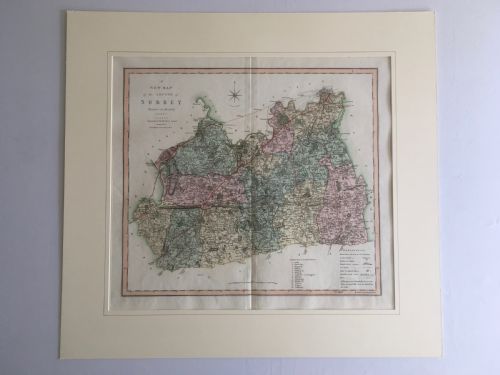
The selection ranges widely across periods, encompassing seventeenth-century regional maps, Georgian county engravings, and nineteenth-century charts. Regional English maps of Surrey, Stafford, and Dorset appear alongside international charts of the Caribbean and Italy.
You are most likely to meet framed regional maps and atlas engravings from the seventeenth and Georgian periods on this page. These pieces showcase detailed geographical depictions of specific counties, cities, and global regions.
Materials and construction
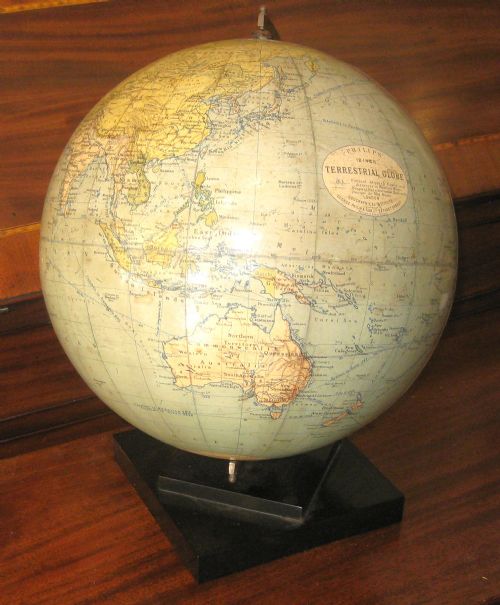
Desk globes incorporate plaster and metal components to form the terrestrial sphere and its supporting meridian ring. Frames utilise wood and giltwood, often protected behind glass to preserve the delicate paper beneath.
A twelve-inch terrestrial globe from nineteen-thirty stands ready to spin stories of geography across your desk.
Assessing quality and execution
The survival of the original paper and the quality of contemporary or later framing also determine the standing of a piece. Stronger impressions maintain deep ink saturation without excessive fading or damage to the paper substrate.
Robert Morden·Joan Blaeu·Cassell·J Harrison·J. Duncan·C. Smith
The Cream Paper Cartography Print Glossary
- Cartography
- The science or practice of drawing maps. It involves the detailed representation of geographical areas on a flat surface or sphere.
- Atlas engraving
- A map produced specifically for inclusion in a bound collection of maps. These plates often show distinct regional boundaries and topographical details.
- Giltwood
- Wood that has been treated with gold leaf or a gold-coloured finish. This material frequently appears on the frames surrounding historical maps.
- Cartouche
- A decorative frame or medallion on a map enclosing the title, scale, or publication details. These ornate elements often reflect the artistic style of the period.
Cream Paper Cartography Print: Frequently Asked Questions
How do I hang a framed map?
Secure the frame using appropriate wall fixings that match the weight of the wood and glass construction. Ensure the piece hangs away from direct sunlight to protect the paper and ink.
Position the map at eye level in a room with stable humidity to prevent warping of the frame or paper over time.
Where were these regional maps made?
The maps originate from various European publishing centres, often produced by prominent cartographers working in England, the Netherlands, and Italy. They were typically issued as part of larger atlases or as standalone wall sheets.
Publishers engraved copper plates to print these geographic details on paper for scholars, landowners, and travellers.
How do I care for a desk globe?
Keep the globe in a stable environment away from extreme temperature fluctuations and direct heat sources. Dust the surface gently with a soft, dry cloth without applying liquids.
Handle the sphere by its metal meridian ring or horizon bar rather than the paper gores to avoid surface oils damaging the map.
How are different centuries identified?
Dating relies on the stylistic evidence of the cartography, the typography used for place names, and internal historical references. Border designs and decorative cartouches often reflect the artistic conventions of specific eras.
Engravers frequently included publication dates or printer signatures directly on the printed plate.