
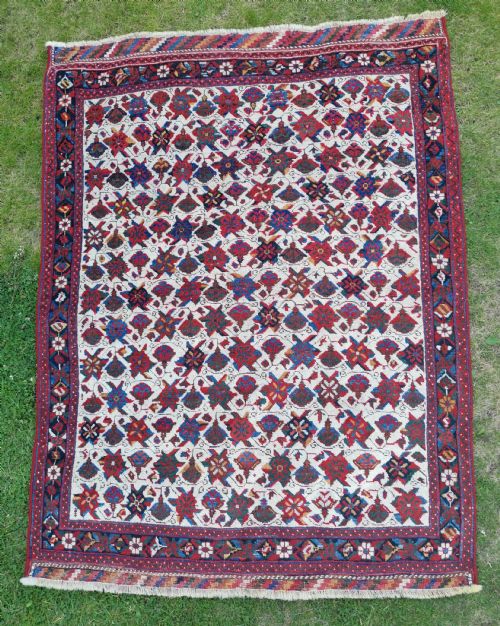
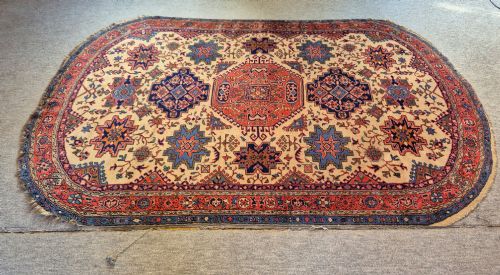
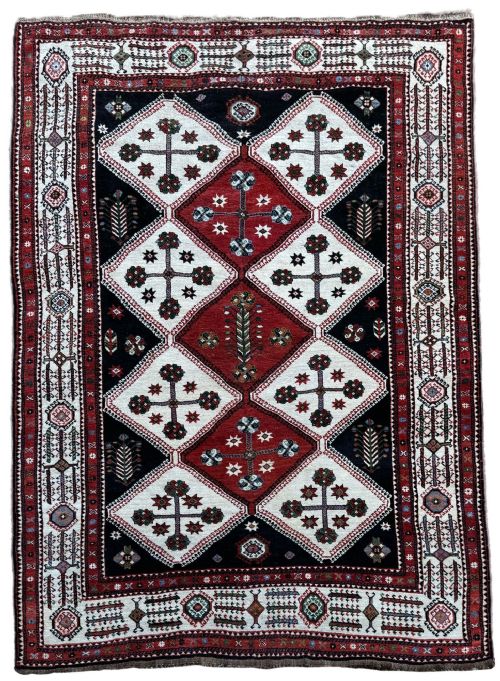
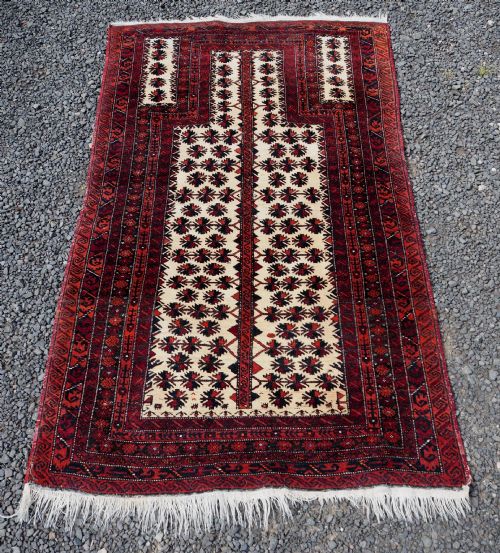
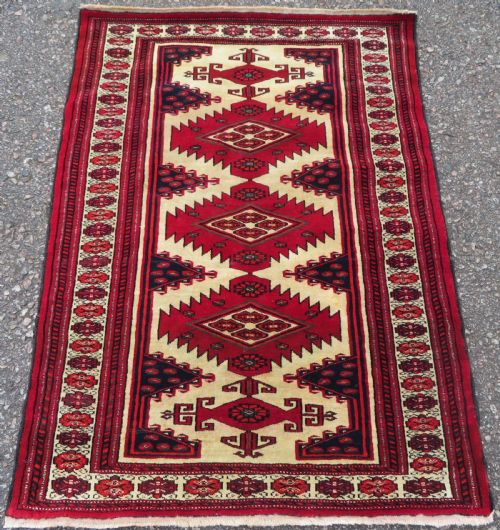
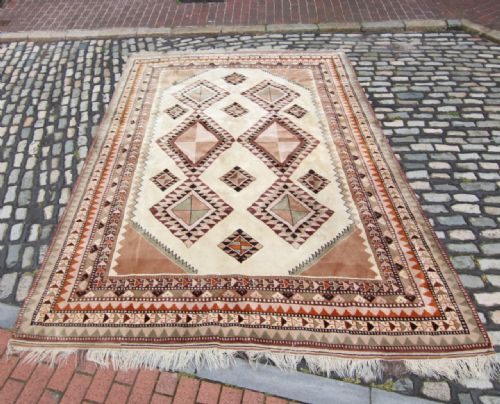
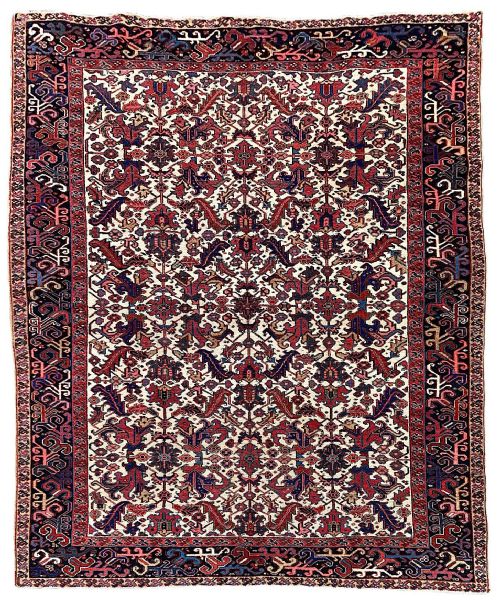
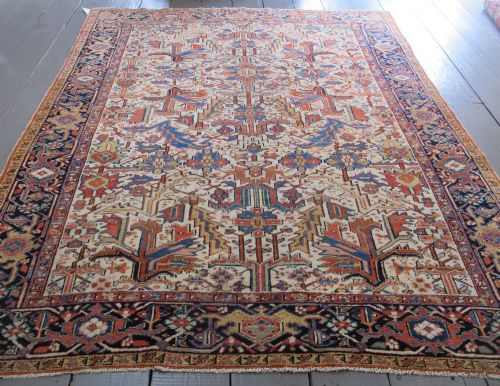
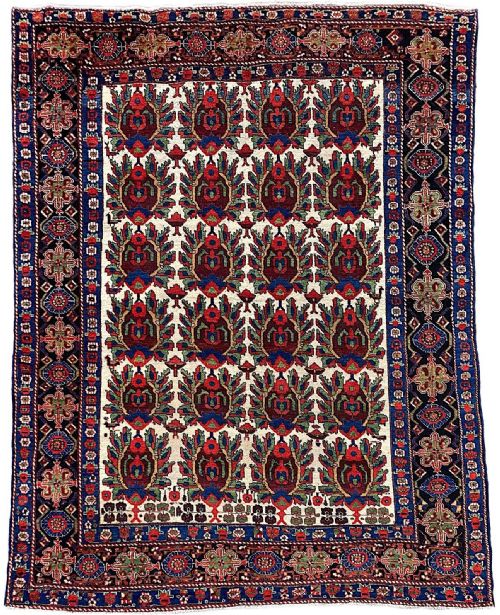
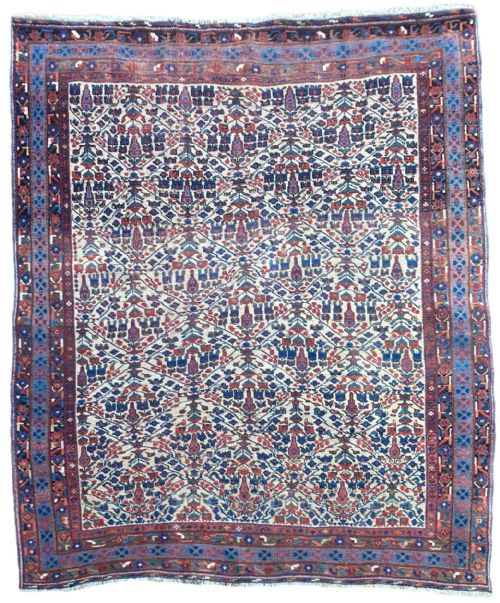


Cream Geometric Area Rug
These hand-woven floor coverings bring distinctive pattern and warmth to a room, offering the texture and character found in traditional village and tribal weaving.
Cream Geometric Area Rug
A cream geometric area rug typically presents a light neutral ground complemented by angular motifs, medallions, and traditional lattice work. These textiles originate largely from Persian, Caucasian, and Anatolian regions, dating from the mid-nineteenth century through to the early twentieth century.
The pieces available here span various tribal and village traditions, including Heriz, Afshar, Shirvan, and Kurdish workshops. Buyers encounter room-sized carpets alongside smaller prayer rugs and long runners, each displaying distinct regional patterns.
Village weavers constructed these carpets using local wool and traditional knotting techniques, producing durable floor coverings with varied geometric compositions. The light ivory and cream ground tones provide a clear backdrop for complex border systems and central field designs.
How they were made
Weavers utilised natural hand-spun wool for the pile, warp, and weft threads, yielding a dense and resilient textile structure. Artisans sourced local dyes from plants and minerals to colour the fleece before hand-knotting each rug on traditional vertical looms.
The construction involves precise hand-weaving methods passed down through generations within specific villages and nomadic groups. This manual labour results in varied pile depths and structural nuances unique to each district.
Listings feature pieces dated across the nineteenth and twentieth centuries, using hand-spun wool and cotton materials from Persian, Caucasian, and Anatolian traditions.
What varies in quality
Quality rests on the fineness of the knotting and the precision of the geometric layout across the pile. Tighter knots allow for sharper definition within medallions and lattice patterns.
The integrity of the hand-spun wool and the depth of the dye work determine the durability and visual texture of the surface. Uniformity in the weave and balanced proportions across the border and field elevate the status of a carpet.
The Cream Geometric Area Rug Glossary
- Pile
- The upright yarn loops that form the functional surface of the carpet. This layer takes the weight of footfall and shows the design.
- Warp
- The vertical foundation threads stretched tightly on the loom before knotting begins. Fringe ends typically originate from these parallel strands.
- Weft
- The horizontal threads passed between rows of knots to secure the pile in place. These strands bind the structure laterally.
- Knot
- The individual loops of wool tied around warp threads to build the pattern. Different regions employ distinct knotting styles.
- Medallion
- A large central ornamental motif set within the main field of the carpet. These geometric shapes often anchor the overall composition.
Cream Geometric Area Rug: Frequently Asked Questions
How do I clean a wool rug?
Regular gentle vacuuming without a beater bar removes surface dust and loose debris from the wool pile. Professional cleaning remains necessary for deep washing to protect the natural fibres and dyes.
Harsh chemical detergents and excessive water damage vintage wool foundations. Specialist textile cleaners understand the specific needs of hand-knotted village rugs.
Where were these rugs made?
Weavers produced these textiles across Persia, the Caucasus, Anatolia, and Central Asia during the nineteenth and early twentieth centuries. Each region developed distinct palettes and geometric vocabularies tied to local tribal traditions.
Village workshops and nomadic camps relied on locally sourced wool and traditional upright looms. These geographical origins dictate the specific styles and structural traits found in the weaving.
Can I place furniture on an antique rug?
Placing furniture on these floor coverings distributes weight across the pile without causing immediate harm. Light chairs and tables sit comfortably on dense wool carpets.
Heavy cabinets and sideboards require protective cups under legs to prevent crushing the foundation. Rotating the rug periodically ensures even wear in high-traffic rooms.
What underlay should I use?
A quality mesh underlay stops the rug from sliding on hard wood or stone flooring. This extra layer absorbs foot impact and reduces friction between the wool base and the floorboards.
Breathable natural rubber or felt pads prevent moisture accumulation underneath the textile. The correct underlay prolongs the structural life of older hand-woven carpets.