




Cream French Hall Table
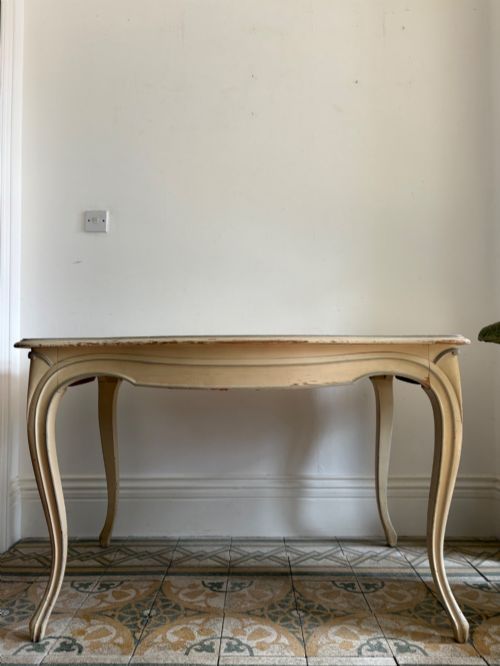
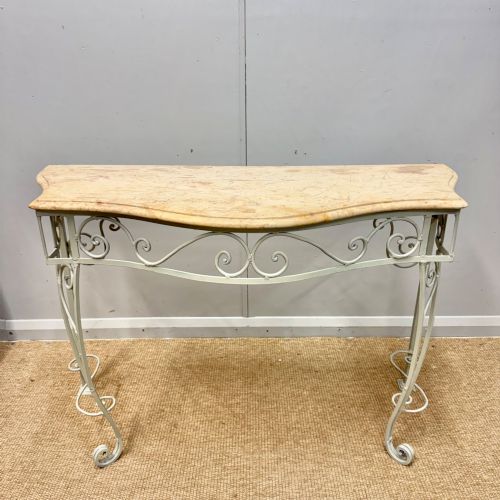
A cream french hall table brings lightness and architectural form to an entrance, offering surfaces topped in marble or inset suede.
Cream French Hall Table
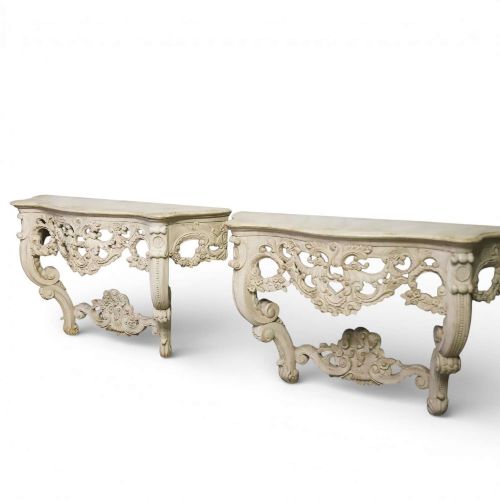
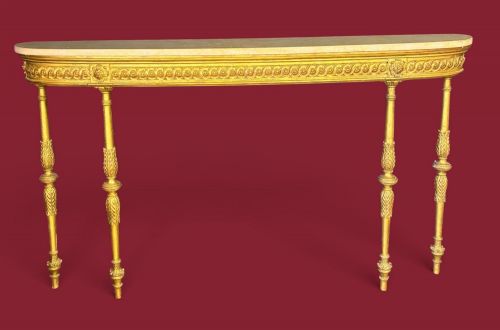
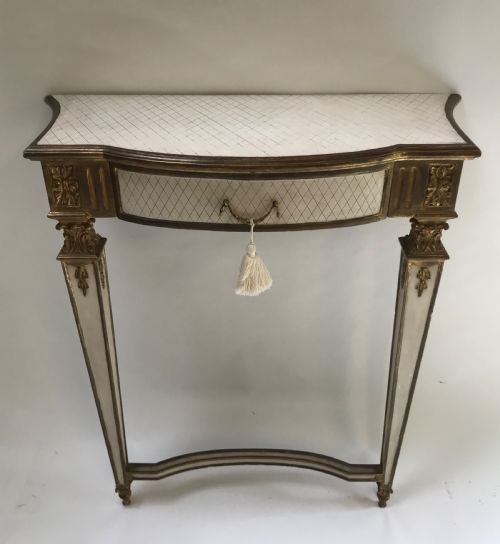
A cream french hall table is essentially a console, side, or centre table designed to sit flat against a wall or anchor a hallway. The pieces gathered here span from the late nineteenth century through to the 1930s, encompassing French provincial, chateau, rococo, and neoclassical design vocabularies.
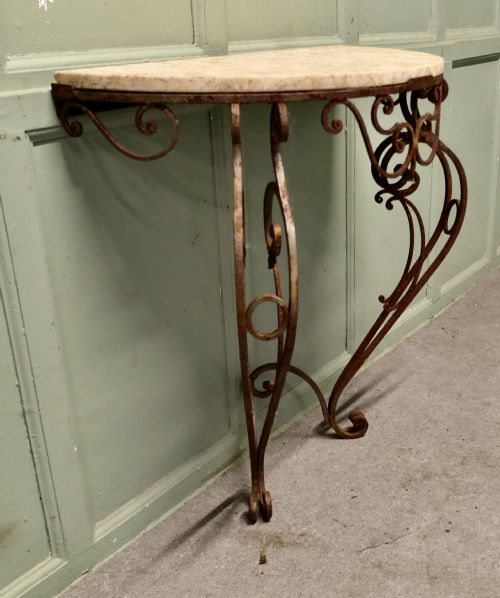
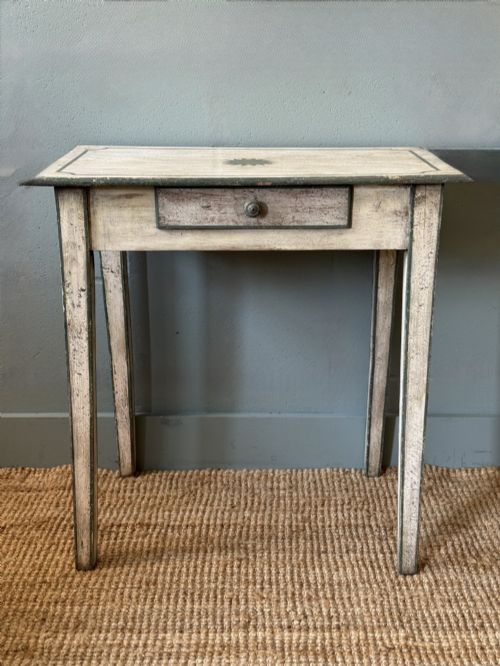
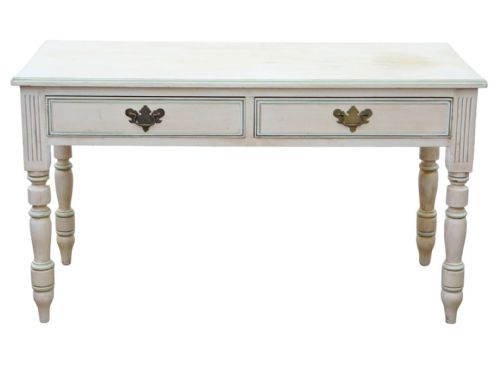
Console tables dominate this selection, frequently featuring serpentine fronts, half-moon shapes, and cabriole legs. You will also encounter occasional side tables, desks, and wrought iron variants that serve the same narrow footprint required in a corridor or reception space.
How they were made
Construction relies heavily on timber, painted wood, and fruitwood, often shaped with hand-carving or delicate parcel gilding. Painted finishes in antique white or cream establish the primary visual tone, layered over solid timber frames.
Many examples incorporate heavy stone or metal elements, pairing timber bases with inset marble tops or utilising wrought iron structures. Surface details range from simple painted schemes to giltwood highlights and inset suede panels.
Object forms on this page include console tables, side tables, desks, and centre tables executed in French provincial and neoclassical styles.
What varies in quality
Quality rests in the crispness of the hand-carving and the substance of the materials, such as the thickness and veining of a marble top. Tables finished with nuanced parcel gilding or original painted surfaces hold greater visual depth than uniform modern applications.
Structural integrity differentiates a robust nineteenth-century console from lighter twentieth-century adaptations. The integration of components, from wrought iron scrollwork to fitted drawers, marks the distinction between standard production and finer execution.
The Cream French Hall Table Glossary
- Console table
- A table designed to be fixed against a wall, frequently supported by two front legs and secured to the masonry behind. These pieces are shallow in depth to suit narrow hallways.
- Cabriole leg
- A furniture leg that curves out and then in, resembling the leg of an animal. It is a defining feature of eighteenth-century and revival French design.
- Parcel gilt
- A surface decoration where only specific raised details or carved elements are covered in gold leaf. This technique highlights particular motifs against a painted background.
- Serpentine front
- A furniture front characterised by a wavy line, curving outward in the centre and inward at the sides. It creates a dynamic silhouette on side tables and consoles.
- Demi-lune
- A half-moon shape used for console and bedside tables designed to sit flush against a wall.
Cream French Hall Table: Frequently Asked Questions
Where should I place a hall table?
These narrow tables suit entrance halls, corridors, and narrow landings where floor space is limited. Their shallow profiles allow them to sit flush against a wall without obstructing movement.
They also function effectively in living rooms or dining spaces beneath a mirror or artwork, providing a surface for lamps and small decorative objects.
How do I care for a marble top?
Marble is a porous stone that reacts to acidic liquids like wine, citrus, and vinegar. Wipe spills promptly with a soft, damp cloth and use coasters to protect the polished surface.
Avoid abrasive cleaners or harsh scrubbing pads, which dull the natural sheen. Periodic sealing helps guard against staining.
Are these tables solid wood?
The listings combine solid timber, fruitwood, and painted wood structures alongside wrought iron bases. Many feature hand-carved wooden frames finished in layered paint.
Heavier elements like marble tops are typically separate slabs resting upon the wooden or iron base for stability.
What periods do these pieces come from?
The selection spans the nineteenth century through the interwar decades of the 1920s and 1930s. Styles range from rococo revival and neoclassical to country and provincial interpretations.
Details like hand-carving, paint finishes, and ironwork reflect the specific design tastes of these different eras.