

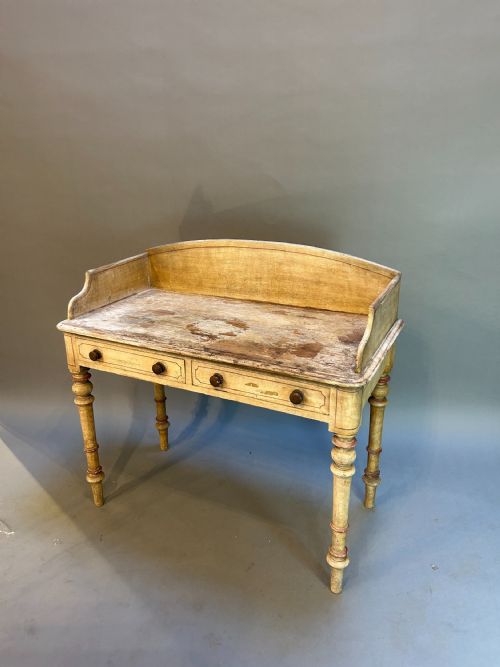
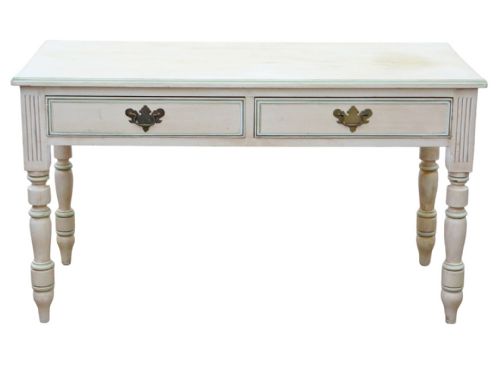
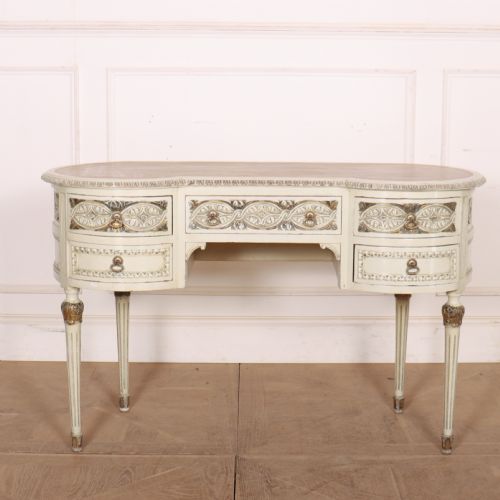


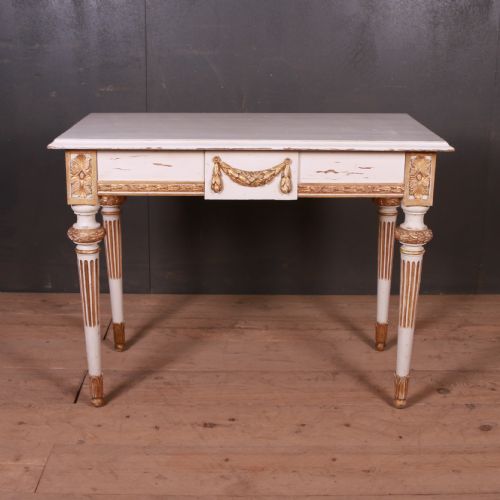


Cream Painted Writing Table
A cream painted writing table brings light and understated surface space to a room, ranging from French provincial forms to English traditional designs.
Cream Painted Writing Table
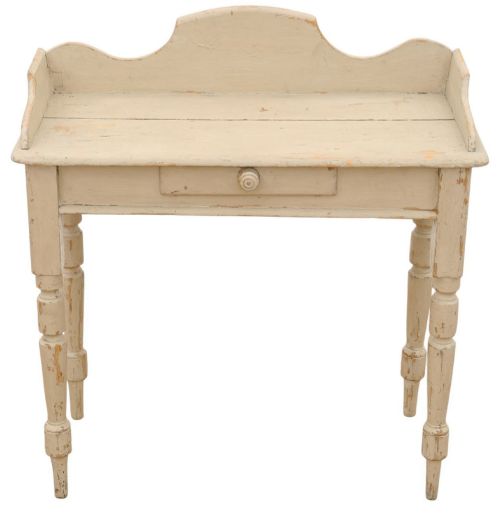
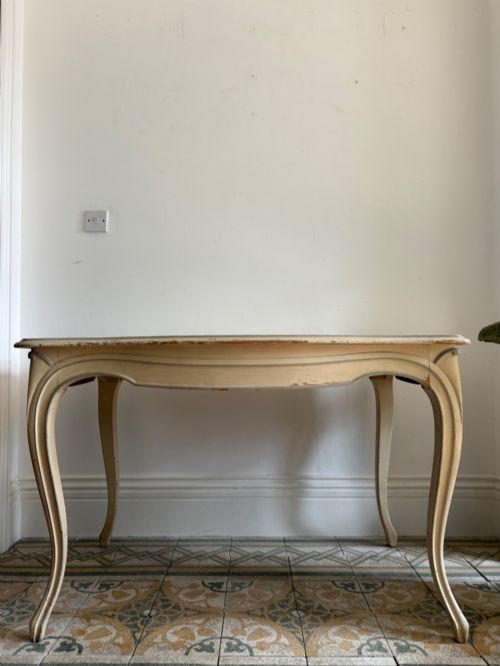
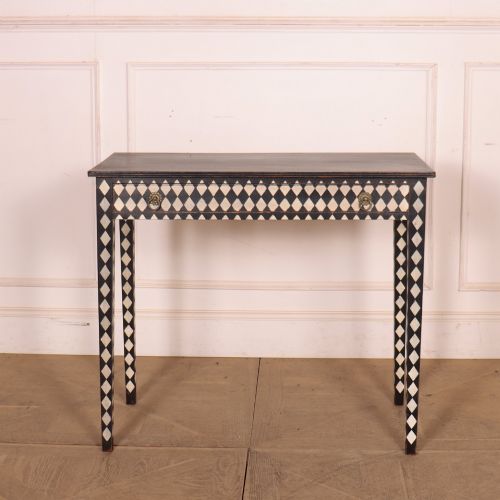
When you search for a cream painted writing table, you are looking at practical surface furniture finished in pale paint, suited for study and writing. These pieces include compact desks, console tables, and side tables designed for domestic use.
The versions you are most likely to meet on this page span the nineteenth century into the early twentieth century. They draw on French Provincial, Victorian, Neoclassical, Gustavian, and rustic farmhouse styles.
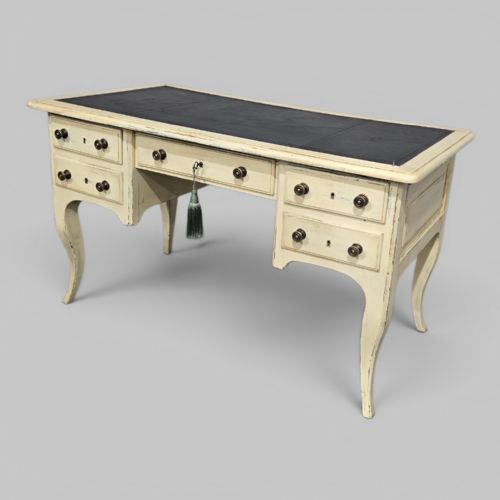
Makers shaped these tables from timber and pine, often incorporating inset leather or suede surfaces, drawers, and cabriole legs. Originating from English and continental workshops, they combine functional drawers with decorative painted finishes.
How they were made
Carpenters constructed these tables using solid wood and pine for the main frames and drawers. Surfaces received layers of paint, sometimes with gilt wood details or original decorative painted finishes applied by hand.
Many examples incorporate inset materials such as leather or suede on the top writing surface, bordered by woodwork. Brass hardware often appears on the drawers, alongside carved wooden elements like cabriole legs.
Cream Painted Writing Table Retail Price Guide 2026
Typical asking prices for cream painted writing table among the pieces listed under this phrase on Sellingantiques today, from the lower quarter to the upper quarter. They describe what is for sale here now, not the wider market.
The pieces span multiple design traditions, including French Provincial, Gustavian, Neoclassical, and rustic farmhouse styles.
What varies in quality
The standard of a cream painted writing table rests on the integrity of its construction and the preservation of its original painted surface. Finer examples retain their initial decorative schemes without heavy modern intervention.
Design sophistication also separates simpler utilitarian desks from elaborate pieces featuring kidney-shaped tops, Wedgwood plaques, and detailed woodwork. The precision of the joinery in the drawers marks the distinction between standard and superior workshops.
The Cream Painted Writing Table Glossary
- Cabriole leg
- A furniture leg that curves outward and then tapers inward, typically ending in a simple foot. This form derives from traditional animal leg shapes.
- Kneehole desk
- A desk featuring a central recess for the user's legs, flanked by pedestals or banks of drawers. This layout provides comfortable clearance while seated.
- Serpentine front
- A furniture front characterised by a wavy shape, curving outward at the centre and inward at the sides. This contour adds visual movement to console and side tables.
- Gustavian style
- A Swedish interpretation of French neoclassical design, notable for pale painted finishes and restrained classical ornamentation. It brings a bright, orderly aesthetic to domestic interiors.
- Kidney-shaped desk
- A writing table with a concave front curve that wraps around the user. This curved profile allows closer access to the working surface.
Cream Painted Writing Table: Frequently Asked Questions
What is a cream painted writing table used for?
These tables provide a dedicated surface for correspondence, administrative tasks, and light paperwork in a study or bedroom. Their drawers offer convenient storage for stationery and small items.
Beyond functional writing tasks, they function well as console tables or side tables in living spaces. Their pale painted finishes help brighten darker corners of a room.
How do I date a painted writing table?
Dating relies on examining the construction methods used in the drawers and the timber framing beneath the paint layers. Structural clues such as hand-cut joints or specific wood types point toward nineteenth-century origins.
Stylistic markers also help narrow the period, as neoclassical proportions differ significantly from later Victorian or Edwardian interpretations. Original hardware and surface wear provide further context for the age of the piece.
Where were these tables made?
The listings show origins spanning both English and continental European workshops. English traditional styles sit alongside French provincial and Swedish designs.
Regional differences appear in the decorative details, such as Gustavian influences from Sweden or neoclassical plaques from French workshops. Each region applied distinct aesthetic preferences to the basic writing table form.