





Cream Framed Map
A cream framed map brings historical geography and domestic needlework together on the wall, offering a crisp border that lifts antique paper and textile art.
Cream Framed Map
A cream framed map comprises historic cartography and embroidered samplers set within pale wooden or painted surrounds. These pieces range from seventeenth-century county atlases and regional charts to late-Georgian needlework maps stitched by hand.
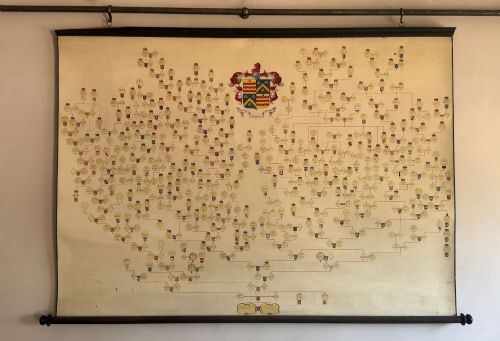
The selection on this page leans heavily towards Georgian and seventeenth-century cartography alongside Victorian wall charts and textile pieces. Buyers encounter engraved county maps, hand-coloured world maps, and detailed family pedigrees housed behind glass.
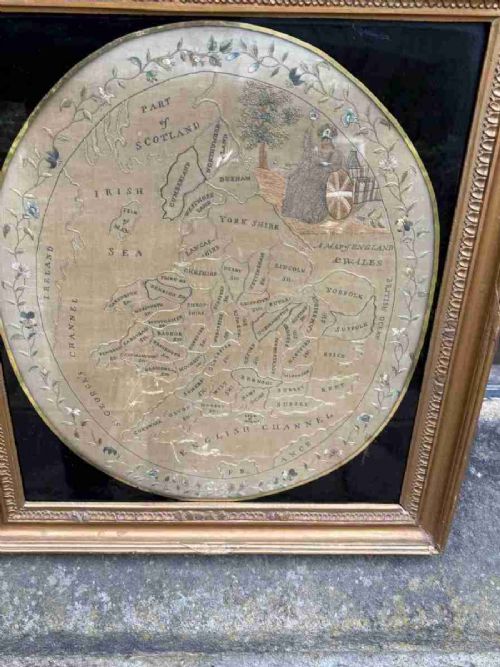
Engraved copperplate maps of English counties sit alongside intricate silk and linen samplers charting England and Wales. Each object records historical boundaries while functioning primarily as decorative wall art.
How they were made
Cartographic pieces rely on copperplate engraving on laid paper, often with contemporary or later hand-colouring in watercolour and ink. The resulting lines capture intricate topographical details, town views, and decorative cartouches.
Textile works utilise silk, linen, and wool thread stitched onto canvas or fabric grounds to form needlework samplers of maps and pedigrees. These require careful mounting and framing behind glass to protect the delicate fibres from atmospheric damage.
Frames utilise wood, including giltwood moulds, painted timber, and traditional mouldings that provide a neutral cream border. This framing choice isolates the aged paper or textile, anchoring the piece visually for interior display.
Early schoolgirls occasionally mislabelled remote parishes while stitching their geography homework, leaving permanent cartographic errors preserved in silk.
What varies in quality
Quality rests in the clarity of the original impression or the tightness and complexity of the needlework stitches. Crisp plate marks, legible typography, and fine hand-colouring elevate an engraved map above a standard late impression.
The condition of the paper or textile substrate dictates the overall standard of the piece, with stable paper free from heavy foxing preferred by collectors. For embroidered maps, the completeness of the stitching and the preservation of the original ground fabric define the standard.
The harmony between the map and its cream frame influences visual success. Pieces retaining period frames or high-grade period-appropriate mouldings offer greater integrity than later, unsympathetic remounts.
Robert Morden·Joan Blaeu·J Harrison·J. Duncan·C. Smith
The Cream Framed Map Glossary
- Cartography
- The science or practice of drawing maps. In antiques, this encompasses engraved maps from commercial atlases and specialised county surveys.
- Needlework sampler
- A piece of textile work produced as a demonstration or test of skill in embroidery. In this category, they frequently take the form of geographical maps or family trees.
- Copperplate engraving
- A printmaking technique where an image is incised into a copper sheet with a burin. The inked plate transfers fine, crisp lines onto paper under pressure.
- Pedigree
- A line of descent traced continuously. These genealogical charts display family trees and hereditary connections, often framed as wall art.
Cream Framed Map: Frequently Asked Questions
How do I date an old map?
Dating relies on internal evidence such as place names, publisher imprints, cartouche styles, and historical boundaries depicted on the paper. Engravers often included publication dates directly beneath the map margin or within the title cartouche.
Paper characteristics, watermarks, and typography further help narrow the decade of production. Comparative reference to known cartographic atlases provides confirmation of the exact printing period.
Are needlework maps rare?
Embroidered maps formed a standard part of young women's education during the eighteenth and early nineteenth centuries. While many were produced, fewer survive in good condition due to the fragile nature of silk and wool exposed to light.
Examples featuring specific cartographic detail alongside the maker's stitched signature attract strong interest from textile collectors. Their survival depends heavily on past framing and protection behind glass.
How should I hang a framed map?
Keep antique maps and needlework samplers away from direct sunlight and damp environments to prevent fading of ink and textile fibres. Stable indoor humidity protects both the paper substrate and the wooden frame from warping.
Use professional picture hooks rated for the weight of the frame and hang the piece securely on an interior wall. Ensure the backing board allows the paper or textile to breathe without trapping moisture.
What is an atlas engraving?
An atlas engraving is a map printed from a copper or steel plate specifically produced for inclusion in a bound collection of maps. These plates were often updated over several editions to reflect changing roads, towns, and political boundaries.
Plates removed from broken or disbound atlases frequently find new life as individual wall art. The margins often retain evidence of past binding folds.