




Cream Framed Coastal Painting
A cream framed coastal painting brings the sea inside through mid-century impressionism, Victorian watercolours, and Edwardian scenes held within pale wooden borders.
Cream Framed Coastal Painting
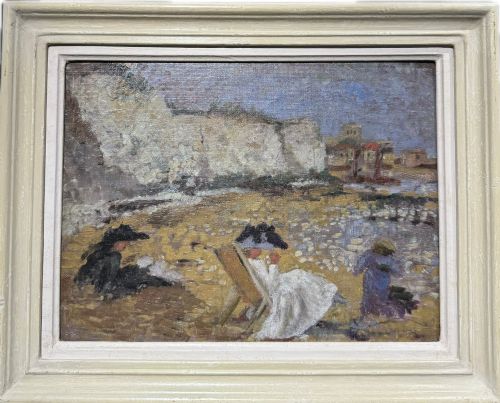
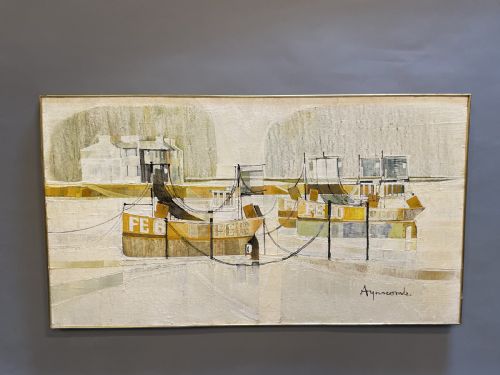
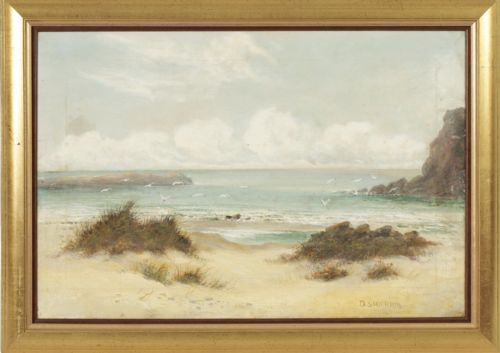
A cream framed coastal painting is a marine or shore scene, often capturing harbours, estuaries, and beaches in oil or watercolour. These works span from Victorian and Edwardian periods through to the nineteen-fifties and nineteen-sixties, reflecting changes in British and European impressionism.
The pieces on this page lean heavily into mid-century impressionism, post-impressionism, and British impressionist styles. Forms range from large oils on canvas and board to delicate watercolours and pastels on paper.
Subjects frequently visit specific locations such as Folkestone, Polperro in Cornwall, Port St Mary on the Isle of Man, and Italian landmarks. Buyers seeking a cream framed coastal painting will find works by named artists like Jeffrey Pratt, Edward M. Elliott, Jack R Mould, Daniel Sherrin, and Paul-Louis Barruel.
How they were made
Artists painted these coastal subjects using oil paint or watercolour, applying pigments directly onto canvas, prepared wooden board, or thick paper. Brushwork varies from the loose, expressive strokes of mid-century impressionism to the precise detail seen in Victorian watercolours and pastels.
Frames made of wood are painted or finished in cream tones to complement the maritime palettes of blues, greys, and earth tones. Protective glass is commonly utilised to shield paper works such as watercolours and pastel drawings from atmospheric moisture.
One oil board on the page carries a silent retail nod from Liberty & Co, tying a quiet harbour view to a famous London storefront.
What varies in quality
Quality rests in the handling of light and atmosphere by the artist, distinguishing a swift decorative sketch from a considered impressionist canvas. The depth of the brushwork and the accuracy of the coastal perspective elevate certain paintings above standard topographical views.
The construction and condition of the wooden frame, along with the preservation of the underlying canvas or paper, influence the overall integrity of the piece. Works retaining original framing details or documented retail provenance carry greater historical interest for collectors.
Jeffrey Pratt·Edward M. Elliott·Jack R Mould·Daniel Sherrin·Paul-Louis Barruel
The Cream Framed Coastal Painting Glossary
- Impressionism
- A style of painting that focuses on light and its changing qualities, often using small, visible brushstrokes to depict coastal scenes and landscapes.
- Watercolour
- A paint consisting of pigment suspended in a water-based solution, typically applied to paper to create translucent washes of colour.
- Board
- A rigid flat surface made of wood pulp or timber panel used as a sturdy support for oil paintings instead of woven canvas.
- Estuary
- The tidal mouth of a large river, where the tide meets the stream, frequently chosen as a subject by mid-century marine painters.
- Provenance
- The chronology of the ownership, custody, or location of a historical work of art.
Cream Framed Coastal Painting: Frequently Asked Questions
How do I date a coastal painting?
Dating relies on the style of the brushwork, the framing materials, and any signatures or inscriptions left by the artist on the canvas or board. Comparing the subject matter and medium against known periods like the Victorian era or mid-century helps narrow the timeline.
Documentation such as retail labels on the reverse also provides clear clues to the decade of creation and framing.
Where should I hang a coastal painting?
These works suit well-lit spaces away from direct sunlight and damp environments, which can damage exposed canvas or paper watercolours. Pairing the pale wooden frame against neutral wall tones allows the coastal blue and grey pigments to stand out.
Placing the artwork at eye level in living areas or hallways creates a natural focal point.
Are watercolours framed differently than oils?
Watercolours and pastel drawings on paper require protective glass and mount boards to prevent moisture and dust from damaging the delicate pigments. Oil paintings on canvas or board are typically displayed open to the air within a fitted wooden frame.
Both methods utilise cream-toned wooden borders to complement the maritime artwork.
What is mid-century impressionism?
Mid-century impressionism combines the loose brushwork and light-capturing qualities of nineteenth-century painting with mid-twentieth-century subjects and palettes. Artists working in this style during the nineteen-fifties and sixties focused on capturing the atmosphere of harbours and coastlines rather than exact topographical replication.
This approach yields textured, vibrant depictions of seaside life.