

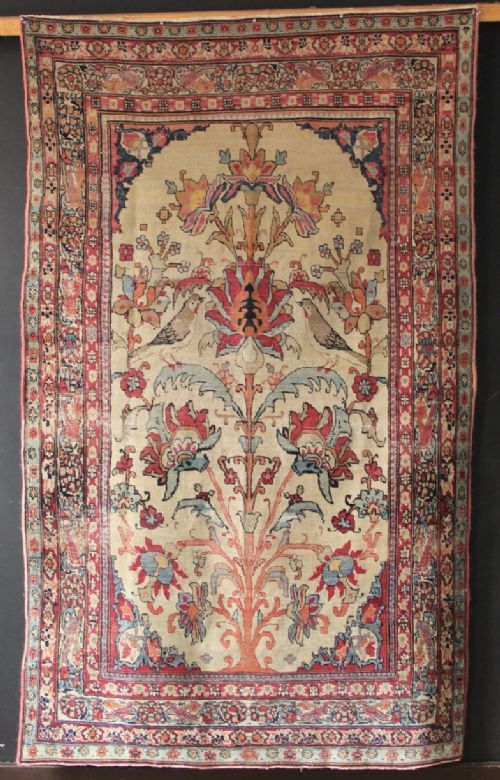
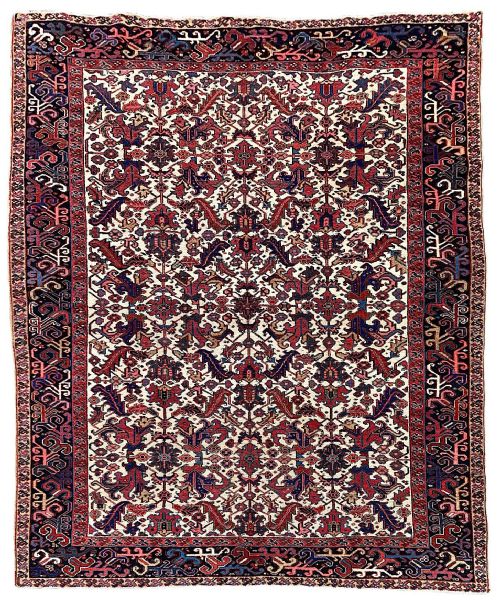
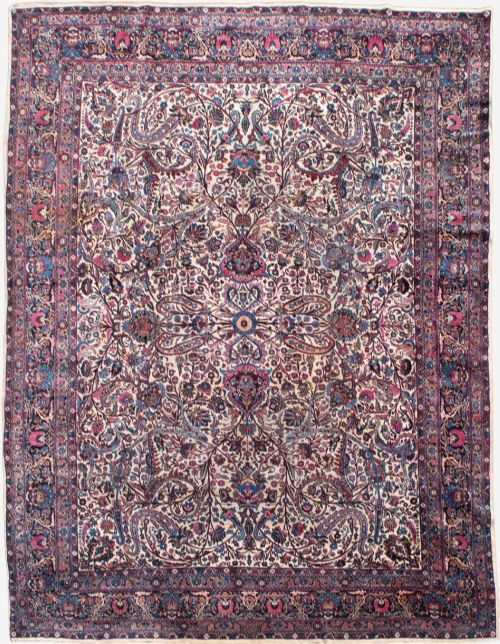
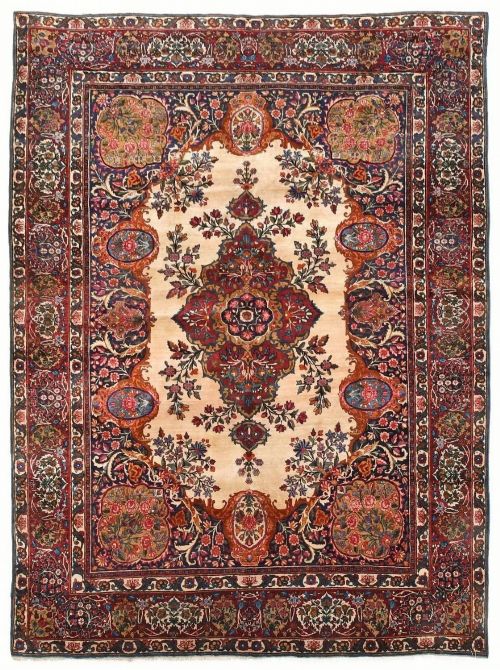
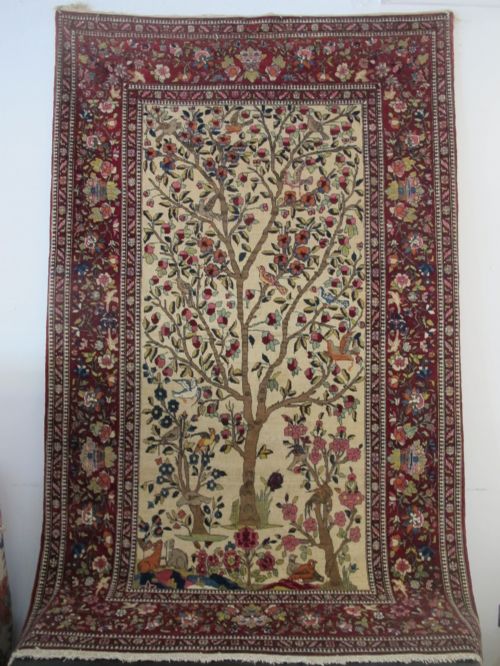


Cream Floral Oriental Carpet
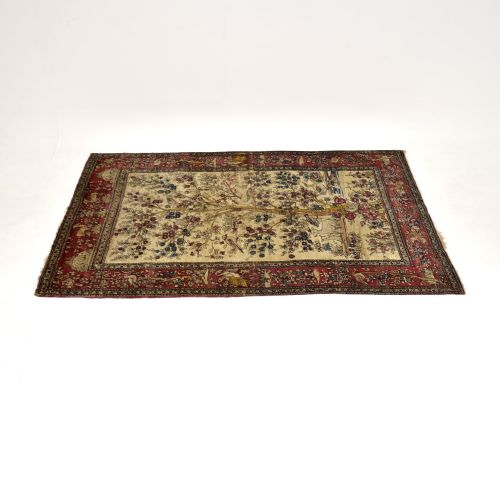
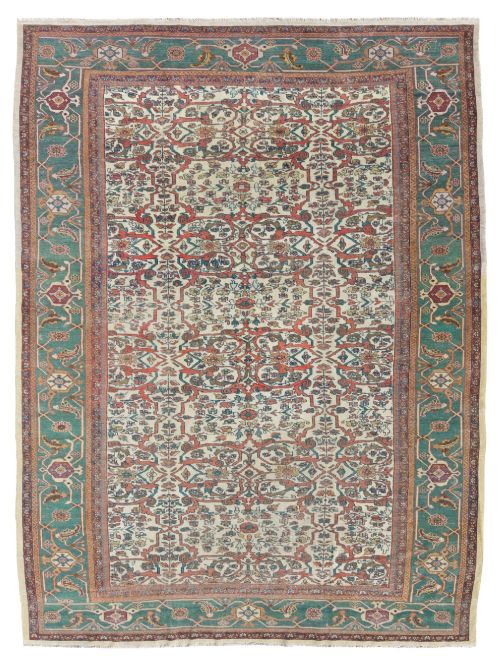
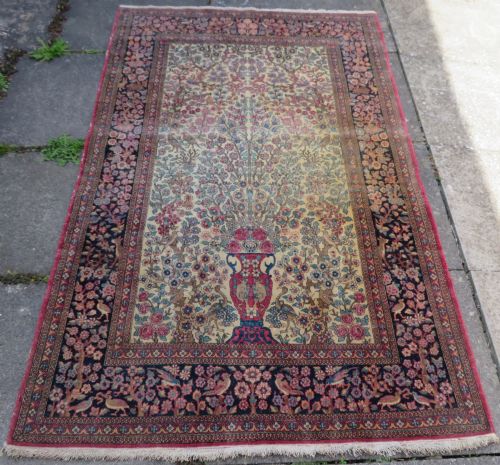
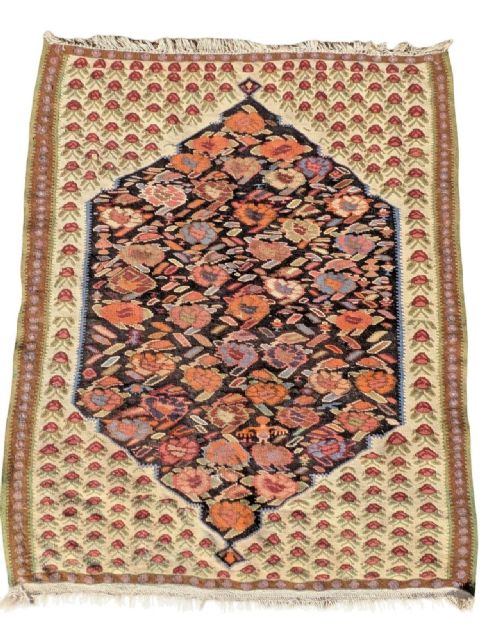
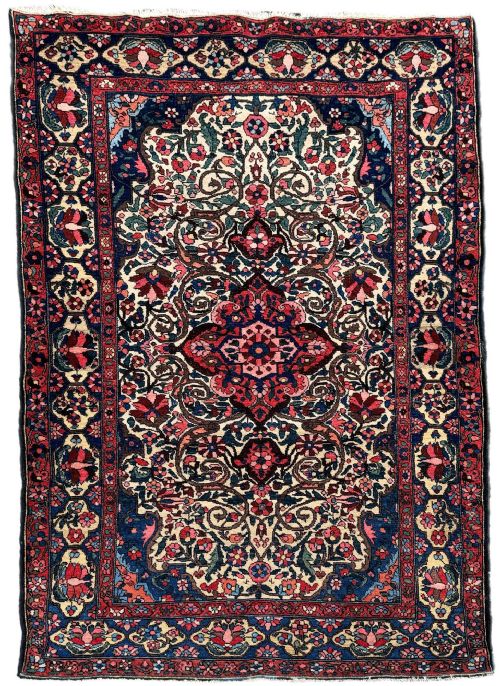
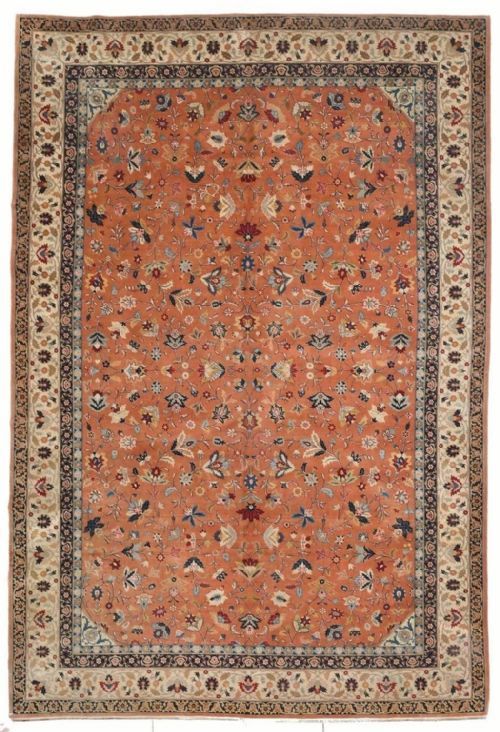
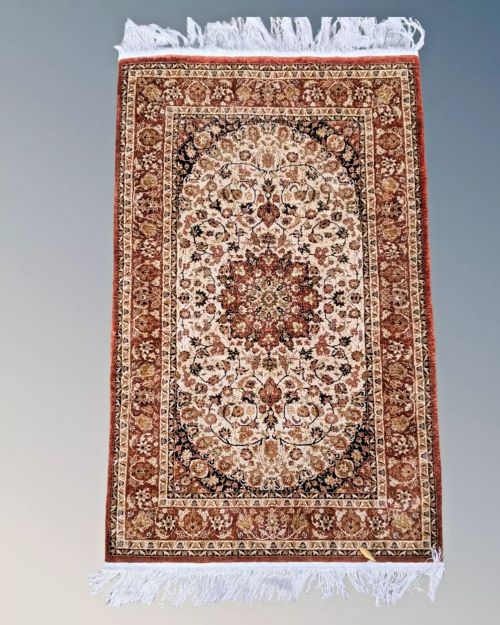
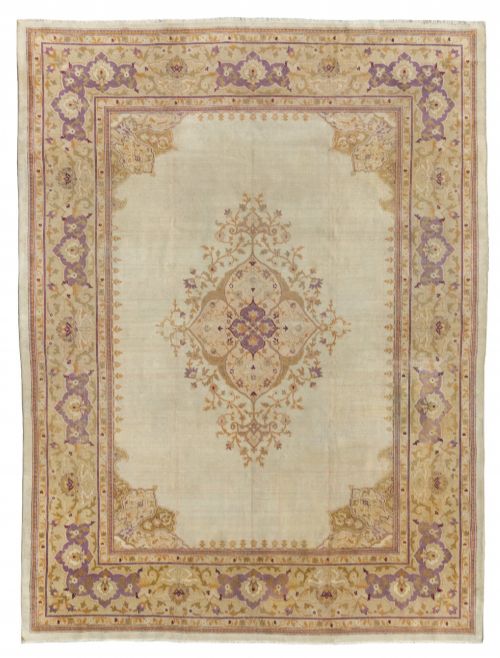
When you search for a cream floral oriental carpet, you look for a floor covering woven in wool, cotton or silk with floral motifs.
Cream Floral Oriental Carpet
A cream floral oriental carpet brings together traditional weaves from regions including Tabriz, Kirman, and Kashan, often featuring ivory or light grounds decorated with botanical patterns. These floor coverings span from the nineteenth century into the nineteen-thirties, offering a range of room sizes alongside smaller rugs.
The most common examples on this page are antique Persian carpets with floral and tree of life designs, worked in wool with occasional cotton foundations or silk elements. Pieces span various workshops and villages, incorporating styles such as Heriz, Bidjar, and Mahal alongside Kashmiri production.
Materials and construction
These carpets rely primarily on wool pile hand-knotted onto cotton or wool warp and weft foundations, providing a dense and durable structure. Certain finer examples incorporate silk, particularly in specific Qum and Kashmir weaves, allowing for intricate detail within the floral compositions.
Dyers utilised natural and early synthetic colourants to achieve the soft pastel shades, ivory grounds, and deep tones seen across Tabriz, Kirman, and Isfahan pieces. The weavers knotted each strand by hand, creating varied pile heights and structural densities depending on the regional workshop tradition.
Regional styles include Tabriz, Kirman, Kashan, Isfahan, Heriz, and Mahal.
Quality variations
Knot density and the precision of the floral drawing dictate the fineness of the weaving, separating standard village rugs from workshop masterpieces by master weavers. The clarity of the ivory or cream ground and the subtlety of the surrounding palette distinguish finer examples.
The choice of materials influences the handling of the pile, with higher quality wools and added silk providing a softer touch and sharper definition to tree of life and vase motifs. Structural integrity, including the evenness of the weave and the preservation of the original edges and ends, marks superior condition.
Mohtasham Kashan·Ahmadi Isfahan·Benlian Tabriz
The Cream Floral Oriental Carpet Glossary
- Pile
- The upright loops or cut ends of yarn that form the soft surface of the carpet. This layer absorbs wear and displays the design.
- Warp
- The vertical foundation threads stretched tightly on the loom before knotting begins. Weft threads pass across these to secure the knots.
- Weft
- The horizontal threads passed through the warp threads after each row of knots is tied. This process binds the structure together firmly.
- Foundation
- The underlying grid of warp and weft threads that supports the knotted pile. It provides the structural backbone of the carpet.
- Ground
- The background colour field of the carpet, often seen in ivory or cream across these specific oriental pieces.
Cream Floral Oriental Carpet: Frequently Asked Questions
What is a cream floral oriental carpet?
A cream floral oriental carpet is a hand-knotted floor covering featuring botanical and floral designs set against a light or ivory background. These pieces originate from Persian weaving centres and Kashmiri workshops.
They combine traditional regional motifs, such as trees of life and vases, with wool, cotton, or silk materials dating from the nineteenth and early twentieth centuries.
Where were these carpets made?
These carpets were produced across various Persian towns and regions, including Tabriz, Kirman, Isfahan, Kashan, Heriz, and Mahal. Other examples originate from Kashmiri workshops.
Each region developed distinct weaving techniques, colour palettes, and structural characteristics that define the individual types.
How do I care for an antique rug?
Care for an antique rug involves regular gentle vacuuming without a beater bar to protect the wool or silk pile. Professional cleaning suited to antique textiles helps preserve the natural fibres.
Keeping the carpet out of direct sunlight prevents the soft pastel and ivory tones from fading over time.
How are different periods told apart?
Periods are identified by examining the materials, dye types, structural wear, and stylistic markers characteristic of nineteenth-century or early twentieth-century weaving. Earlier pieces often display specific botanical nuances and regional dying methods.
Comparing the knot structure and foundation materials provides further clues to the date of manufacture.