
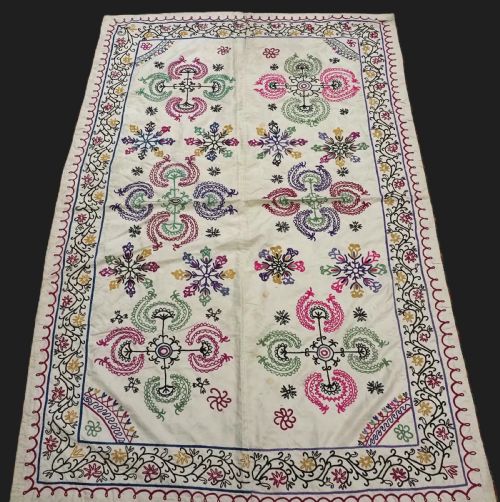


Cream Embroidered Rug
A cream embroidered rug brings warmth and texture to a floor, offering intricate needlework and storied textile traditions for your interior.
Cream Embroidered Rug
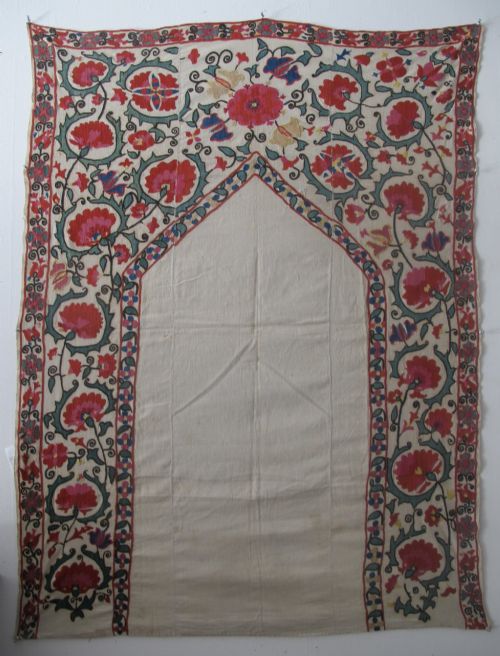
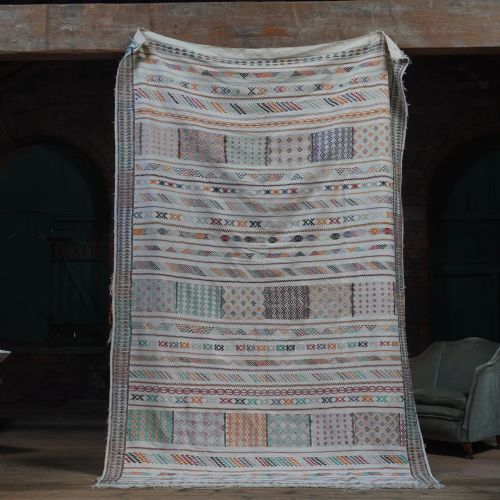
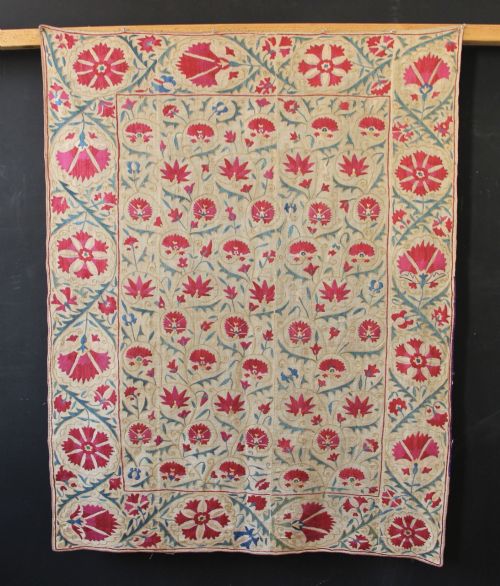
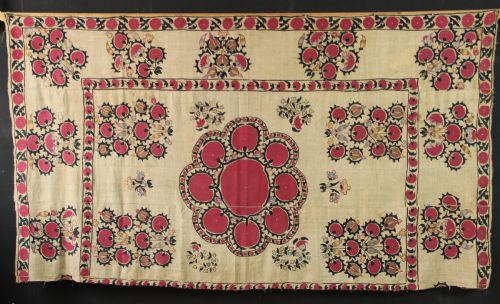
When you search for a cream embroidered rug, you encounter a diverse array of textiles ranging from Central Asian suzanis to Portuguese needlepoints and Moroccan flatweaves. These pieces serve as decorative floor coverings, wall hangings, and tapestries that introduce soft neutral tones and complex needlework into a room.
The selections on this page span several centuries and regions, incorporating traditional designs from Uzbekistan, Portugal, and North Africa. You are most likely to meet vintage needlepoints and antique embroidered textiles featuring wool, cotton, or silk worked onto canvas or linen grounds.
Materials and construction methods
The pieces rely on natural fibres including wool, cotton, silk, linen, and canvas, frequently paired with regional materials such as cactus silk or sabra fibre. Artisans utilised specialised embroidery techniques like chain stitch, needlepoint, and fine silk thread work to build dense patterns across the fabric.
Ground fabrics provide a sturdy foundation for intricate surface embellishment, whether executed as a Portuguese needlepoint or an Uzbek suzani. The interplay between the support material and the thread determines the drape and durability of each textile.
The inventory encompasses diverse geographic origins including Uzbekistan, Portugal, Morocco, and Persia.
Evaluating quality and execution
Quality rests in the precision of the needlework and the integrity of the materials, where fine silk thread and tightly worked canvas distinguish superior examples from simpler ones. The consistency of the stitches and the complexity of the design layout indicate the maker's skill and time invested.
The preservation of the ground fabric and the vibrancy of the embroidered threads dictate the overall standard of the piece. Well-balanced proportions and harmonious colour palettes separate refined historical textiles from standard utilitarian examples.
The Cream Embroidered Rug Glossary
- Suzani
- An embroidered tribal textile originating from Central Asia, traditionally worked in silk thread on a cotton or silk ground. These pieces often display large-scale floral and architectural motifs.
- Needlepoint
- A type of counted thread embroidery stitched onto a stiff canvas mesh, frequently seen in traditional Portuguese examples. It creates a dense, durable surface suitable for floor use.
- Chain stitch
- A looping embroidery technique that forms a series of connected stitches resembling a chain. This method builds textured linear designs across rugs and wall hangings.
- Sabra fibre
- A vegetable silk extracted from the agave cactus, utilised in traditional Moroccan weaving and embroidery. It yields a lustrous finish similar to conventional silk.
Cream Embroidered Rug: Frequently Asked Questions
How do I care for an embroidered rug?
Protect delicate embroidered textiles from heavy foot traffic by placing them in low-impact areas or mounting them on a wall as a tapestry. Gentle vacuuming without a beater brush helps remove surface dust.
Avoid moisture and direct sunlight to preserve natural silk, wool, and cotton fibres. Professional textile cleaning is recommended for antique pieces.
Are these pieces meant for the floor?
While many items function as area rugs or carpets, others are delicate wall hangings, crewelwork panels, or prayer textiles. Assessing the ground material and backing helps determine suitability for floor placement.
Fragile silk-on-silk examples and historic tapestries are better suited to vertical display. Sturdier wool and canvas needlepoints handle gentle foot traffic more effectively.
How can I tell the origin of a textile?
Origin is identified through specific stylistic motifs, embroidery techniques, and regional colour palettes. Central Asian suzanis display distinct floral medallions, while Portuguese pieces typically feature needlepoint floral compositions.
Examining the reverse side reveals construction methods and fibre types characteristic of particular workshops or nomadic traditions. Comparing stitch density also aids provenance.
What is the difference between a rug and a wall hanging?
Rugs and carpets generally feature heavier ground fabrics or supportive backings designed to withstand weight and friction. Wall hangings and decorative textiles often utilise lighter silk or linen foundations.
Format and design orientation can also indicate intended use, such as prayer formats or long runner dimensions. Structural weight remains the primary indicator of floor capability.