
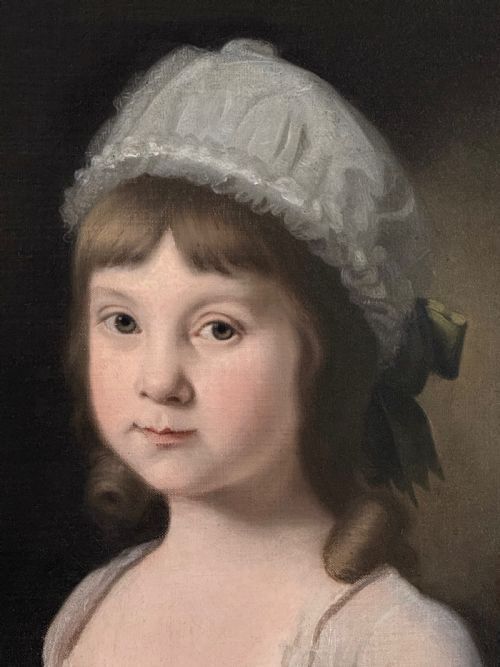


Cream Dress Oil Portrait
A cream dress oil portrait brings historical presence into a room, capturing sitters from the eighteenth and nineteenth centuries in refined attire.

Cream Dress Oil Portrait
A cream dress oil portrait is a painted likeness showing a sitter garbed in pale, light-coloured textiles, spanning periods from the eighteenth century through to the mid-twentieth century. The works on this page include oils on canvas depicting women and children, often associated with English and European schools.
The subjects range from formally posed Regency figures to military musicians and Spanish ladies, reflecting diverse stylistic choices across different eras. Buyers encountering these pieces will find both named sitters and anonymous subjects captured in oil paint.
Framing often complements the artwork, with giltwood and gilded wood surrounds enhancing the visual weight of the paintings. These portraits serve as striking wall art that anchors a room with historic character.
Quality factors in portraiture
Quality in a cream dress oil portrait rests upon the skill of the brushwork and the psychological depth captured in the sitter's expression. Superior examples demonstrate a confident handling of light upon fabric, rendering the texture of the cream dress with convincing volume.
The condition of the canvas and the originality of the frame also influence the standing of a piece. Works attributed to known hands or specific regional schools command greater interest among collectors seeking documented provenance.
Several sitters share the canvas with faithful spaniels and blue chow dogs.
Attilio Toro·John Horsburgh·Francis Alleyne·George Clint·John Raphael Smith
The Cream Dress Oil Portrait Glossary
- Oil on Canvas
- A painting medium where pigments are suspended in a drying oil, applied to a woven fabric support. This combination permits rich colour blending and durability over centuries.
- Giltwood
- Wood that has been treated with a thin layer of gold leaf or gilt powder. It provides a reflective, ornate border common in period frames.
- Georgian
- The period spanning the reigns of the four British monarchs named George, from 1714 to 1830. Art from this era is characterised by classical restraint and elegance.
- Regency
- The British historical period from 1811 to 1820, marked by distinct architectural and artistic styles influenced by classical Greece and Rome.
- English School
- A designation for artists working in England, or following traditional English artistic methods, during a specific historical timeframe.
Cream Dress Oil Portrait: Frequently Asked Questions
How do I date a cream dress oil portrait?
Dating relies on the style of the clothing, the hairstyle of the sitter, and the construction methods of the canvas and frame. Comparing these elements with documented portraits from periods like the Regency or eighteenth century helps narrow the timeframe.
Signatures, inscriptions on the stretcher bars, and historical records also provide clues to the exact era in which the work was created.
Where should I hang an oil portrait?
These portraits suit principal reception rooms, hallways, or libraries where traditional wall art creates a focal point. They pair well with period interiors and benefit from stable wall spaces away from direct sunlight.
Ensuring the room maintains moderate humidity levels protects both the canvas and the wooden or giltwood frame from degradation.
What is the difference between an attributed work and a circle piece?
An attributed work is one where stylistic evidence suggests a specific artist created the piece, though absolute documentation may be absent. This classification indicates strong similarities to a known master's verified output.
Works from the circle of an artist refer to paintings by an unidentified hand closely associated with the master, often working in the same studio or sharing identical stylistic traits.
How are giltwood frames maintained?
Maintenance involves gentle dusting with a soft, dry brush to remove particles without disturbing the delicate gold leaf surface. Moisture and chemical cleaners should be avoided entirely to prevent lifting or tarnishing of the gilt.
Periodic checks of the structural joints ensure the frame continues to support the weight of the canvas securely.