
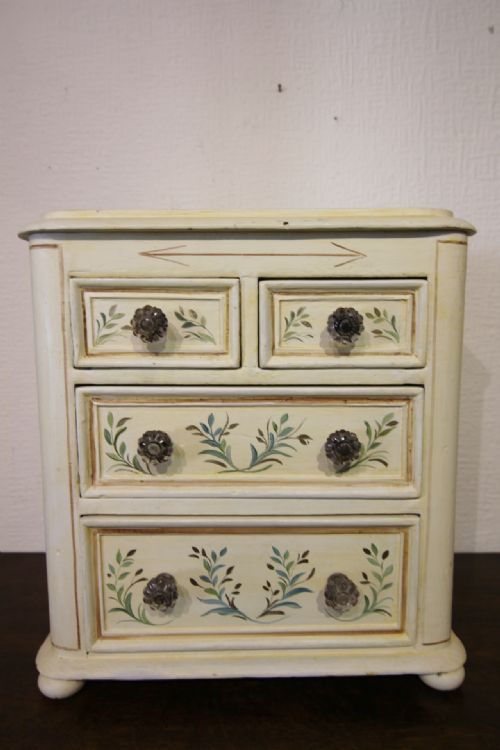
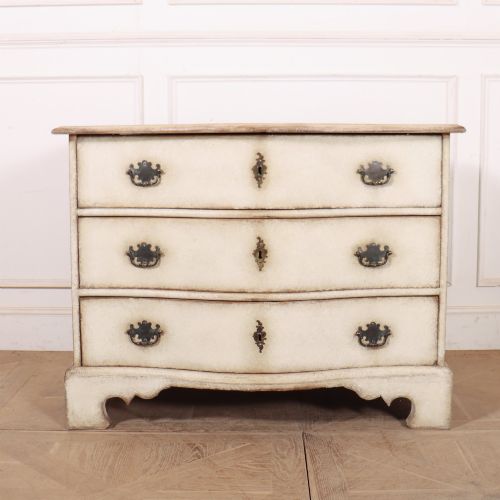
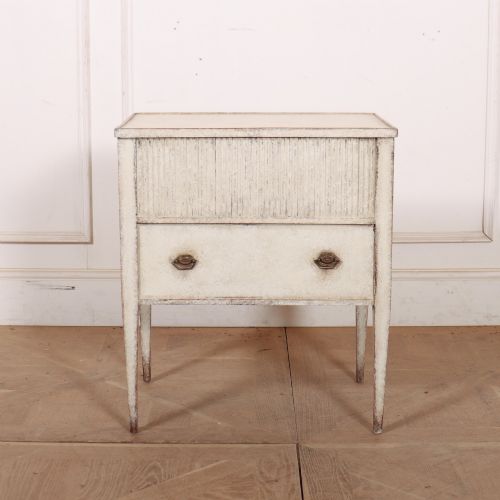
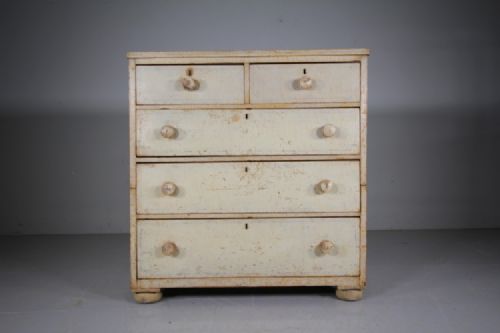
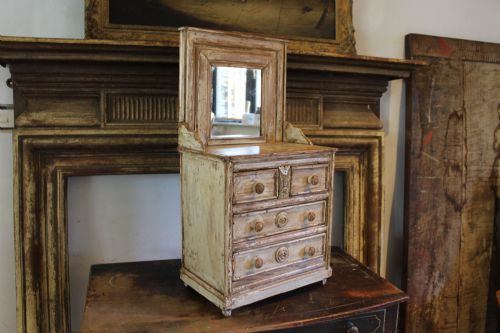
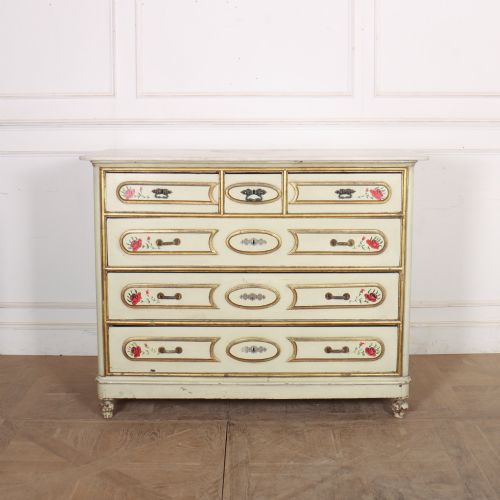
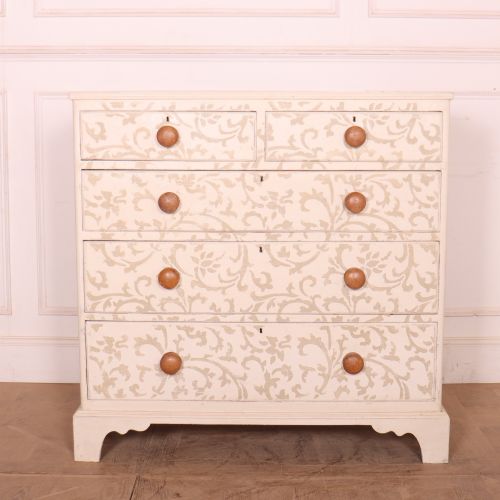

Cream Chest on Chest
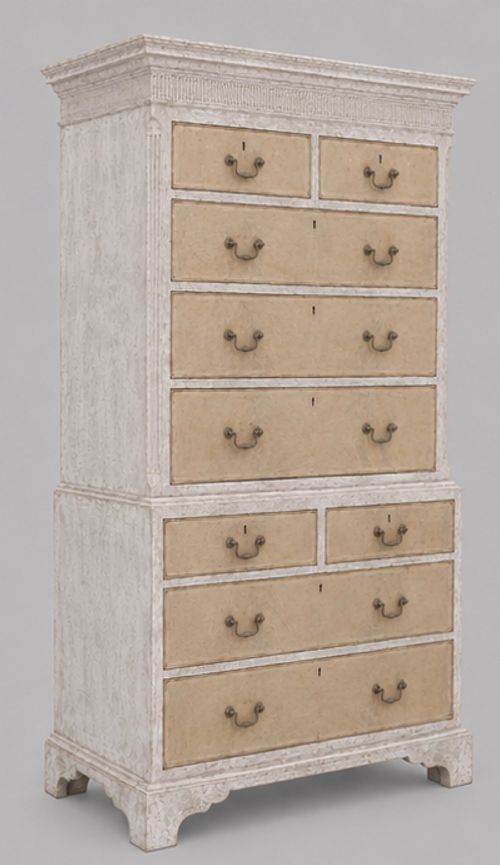
A cream chest on chest brings vertical storage and layered proportions into a room, offering tall timber drawers finished in pale paint.
Cream Chest on Chest
A cream chest on chest combines two distinct stacked cabinetry sections into a tall storage unit, often arriving in painted pine or hardwood from the eighteenth and nineteenth centuries. Buyers searching this phrase seek substantial vertical presence paired with the lighter aesthetic of painted surfaces.
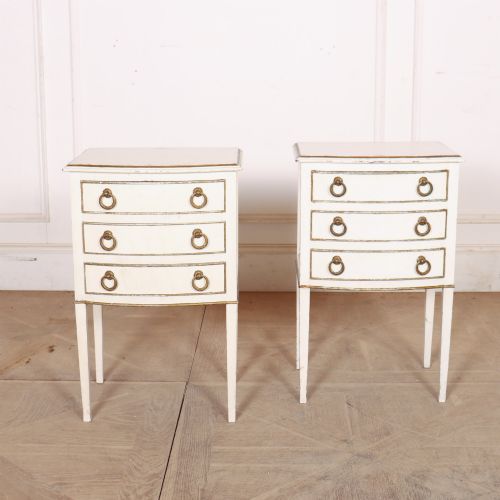
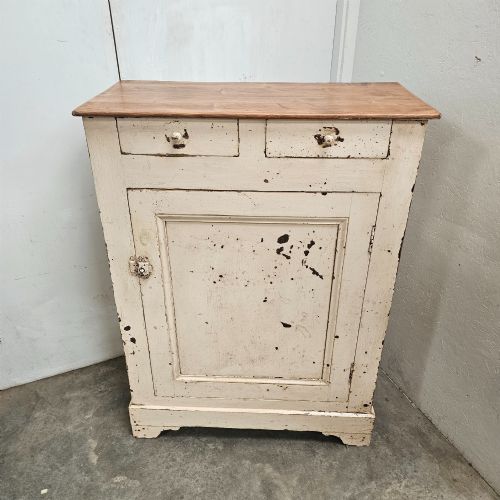
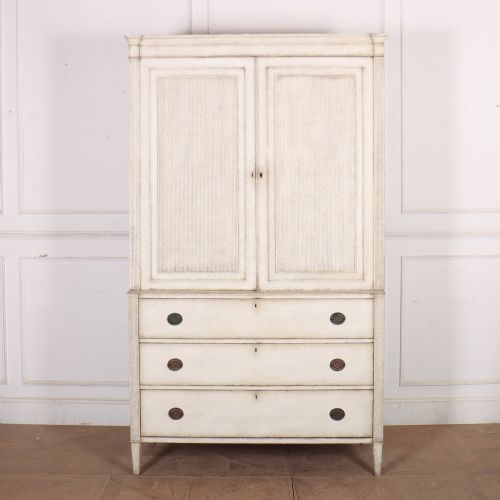
The pieces appearing here span Georgian origins through to later Victorian and Edwardian interpretations, including regional styles like French provincial commodes and Scandinavian country cupboards. Most examples utilise pine or mixed woods finished in cream paint, ranging from untouched original surfaces to later decorative schemes.
Materials and construction methods
Cabinetmakers constructed these tall storage units primarily using solid pine, oak, and regional hardwoods, frequently joining two separate carcass sections together for transport and placement. Brass hardware, such as swing handles and escutcheons, provides functional contrast against the timber structures.
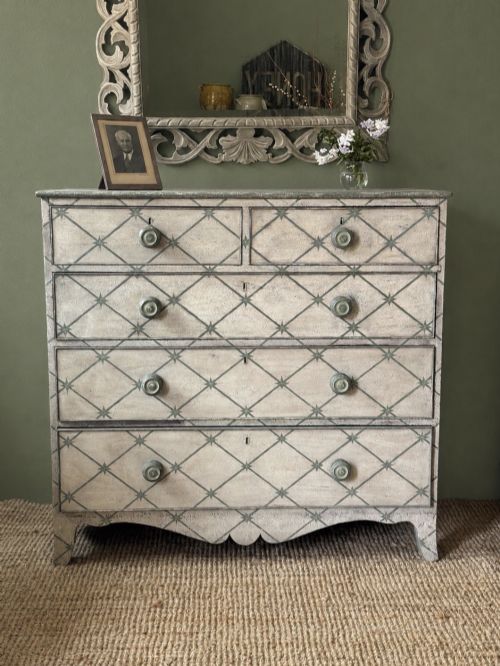
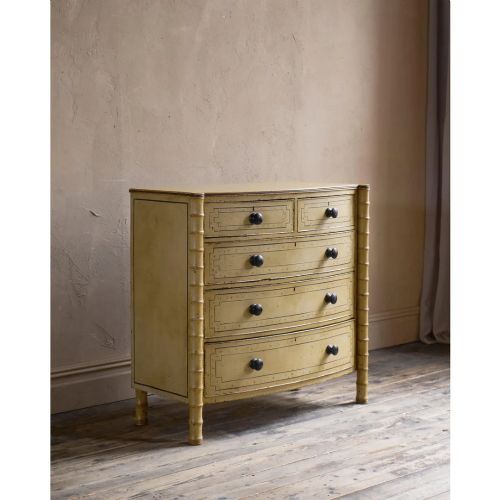
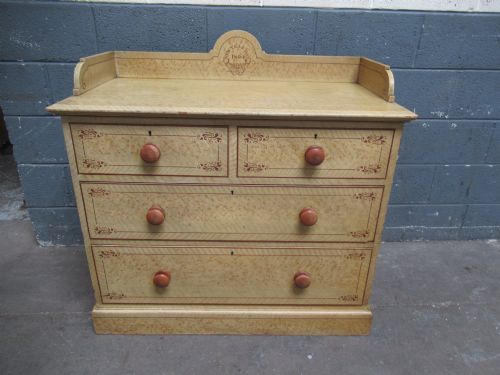
Surfaces received multiple coats of paint, occasionally incorporating decorative techniques like faux bamboo moulding, japanning, or hand-painted details. Carpenters relied on traditional dovetail joints for drawer construction to ensure stability across the stacked tiers.
One remarkably ambitious eighteenth-century cabinetmaker decided twenty-five drawers in a single shop fitting was simply not enough.
Distinguishing quality across examples
The integrity of the painted surface determines much of the visual character, separating genuine historic paint layers from later decorative applications. Original patination and untouched wear across the cream finish command greater interest from collectors.
Proportional balance between the upper and lower chest sections dictates structural success, alongside the precision of the drawer dovetails and the retention of original brass fittings.
The Cream Chest on Chest Glossary
- Chest on chest
- A tall furniture form comprising one cabinet stacked directly on top of another, creating a double-tiered storage unit. This arrangement maximises vertical capacity while maintaining a formal footprint.
- Commode
- A low chest of drawers or cabinet, frequently associated with eighteenth-century French and Italian styles. These pieces often feature serpentine fronts and decorative painted finishes.
- Dovetail
- A traditional interlocking woodworking joint used to secure drawer corners together. Fine, narrow pins indicate skilled hand craftsmanship.
- Japanning
- A European technique imitating East Asian lacquer work using layered varnishes and paints. It appears on decorative furniture from the eighteenth century onwards.
- Serpentine
- A furniture front characterised by a wavy outline featuring a convex centre flanked by concave curves. This contour requires precise carpentry to execute.
Cream Chest on Chest: Frequently Asked Questions
What is a chest on chest?
A chest on chest is a tall storage furniture piece made by stacking a smaller upper chest directly onto a wider lower chest. This design provides generous drawer space while occupying a compact floor area.
Historically, these units were built in two separate modular sections to make moving the heavy timber furniture up staircases and between rooms manageable.
How do I style a cream chest on chest?
The neutral cream painted finish allows these tall units to anchor both traditional period rooms and lighter contemporary interiors. Placing the chest against a contrasting wall colour highlights the vertical proportions and architectural mouldings.
The top surface provides an ideal display area for ceramics, mirrors, or small lamps without cluttering the main drawer storage below.
Are these pieces made in two parts?
Many tall chests and linen presses were constructed as two distinct carcass sections that sit securely one on top of the other. This modular construction method assisted joiners in transporting heavy timber furniture.
Examining the dividing line between the upper and lower drawers usually reveals the join where the two sections meet.
How do I identify original paint?
Original painted surfaces display natural craquelure, subtle fading, and consistent wear patterns accumulated over decades of use. The paint adheres closely to the wood grain rather sitting as a thick modern synthetic film.
Under closer inspection, earlier preparation layers and minor touch-ups from past maintenance may be visible beneath the surface.