

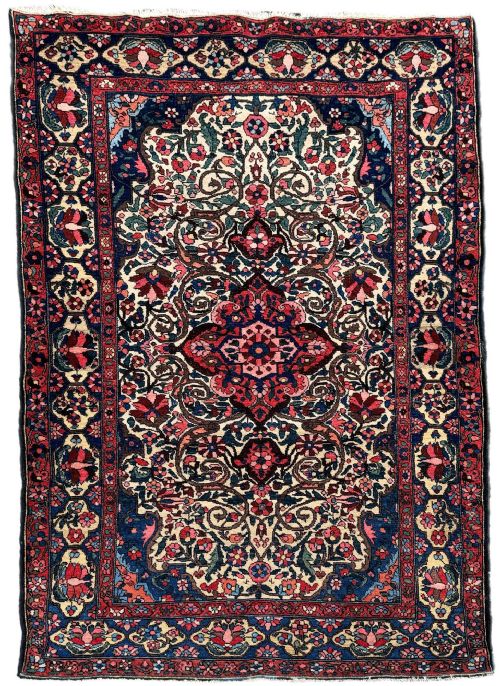
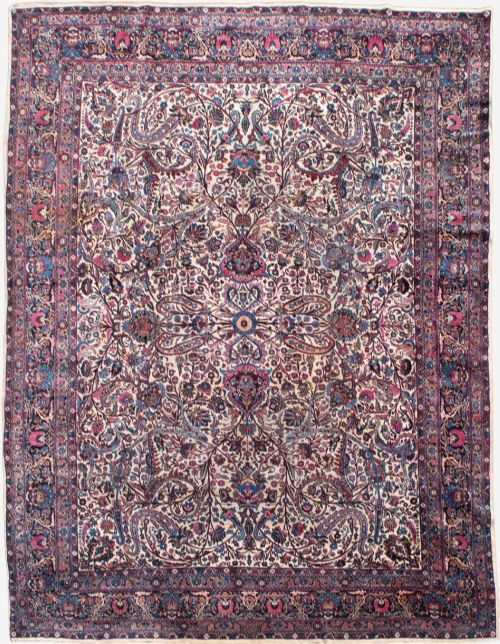
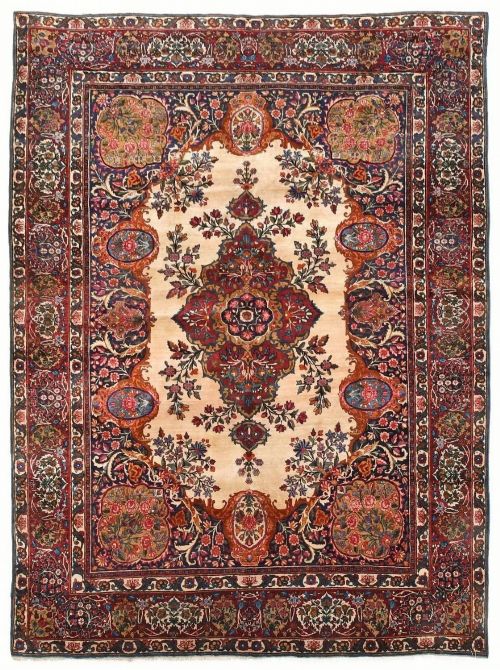


Cream Blue Floral Carpet
A cream blue floral carpet anchors a room with botanical symmetry and soft tones, offering centuries of regional weaving tradition for modern interiors.
Cream Blue Floral Carpet
When searching for a cream blue floral carpet, buyers encounter hand-knotted room-size carpets and smaller rugs originating primarily from Persian weaving centres and regional workshops. These pieces date from the nineteenth century through the mid-twentieth century, encompassing traditional village and city productions.
The inventory on this page draws heavily on classical Persian styles such as Kirman, Tabriz, Ziegler, and Bakhtiar, alongside related regional rugs. Buyers will find formats ranging from compact scatter sizes to large room-size carpets and runners.
Floral motifs, medallions, and vase designs dominate the visual field, executed in palettes that blend soft creams with rich blues. These floor coverings bridge historical craftsmanship and practical domestic use.
How they were made
Weavers constructed these rugs using natural fibres, predominantly wool for the pile, supported by cotton foundations in many city carpets and occasional silk details. The employment of wool ensures durability under foot while retaining flexibility and warmth.
Dyers utilised natural botanical and mineral sources to achieve the characteristic blue and cream tones seen across the pieces. Artisans knotted the pile by hand onto warp and weft threads, finishing the edges with sturdy selvages.
Listings feature wool, cotton, and silk across nineteenth-century and twentieth-century Persian and European regional styles.
What varies in quality
Knot density and precision of execution distinguish finer examples from standard village work, influencing the clarity of the floral motifs. Higher knot counts allow for intricate curves and detailed rendering of complex medallion and vase patterns.
The quality of the wool and the depth of the dye saturation dictate how well a carpet ages and how the pile reflects light. Even wear and consistent pile height across the field indicate careful handling and superior initial construction.
Mohtasham Kashan·Haji Jalili
The Cream Blue Floral Carpet Glossary
- Warp
- The vertical threads stretched tightly on the loom that form the structural foundation of the rug. The visible fringes at each end are extensions of these threads.
- Weft
- The horizontal threads passed alternately over and under the warp threads to secure the knots in place. Together with the warp, they create the grid of the carpet foundation.
- Pile
- The upright yarn surface of the carpet formed by the cut ends of knots. Wool, cotton, and silk are the primary materials used for this wearable layer.
- Kilim
- A flat-woven carpet or rug made without a pile. These pieces rely on interlocking weft techniques to create crisp, geometric patterns.
Cream Blue Floral Carpet: Frequently Asked Questions
How do I choose the right size?
Measure your floor space to allow a uniform border of exposed flooring around the perimeter of the carpet. Consider whether furniture will sit entirely on the rug or just have front legs resting upon it.
Room-size carpets suit larger living areas and dining rooms, while smaller rugs fit entryways, studies, or bedrooms where spatial proportions demand a more compact footprint.
How should I care for an old rug?
Vacuum gently using suction attachment without a rotating brush bar to protect the delicate wool pile and fringes. Rotate the carpet periodically to ensure even exposure to foot traffic and sunlight.
Professional cleaning tailored to antique textiles preserves the natural lanolin in the wool and prevents dye migration. Avoid harsh chemical spot treatments.
Are these rugs suitable for daily use?
Hand-knotted wool carpets from these periods were built for endurance and perform well in domestic environments. Regular foot traffic actually helps settle the fibres and distributes wear evenly.
Placing a quality underlay beneath the carpet prevents slipping, adds cushioning, and reduces friction between the foundation and the floorboards.
How are different regional styles told apart?
Regional distinction relies on the structure, palette, and specific drawing style of the floral motifs. City workshops like Tabriz or Kirman display refined, highly detailed compositions and fine knotting.
Village productions such as Bakhtiar or Hamadan often show bolder, more geometric interpretations of floral themes with sturdy structures and varied wool textures.