


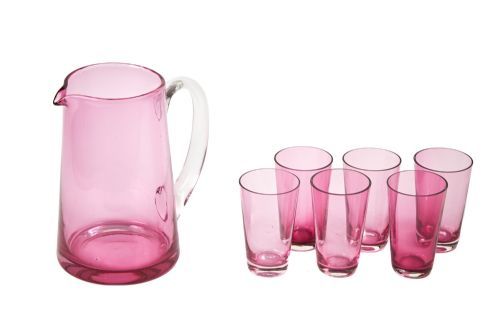


Cranberry Glass Glassware
Cranberry glass glassware brings rich, translucent pink and red tones to tables and mantelpieces through Victorian and Edwardian decorative objects.
Cranberry Glass Glassware
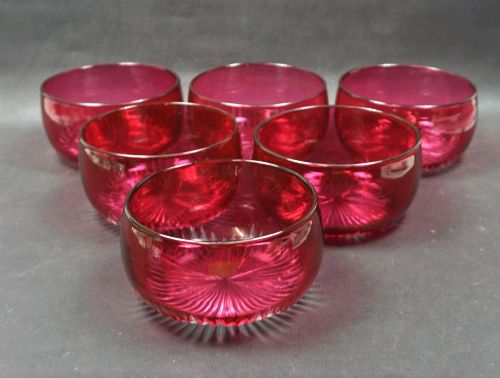
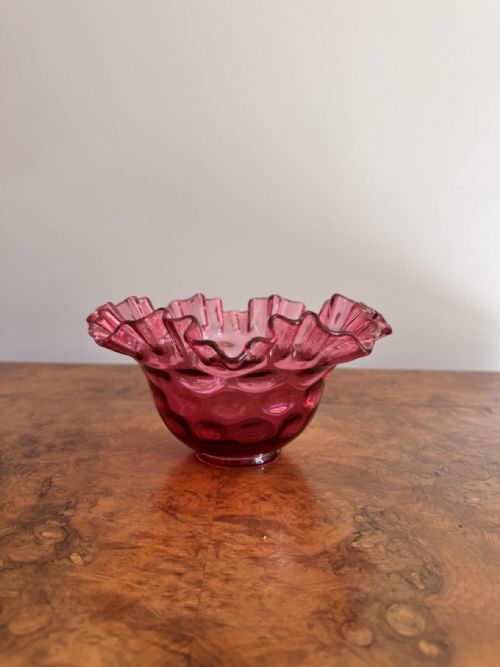
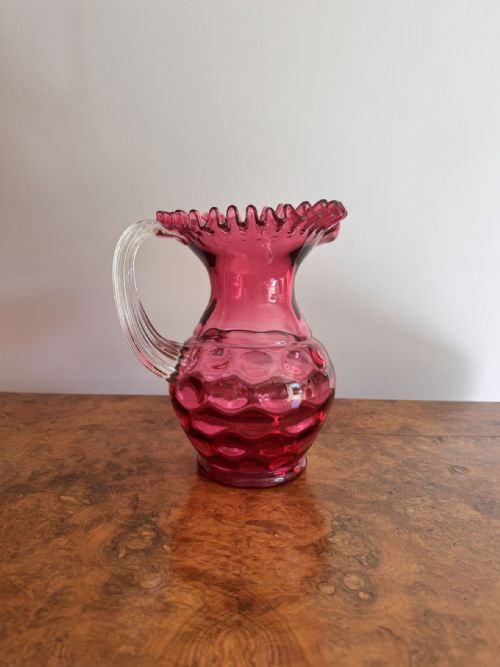
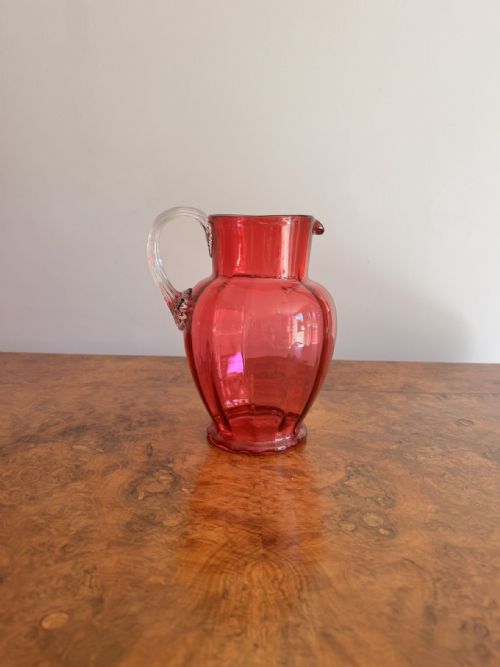
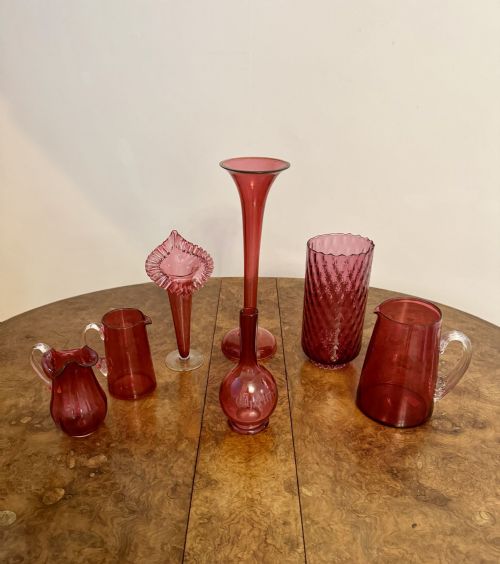
When you search for cranberry glass glassware, you encounter a distinct category of coloured tableware and decorative items spanning the nineteenth and early twentieth centuries. The pieces on this page range from Victorian jugs, wine glasses and decanters to Edwardian preserve bowls, biscuit barrels and epergnes.
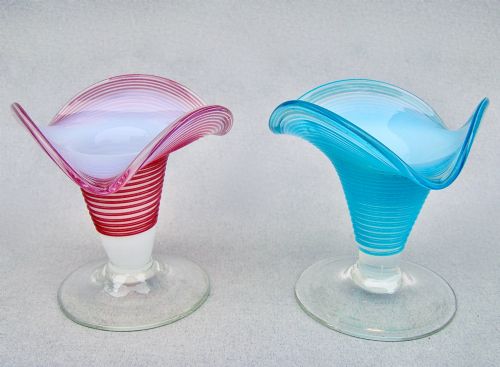
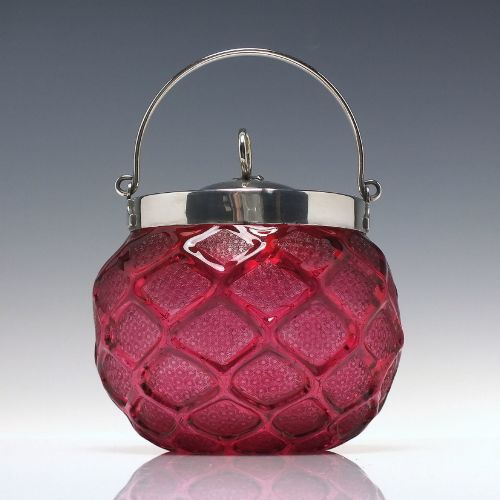
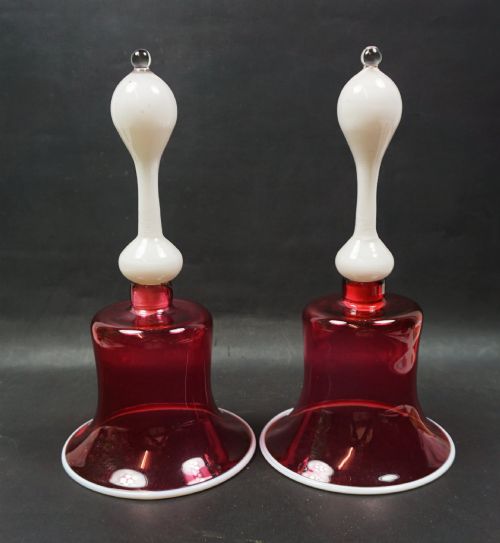
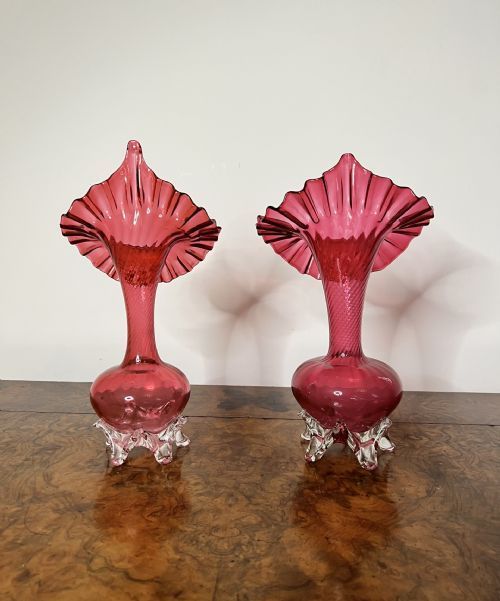
Victorian examples dominate the selection, often taking the form of matched sets of wine glasses, hand bells or sculptural jack-in-the-pulpit vases. Alongside these sit later Edwardian items, including lidded biscuit jars mounted in silver plate and twin preserve bowls designed for the dining table.
Origin points encompass English production alongside Bohemian manufacture, yielding both simple blown forms and heavily decorated overlay pieces. Collectors find individual items such as bon bon dishes and tazze sitting beside multi-piece sets.
Materials and methods
The characteristic colour of cranberry glass derives from the addition of gold chloride to the molten metal during production. Makers combined this coloured glass with clear lead crystal, enamel, and gold leaf to achieve layered and contrasting effects.
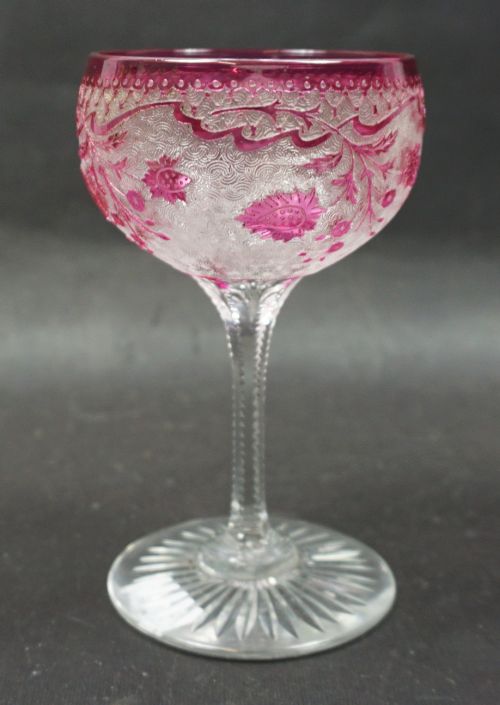
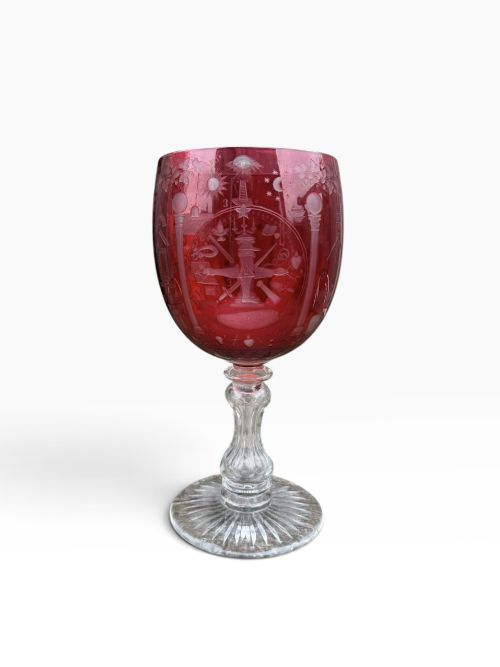
Many items utilise free-blowing and mould-blowing techniques, evident in the smooth contours of jugs and wine glasses. Overlay pieces involve casing a layer of red or cranberry glass over clear crystal before cutting away sections to reveal the colour beneath.
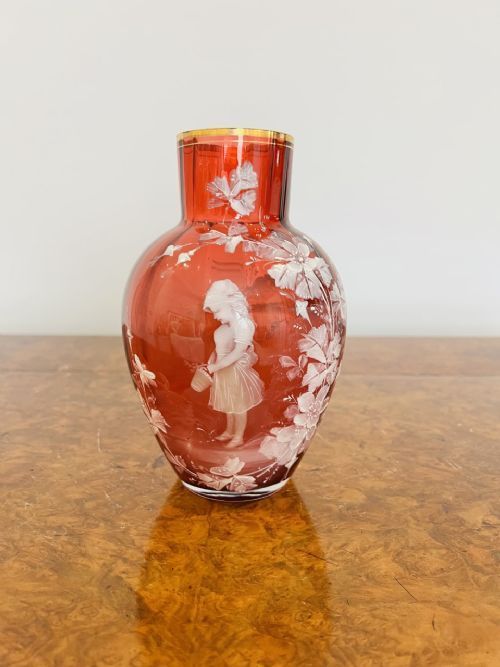
Surface ornamentation often includes hand-applied enamel details, such as the white figures found on Mary Gregory pieces, alongside wheel-engraved motifs depicting floral garlands and fruiting vines.
Cranberry Glass Glassware Retail Price Guide 2026
Typical asking prices for cranberry glass glassware among the pieces listed under this phrase on Sellingantiques today, from the lower quarter to the upper quarter. They describe what is for sale here now, not the wider market.
Judging quality
Depth and consistency of colour set the better examples apart from paler or unevenly tinted pieces. The richness of the gold-infused hue determines much of the visual impact, particularly in plain jugs and bowls.
Execution of decorative work divides standard items from superior productions. Finely engraved crystal panels, precise wheel-cutting on over-layer glass, and delicate enamel painting indicate higher levels of craftsmanship.
Completeness of associated elements also influences standing, such as intact silver-plated mounts on biscuit barrels, matching sets of stemware, and original glass handles or stoppers.
The Cranberry Glass Glassware Glossary
- Cranberry glass
- A transparent glass coloured by the addition of gold. It exhibits shades ranging from pale pink to deep crimson depending on the batch composition.
- Mary Gregory
- A style of glass decoration featuring white enamel silhouettes of children in natural settings. The technique gained popularity during the Victorian period.
- Jack-in-the-pulpit vase
- A nineteenth-century vase form characterised by a tall stem expanding into a wide, ruffled brim resembling a flower blossom.
- Overlaid glass
- Glass formed by fusing a layer of coloured glass over a body of clear crystal. Artisans then cut through the outer layer to expose the clear glass beneath.
- Tazza
- A shallow ornamental cup or bowl raised on a stem and foot. These pieces frequently served as centrepieces on Victorian dining tables.
Cranberry Glass Glassware: Frequently Asked Questions
What is cranberry glass?
Cranberry glass is a type of transparent glassware coloured using gold chloride during the melting process. This gives the material its signature pink-to-red tone.
Artisans shaped the hot metal into tableware, vases and decorative objects throughout the Victorian and Edwardian eras.
How do I identify Mary Gregory glass?
Mary Gregory pieces feature hand-painted white enamel decoration depicting children, birds or foliage. The enamel work sits directly on the surface of the coloured glass.
These items were produced extensively in the nineteenth century as small vases, jars and jugs.
Were these items used daily?
Many pieces served practical functions at the dining table, including wine glasses, decanters, jugs and preserve bowls. Sets of stemware accommodated formal entertaining.
Other items, such as epergnes and jack-in-the-pulpit vases, remained purely decorative ornaments for mantelpieces and sideboards.
How should I clean antique glass?
Wash items gently by hand using warm water and mild detergent. Avoid abrasive sponges or harsh chemicals that might damage enamel details or gilded surfaces.
Dry the pieces thoroughly with a soft lint-free cloth to maintain the clarity of the material.
What is an epergne?
An epergne is a large ornamental centrepiece featuring a central trumpet vase surrounded by smaller hanging baskets or arms. They stood on dining tables to hold fruit or flowers.
Victorian examples in cranberry glass often combine ruffled bowls and matching lily vases.