
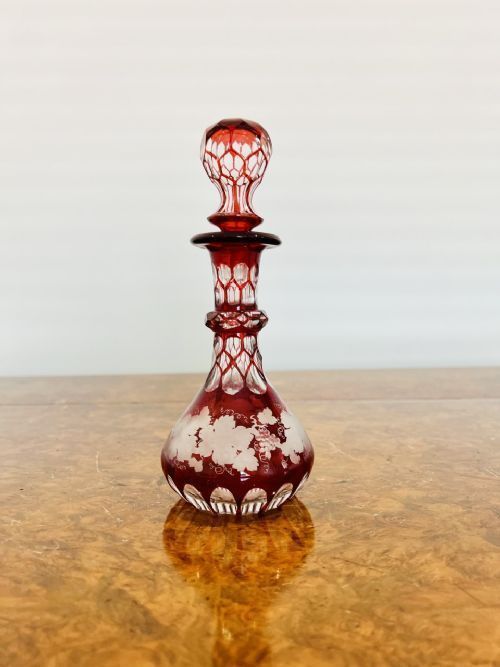


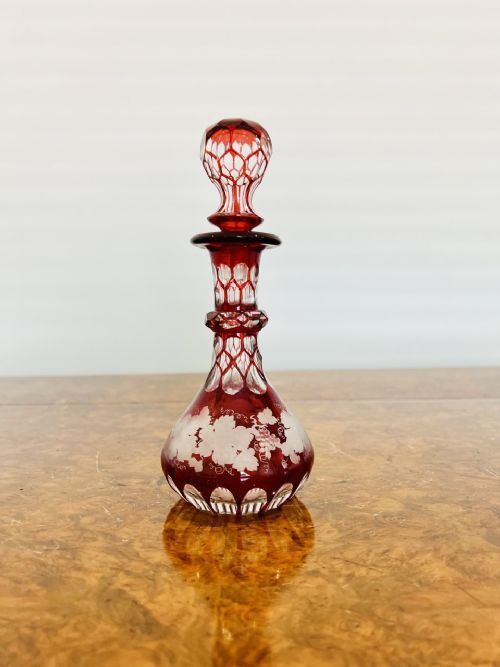


Cranberry Glass Decanter
A cranberry glass decanter brings rich crimson colour to the dining table through transparent, blown glass vessels made across the nineteenth and early twentieth centuries.
Cranberry Glass Decanter
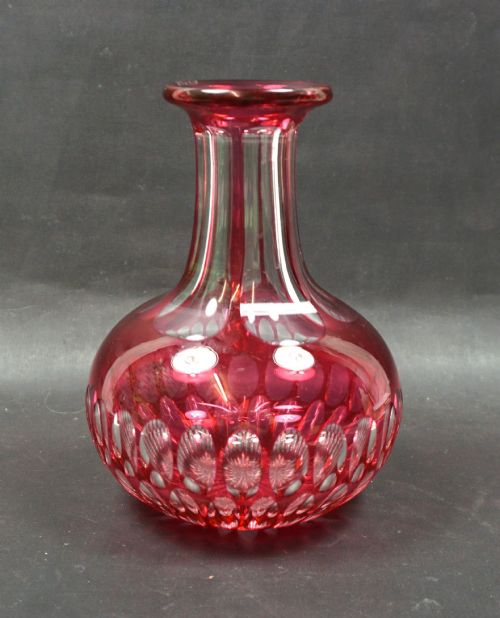
A cranberry glass decanter is a serving vessel shaped for wine or spirits, formed from rich pinkish-red glass created by adding gold chloride to the molten batch. You will frequently meet Victorian and Edwardian examples on this page, spanning decades from the mid-nineteenth century onward.
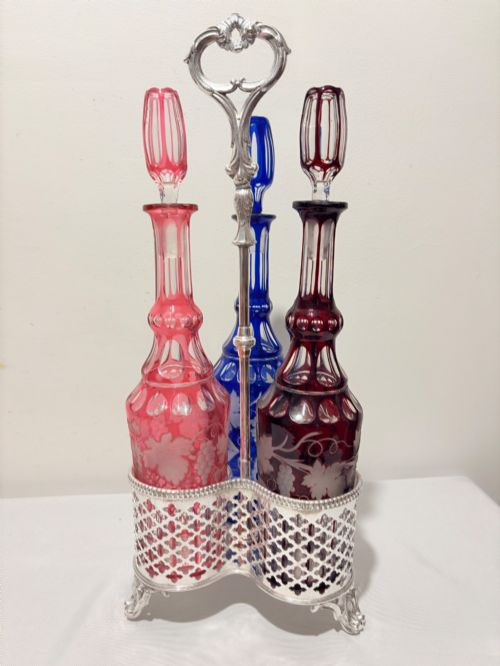
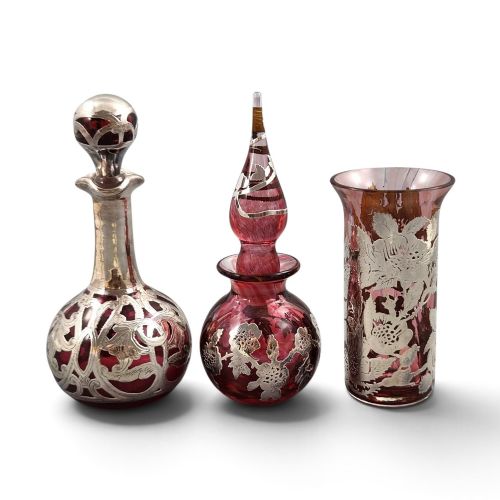
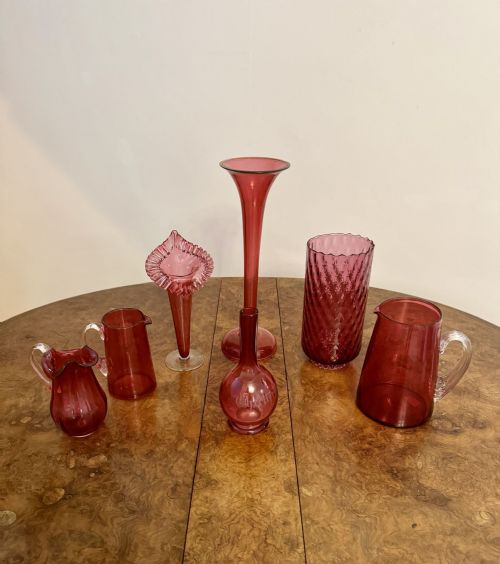
The selection includes single decanters, matched pairs, and items fitted into silver-plated stands or mounted with sterling silver collars. Alongside standard wine decanters, the listings feature overlay carafes, water jugs, and spirit bottles paired with matching stoppers.
Origin points encompass English workshops alongside Bohemian makers who produced coloured and flashed glass. Pieces range from simple blown forms to vessels decorated with etched foliage and engraved birds among vines.

How they were made
Makers utilised glassblowing techniques to shape the body of each decanter, often combining coloured glass with clear crystal through overlay methods. Artisans then applied wheel-cutting, etching, or gilding to the surface to reveal contrasting layers or create decorative motifs.
Mounts and hardware incorporate sterling silver and silver plate, frequently fitted as collars around the neck or constructed as stands to hold the glass vessels securely. Stoppers were shaped by hand to fit individual bottlenecks, ensuring a close seal for spirit and wine storage.
Cranberry Glass Decanter Retail Price Guide 2026
Typical asking prices for cranberry glass decanter among the pieces listed under this phrase on Sellingantiques today, from the lower quarter to the upper quarter. They describe what is for sale here now, not the wider market.
Materials span cranberry glass, ruby glass, clear crystal, and silver plate, often combined within a single vanity set or serving stand.
What varies in quality
Depth and consistency of the red hue distinguish the glass, arising from the precise amount of gold used in the initial chemical mixture. Superior pieces show an even, rich tone throughout the body without muddy patches or uneven thinness.
Execution of surface decoration marks the difference between standard production and finer work, seen in the crispness of hand-engraved vines or the clean lines of overlay cutting. The quality of silver mounts and the accurate fit of the original stopper complete the assessment of an individual vessel.
Gorham·Mitchell Bosley Co
The Cranberry Glass Decanter Glossary
- Cranberry glass
- A transparent pinkish-red glass coloured by the addition of gold chloride to the molten batch. It became especially popular during the Victorian period for tableware and decorative items.
- Overlay glass
- A technique where a layer of coloured glass is cased over a core of clear crystal. Cutting through the outer layer reveals the clear glass beneath in decorative patterns.
- Decanter stand
- A metal frame, often silver-plated or fashioned from sterling silver, designed to hold one or more glass bottles. These frames sometimes incorporate carrying handles or locking mechanisms.
- Finial
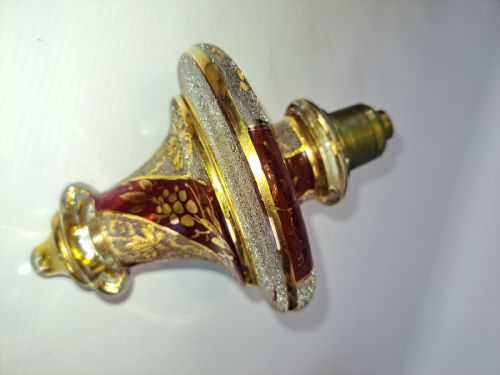
- The decorative knob or topmost ornamental feature fitted to the top of a stopper or lid. On these pieces, it provides a secure grip for removing the glass stopper.
- Claret jug
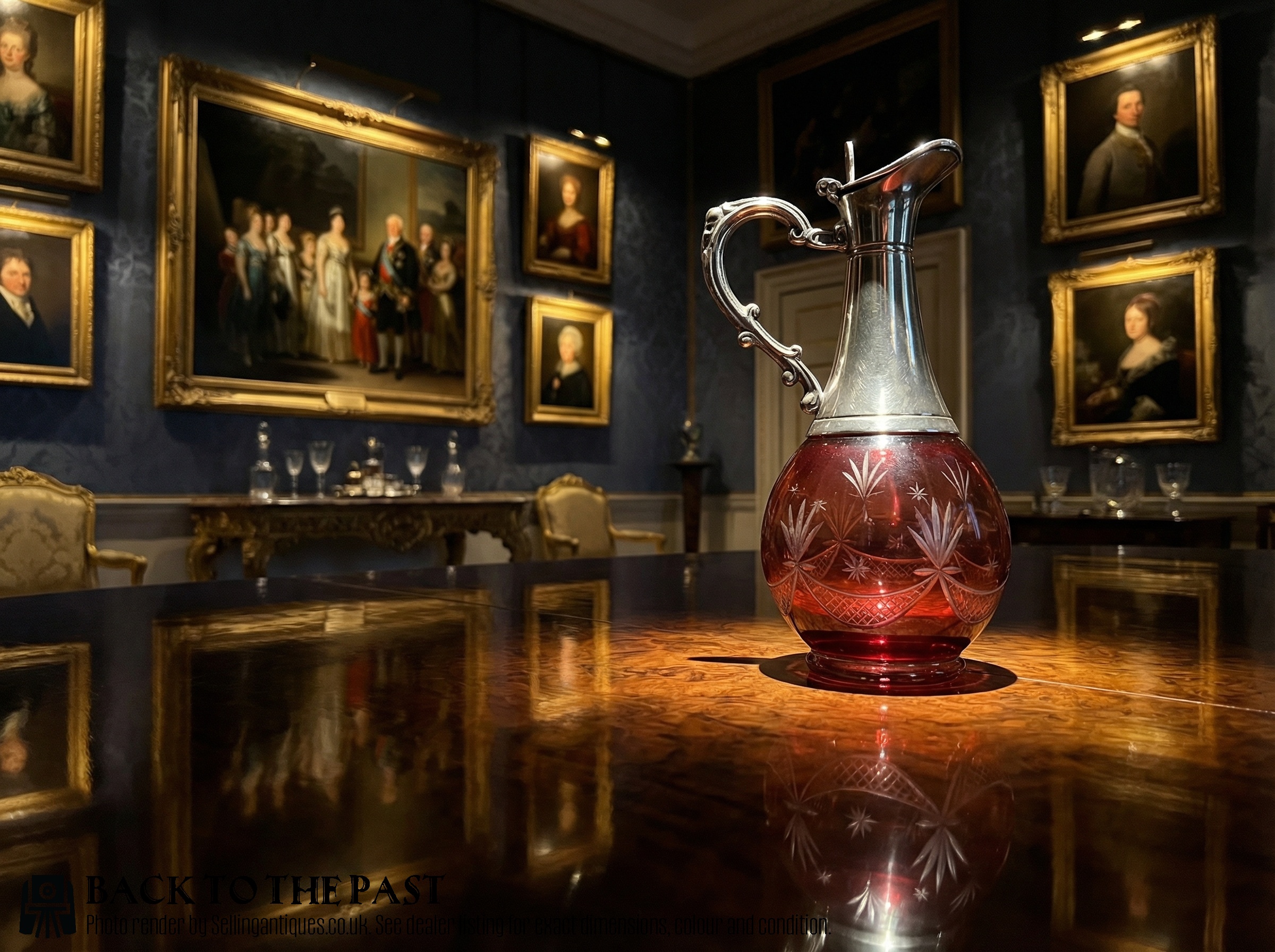
- A specific type of serving vessel intended for red wine, usually featuring a pourer spout and a handle. Some examples include hinged metal mounts attached to the glass neck.
Cranberry Glass Decanter: Frequently Asked Questions
Are the stoppers original?
Inspect the fit and colour match between the stopper and the neck to determine originality. Hand-ground glass stoppers often bear matching numbers or show identical wear patterns consistent with the age of the base.
Slight variations in hue can occur due to the handmade nature of coloured glass production. A snug fit without excessive rocking suggests the stopper belongs to that specific vessel.
What is overlay glass?
Overlay glass consists of two or more distinct layers fused together during the blowing process. A layer of cranberry glass is typically placed over clear crystal to create contrast.
Artisans then cut through the outer coloured layer using a wheel to expose the clear glass underneath. This technique produces crisp patterns such as vines, flutes, or geometric panels.
How do I date these pieces?
Dating relies on a combination of manufacturing traits, engraved styles, and silver hallmarks where present. Victorian examples often display deep ruby tones and heavy floral engraving, while Edwardian items lean toward lighter mounts and refined proportions.
Sterling silver collars frequently feature date letters and maker marks that pinpoint the exact year of manufacture. Shape and cutting depth also provide clues to the production era.