



Craftsman Oak Desk
A craftsman oak desk brings honest construction and tactile warmth into a room, offering a sturdy surface shaped by the ideals of the Arts and Crafts movement.
Craftsman Oak Desk
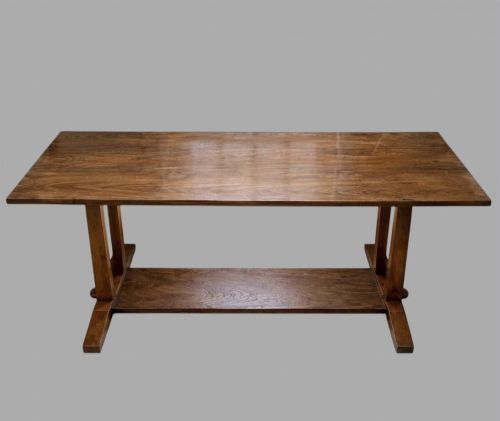
A craftsman oak desk embodies the functional utility and handcrafted ethos of the early twentieth century, drawing directly from the Arts and Crafts movement. When you search for a craftsman oak desk, you encounter forms that prioritize solid timber construction and honest joinery over superficial ornamentation.
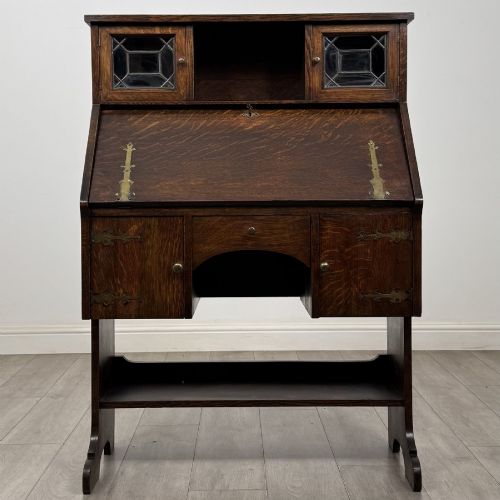
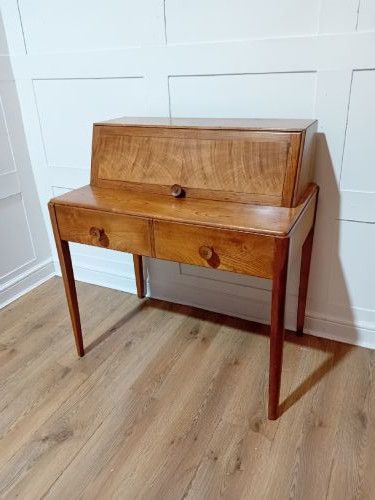
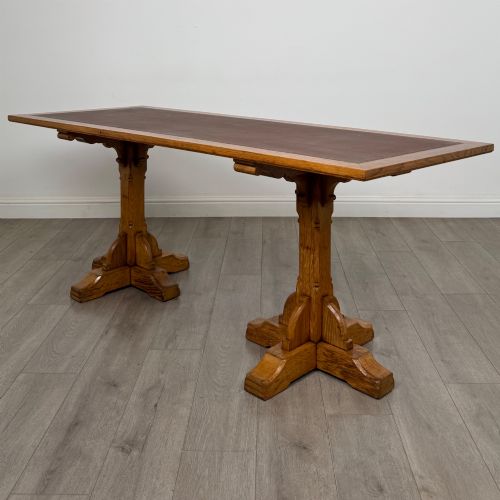
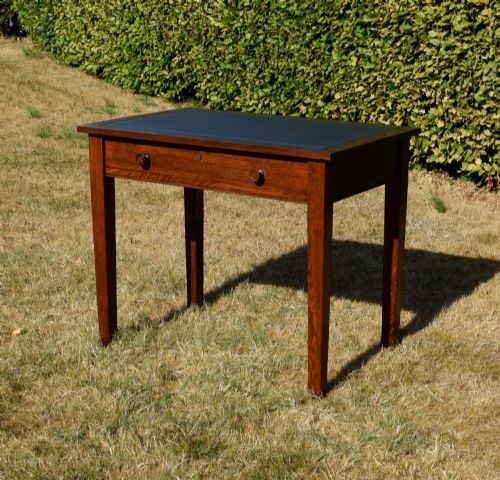
The versions most commonly met on this page include library tables adapted for writing, fall-front bureaux with fitted pigeonholes, and occasional writing tables produced across the Edwardian period and subsequent decades. These pieces serve as practical workspaces while carrying the distinct aesthetic of provincial workshops and metropolitan firms alike.
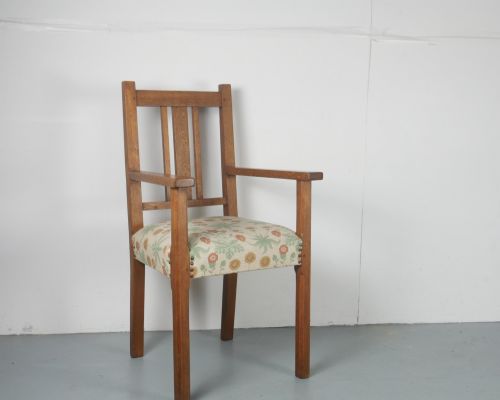
Alongside dedicated desks, the selection encompasses related furniture types such as bureaux bookcases and library tables that function equally well for writing. Each piece demonstrates a straightforward approach to domestic furniture, utilising robust timber frames designed for daily use.
How they were made
Makers built these desks from solid oak, selecting timber for its visible grain and structural integrity rather than masking it beneath heavy veneers. Panels and framing joints rely on traditional methods like mortise and tenon construction, often left exposed as a mark of genuine craftsmanship.
Hardware and decorative accents were carefully chosen to complement the timber, frequently featuring hammered brass handles, copper escutcheons, or pewter inlay. Writing surfaces occasionally incorporated leather or fabric inserts framed directly into the solid oak top.
Craftsman Oak Desk Retail Price Guide 2026
Typical asking prices for craftsman oak desk among the pieces listed under this phrase on Sellingantiques today, from the lower quarter to the upper quarter. They describe what is for sale here now, not the wider market.
Some desks retain the faint, permanent impression of an Edwardian ink nib pressed a fraction too hard into the oak writing flap.
What varies in quality
The distinction between standard commercial output and exceptional workshop pieces lies in the subtlety of the hand-finishing and the integrity of the timber selection. Finer examples display carefully chosen quarter-sawn oak with prominent medullary rays, alongside refined dovetailing in the drawer construction.
Work by notable designers or specific regional schools introduces a higher degree of sculptural detail in the carved elements and more considered proportions throughout the frame. Conversely, simpler commercial production relies on standard mechanical joinery and plainer timber boards while maintaining the same general form.
Arthur Basil Reynolds·Gordon Russell·Liberty & Co·Shapland & Petter·James Shoolbred & Co
The Craftsman Oak Desk Glossary
- Quarter-sawn oak
- Timber cut radially through the log rings to produce a distinctive decorative grain pattern known as silver grain or medullary rays. This cut provides greater dimensional stability for large desk tops and cabinet panels.
- Bureau
- A form of writing furniture featuring a sloping hinged flap that opens to reveal a fitted interior of small drawers and pigeonholes. When closed, it conceals writing materials and correspondence.
- Pewter inlay
- A decorative technique where small sections of pewter metal are set flush into grooves cut into the oak surface. It appears frequently on pieces associated with the Arts and Crafts movement.
- Mortise and tenon
- A traditional woodworking joint where a projecting tongue on one piece fits snugly into a corresponding cavity in another. It forms the structural skeleton of most high-quality tables and desks.
- Escutcheon
- A protective plate surrounding a keyhole, usually fashioned from hammered brass or copper on pieces from this period. It serves both a functional and a decorative purpose.
Craftsman Oak Desk: Frequently Asked Questions
What is a craftsman oak desk?
A craftsman oak desk is a solid wood writing table or bureau produced under the influence of the Arts and Crafts movement around the late nineteenth and early twentieth centuries.
These pieces emphasise visible construction, honest materials, and functional design over mass-produced ornamentation.
How were these desks used?
They were designed for household administration, correspondence, and study in libraries, studies, or living rooms. The inclusion of drawers, drop-front flaps, and fitted compartments allowed owners to store writing paper, ink, and letters close at hand.
Larger library tables doubled as shared work surfaces for reading and writing in domestic settings.
How do I care for an oak desk?
Maintain the timber by keeping the desk away from direct heat sources and sudden humidity changes that can cause the solid oak to warp or split. Regular dusting with a dry cloth and occasional application of appropriate wax helps preserve the natural finish.
Avoid placing damp items or unpadded writing implements directly onto the bare wood or leather inserts.
How can I tell the period?
Dating relies on examining the construction methods, hardware materials, and stylistic markers characteristic of the Edwardian era through the 1930s. Hand-hammered metalwork, specific inlay styles, and regional workshop labels often point toward a precise decade.
Construction details like machine-cut versus hand-cut joints provide further clues to the manufacturing date.