




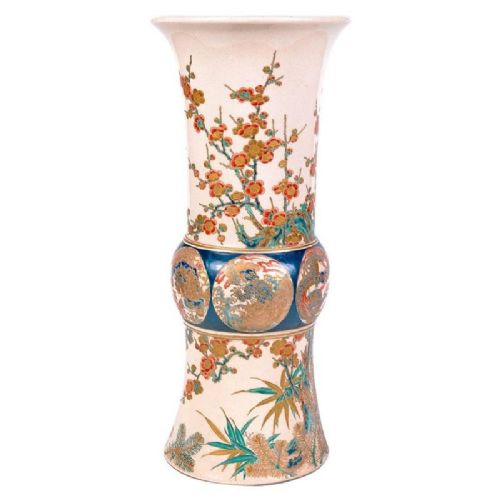


Crackled Pottery Vessel
A crackled pottery vessel brings tactile depth to a room through intentional crazing in the glaze.
Crackled Pottery Vessel
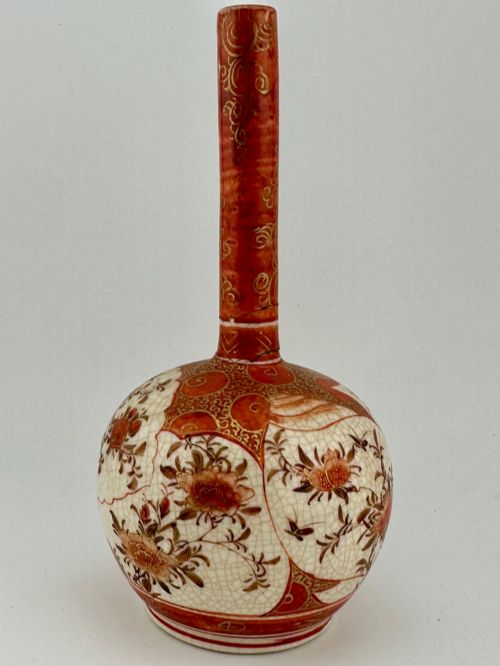
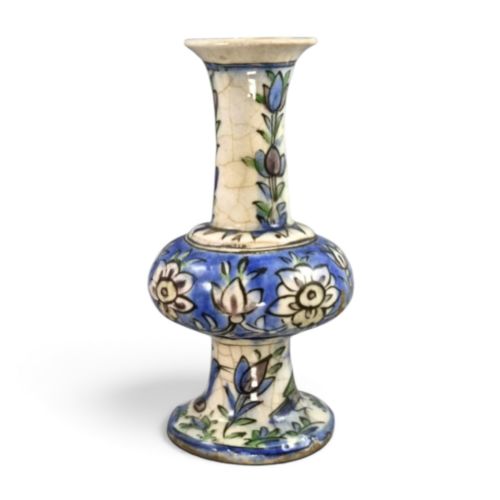
A crackled pottery vessel is defined by an intentional network of fine lines across the surface glaze, appearing on everything from ginger jars to tripod censers. When you search for a crackled pottery vessel, you encounter items spanning the 18th century to the 20th century, originating from Japanese, Chinese, and Persian traditions.
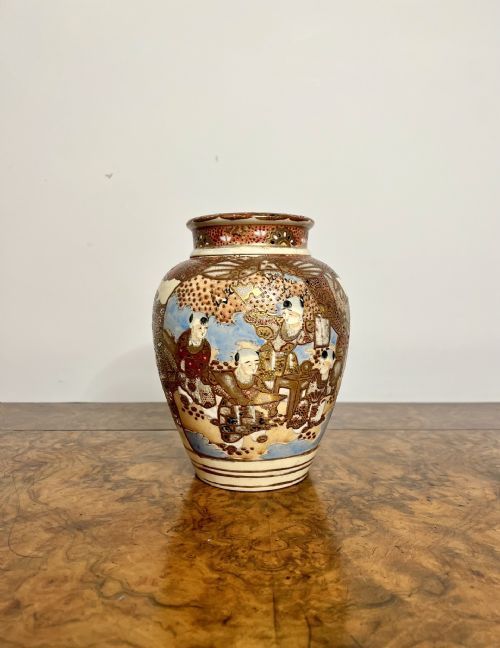
The most common examples on this page are Japanese Satsuma ceramics from the Meiji period, often decorated with iron red, enamel, and gold leaf. These range from miniature vases and tea jars to large baluster vases and footed bowl burners.
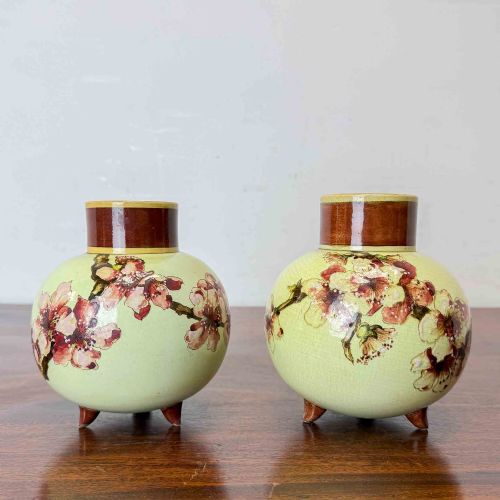
Earlier Chinese pieces such as celadon jars and Guan-type archaistic vessels also appear alongside Qajar Persian polychrome glazed ceramics and European interpretations like Doulton Lambeth faience.
How they were made
Makers constructed these pieces using earthenware, porcelain, and standard ceramic bodies, shaping them into vases, urns, and jars. The signature crackle results from differential cooling rates between the body and the glaze during firing.
Surface decoration frequently combines polychrome enamel paints with gold leaf and gilt highlights. Artists applied fine brushwork to depict figural processions, floral motifs, and mythological scenes over the crazed glaze ground.
Crackled Pottery Vessel Retail Price Guide 2026
Typical asking prices for crackled pottery vessel among the pieces listed under this phrase on Sellingantiques today, from the lower quarter to the upper quarter. They describe what is for sale here now, not the wider market.
The selection spans 18th-century Chinese archaistic censers, Meiji period Satsuma ginger jars, and 20th-century European faience.
What varies in quality
Quality rests in the precision of the form and the control of the glaze finish. The distribution and fineness of the crackle network indicate the potter's technical skill during the cooling stage.
Painted details separate standard decorative ware from finer studio output. Crisp execution in the enamel work and refined application of gold leaf elevate the piece.
Chosei·Tokyo Taizan·Shozan·Kinkozan·Doulton Lambeth
The Crackled Pottery Vessel Glossary
- Crazing
- A network of fine cracks in the ceramic glaze caused by tension during cooling. This effect can occur naturally over time or be deliberately induced by the potter.
- Celadon
- A pale green jade-like glaze originating in China. It frequently accompanies subtle crackle patterns on Song dynasty and later vessels.
- Satsuma
- Japanese earthenware pottery featuring a crackled ivory glaze decorated with polychrome enamels and gilt. Production flourished particularly during the Meiji period.
- Faience
- Tin-glazed earthenware popular in European and British studio pottery. It provides a smooth opaque surface for painted botanical or scenic designs.
- Archaistic
- A design style that deliberately mimics the forms, motifs, and patination of ancient bronzes or ritual vessels. Makers used this approach to evoke historical authority.
Crackled Pottery Vessel: Frequently Asked Questions
What causes the crackle in the glaze?
The crackle is an intentional decorative effect known as crazing, created when the glaze shrinks faster than the clay body during firing and cooling.
Potters often control the density of these tiny lines to add visual texture and depth to the finished surface.
How do I identify a Meiji period Satsuma piece?
Satsuma wares from the Meiji period typically feature a finely crackled creamy earthenware body. They are heavily decorated with detailed hand-painted figures and generous gold leaf.
Many pieces carry studio signatures or maker marks on the base, pointing to specific workshops in Kyoto or Tokyo.
Were these vessels used for daily storage?
While some forms like tea caddies and sugar bowls served functional roles in domestic routines, many items acted purely as decorative ornaments.
Ginger jars, large baluster vases, and incense burners were primarily displayed in domestic interiors to showcase fine craftsmanship.
How do Chinese celadon wares differ from Satsuma?
Chinese celadon pieces rely on a thick, translucent green glaze over a sturdy ceramic body, often featuring carved lotus or duck motifs. Satsuma pottery uses an ivory-colored earthenware base covered in dense enamel painting and gilt.