


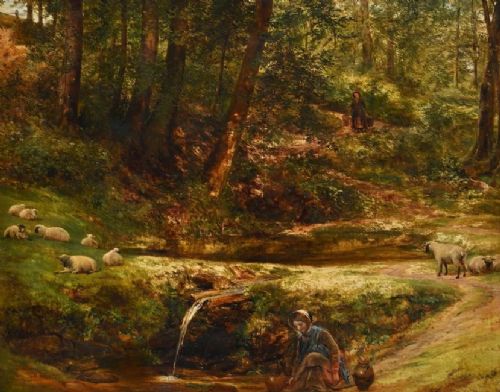
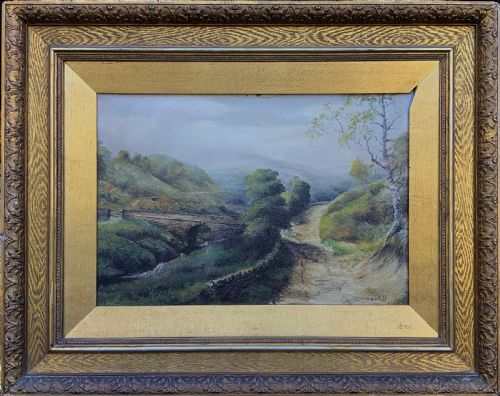
Countryside Scene Oil Painting
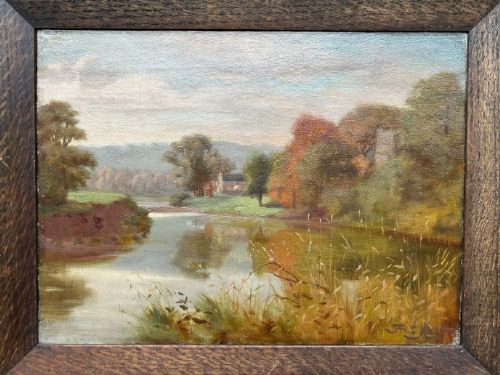
When you search for a countryside scene oil painting, you find framed works on canvas and wood panel capturing rural life, pastoral rivers, and farmland.
Countryside Scene Oil Painting
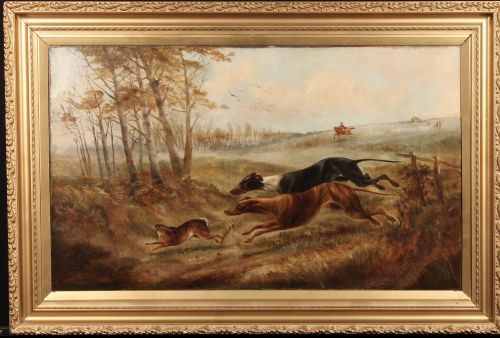
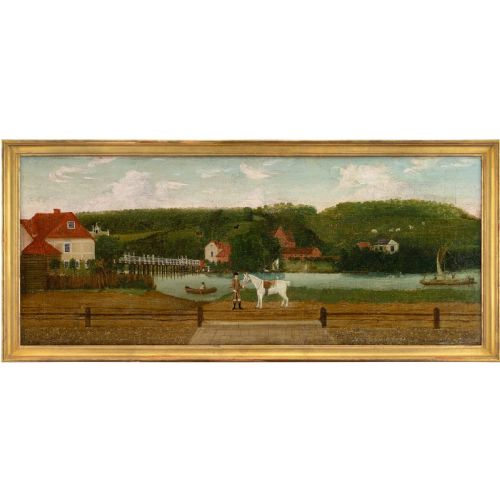
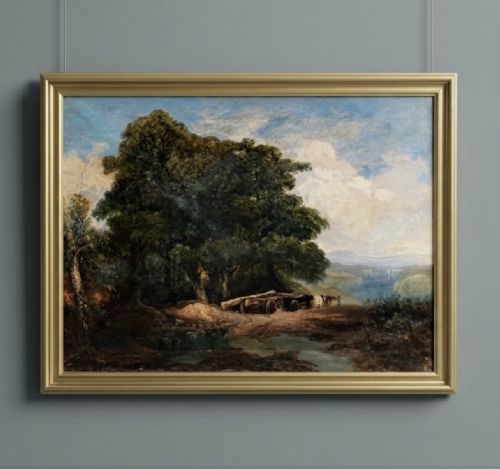
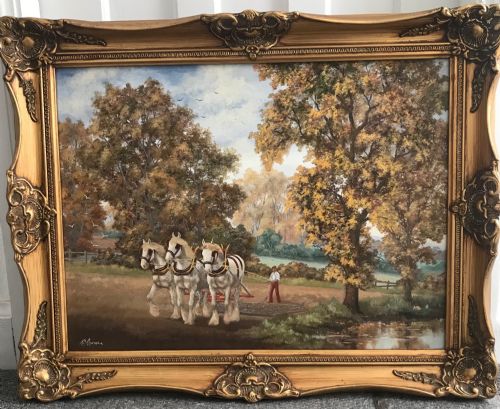
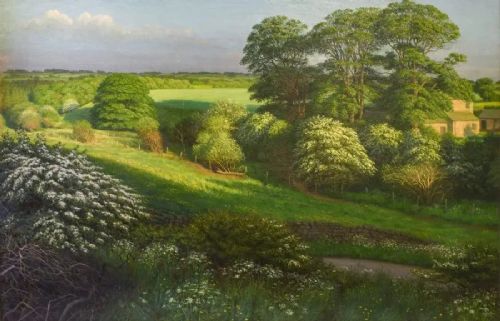
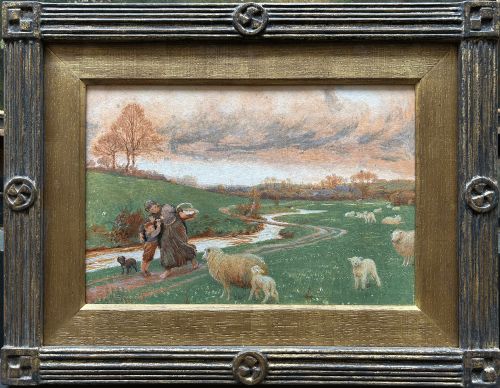
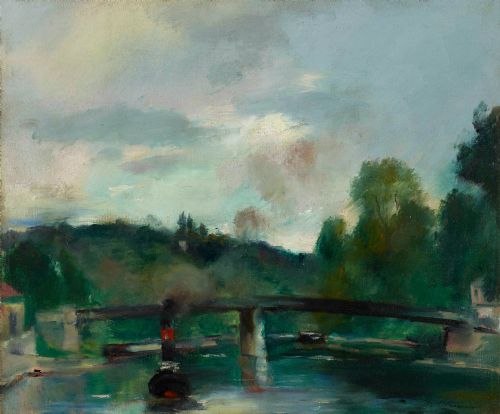
A countryside scene oil painting depicts rural life, pastoral landscapes, rivers, and farmland through framed works on canvas and wood panel. These pieces record British and continental countryside views ranging from Victorian pastoral settings to mid-twentieth-century village and farm views.
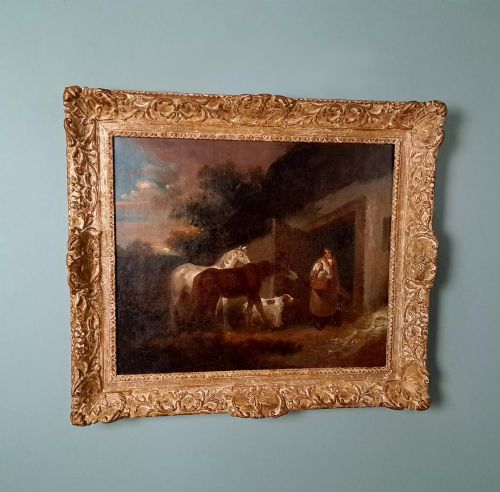
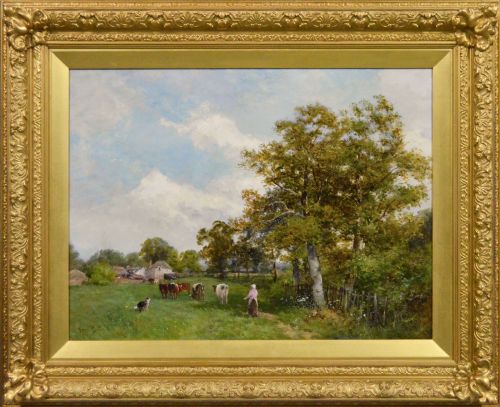
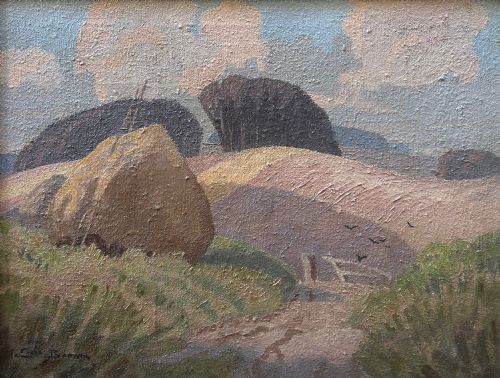
You meet works on this page created across the nineteenth and twentieth centuries, including Victorian pastoral scenes, Edwardian river landscapes, and later twentieth-century farmland depictions. The subjects span thatched cottages, cattle in woodland, haystacks, and working horses in fields.
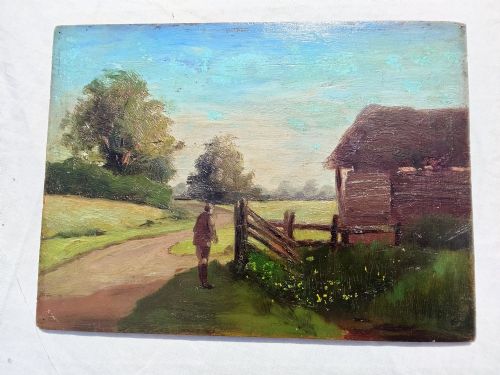
The physical formats include large oils on canvas in ebonised or gilt frames alongside smaller paintings on wooden board and panel. Many bear signatures or attributions to named painters working within British and French impressionism or traditional country styles.
How they were made
Artists painted primarily with oil paint upon stretched canvas or prepared wooden panels and boards. These grounds supported layered brushwork that built up depth in foliage, water, and skies.
Frames play a structural and decorative role, constructed from wood, giltwood, and ebonised mouldings. Many works retain their period framing, which protects the edges of the canvas or panel.
Subject matter ranges from romantic landscapes and river views to thatched cottages and farm animals.
What varies in quality
Quality rests in the handling of light, brushwork, and atmospheric depth across the canvas or panel. Works by accomplished painters display confident control over perspective, colour harmony, and natural textures in foliage and water.
The retention of original framing and clear provenance or signature adds distinction. Stronger examples demonstrate careful observation of light and movement, whereas lesser works rely on formulaic compositions.
George Armfield·Richard Sebastian Bond·William H Myers·Frederick Marriott·William Joseph Shayer Senior·David Bates·Raymond Booth·Frederick Walker·Eric Brown·Henri Ottmann·Richard Redgrave·Florence Adelina Hess·Hubert Wellington·André Prévot-Valéri·Herbert Royle·John Sanderson Wells·J Phipps·Thomas Spinks·Robert John Hammond·Giulio Cecchini·William Greaves·Robert Thorne Waite·Charles Vickers·Walter J Watson·John Westall
The Countryside Scene Oil Painting Glossary
- Oil on Canvas
- A painting medium where pigments are bound with drying oils and applied to woven fabric stretched over a wooden frame. This combination allows for rich blending and textured brushstrokes.
- Wood Panel
- A rigid support made from timber used instead of canvas. Painters often applied oil directly to these prepared wooden boards or panels.
- Giltwood
- Wood carved and coated with gold leaf or metallic gilt finish. It forms the decorative border of many traditional picture frames.
- Pastoral
- A genre of art depicting rural life, shepherds, farms, and idealized country landscapes. These scenes emphasise peace and simplicity in nature.
- Impressionism
- A style of painting focusing on the visual impression of the moment, particularly shifting light and open brushwork. It appears in several British and French works on this page.
Countryside Scene Oil Painting: Frequently Asked Questions
What periods do these paintings cover?
The listings span from the nineteenth century through the Edwardian era and into the mid-twentieth century. You will find Victorian pastoral works alongside post-war vintage pieces.
Dates and stylistic markers help place each piece within its specific period of production.
What surfaces were used?
Artists painted on stretched canvas, wooden boards, and wood panels. Oil paint served as the primary medium across all these supports.
Some smaller works utilise panels, while larger romantic landscapes typically rest on canvas.
Who painted these countryside scenes?
The works include pieces by named British and continental artists, alongside examples from the broader English school. Signatures, inscriptions, and historical attributions identify many of the hands involved.
Other pieces remain attributed to regional schools or bear indistinct signatures from their period.