


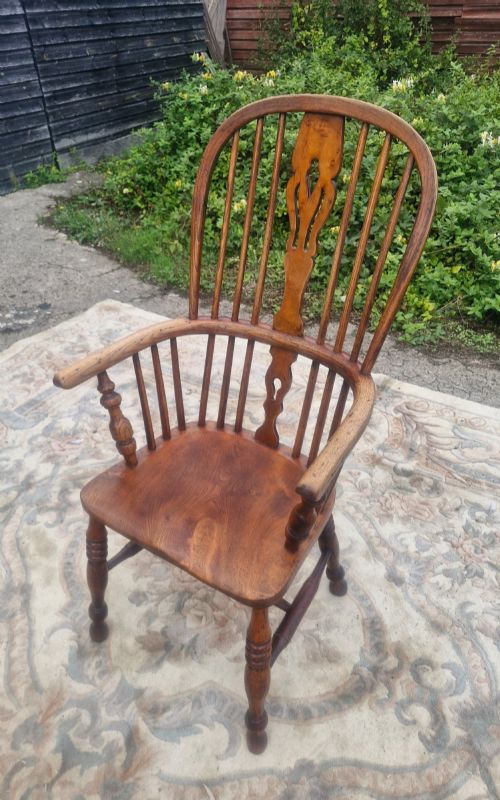
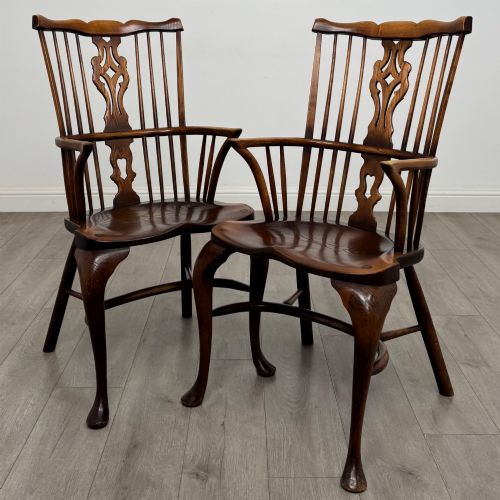
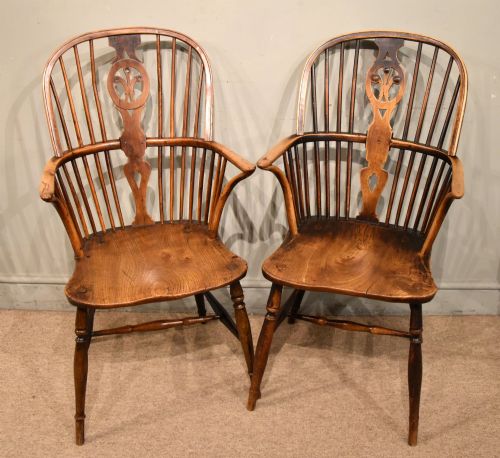
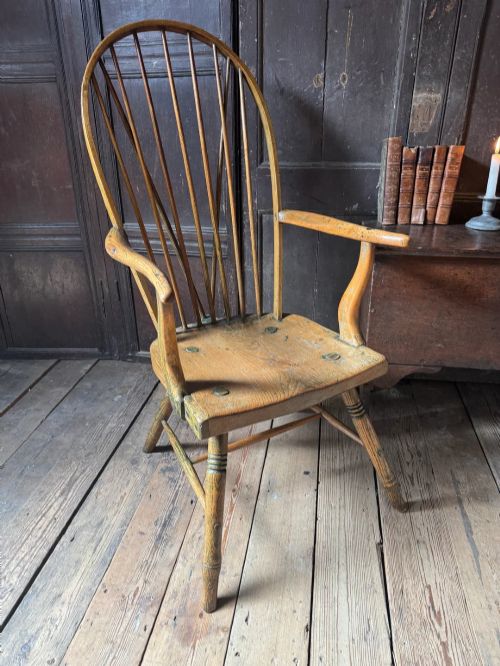
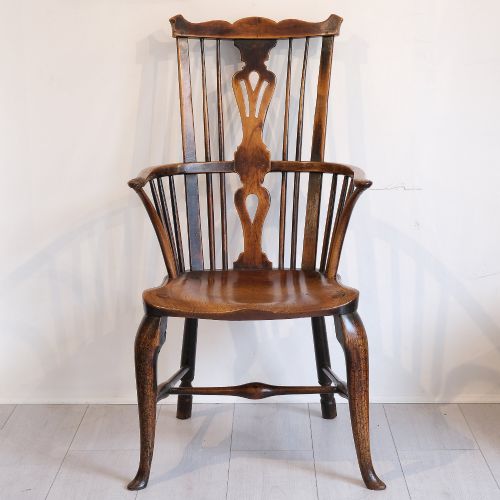
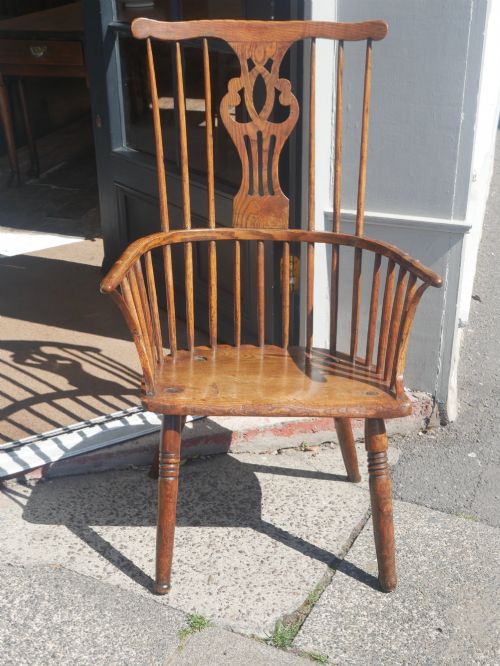
Country Windsor High Chair
A country windsor high chair brings solid vernacular craft and comfortable seating into a room through traditional timber construction.
Country Windsor High Chair
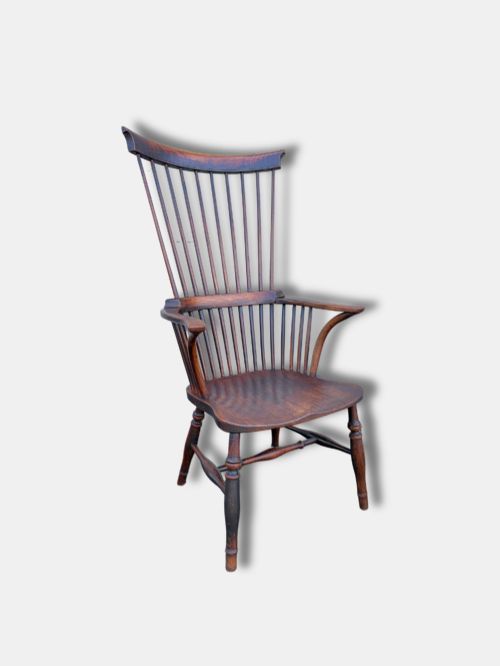
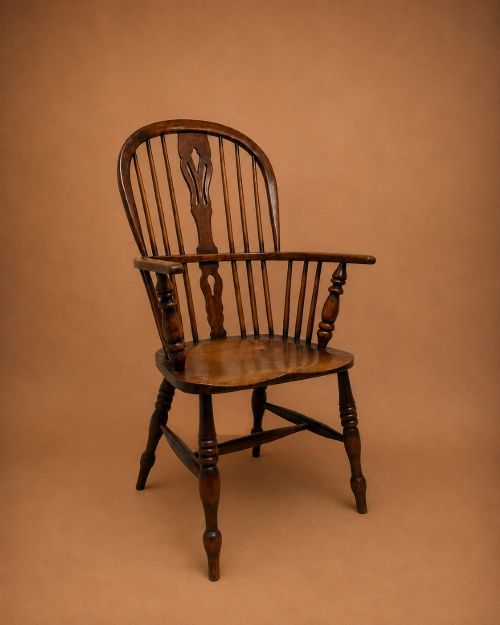
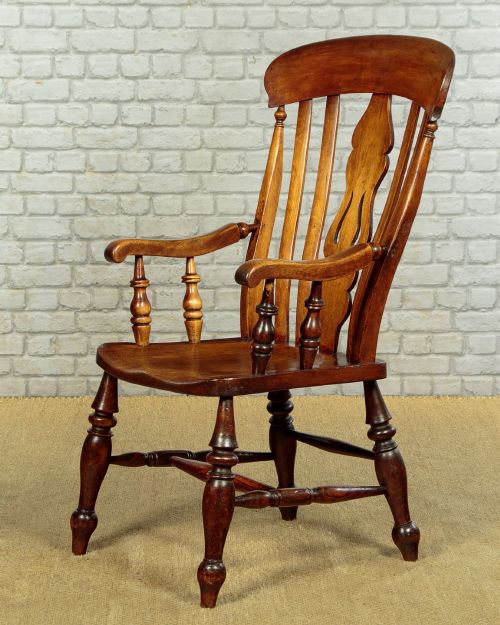
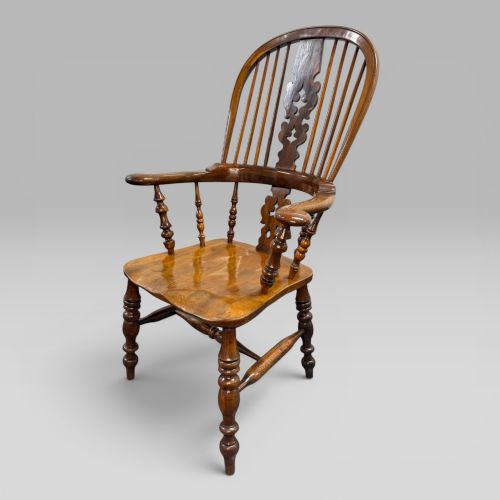
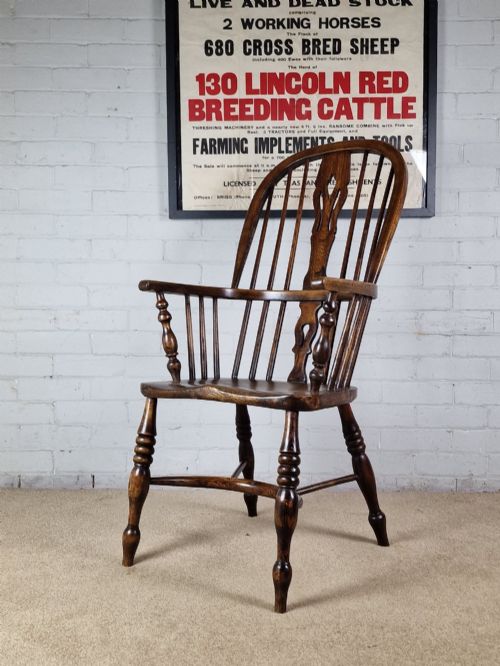
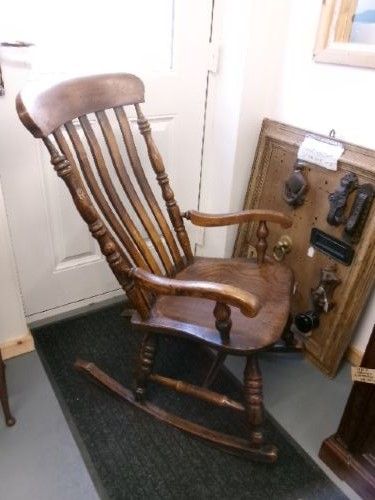
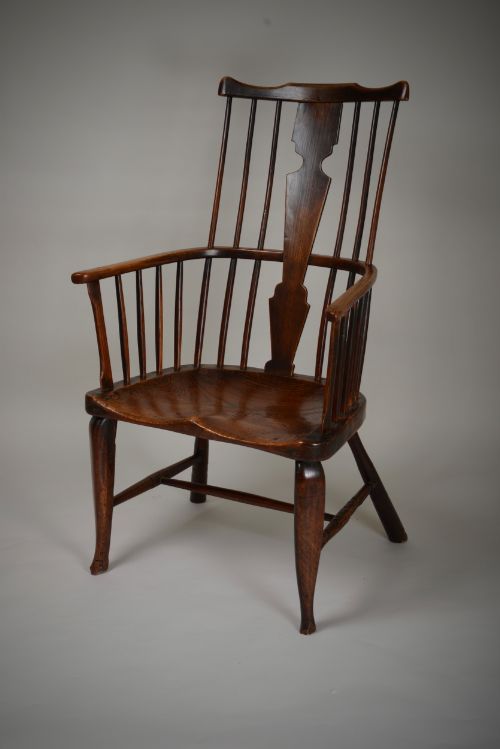
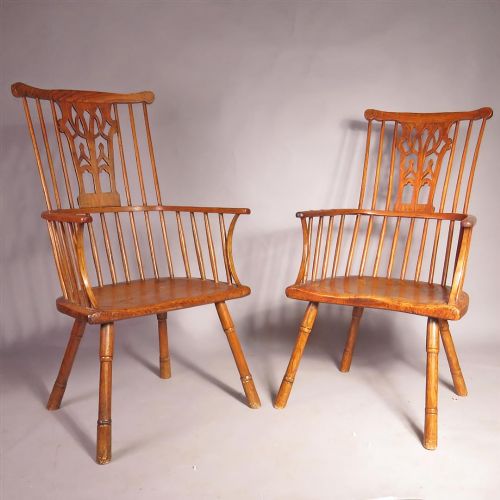
A country windsor high chair represents traditional domestic seating rooted in centuries of vernacular British furniture making. These pieces typically combine elevated backs with rigid stick or comb structures designed for daily farmhouse use.
Most examples encountered here date from the eighteenth, nineteenth, and early twentieth centuries, spanning Georgian, Victorian, and Edwardian periods. Regional variations emerge clearly across these eras, ranging from Thames Valley and West Country designs to Yorkshire and Scottish regional forms.
How they were made
Makers utilised a combination of native timbers, frequently pairing elm for deeply saddled solid seats with ash, beech, or fruitwood for spindles, bows, and legs. Yew also appears in select high-status regional pieces.
The construction relies on socketed joinery where turned legs and back spindles are wedged directly into a thick wooden seat base. Steam-bending techniques shape the characteristic high hoops, combs, and lath backs.
Listings feature items constructed from elm, ash, yew, beech, oak, fruitwood, and hardwood.
What varies in quality
Quality depends heavily on the sculptural handling of the seat block and the purity of the timber selection. Deeply carved saddles and carefully thinned arm bows show superior bench work.
Proportion and stance separate standard utility items from finer workshop pieces. Well-balanced splats, crisp turning on the stretchers, and graceful rake in the legs distinguish the better examples.
Duncan McKellar of Fenwick
The Country Windsor High Chair Glossary
- Comb back
- A Windsor chair back where upright spindles rise to a horizontal crest rail resembling the teeth of a comb.
- Hoop back
- A continuous bentwood rail forming the main outer frame of the chair back.
- Saddle seat
- A wooden seat base scooped and shaped by hand for ergonomic comfort.
- Vernacular
- Objects made by regional craftsmen following local traditions rather than strict academic design rules.
- Stretcher
- A horizontal timber connecting the legs to provide structural rigidity.
Country Windsor High Chair: Frequently Asked Questions
What is a country windsor high chair?
A country windsor high chair is a traditional wooden seat featuring a tall back and stick-built construction inserted into a solid plank base. These sturdy domestic pieces evolved from regional vernacular traditions across Britain.
They served practical roles in farmhouses and kitchens, providing reliable support and comfort for daily tasks. The raised back design offered extra head and back warmth near open fires.
How do I identify the wood used?
Makers selected native timbers for specific structural properties, combining distinct woods within a single frame. Elm typically appears in the heavy seat plank due to its interlocking grain resisting splits.
Ash, beech, and fruitwood provide flexible strength for bent bows and slender turned spindles. Yew appears less frequently, offering rich grain patterns in high-status regional versions.
How can I tell the age of a chair?
Dating relies on observing construction methods, tool marks, and overall stylistic evolution across different centuries. Eighteenth-century examples often display subtle differences in comb shapes and finer spindle turnings compared to later Victorian pieces.
Wear patterns on the seat and footings also indicate age, alongside changes in timber availability and regional building preferences documented from the Georgian era onward.
Where were these chairs made?
Production spread across various rural regions, with distinct local styles developing in places like the Thames Valley, Yorkshire, and the West Country. Regional workshops utilised whatever local hardwoods grew abundantly nearby.
Makers in specific towns developed signature back designs and leg turnings, allowing specialists to trace the geographic origins of individual pieces.