
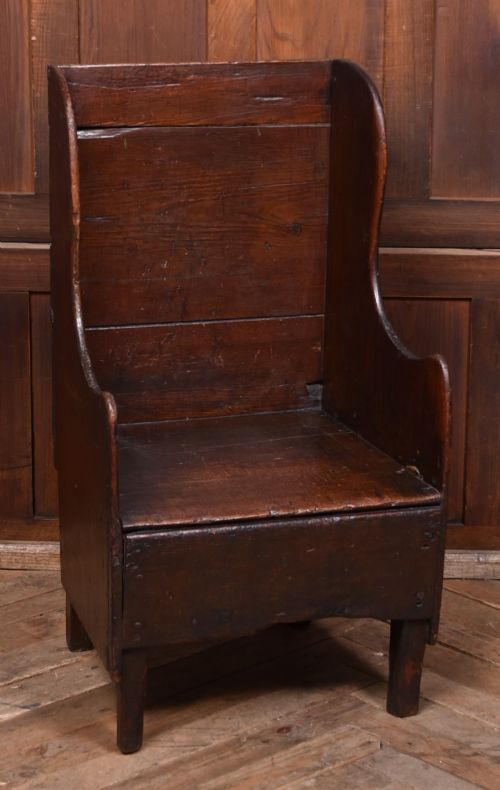


Country Vernacular Child Chair
A country vernacular child chair offers domestic utility shaped by local hands across centuries of British rural life.
Country Vernacular Child Chair
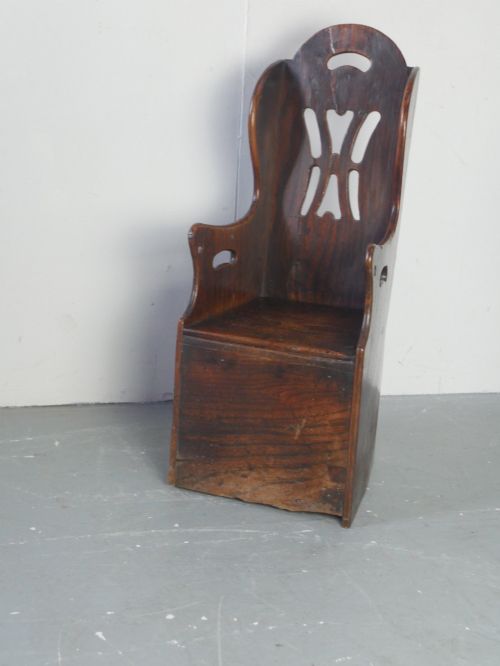
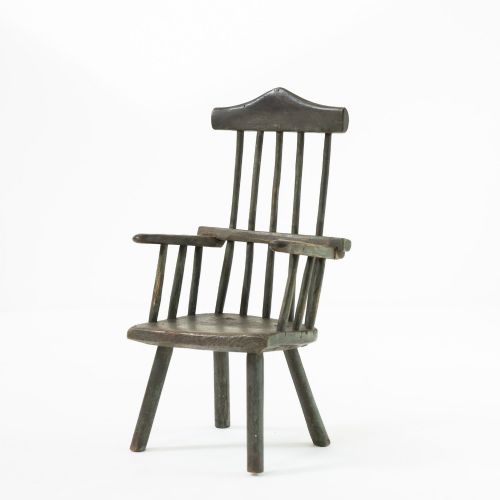
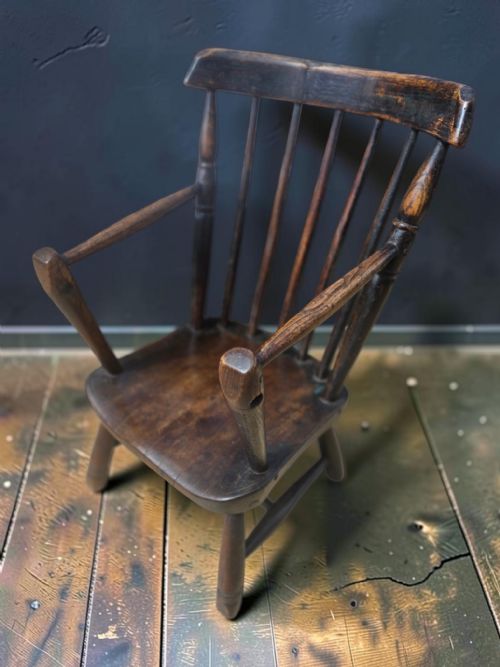
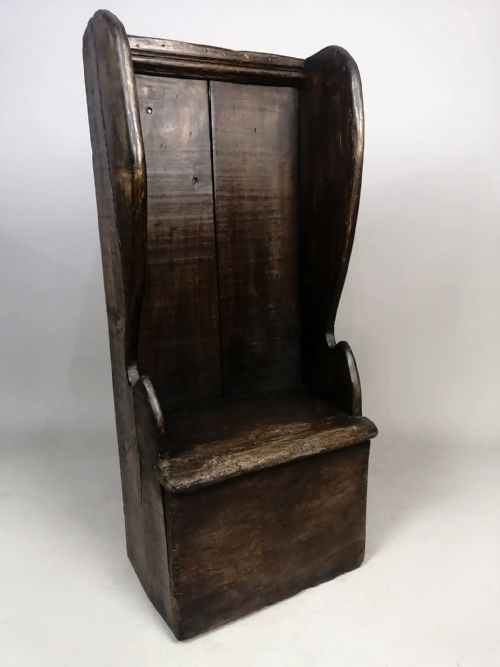
A country vernacular child chair brings small-scale domestic seating into the domestic sphere, spanning forms from simple stools and ladderbacks to high chairs, armchairs, commodes, and lambing chairs. These pieces originate across regional traditions, notably Welsh and English country workshops, utilising local timber forms suited to children.
The selections on this page concentrate heavily on nineteenth-century and Georgian examples, alongside earlier seventeenth-century survivals and twentieth-century items. Buyers encounter stick backs, hoop backs, Windsor designs, and primitive rocking formats built for everyday use rather than formal display.
How they were made
Local makers constructed these chairs using native hardwoods including oak, elm, ash, and fruitwood, often combining woods within a single frame for seats, spindles, and legs. Seats were formed from solid timber slabs or woven with rush, while structural joints relied on traditional pegged and wedged construction.
Surfaces frequently show natural grain, early paint layers, or patinated finishes developed through generations of handling. Construction prioritised sturdiness and utility, resulting in unpretentious frames shaped by regional joinery methods.
Listings span four centuries, featuring native timbers like oak, ash, elm, and fruitwood shaped into windsor, ladderback, and lambing forms.
What varies in quality
Quality rests in the balance of proportions and the integrity of the original construction, where skilled shaping of a stick back or hoop back elevates a functional object. Better examples display thoughtful integration of natural timber forms and enduring joinery rather than purely crude assembly.
The degree of original surface preservation also distinguishes pieces, with untouched patinated timber or early paint retaining more character than heavily restored or altered frames.
The Country Vernacular Child Chair Glossary
- Vernacular
- An object made by local craftsmen following regional traditions rather than metropolitan academic designs. These pieces reflect the materials and methods immediately available to the maker.
- Lambing chair
- A hooded or high-sided seat designed to shield the occupant from drafts in cold rural rooms. Miniature versions provided sheltered seating for children.
- Stick back
- A chair construction where turned or cleft spindles are inserted directly into a solid wooden seat and connected to a bentwood rail. It forms a staple of country seating.
- Windsor chair
- A form characterised by a solid wooden seat into which the legs and back spindles are separately tenoned. Regional variations include hoop backs and high chairs.
- Commode chair
- A seated piece housing a concealed chamber pot or receptacle beneath a pierced board. Child versions served toilet training needs in early households.
Country Vernacular Child Chair: Frequently Asked Questions
How were child high chairs used?
These elevated seats allowed small children to join adults at table while keeping them contained safely during meals. Their sturdy bases prevented tipping on uneven farmhouse floors.
Many incorporated footrests or enclosed rails to support younger infants before independent seating was mastered.
What is a potty chair?
A potty chair functioned as an early form of toilet training furniture by integrating a concealed receptacle beneath a lift-up or pierced seat. Parents relied on these domestic items for daily nursery routines.
They combined standard seating comfort with practical sanitation in periods before modern plumbing.
How do I date a country chair?
Dating relies on assessing tool marks, timber species, construction techniques, and wear patterns across the frame. Earlier pieces often display hand-cleft wood and pegged joinery.
Changes in backrest styles, from solid boards to spindles and Windsor hoops, also help place pieces within specific centuries.
Are these chairs safe for children?
While structurally sound for display, antique child chairs were built to historical standards and may lack modern safety clearances or stability testing. Collectors generally treat them as decorative objects or historic artefacts.
Careful placement prevents tipping if handled by active toddlers.