
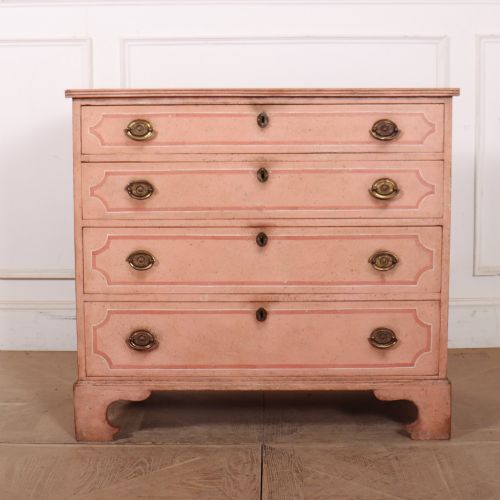

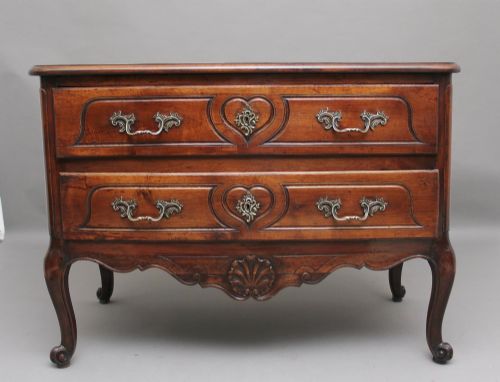
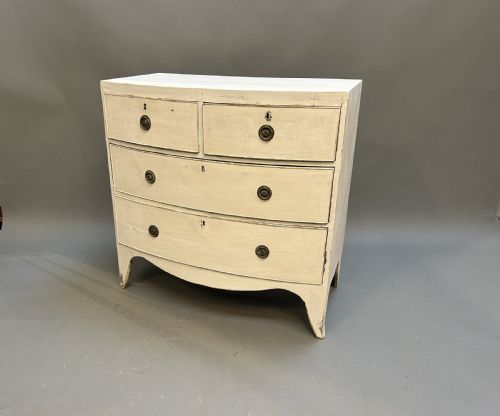


Country Style Storage Drawers
Country style storage drawers bring practical rustic character and everyday utility into a room, offering robust housing for your belongings.
Country Style Storage Drawers
Country style storage drawers encompass robust chests of drawers, commodes, trunks, and cabinets spanning the eighteenth and nineteenth centuries. These pieces emerge from English, French, Dutch, and Scandinavian traditions, reflecting regional utilitarian designs.
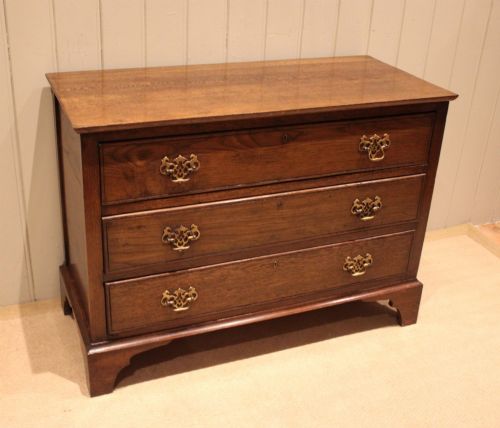
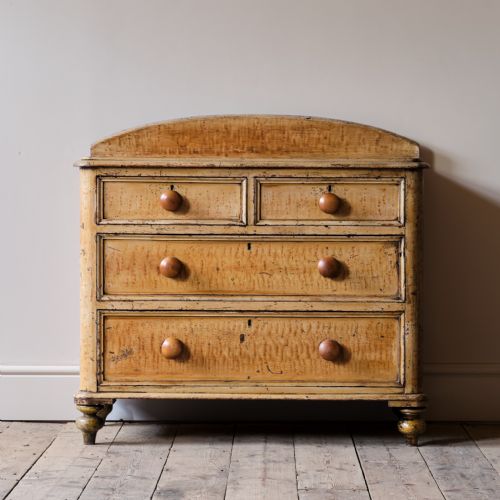
The most common form you will meet on this page is the painted or polished wooden chest of drawers, ranging from rustic pine to polished oak and walnut. Makers built these for provincial homes, country houses, and farmhouses where everyday storage was essential.
Pieces from this group often display regional characteristics, such as French provincial commodes with serpentine fronts or simple English painted pine configurations. The selection spans straightforward eighteenth-century oak designs up to early twentieth-century scrubbed oak and painted variations.
Materials and Construction
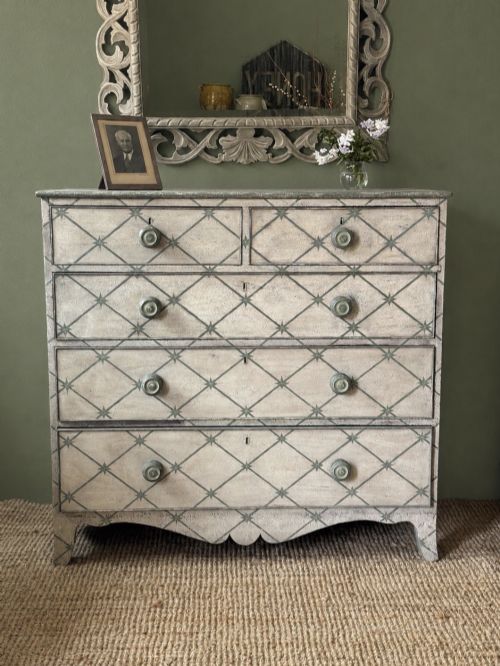
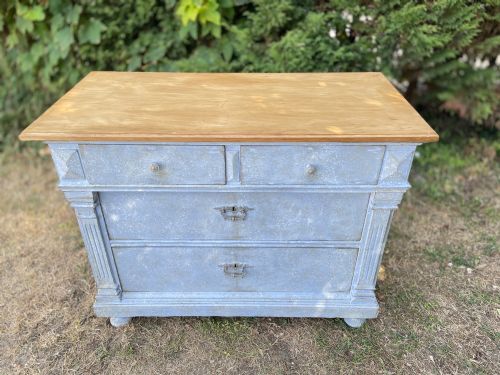
Makers relied primarily on solid woods such as oak, pine, walnut, fruitwood, elm, and cherrywood to build these storage pieces. Many surfaces received an application of paint, creating the characteristic painted wood finishes seen across French, English, and Scandinavian examples.
Hardware played an essential functional role, with brass fittings frequently securing drawers and doors on finer pieces. Joinery relied on traditional timber framing techniques suited to provincial workshops, accommodating woods like burr elm and deal without synthetic adhesives.
Some nineteenth-century French commodes arrived with lift tops cleverly concealing storage drawers beneath.
Distinctions in Quality
Quality in these storage pieces rests on the choice of timber and the sophistication of the provincial cabinetmaking. Superior examples utilise dense woods like walnut, cherrywood, or quarter-sawn oak, whilst more utilitarian pieces employ everyday pine.
The finish and surface preservation dictate the distinction between standard items and those of greater interest. Original paint surfaces, marble tops, and carved serpentine fronts elevate a piece above straightforward domestic storage drawers.
The Country Style Storage Drawers Glossary
- Commode
- A low chest of drawers or cabinet, frequently of French origin and dating to the eighteenth or nineteenth century.
- Serpentine
- A curved furniture front characterised by a convex centre flanked by concave sides.
- Commode à Pointe de Diamant
- A decorative furniture style featuring diamond-point panelling on the drawer fronts.
- Linen Press
- A tall storage cabinet historically used for storing household linens and garments.
- Mule Trunk
- A storage chest fitted with one or more drawers in the base beneath the main compartment.
Country Style Storage Drawers: Frequently Asked Questions
What defines country style storage drawers?
These pieces comprise chests of drawers, commodes, and cabinets originating from rural workshops across Europe during the eighteenth, nineteenth, and early twentieth centuries.
They prioritise straightforward utility and robust timber construction over formal courtly ornamentation, frequently utilising regional woods like pine, oak, and fruitwood.
How were these drawers used historically?
Households relied on these chests and cabinets for storing garments, textiles, and domestic essentials in bedrooms and living quarters.
Trunks and linen presses provided secure storage for valuable fabrics before fitted wardrobes became standard in domestic architecture.
How do I distinguish regional styles?
French provincial pieces often exhibit serpentine fronts, fruitwood or walnut construction, and painted finishes, whereas English versions typically favour oak or pine.
Scandinavian and Dutch examples frequently display distinct painted treatments or characteristic timber selections like elm.
Can I use these in modern interiors?
Their enduring structural utility makes them straightforward to integrate into contemporary bedrooms, hallways, and living spaces for everyday storage.
Unfussy proportions and natural wood or painted finishes allow them to sit comfortably alongside modern furnishings.