

Country Style Armchair
A country style armchair brings grounded comfort and history to a room, offering deep seats shaped by traditional craftsmanship.
Country Style Armchair
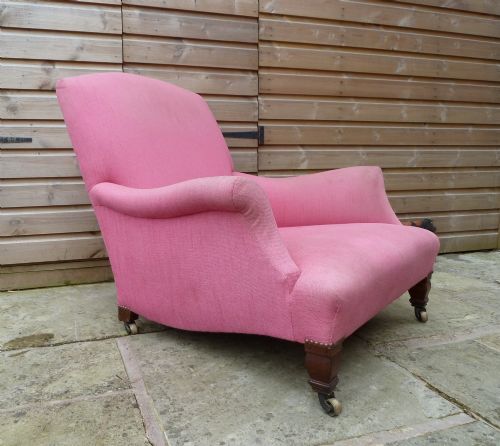
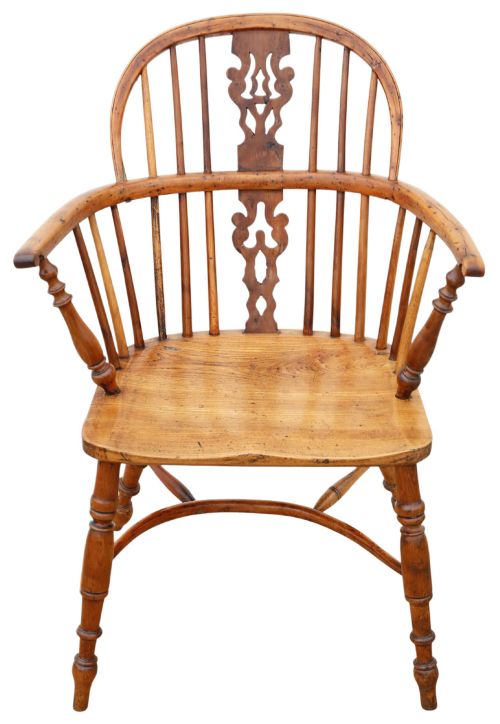
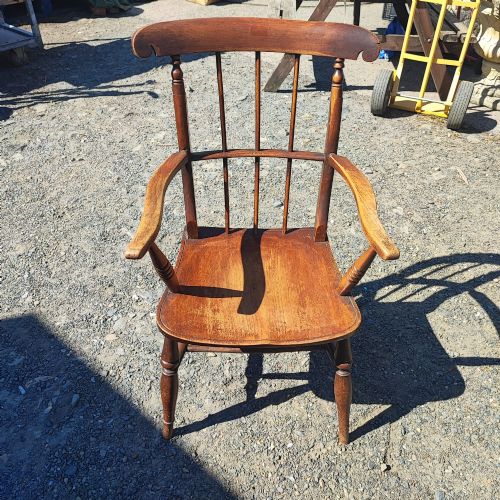
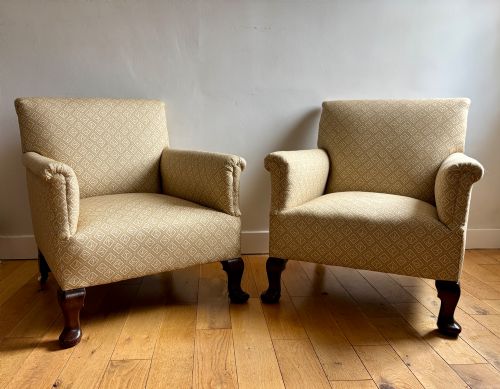
A country style armchair encompasses relaxed seating forms rooted in vernacular traditions, including Windsor chairs and upholstered club designs. These pieces range from sturdy timber frames to deep-sprung seating built for everyday ease.
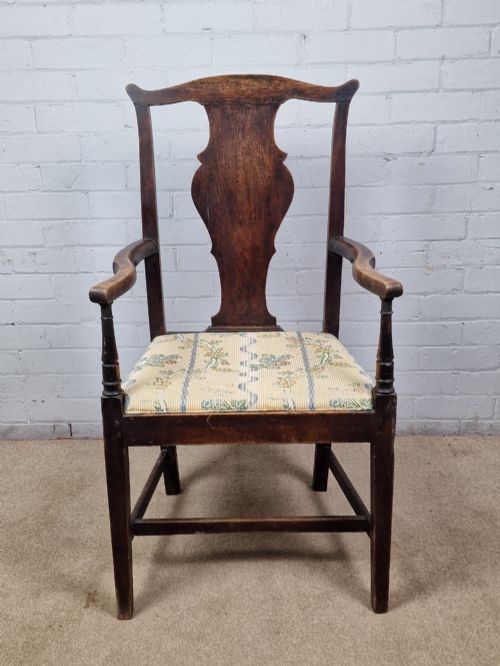
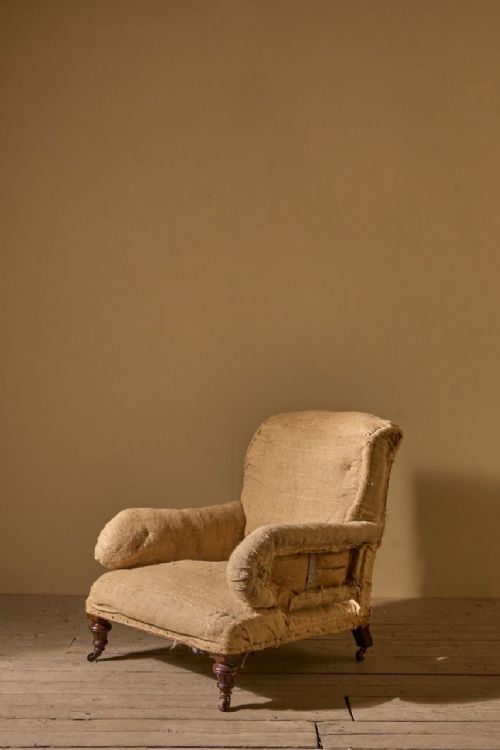
The selections available here lean heavily towards nineteenth-century English country house models and Windsor armchairs, alongside later Edwardian iterations. Buyers frequently encounter oak, elm, ash, and walnut frameworks paired with traditional textiles like calico and hessian.
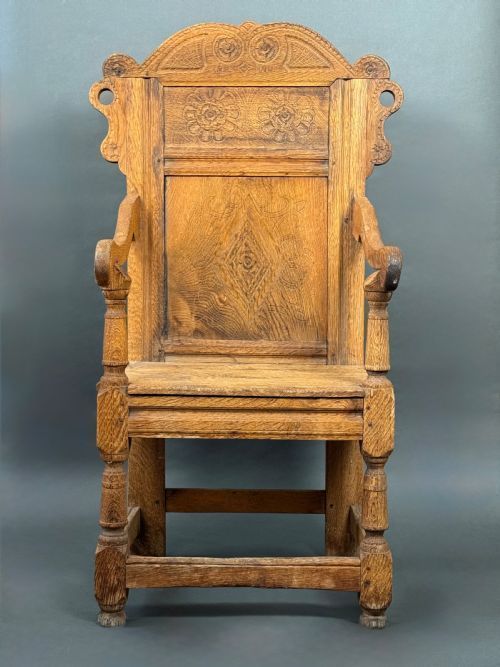
Makers and workshops across Britain and France produced these seating options, spanning rustic vernacular builds to refined period revivals. Each specimen carries the functional hallmarks of its specific era, whether high-backed wainscot panels or low spindle-back profiles.
Materials and construction methods
Makers relied on durable timbers such as oak, elm, yew, fruitwood, and beech to build sturdy structural frames. Windsor models utilised contrasting woods, often combining bent ash for hoops with elm seats and spindle turnings.
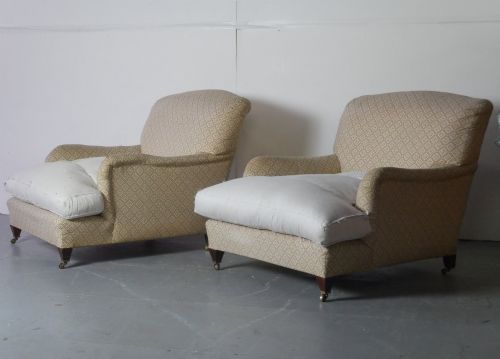
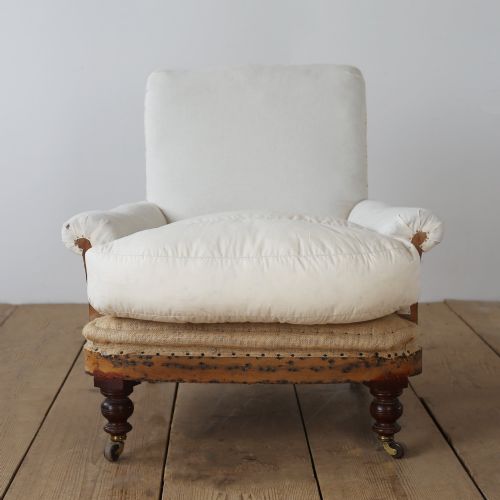
Upholstered variants employed traditional stuffing materials, hessian webbing, and foundational coil springs to achieve resilient support. Feather filling frequently provided deep softness within nineteenth and twentieth-century lounge variants.
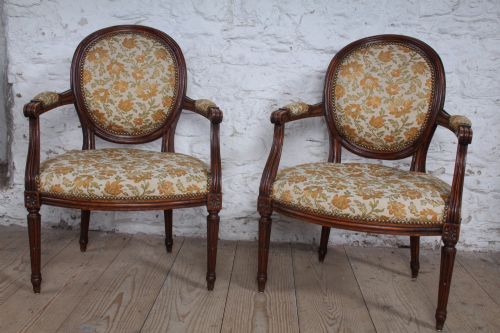
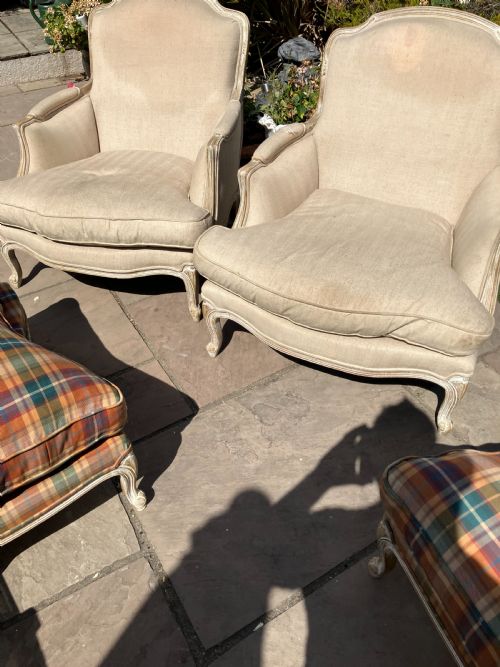
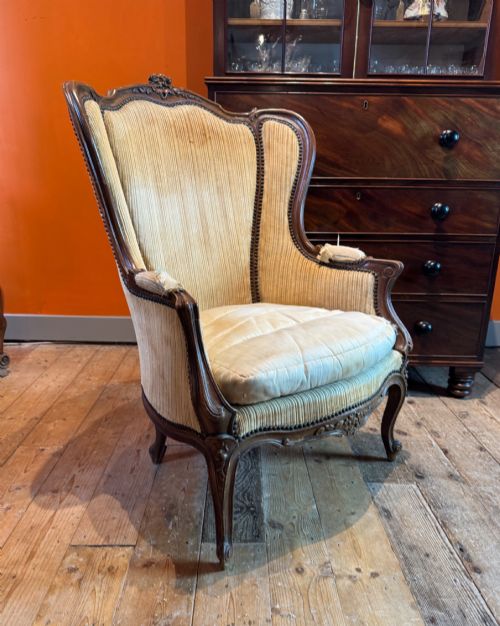
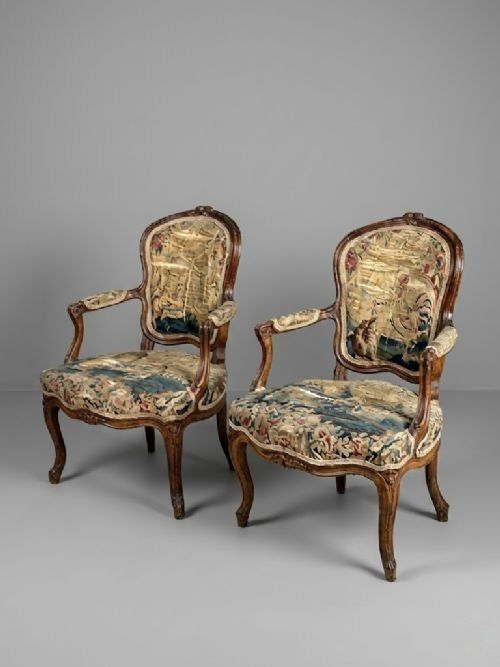
Joinery techniques ranged from pegged mortise and tenon joints in early oak wainscot chairs to steam-bent components in vernacular country seating. Carved decoration on walnut and beech frames demonstrated continental influences like Louis XV and Rococo revivals.
The listings here feature oak, walnut, mahogany, elm, and beech frameworks paired with fabrics ranging from needlework to calico.
Assessing construction and material merit
The integrity of timber frames dictates longevity, with tight joints and original timber patination separating superior examples from lesser pieces. Retained originality in structural elements and historical surfaces commands greater appreciation among collectors.
Upholstered pieces rely on the execution of internal stuffing and spring work, where traditional hand-tied methods offer enduring shape. The refinement of hand-carved detailing on exposed wood arms and cabriole legs also distinguishes finer workshop output.
Howard and Sons·Whytock and Reid·Gillows·SF Cullen
The Country Style Armchair Glossary
- Windsor armchair
- A timber seat featuring upright spindles inserted into a solid wooden saddle-shaped seat base. These chairs often incorporate a bentwood bow back.
- Wainscot armchair
- An early wooden armchair constructed primarily from solid oak with panelled backrests. They date back to the seventeenth and eighteenth centuries.
- Carver elbow-chair
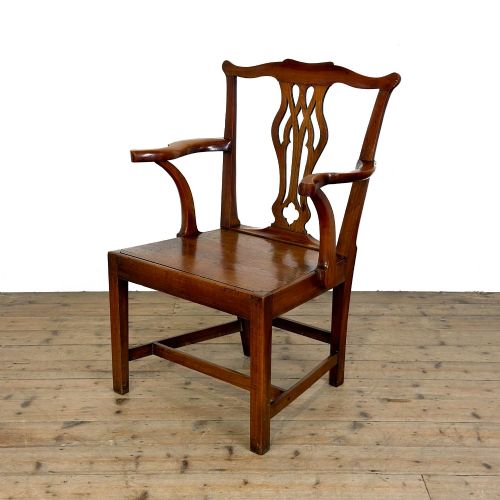
- A traditional dining or desk chair fitted with open arms, often matching a larger set of dining seats. They utilise vernacular timber construction.
- Fauteuil
- An open-framed upholstered armchair originating in France, characterised by exposed wooden armrests and carved rails. Beech and walnut are typical frame materials.
- Rush seat
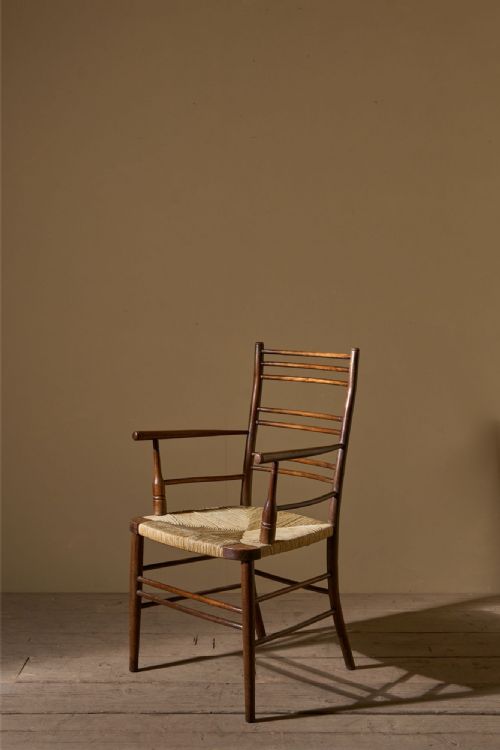
- A woven seating surface made from dried marsh rushes twisted into cords. This technique appears frequently on Arts and Crafts and vernacular chairs.
Country Style Armchair: Frequently Asked Questions
What defines a country style armchair?
These chairs combine utilitarian timber construction or relaxed upholstered seating with traditional forms originating from rural workshops and country houses. They prioritise comfort and durable materials over formal courtly aesthetics.
Examples range from spindle-backed Windsor seating in elm and yew to deep-sprung club armchairs covered in ticking or hessian. Each piece reflects regional woodworking traditions across British and European eras.
How do I care for wooden frames?
Maintain timber components by keeping them away from direct heat sources and sudden humidity shifts to prevent wood splitting. Apply a suitable microcrystalline wax periodically to nourish the surface finish.
Avoid using harsh chemical polishes that can degrade historical patina. Gentle dusting with a dry cloth is sufficient for daily maintenance.
Where should I place an armchair?
These versatile seats function well in living rooms, studies, or bedrooms as reading chairs or conversational seating. Their varied profiles allow them to anchor corner spaces or sit comfortably beside firesides.
Ensure adequate room around open-armed or wingback variants so their structural silhouettes remain visible within the interior scheme.
How can I distinguish period styles?
Study the turning shapes, leg geometry, and joinery methods to identify specific eras like the Georgian or Victorian periods. Regional vernacular pieces often display simpler, utilitarian construction compared to London workshop output.
Upholstered profiles also offer clues, transitioning from rigid nineteenth-century horsehair stuffing to softer feather-filled twentieth-century Bridgewater designs.