
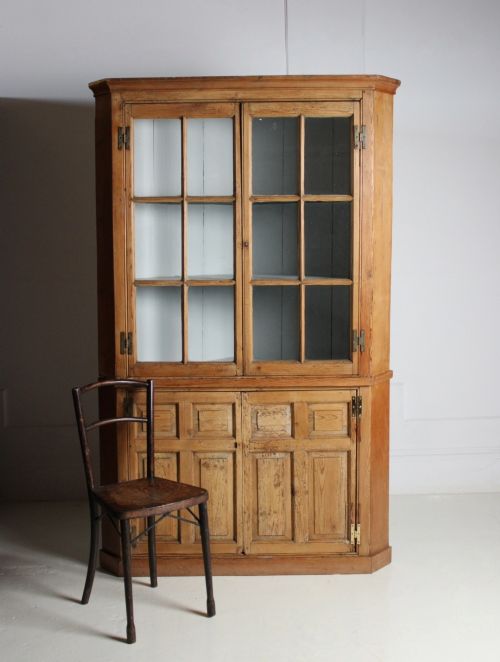
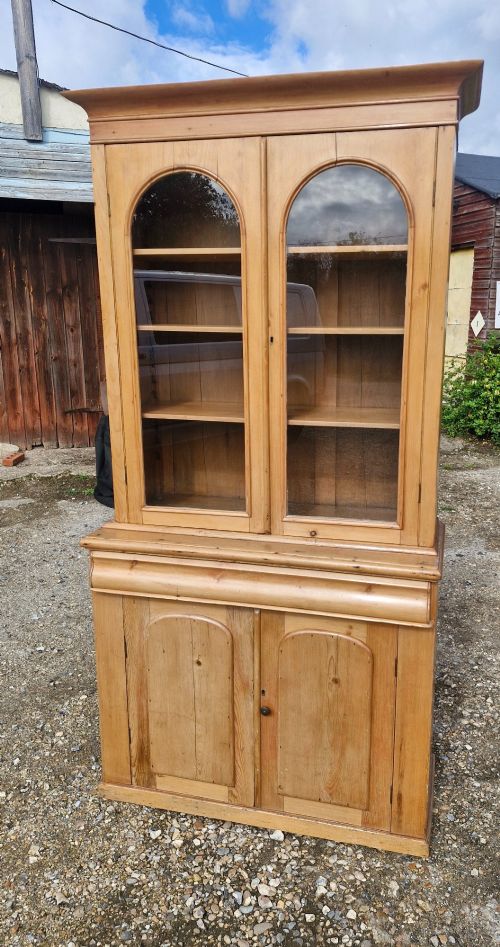
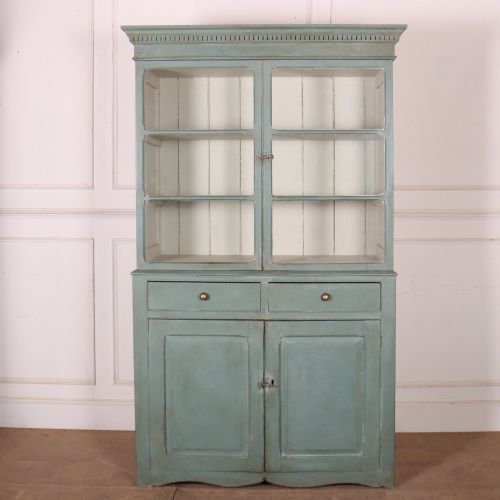
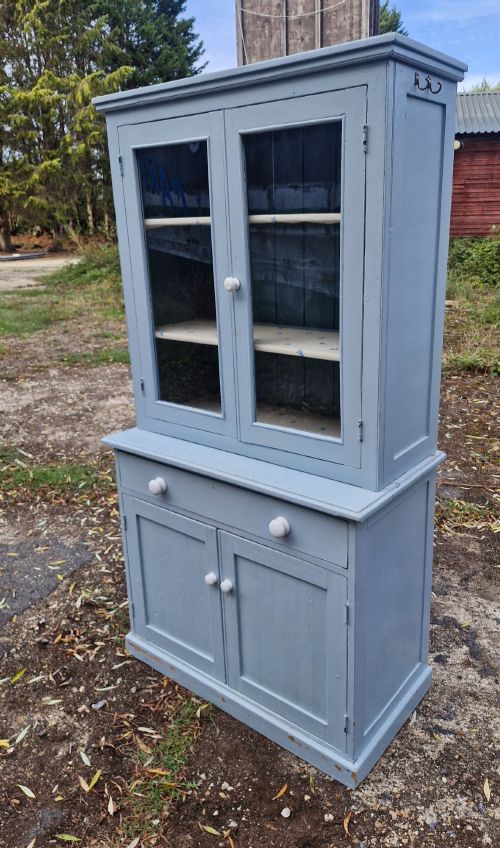
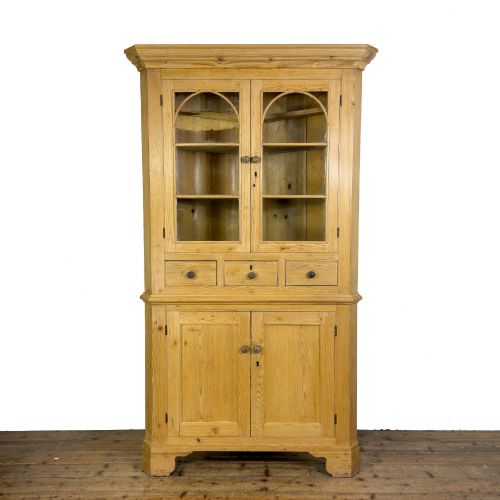
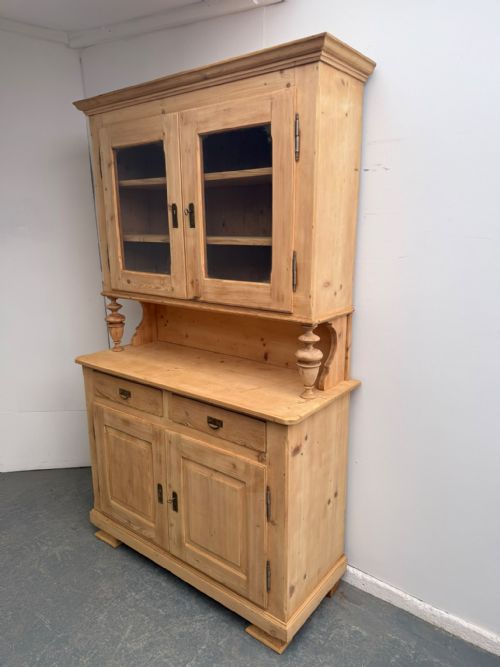
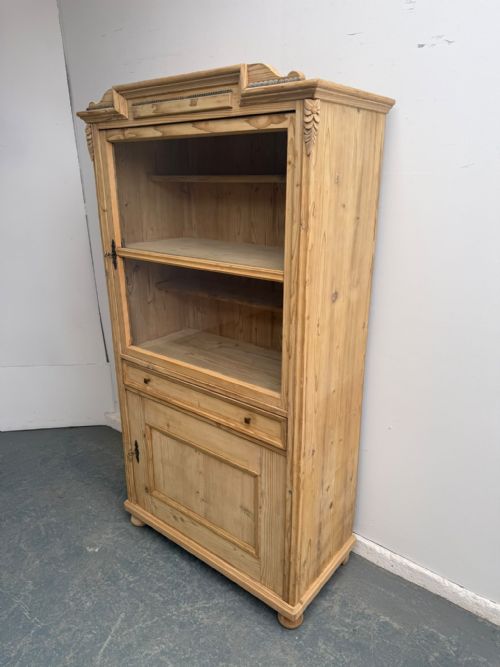
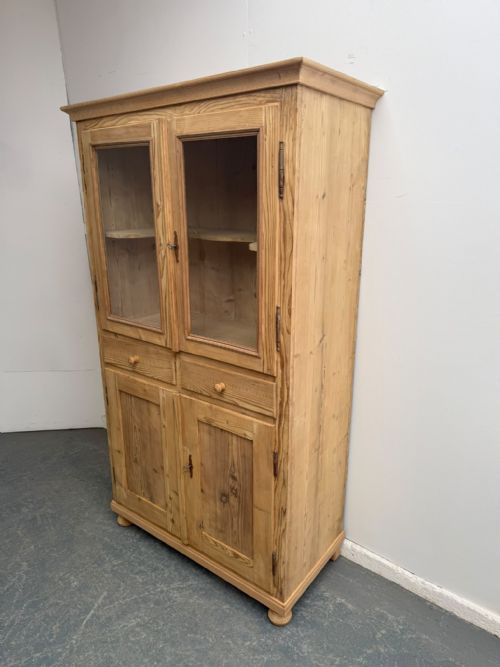

Country Pine Glazed Dresser
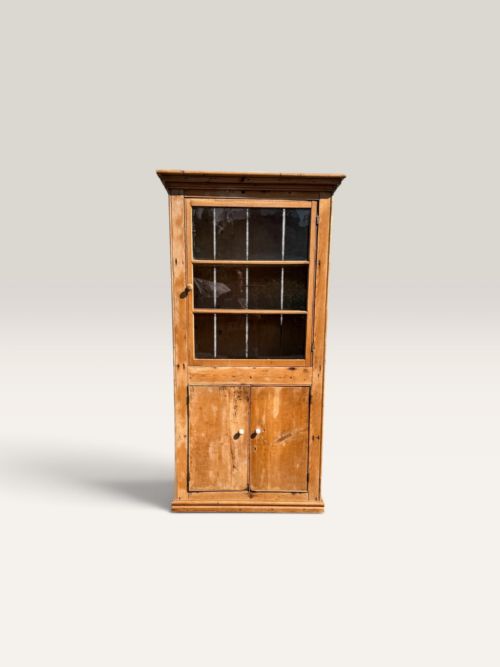
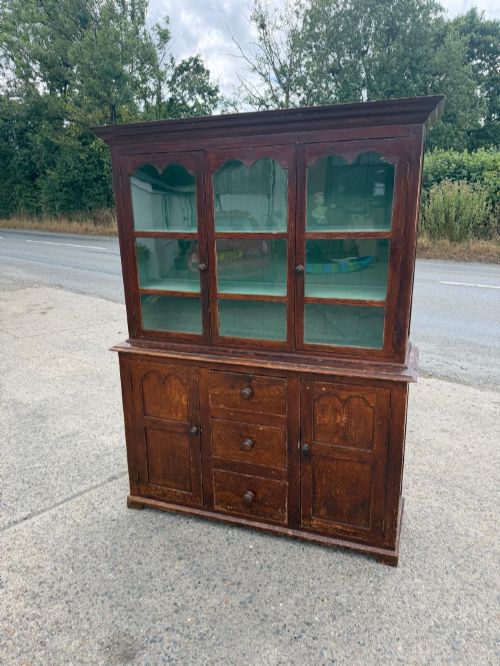
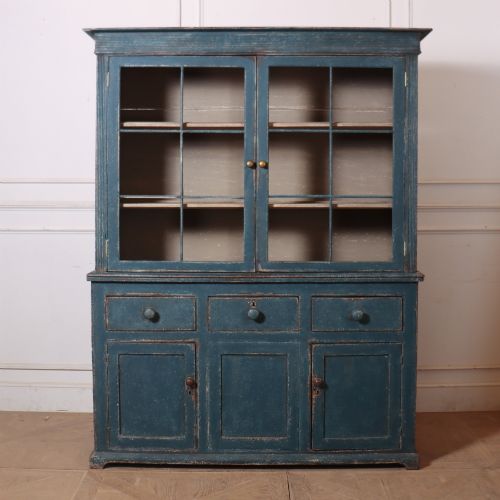
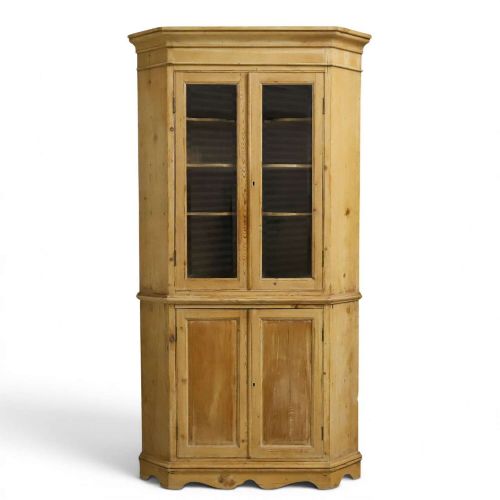
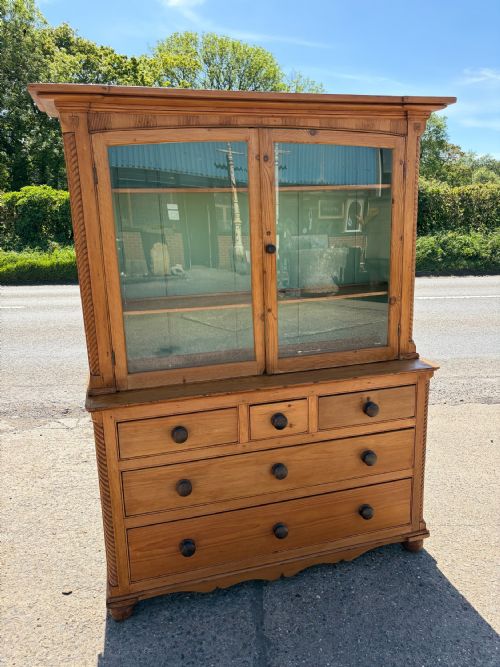
A country pine glazed dresser brings honest utility and warmth to a room, storing provisions below while displaying ceramics behind glass above.
Country Pine Glazed Dresser
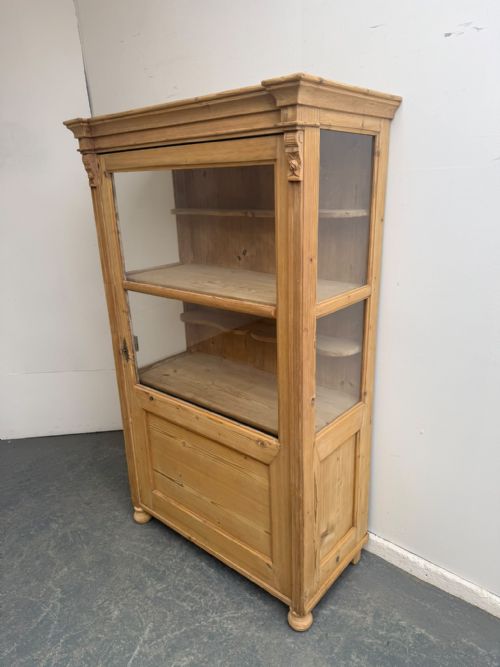
A country pine glazed dresser combines an enclosed base of cupboards or drawers with an upper section of glass doors, serving as storage and display in domestic spaces. These pieces appear in regional English forms, including West Country variants, alongside Scottish, Irish, French, Danish and Hungarian examples.
The selection ranges from early Victorian kitchen bookcase cabinets and two-part cupboards to corner cabinets, breakfront dressers and tall larder units. Dating spans the nineteenth century through the Edwardian period into the early twentieth century, taking shapes shaped by utilitarian daily needs.
Materials and construction
Makers built these pieces primarily from solid pine, often integrating glass for upper display doors alongside brass or iron hardware and occasional ceramic elements. Construction commonly relies on a two-part format, separating the heavy base from the glazed upper cabinet for transport and placement.
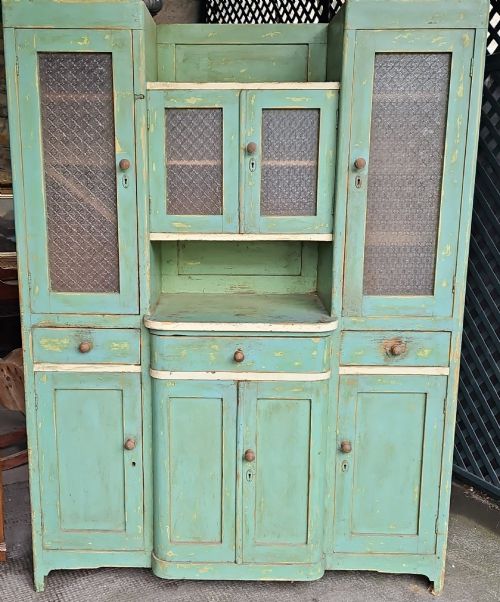
Surfaces receive varied finishes, ranging from stripped wood and traditional wax to original painted schemes, scumbled graining and scraped paint. Construction details reflect regional workshop practices across English counties, Scotland, Ireland and continental Europe.
Listings feature pine, glass, brass, iron, ceramic, and paint across periods spanning the nineteenth century through the Edwardian era.
Gradations of quality
Quality rests upon the integrity of the timber, the balance of proportions between the lower base and upper glazed section, and the survival of original surface treatments. Pieces retaining authentic regional characteristics, untouched painted finishes or scumble work hold greater distinction than heavily altered examples.
Joinery and hardware execution distinguish standard utility pieces from finer vernacular work. The presence of original glass panes, working brass or iron fittings, and sound structural timber elevates a piece above standard workshop production.
The Country Pine Glazed Dresser Glossary
- Scumble
- A decorative painting technique involving layers of translucent glaze manipulated over a base colour to simulate richer wood grain. This finish appears frequently on nineteenth-century vernacular furniture.
- Breakfront
- A cabinet design where the central section projects forward from the flanking wings. This architectural form adds depth and presence to larger kitchen dressers and bookcases.
- Two-part form
- Construction method dividing a tall cabinet or dresser into an upper glazed display section resting upon a lower cupboard or drawer base. This facilitates movement and placement in domestic settings.
- Cornish dresser
- A regional variant of the traditional kitchen dresser associated with West Country workshop traditions. These pieces often feature specific proportions and local timber selection.
Country Pine Glazed Dresser: Frequently Asked Questions
How do I date a pine dresser?
Dating relies on construction methods, timber characteristics, hardware types, and stylistic indicators. Nineteenth-century examples often feature hand-cut joints, heavier pine sections, and period iron or brass fittings.
Later Victorian, Edwardian, and early twentieth-century pieces introduce machine-sawn components and different proportions while maintaining traditional utility forms.
Are these dressers made in two parts?
Many larger examples utilise a two-part form, separating the upper glazed cabinet from the lower base. This construction method eased transport through narrow farmhouse doorways and placement within domestic kitchens.
Smaller cupboards and corner cabinets typically remain as single fixed units.
What finishes do these pieces have?
Surfaces range from stripped and waxed pine exposing the natural grain to original painted schemes, scumbled glazes, and scraped historic paint. Many pieces carry layers of later paint applied during active domestic service.
Original painted finishes, particularly regional colours like cream and teal, preserve the vernacular character of the piece.