
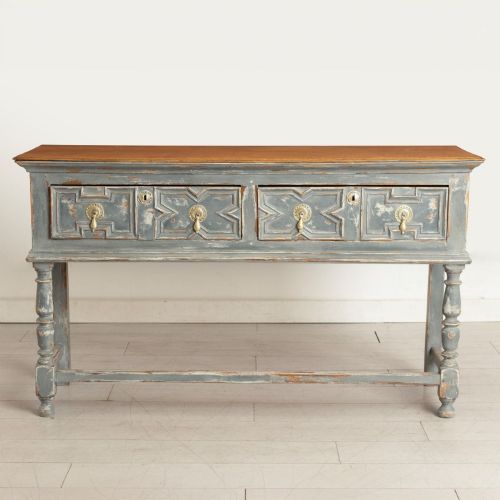
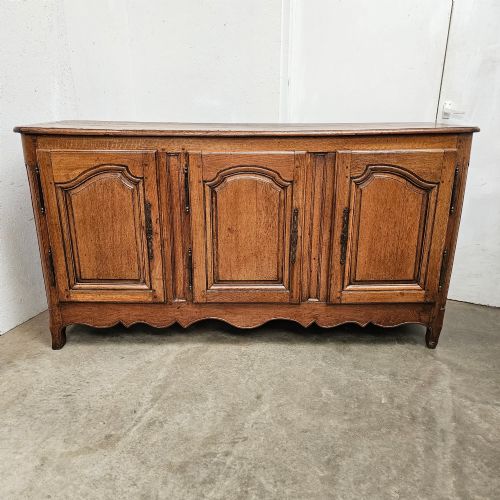
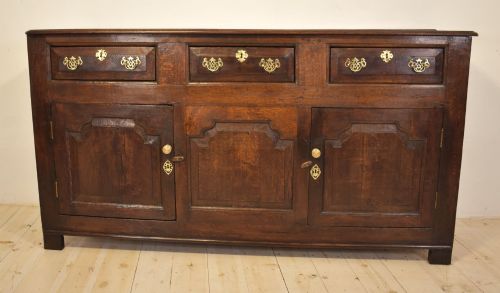
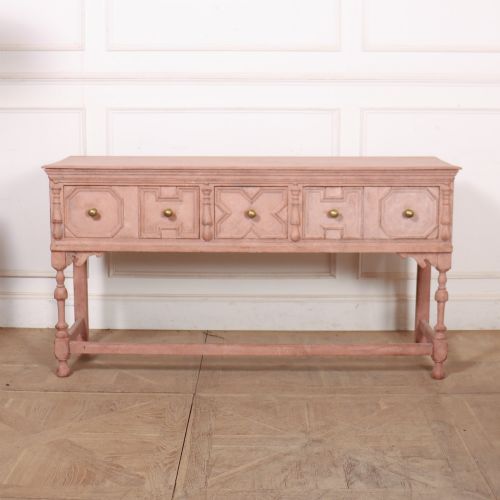
Country Oak Sideboard Base
A country oak sideboard base brings honest timber and historic utility straight into a modern dining room.
Country Oak Sideboard Base
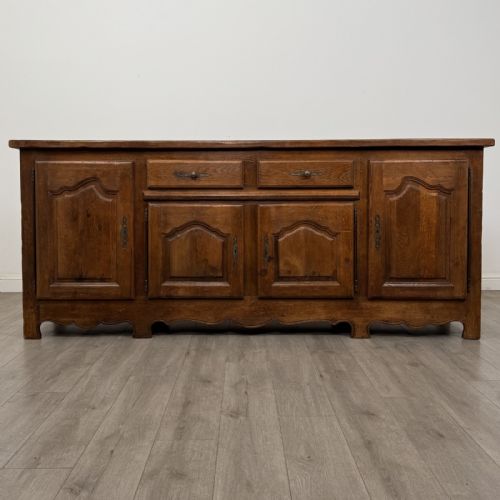
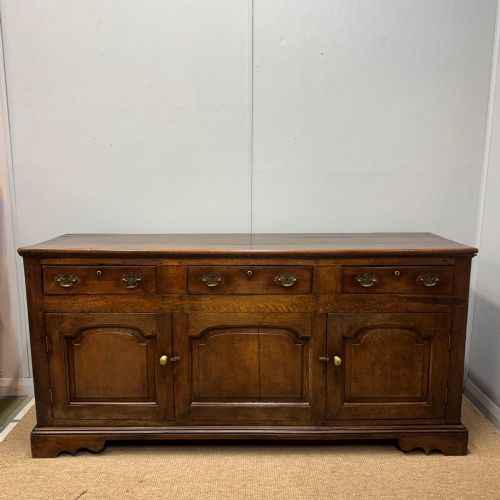
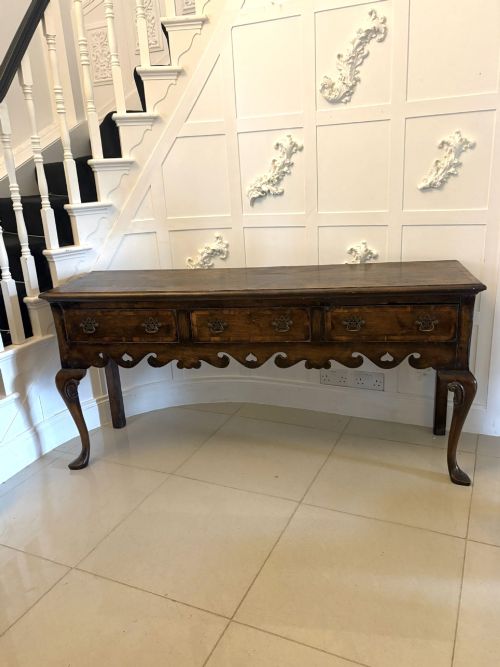
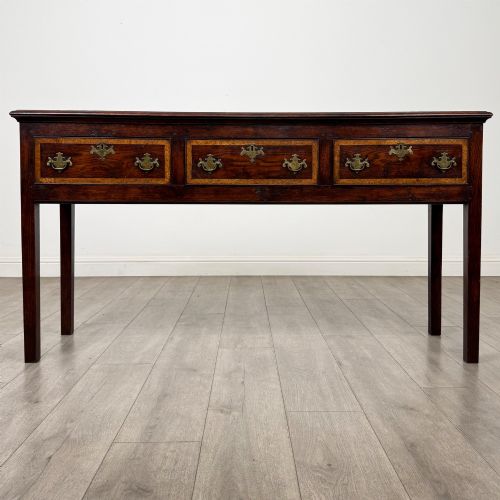
A country oak sideboard base is a sturdy utilitarian low cabinet built for storing kitchen and dining provisions, commonly found spanning the eighteenth and nineteenth centuries. These low-slung cupboards often lack their original upper plate racks, leaving a broad top surface that serves well for serving food or displaying ceramics.
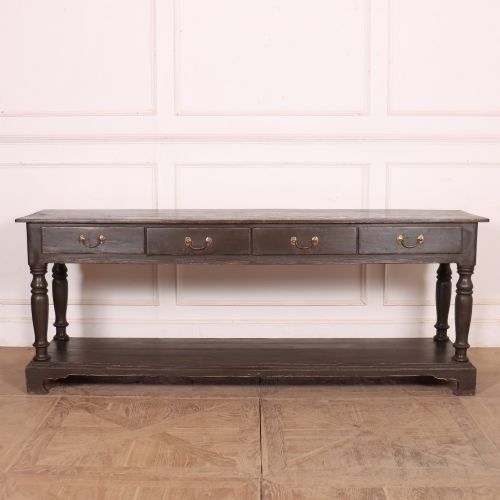
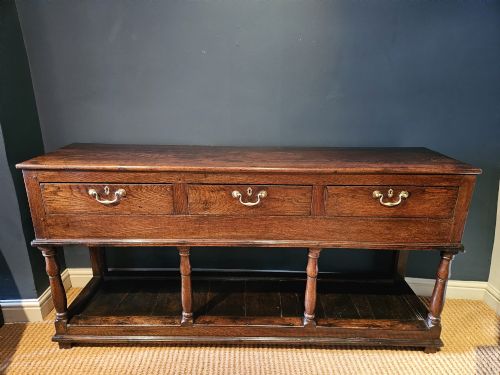
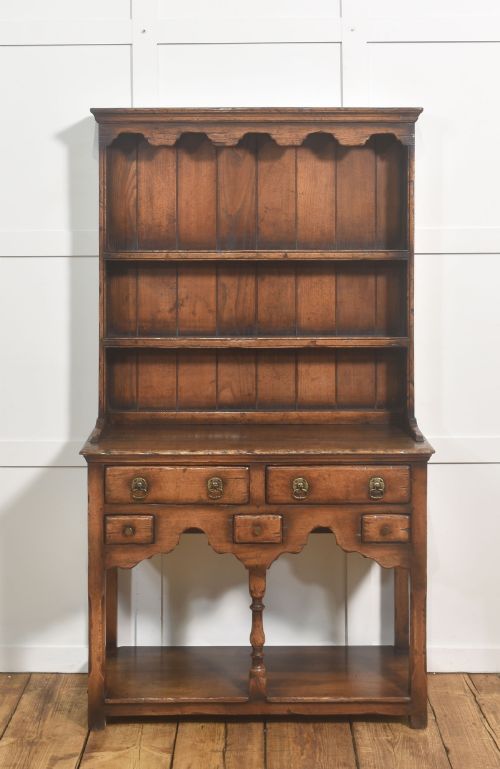
The versions most frequently met on this page originate from English and Welsh country workshops, alongside occasional French provincial examples. They display regional cabinet-making traits, ranging from simple boarded doors to robust potboards set between lower stretchers.
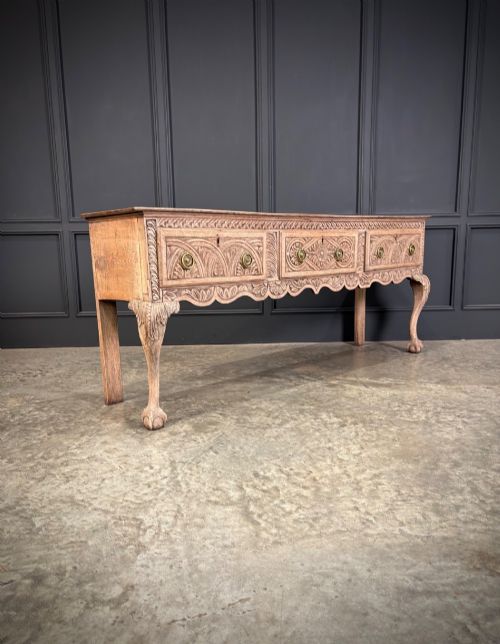
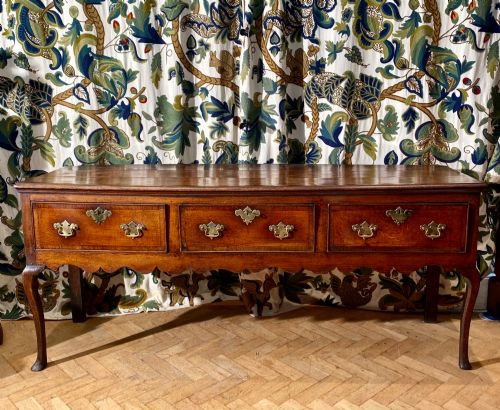
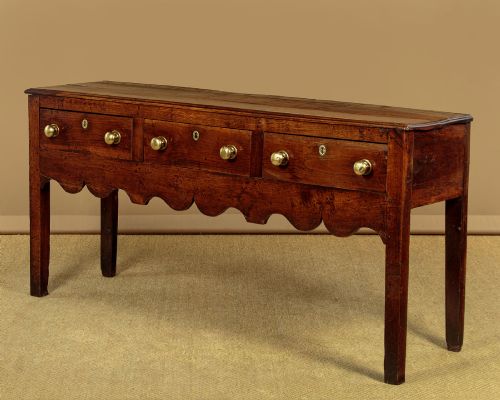
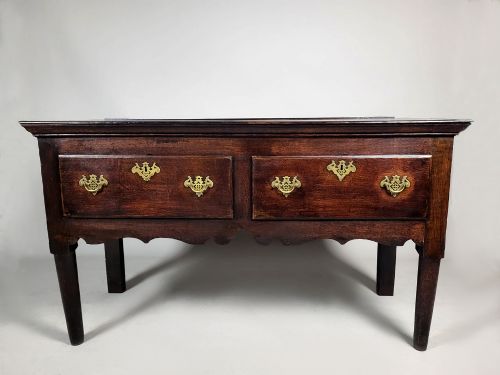
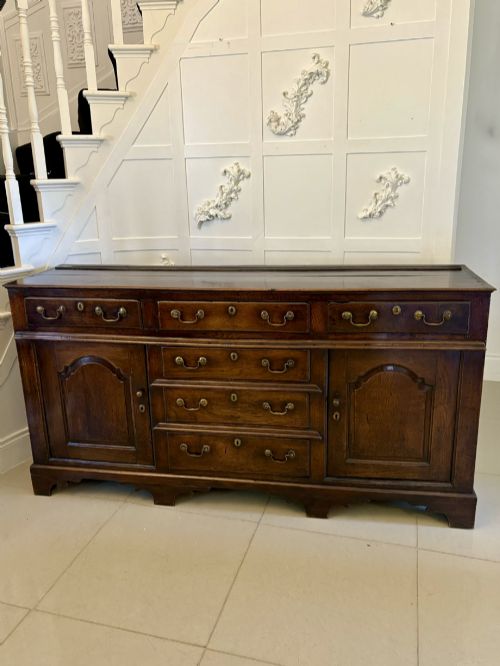
Makers constructed these sturdy items from domestic hardwoods to endure daily domestic use over generations. Their forms include straightforward three-drawer line-ups above panelled doors, breakfront configurations, and open potboard stages.
Materials and construction
Cabinet-makers relied on solid oak as the primary structural timber, often supplementing it with secondary woods such as fruitwood or elm for interior drawer linings and panels. Carpenters joined heavy planks using traditional pegged mortise and tenon joints to withstand the heavy loads of kitchen provisions.
Surface treatments developed naturally through decades of polishing and scrubbing, though some examples carry historical paint or bleached finishes. Iron drop handles, brass bail handles, and wrought hardware secure the doors and drawers while adding functional contrast to the warm timber grain.
Listings span the seventeenth century through to the Edwardian era, featuring oak, fruitwood, elm, and painted finishes.
Judging quality in historic timbers
Quality rests in the integrity of the timber selection and the restraint of the carving. Superior pieces exhibit well-figured quarter-sawn oak boards that have aged with a rich, unblemished patina, while lesser examples show excessive later alterations or replaced structural timbers.
Proportion and structural honesty separate finer examples from routine workshop output. A balanced arrangement of drawers set above deeply recessed cupboards, combined with original brass hardware and untouched feet, commands greater respect among collectors.
The Country Oak Sideboard Base Glossary
- Potboard
- A low open shelf fitted near the floor beneath a dresser base. Originally designed for storing earthenware pots and heavy kitchen utensils.
- Enfilade
- A long sideboard or buffet featuring a continuous line of cabinets or drawers. This term appears frequently among French provincial pieces.
- Breakfront
- A piece of furniture where the central section projects forward from the flanking outer cabinets. This layout creates visual depth on larger dining room storage units.
- Quarter-sawn
- Timber cut radially from the growth rings rather than tangentially. This method produces durable boards with a distinctive flecked grain pattern.
- Dresser base
- The lower section of a kitchen dresser, functioning independently as a low sideboard. It typically combines bank drawers with lower cupboard doors.
Country Oak Sideboard Base: Frequently Asked Questions
What is a country oak sideboard base used for today?
These low cupboards serve brilliantly as sideboards in modern dining rooms or hallways for storing tableware, linens, and everyday objects.
The sturdy top surface offers ample space for serving food during gatherings or displaying lamps and pottery collections.
How do I tell an eighteenth-century base from a later revival piece?
Look closely at the construction methods inside the drawers and cabinet backs, where hand-cut joints and pegged frames indicate genuine age.
Revival pieces built around nineteen-hundred often display machine-cut elements, lighter pine secondary woods, and overly uniform patination.
Did these sideboards always have potboards underneath?
Many country pieces incorporate a low slatted shelf or potboard, but numerous examples feature plain plinths or enclosed cupboards instead.
Regional traditions across England, Wales, and France determined whether the lower section remained open for storage or closed off.
How should I care for historic oak furniture?
Keep the timber away from direct heat sources and sudden humidity changes to prevent the old boards from splitting or warping.
Apply a traditional beeswax polish occasionally to nourish the dry grain and maintain the natural depth of the finish.