

Country Oak Press
A country oak press provides substantial domestic storage, bringing rustic proportion and deep timber character into modern rooms.
Country Oak Press
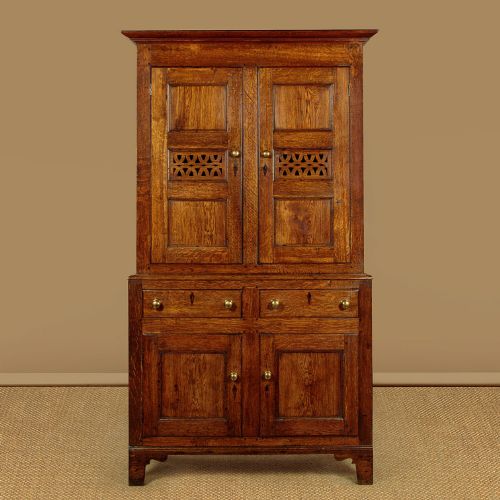
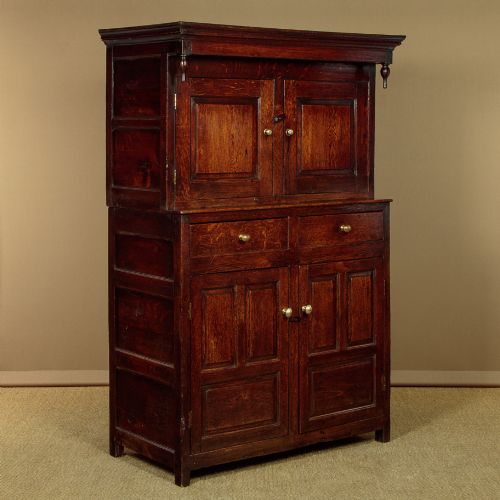
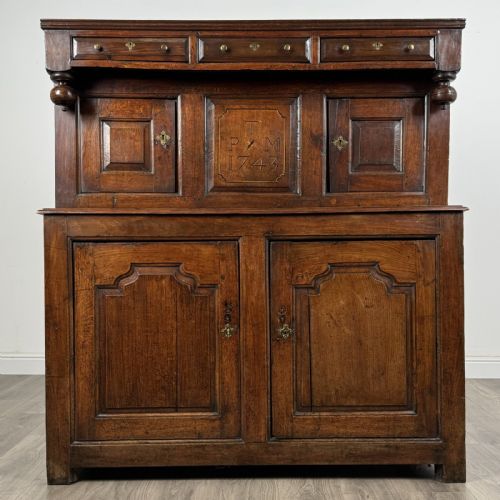
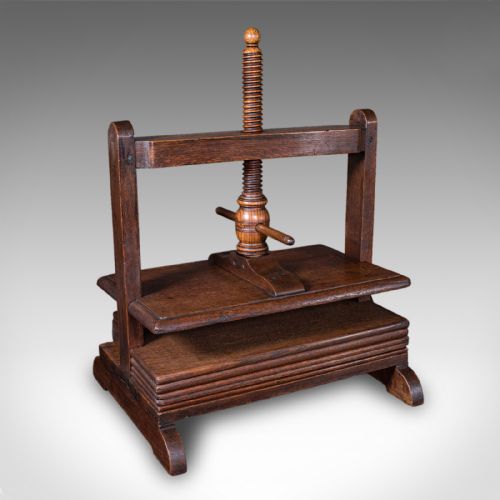
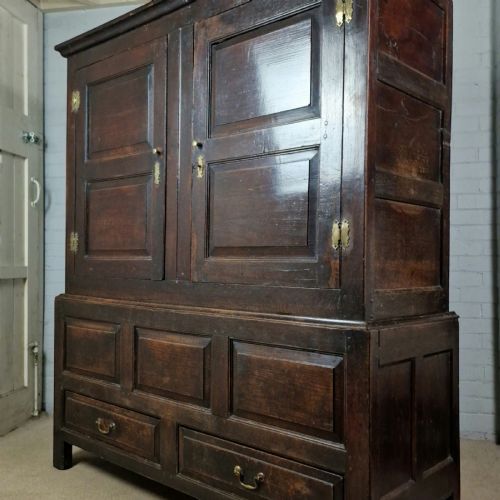
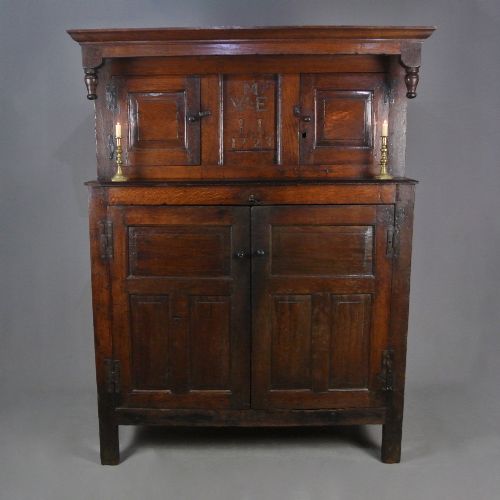
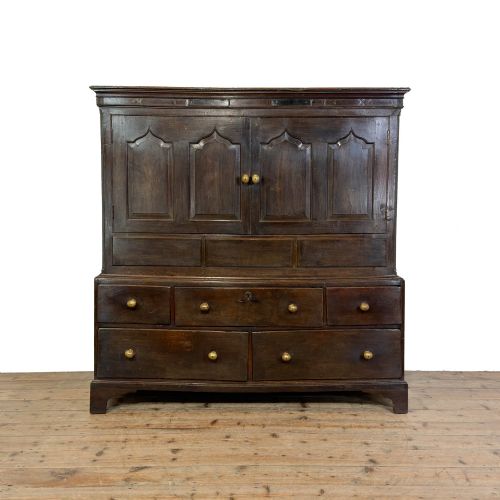
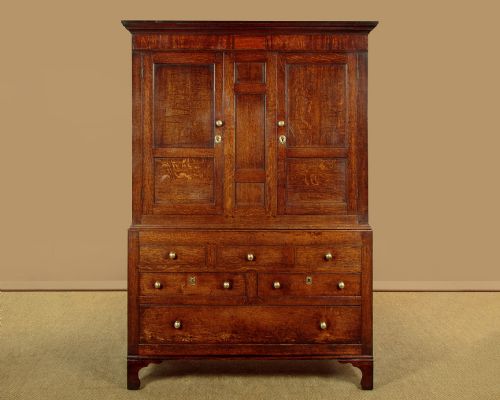
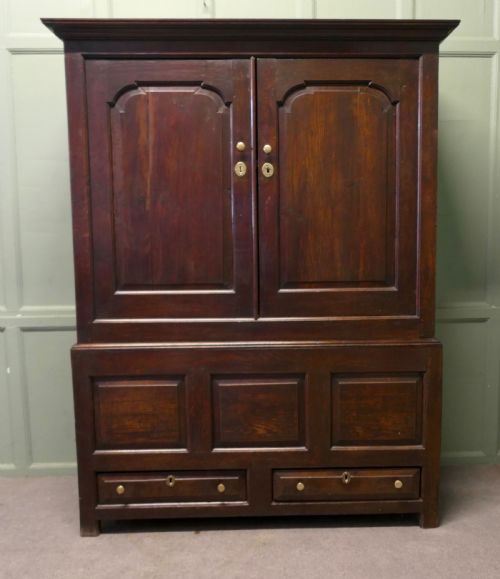
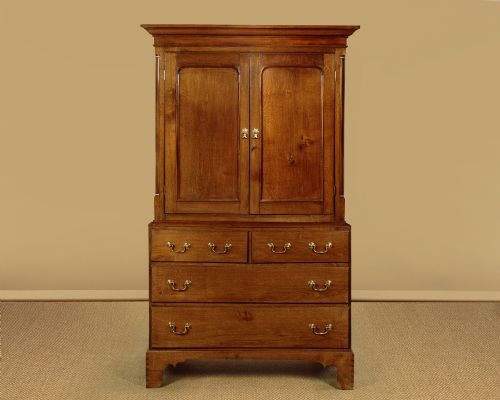
A country oak press brings together centuries of regional furniture making, spanning 17th century court cupboards, Georgian housekeepers' cupboards, and Welsh vernacular forms like the deuddarn and tridarn. These substantial pieces served working rural households for linen, provisions, and dry goods storage.
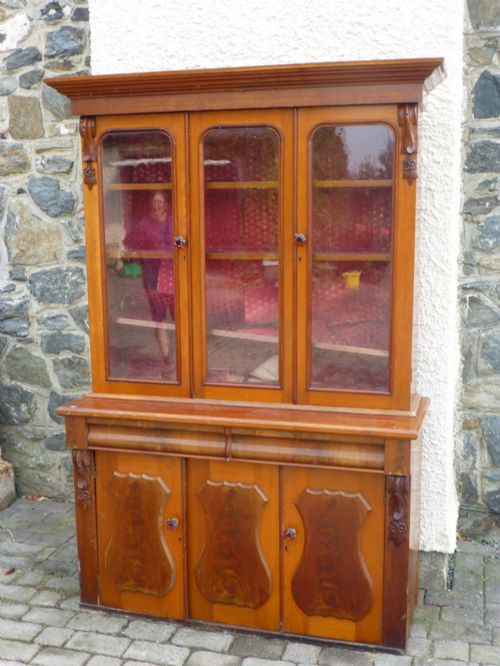
The versions most commonly met on this page date from the 18th and 19th centuries, often shaped by Welsh or English country traditions. Their forms range from low linen press cupboards to tall tripartite storage units and specialised food or tack cupboards.
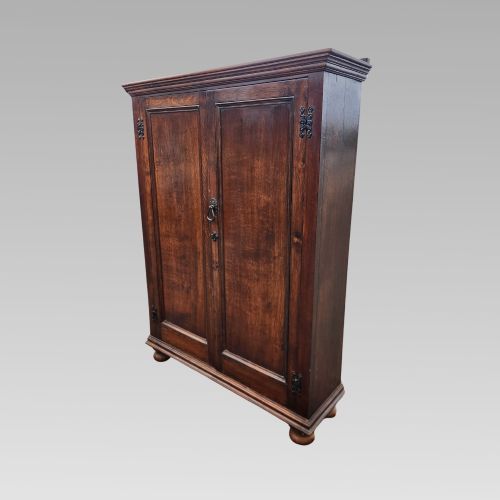
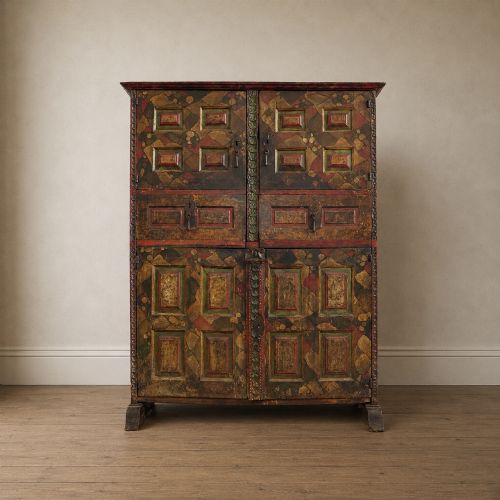
Regional variations appear across the inventory, including French provincial armoires and Spanish Basque painted housekeeper's cupboards alongside native British vernacular pieces. Each regional variation reflects local domestic requirements and prevailing rural woodworking customs.
Construction and Materials
Construction relies heavily on solid oak timber complemented by secondary woods such as elm, pine, and mahogany. Carpenters joined panels and frames using traditional pegged joinery, allowing the native timber to expand and contract with seasonal humidity changes.
Iron and brass hardware, including blacksmith-made locks and hinges, secure the heavy doors and drawers. Surface finishes vary from untreated bare timber to applied paint and polychrome decoration, particularly on continental examples.
Country Oak Press Retail Price Guide 2026
Typical asking prices for country oak press among the pieces listed under this phrase on Sellingantiques today, from the lower quarter to the upper quarter. They describe what is for sale here now, not the wider market.
Listings feature oak, pine, and mahogany alongside painted surfaces and iron hardware across 17th, 18th, and 19th century periods.
Assessing Quality
Quality rests upon the integrity of the timber, the crispness of any carved detailing, and the survival of original surface finishes. Pieces retaining their early blacksmith-made ironwork and unblemished structural framing command greater regard from collectors.
Proportion and regional character distinguish standard utilitarian storage from finer vernacular output. Regional quirks, such as distinctive panel layouts on Welsh deuddarns or inlaid decoration on bread and cheese cupboards, elevate the visual impact of an individual press.
The Country Oak Press Glossary
- Deuddarn
- A traditional Welsh two-tier or two-part cupboard featuring enclosed upper and lower storage sections. This form frequently incorporates panelled doors and distinct cornices.
- Tridarn
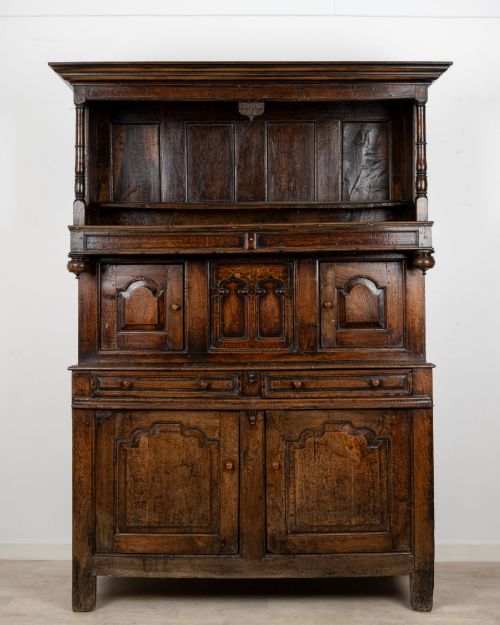
- A three-tier Welsh cupboard distinguished by an open middle stage supported by turned columns beneath an upper canopy. It represents an evolution from the earlier deuddarn.
- Livery Cupboard
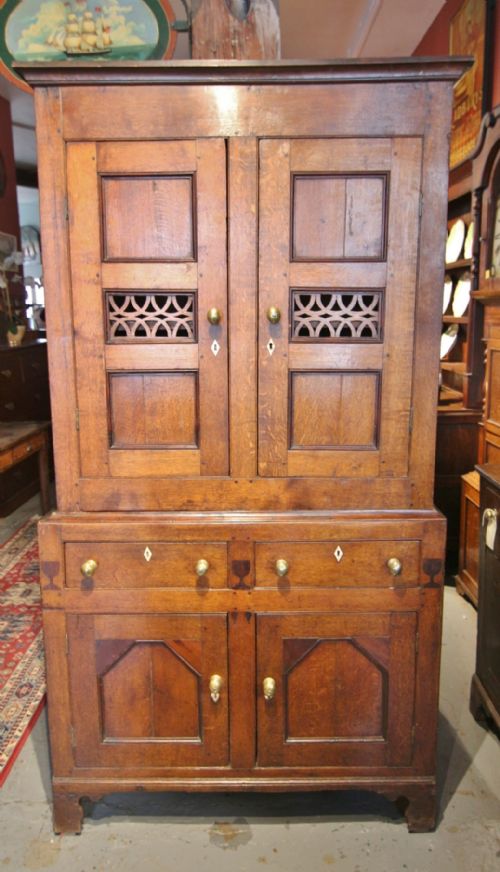
- A storage piece originally designed for food and drink ventilation, utilising pierced panels or turned spindles rather than solid timber doors. Surviving examples date primarily to the 17th and 18th centuries.
- Court Cupboard
- An early English or Welsh press featuring recessed upper sections above a wider base. They often display carved friezes and sturdy columnar supports.
- Housekeeper's Cupboard
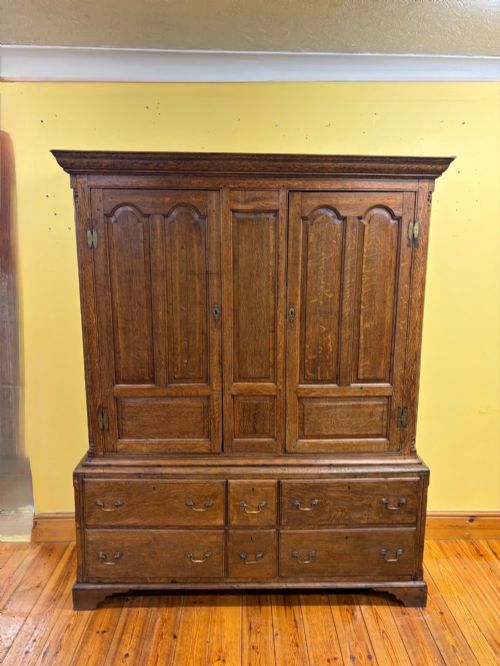
- A large domestic storage fixture typically arranged with linen presses above banks of smaller drawers. These utilitarian pieces managed household textiles and provisions in country houses.
Country Oak Press: Frequently Asked Questions
How were these cupboards used?
Rural households utilised these large cupboards to store homespun linen, blankets, and seasonal clothing away from damp walls. Specialised variations also stored dried food, dairy produce, or riding tack.
In larger country houses, housekeeper's cupboards served as central stations for managing household inventories and linens. Their deep shelves and multiple drawers kept domestic supplies organised and protected.
How do I date an oak press?
Dating relies on examining construction techniques, timber selection, and hardware styles across the piece. Early 17th century examples display heavy pegged framing, moulded panels, and forged iron strap hinges.
Later 18th and 19th century iterations incorporate mahogany banding, sliding linen trays, and refined brass drawer pulls. Vernacular pieces often retain traditional construction methods long after urban workshops adopted newer furniture styles.
How do I care for antique oak?
Antique oak requires stable indoor humidity levels and protection from direct sunlight to prevent timber splitting. Keeping pieces away from radiators preserves the natural moisture balance of the old wood.
Applying a traditional beeswax polish periodically nourishes the dry surface and maintains the subtle sheen of the timber. Avoid modern silicone sprays, which can penetrate porous historical finishes and damage the wood.