
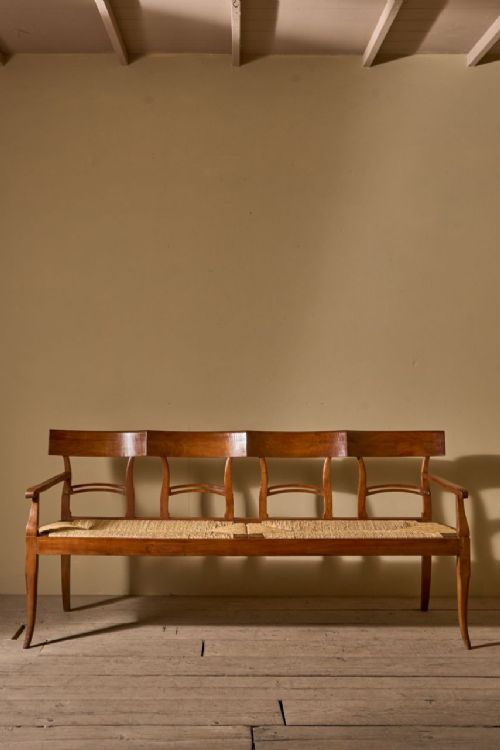
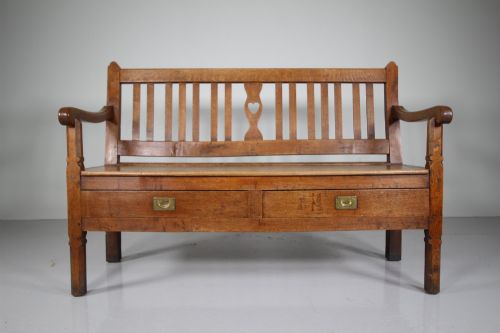
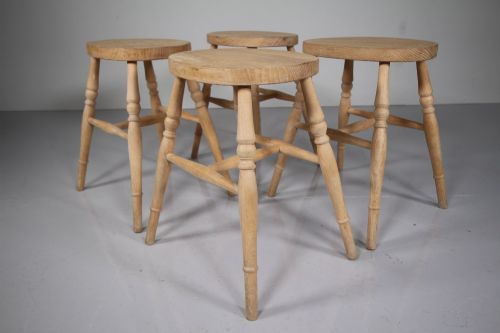
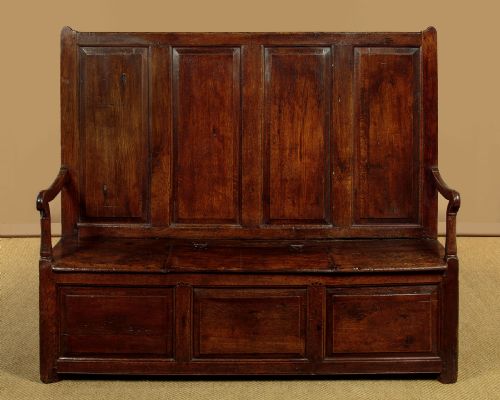
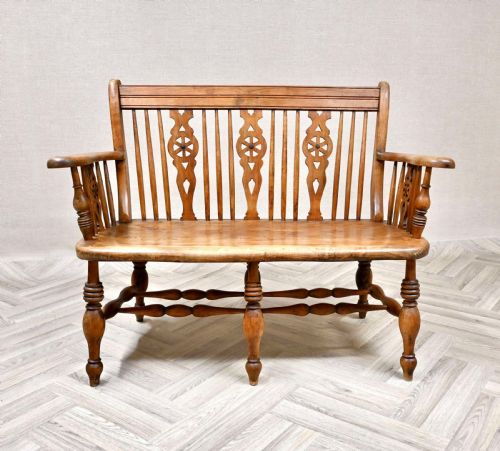
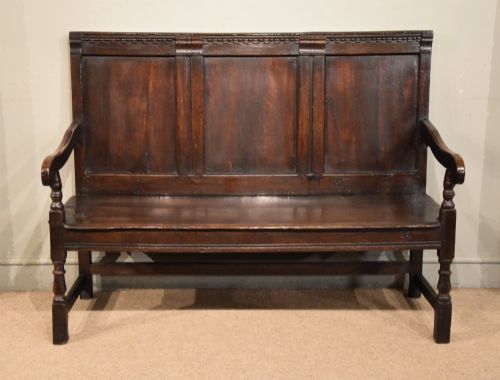
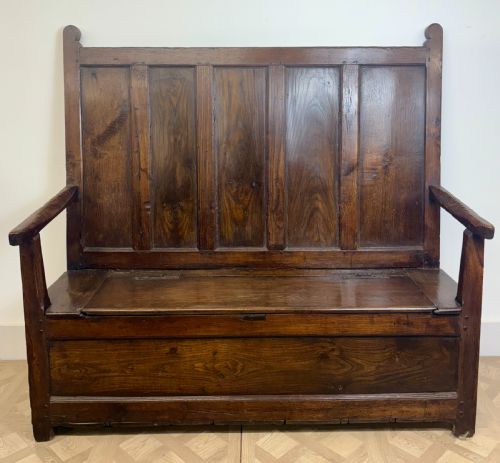
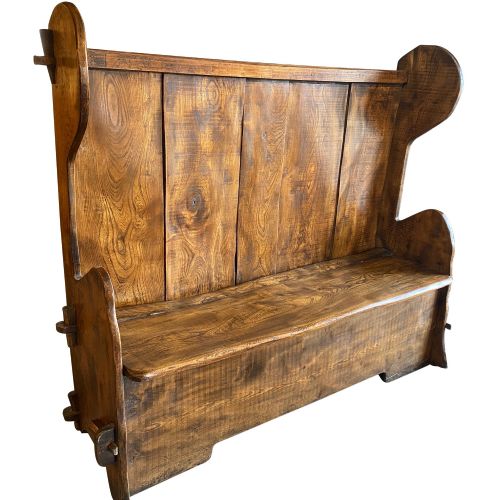
Country Oak Bench Seat
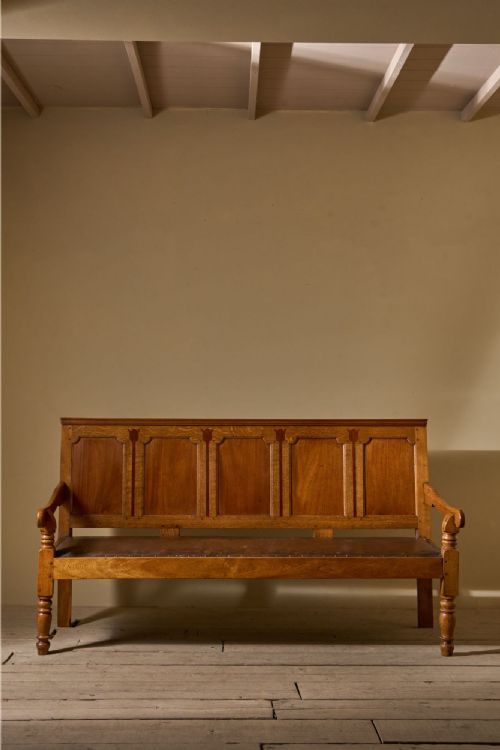
A country oak bench seat brings rugged timber and centuries of domestic utility straight into a modern hallway.
Country Oak Bench Seat
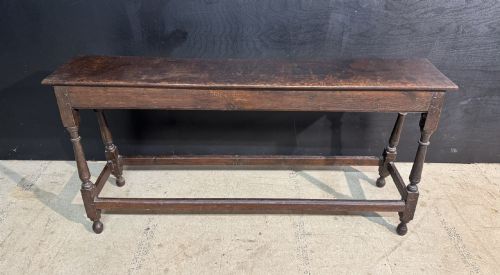
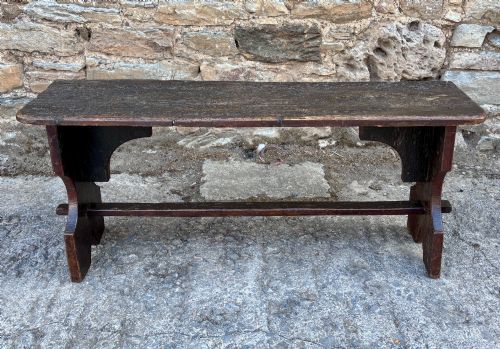
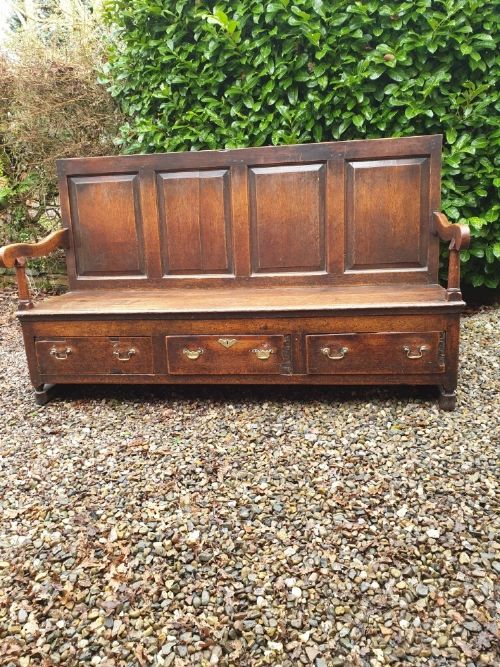
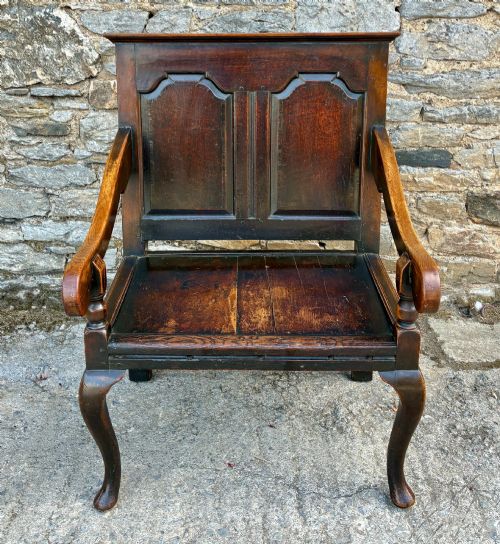
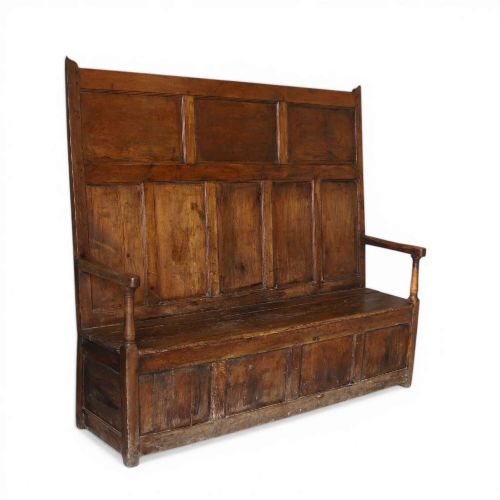
A country oak bench seat serves as a practical timber furnishing designed for hallways, kitchens and communal rooms. These pieces encompass sturdy joint stools, long pew-style forms, and high-backed settles intended to block draughts from cottage doors.
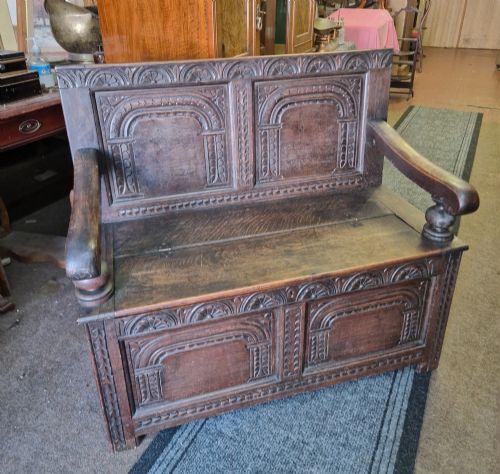
The selection here draws heavily from eighteenth-century and nineteenth-century examples alongside later vernacular interpretations. Buyers frequently encounter oak box settles with integrated storage, narrow hall benches, and panelled seats rooted in Georgian and rustic farmhouse traditions.
Materials and construction methods
Makers relied primarily on solid oak supplemented by regional timbers such as elm, ash, and cherrywood for secondary components or specific seats. Joinery relied on pegged mortise and tenon frames designed to withstand heavy daily use without metal fasteners.
Surfaces often show adze marks and hand-planed irregularities that reveal the manual labour involved in shaping green timber. Regional vernacular workshops also incorporated rush for seating or iron and brass for structural reinforcement and hinges.
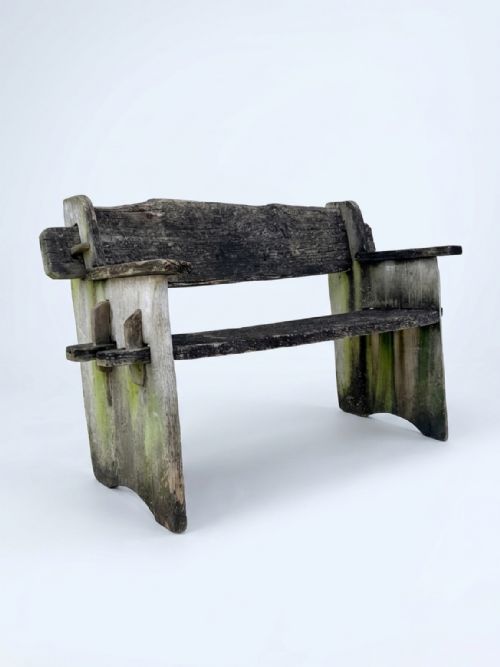
The listings span from seventeenth-century box settles to early twentieth-century garden benches, constructed primarily in oak, elm, ash, and cherrywood.
Distinguishing quality in vernacular seating
Superior examples demonstrate proportion and restraint, where high-backed settles feature balanced panel work and harmonious proportions rather than cluttered carving. The choice of timber grain and the integrity of the original joints dictate the structural longevity of the piece.
Later alterations and heavily restored timber partitions alter the original domestic context of a bench. Pieces retaining untouched surfaces and honest patination achieved through generations of handling stand apart from heavily sanded or chemically stripped equivalents.
The Country Oak Bench Seat Glossary
- Settle
- A wooden bench featuring a high solid back and enclosed arms designed to shield occupants from cold draughts. These often include a box seat compartment beneath the hinged lid.
- Joint stool
- A low wooden stool constructed with pegged mortise and tenon joinery rather than turned legs inserted into a seat. They frequently served multiple domestic purposes in early households.
- Vernacular
- Furniture built by regional craftsmen following local traditions rather than metropolitan academic designs. These pieces prioritise utilitarian function and locally sourced materials.
- Box settle
- A variation of the settle incorporating a compartment beneath the seat for storing blankets or household goods. This dual-purpose design conserved valuable floor space in modest dwellings.
Country Oak Bench Seat: Frequently Asked Questions
Where did these benches sit?
These benches sat in the busiest areas of historic homes, from draughty cottage entryways to farmhouse kitchens where family members gathered near the hearth.
Their robust construction allowed them to function as communal seating, dining benches, and practical barriers against cold air currents.
How do I spot an 18th century piece?
Eighteenth-century examples display hand-split oak panels, pegged joints, and natural surface wear accumulated over centuries of domestic life.
Examination of the underside and interior boards often reveals tool marks and timber shrinkage consistent with early period hand-tool methods.
Can I use a hall bench daily?
These sturdy timber seats handle daily household use easily, functioning well in modern entryways for sitting while removing shoes.
Placing them away from direct heat sources helps preserve the historic oak and prevents the original timber from drying out or splitting.