

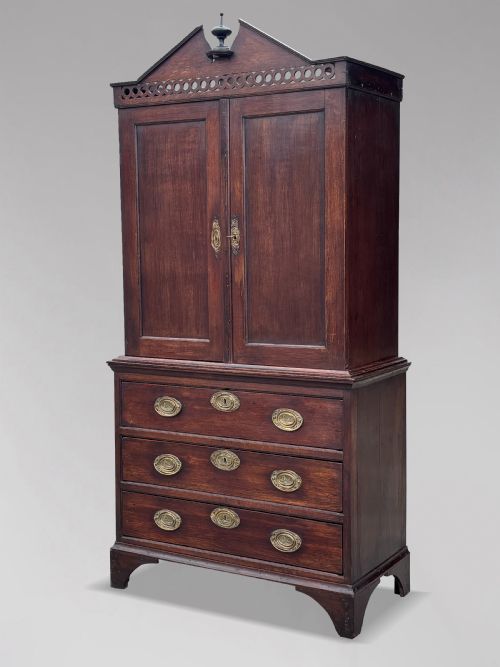
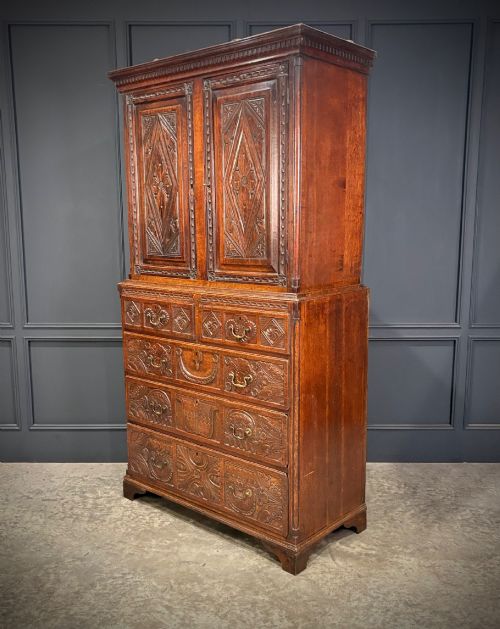


Country Oak Armoire
A country oak armoire brings immediate warmth and honest utility to a room through solid timber and centuries of regional craftsmanship.

What a country oak armoire is
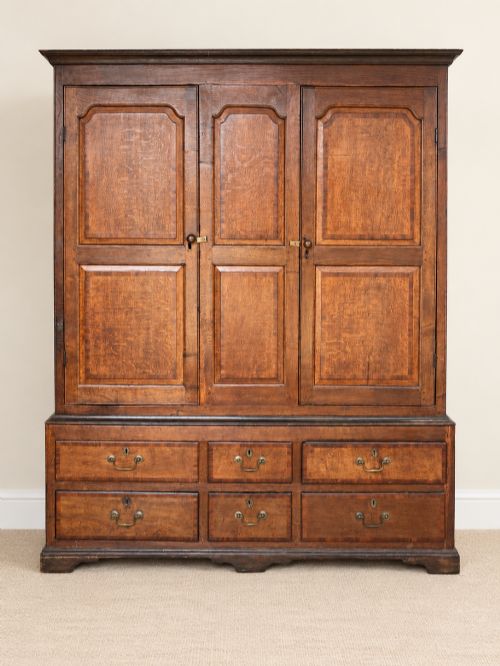
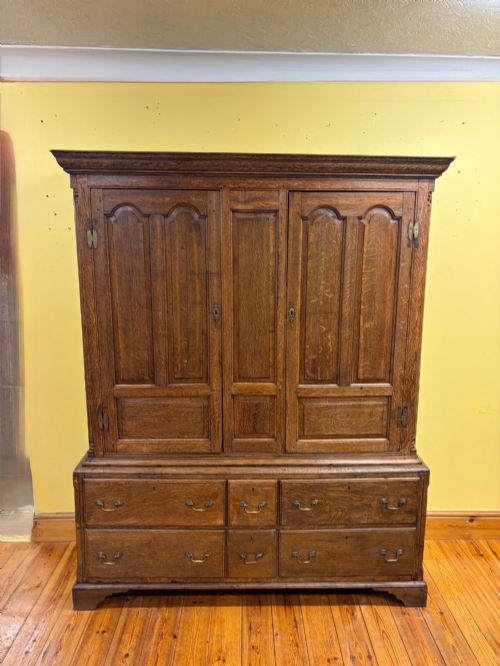
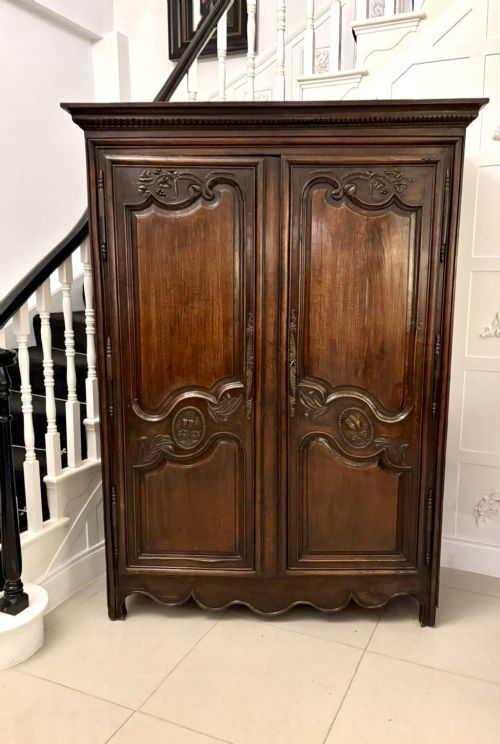
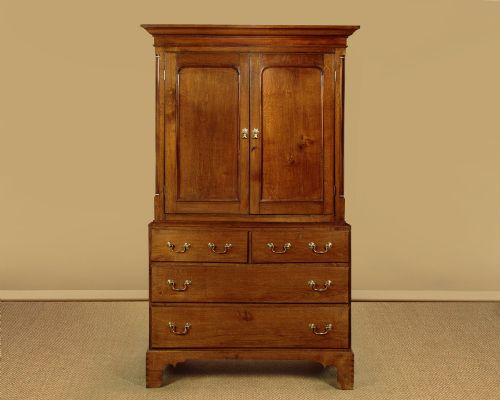
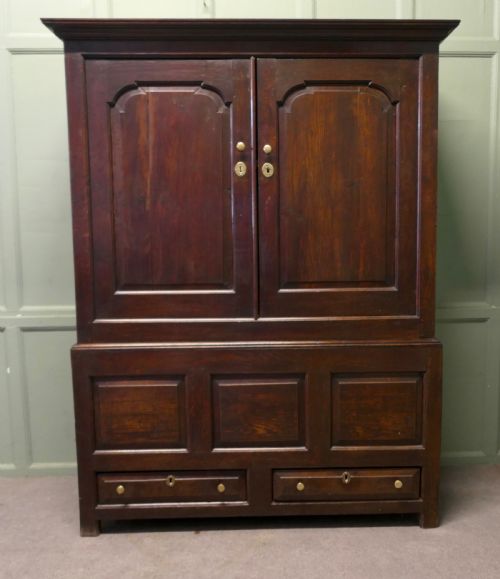
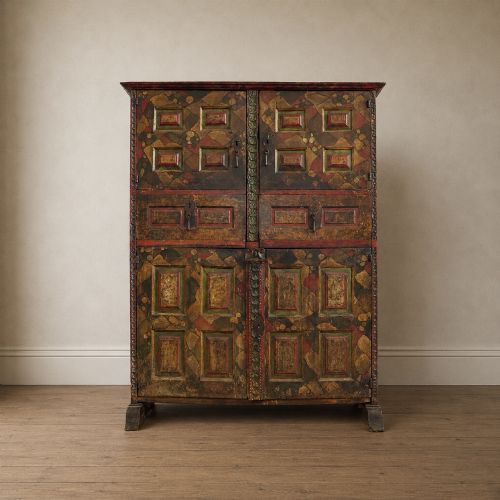
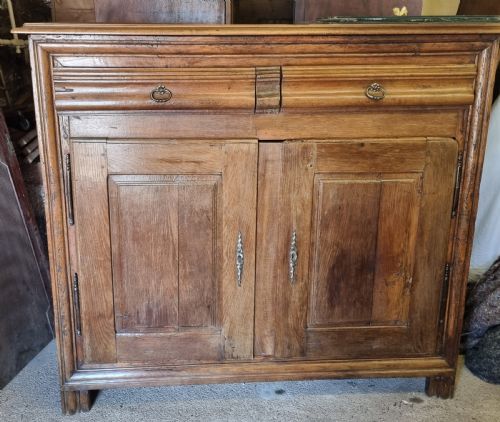
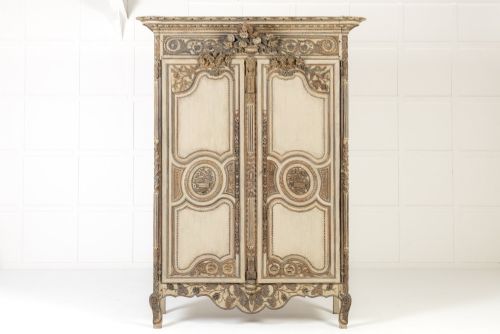
When you search for a country oak armoire, you encounter robust storage furniture shaped by regional British vernacular traditions from the seventeenth, eighteenth, and nineteenth centuries. These pieces encompass press cupboards, housekeepers cupboards, linen presses, and hanging cupboards built to store textiles and household provisions.
The versions most frequently met on this page are Welsh country examples, notably two-stage press cupboards and tall cupboards constructed from sturdy oak. Their forms reflect domestic utility rather than courtly fashion, relying on panelled construction and generous proportions to serve rural households.
Makers working within these styles drew upon local timber resources, producing heavy, functional carcases designed to endure generations of daily domestic use. The resulting forms range from early seventeenth-century harness cupboards to later Georgian linen presses.
How they were made
Construction relies upon solid oak timbers, chosen for durability and strength, shaped into heavy frames and panelled doors. Cabinetmakers employed traditional joinery techniques such as mortise and tenon joints to secure the heavy structure without relying on metal fasteners.
Decorative and functional detailing incorporates brass hardware, bone inlay, and porcelain elements to accent handles, escutcheons, and drawer pulls. These materials are worked by hand, showing the characteristic tool marks and surface variations of regional vernacular workshops.
Retail Price Guide 2026
Typical UK retail prices for country oak armoire, calculated from the Sellingantiques database of over a million retail prices indexed since 2003. This retail price guide relies exclusively on Sellingantiques data; no external sources or auction records are used, so the figures do not describe the wider market.
Listings span the seventeenth, eighteenth, and nineteenth centuries, featuring styles from Georgian to Welsh vernacular.
What varies in quality
The distinction between standard vernacular pieces and the finest examples rests upon the selection of timber and the ambition of the regional design. Grain patterns, the depth of panel linen-folds or fielded panels, and the integration of secondary woods all demonstrate the maker's skill.
Proportion and architectural presence separate simpler rural utilities from more sophisticated Georgian or Welsh regional expressions. Surviving original brass hardware and untouched surface patination elevate the standing of a piece considerably.
The Country Oak Armoire Glossary
- Press cupboard
- A large storage cabinet featuring upper and lower compartments traditionally used for linen and household goods. These pieces often separate into two stages for transport.
- Housekeepers cupboard
- A utilitarian storage piece designed for domestic management, providing ample shelving and hanging space for provisions or textiles. They occupy a central place in the working areas of historic homes.
- Linen press
- A specialised cabinet combining sliding trays or shelves in the upper section with drawers below for storing folded garments. The form developed to protect textiles from dust and damp.
- Welsh vernacular
- A distinct regional style of furniture making characterised by sturdy construction, local timber usage, and practical forms shaped by rural Welsh traditions. It avoids metropolitan ornamentation in favour of honest utility.
- Fielded panel
- A wooden panel with bevelled edges designed to fit into a grooved frame, allowing the timber to expand and contract with humidity changes. This technique prevents warping in heavy oak furniture.
Frequently Asked Questions
What is a country oak armoire?
A country oak armoire is a robust storage piece originating from rural British traditions, encompassing press cupboards and linen presses.
These cabinets utilise solid oak timber and practical regional designs to provide substantial domestic storage.
How do I date a country oak cupboard?
Dating relies upon examining construction methods, timber selection, and hardware styles associated with the seventeenth, eighteenth, and nineteenth centuries.
Earlier pieces feature heavy framework and hand-carved details, while later examples often incorporate standardised Georgian proportions and brass fittings.
Where were these cupboards made?
These pieces originate from regional British workshops, with a strong representation of Welsh vernacular and Georgian country production.
Local cabinetmakers used locally sourced oak to build functional furniture tailored to rural domestic needs.
How do I care for antique oak?
Antique oak requires a stable indoor environment away from direct heat sources and extreme humidity fluctuations to prevent timber movement.
Regular dusting and occasional applications of traditional wax help maintain the natural lustre and protective patination of the wood.